

You buy the same house blend every month. The bag looks the same, the name has not changed, the tasting notes on the label say the same three things they said in January. And as far as your palate is concerned, it is the same coffee.
Under the hood, it is probably not. The specific coffees inside that blend have likely been swapped two or three times since you started buying it, and possibly more. That is not a bait and switch. It is the only way a blend can stay consistent, and it is one of the more demanding jobs in a roastery.
Taste a blend built to stay the same.
Coffee Is a Crop, and Crops Run Out
Every coffee has a harvest. Ethiopia picks between October and January. Colombia has a main crop and a secondary one. Brazil harvests from May into September. Kenya, Guatemala, Indonesia, all of them on their own calendars.
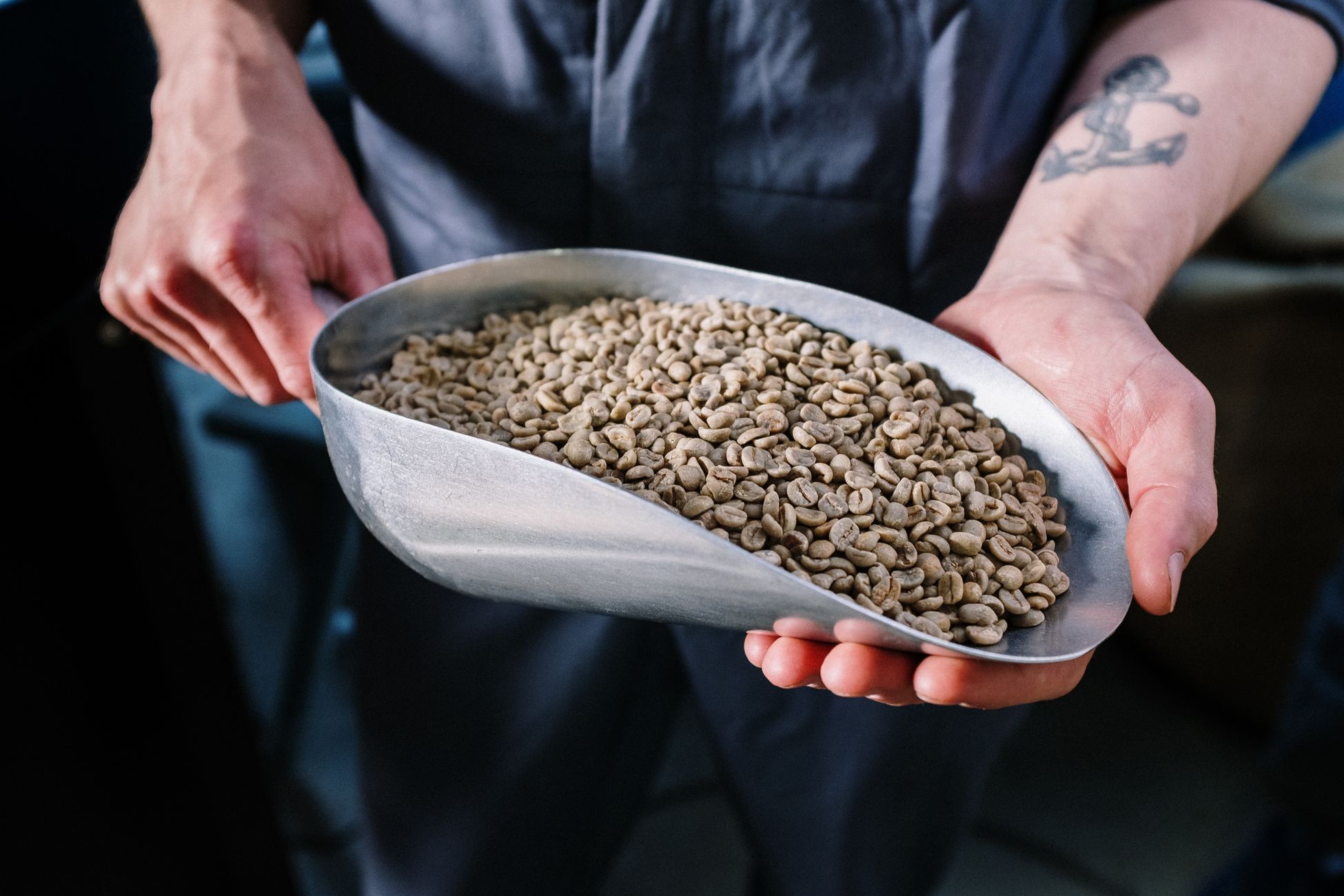
Green coffee from a given harvest is good for a limited window. It arrives at a roaster's warehouse fresh, holds its character for a while, and then starts to fade. The bright acidity dulls, the aromatics flatten, and eventually you get the papery, woody quality of past crop coffee.
That window is generally somewhere between six months and a year depending on storage, and the good part of it is shorter than the technically usable part.
So a roaster cannot simply pick five coffees, love the blend they make, and buy those five forever. In eight months, three of them will be gone or going flat, and the ones from the new harvest will not taste the same as last year's from the same farm.
That is not a flaw in the system. It is what it means to work with agriculture.

What a Blend Recipe Actually Is
The mistake most people make is thinking a blend is a list of coffees. Sixty percent Brazil, thirty percent Colombia, ten percent Ethiopia.
For a well built blend, the recipe is not the list. The recipe is a target profile, and the component list is just the current way of hitting it.
A roaster building a blend is usually thinking in roles rather than origins. Something to provide the base, the body and the chocolate and nut character that the whole thing sits on, often a Brazil or a lower elevation Central American. Something to add sweetness and structure, often a washed Colombian or Honduran. Something to add lift and aroma, often a smaller percentage of an East African.
When the Brazil runs out, the question is not where do I find identical Brazil. It is what can play the base role for the next six months. It might be a different Brazilian farm, or a Peruvian, or a natural from somewhere else entirely, and the percentages will shift to compensate.
How They Keep It Tasting the Same
This is where the work happens.
When a component is running low, the roaster starts cupping candidates well before it runs out. They roast trial batches of the blend with the candidate substituted in, at several different percentages, and cup those against the current blend side by side.
Blind, ideally, because knowing which bowl is the incumbent biases the result toward the incumbent.
They are not looking for a bowl that tastes good. They are looking for a bowl that tastes like the reference. A candidate that produces a genuinely better blend is a problem rather than a win, because the customer who has been buying this coffee for two years did not order a better coffee, they ordered the coffee they like.
Adjustments are usually small and made in several places at once. Bump the base up two percent, drop the East African by one, and pull the roast a touch longer to compensate for a denser bean in the mix.
Buy a blend from people who cup every batch.

The Roast Does Some of the Work Too
A blend is not only a green coffee decision. The roast profile is part of the recipe and it gets adjusted alongside the components.
If a new component is denser, it needs more energy to develop, and running the old profile would leave it underdeveloped and grassy while the softer beans around it were fine. If the moisture content of the new lot is higher, the drying phase needs longer.
There is also the choice of blending before or after roasting. Blending before means all components are roasted together on one profile, which is simpler and gives a more integrated cup but forces a compromise on any bean whose ideal profile differs from the group. Blending after means each component gets its own roast and they are combined afterward, which gives more control at the cost of more work and more risk of inconsistency between batches.
Roasteries doing either one seriously will adjust the approach as components change.
When a Blend Is Allowed to Change
There are exceptions, and they are usually announced rather than hidden.
Seasonal blends are built to change. An espresso blend released for a particular part of the year exists precisely to showcase what is fresh and good right now, and the customer is buying the seasonality rather than the consistency.
Some roasters version their blends openly, putting a batch number or a component list on the bag so you know when it shifted. That is a stylistic choice and a defensible one, particularly for a roastery whose customers are engaged enough to care.
And occasionally a flagship blend does get deliberately rebuilt, when the roaster's taste has moved, when the sourcing relationships have changed, or when the original recipe was simply never that good. Doing that quietly is the thing customers resent. Doing it openly, with an explanation, is usually met with interest rather than complaint.
Why This Is Harder Than Roasting Single Origins
A single origin is judged on its own terms. If this year's lot from a farm is different from last year's, you update the tasting notes and tell people it is a new crop. Variation is part of the appeal.
A blend has no such freedom. The name on the bag is a promise that the customer knows what they are getting, and every batch is measured against a standard that exists in the roaster's memory and in a set of cupping notes.
It is also the coffee most likely to be someone's daily habit, which means the person drinking it has the most calibrated possible palate for it. Nobody notices a change in a coffee they drink once. Everybody notices a change in the coffee they drink every morning for a year.

What This Should Change About How You Shop
A few practical things follow from this.
A blend with a consistent character over years is evidence of active work, not of a coffee that never changes. If anything, a blend that has been quietly drifting is the sign of a roastery not doing this job.
Blends are not the lesser option. There is a persistent idea in specialty coffee that single origin is the serious purchase and blends are for people who do not know better. The truth is that building a blend that stays stable across four harvests requires more skill than buying one good lot and roasting it well.
And it is worth asking. A roaster who is doing this properly is usually happy to tell you roughly what is in the current version and what changed recently, because they are proud of the work. A roaster who cannot tell you what is in it is probably buying whatever was cheapest that month, and the drift will show up in your cup eventually.
The bag that tastes the same in September as it did in February is not sitting still. Somebody kept it there.
Find a blend worth making a habit.
All images shown in this blog are sourced from pexels.com.