

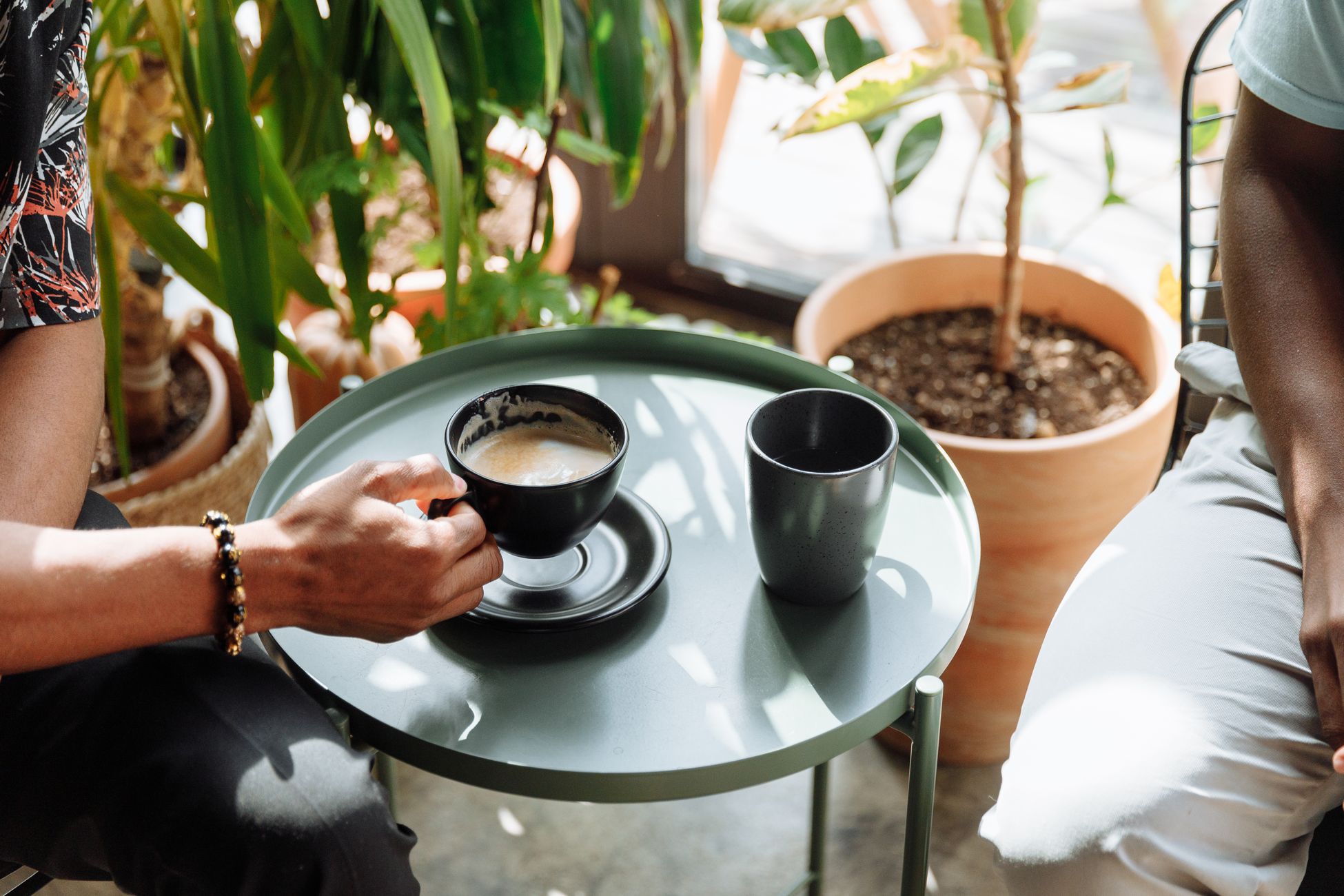
You hand someone a cup of a bright Kenyan you have been excited about all week. They take a sip, make a face, and say it tastes sour. You taste blackcurrant and grapefruit and a sweetness underneath that keeps pulling you back.
Neither of you is being difficult. You are having genuinely different sensory experiences from the same liquid, for reasons that are biological, chemical, and learned. Understanding why does not settle the argument about which coffee is better, but it does explain a lot of what happens whenever people taste together.
Find out what you actually taste in a good coffee.
People Have Different Numbers of Taste Buds
Start with the physical hardware, because the variation there is larger than most people expect.
The density of taste papillae on the tongue varies enormously between individuals. Researchers sort people roughly into non tasters, medium tasters, and supertasters based on their sensitivity to certain bitter compounds, and the differences track partly with genetics and partly with how many receptors are physically present.
Supertasters, who make up something like a quarter of the population, experience bitterness much more intensely than average. Coffee, which is inherently bitter, hits them harder. Many of them add milk and sugar not out of unrefined taste but because black coffee is genuinely more aggressive in their mouth than it is in yours.
Non tasters experience the same cup as milder. They often prefer darker roasts and stronger brews, because a light delicate coffee registers as weak rather than nuanced.
This is not a hierarchy. A supertaster is not a better judge of coffee, and in some contexts they are worse, because intense bitterness can mask the subtler things a cup is doing.
Genetics Decide Whether You Can Smell Certain Things
Most of coffee flavor is aroma, detected by receptors in the nose rather than the tongue. Humans have roughly four hundred functional olfactory receptor genes, and they vary between individuals more than almost any other gene family.
The practical result is specific anosmias, meaning a person can be effectively blind to one particular smell while having a completely normal sense of smell otherwise. The famous example is the compound that makes cilantro taste like soap to some people. Similar variation exists for compounds relevant to coffee.
So when one person picks out a distinct blueberry note in a natural process Ethiopian and another gets nothing but generic fruit, that may not be a difference in skill or attention. One of them may not have the receptor.
This is also why tasting notes on a bag frustrate people. The roaster is not making it up, and you are not failing. You may simply be working with different equipment.
Saliva Changes the Chemistry
There is a stranger mechanism, and it is well documented.
Saliva composition varies between people in the concentration of proteins, particularly proline rich proteins that bind to tannins and polyphenols. Those proteins are what neutralize the astringent, mouth drying sensation from compounds in coffee, tea, and wine.
Someone with high concentrations of these proteins experiences less astringency from the same cup. Someone with low concentrations feels a coffee as drying and harsh where their friend finds it smooth.
Saliva also contains enzymes that begin breaking down compounds in the mouth, at rates that vary between people. Two people can literally have the coffee transformed differently while it is in their mouths.
Taste a coffee side by side with someone.
Experience Rewires What You Notice
The biological differences are fixed. This next part is not, and it is the largest source of variation in practice.
Flavor perception is learned. Your brain builds a library of smells and tastes over your lifetime and matches new experiences against it. Someone who grew up eating a wide range of fruit has reference points for stone fruit, citrus, and berries that they can attach to a coffee. Someone without those reference points tastes something real but has no name for it.
This is why professional cuppers train with aroma kits and structured vocabulary. They are not developing better noses, they are building an indexed library so that what they detect can be identified and communicated.
It is also why your own tasting improves noticeably within a few months of paying attention. The coffee did not change. Your ability to identify what you were always perceiving did.
Cultural background matters here in the same way. A person raised around a particular cuisine has strong references for the flavors in it and will find those descriptors first, because those are the ones that are available.
Context Changes the Cup
Even for one person, the same coffee tastes different depending on circumstances.
What you ate or drank before changes everything. Orange juice, toothpaste, and anything spicy all reshape the next thing you taste. Cupping protocols exist partly to control this.
Temperature changes the coffee itself, since different compounds are perceptible at different temperatures, and a cup genuinely shifts character as it cools.
The order you taste in matters, because palate fatigue accumulates and the third strong coffee in a row registers differently than the first.
Expectation is powerful and hard to defeat. Knowing a coffee is expensive, or that it scored well, or that a friend loved it, measurably shifts what people report. Blind tasting exists because sighted tasting is unreliable, including for professionals.
Even the vessel matters. The same coffee in a thick mug and a thin cup delivers a different mouthfeel and a different aroma concentration to your nose.
Your own state counts too. Hydration, sleep, allergies, and a lingering cold all change how much you smell, and smell is most of flavor. A coffee that tastes muted on a congested morning is usually a nose problem rather than a bean problem, which is worth remembering before you write off a bag you just bought.
What to Do With This
A few things follow that are actually useful.
Stop treating disagreement as error. If someone tastes your favorite coffee and finds it sour, that is information about the intersection of that coffee and that person, not a verdict on either.
Use tasting notes as suggestions rather than a test. A bag saying cherry and cocoa is telling you the general neighborhood the roaster found. If you get plum and caramel, you are in the same neighborhood and you are not wrong.
Taste comparatively rather than in isolation. Two coffees side by side reveal differences that either one alone does not, because your palate is far better at comparison than at absolute judgment.
Taste the same coffee more than once, on different days and at different temperatures. A cup that seems flat in the morning after toothpaste may be excellent in the afternoon.
And find the people whose palate tends to agree with yours, then take their recommendations seriously. That correlation is more useful to you than any score, because it accounts for whatever combination of receptors, saliva, and history you happen to have.
The goal was never to taste correctly. It was to notice more of what is there, and to know your own preferences well enough to buy coffee you will actually enjoy drinking.
Start finding out what your palate likes.
All images shown in this blog are sourced from pexels.com.