

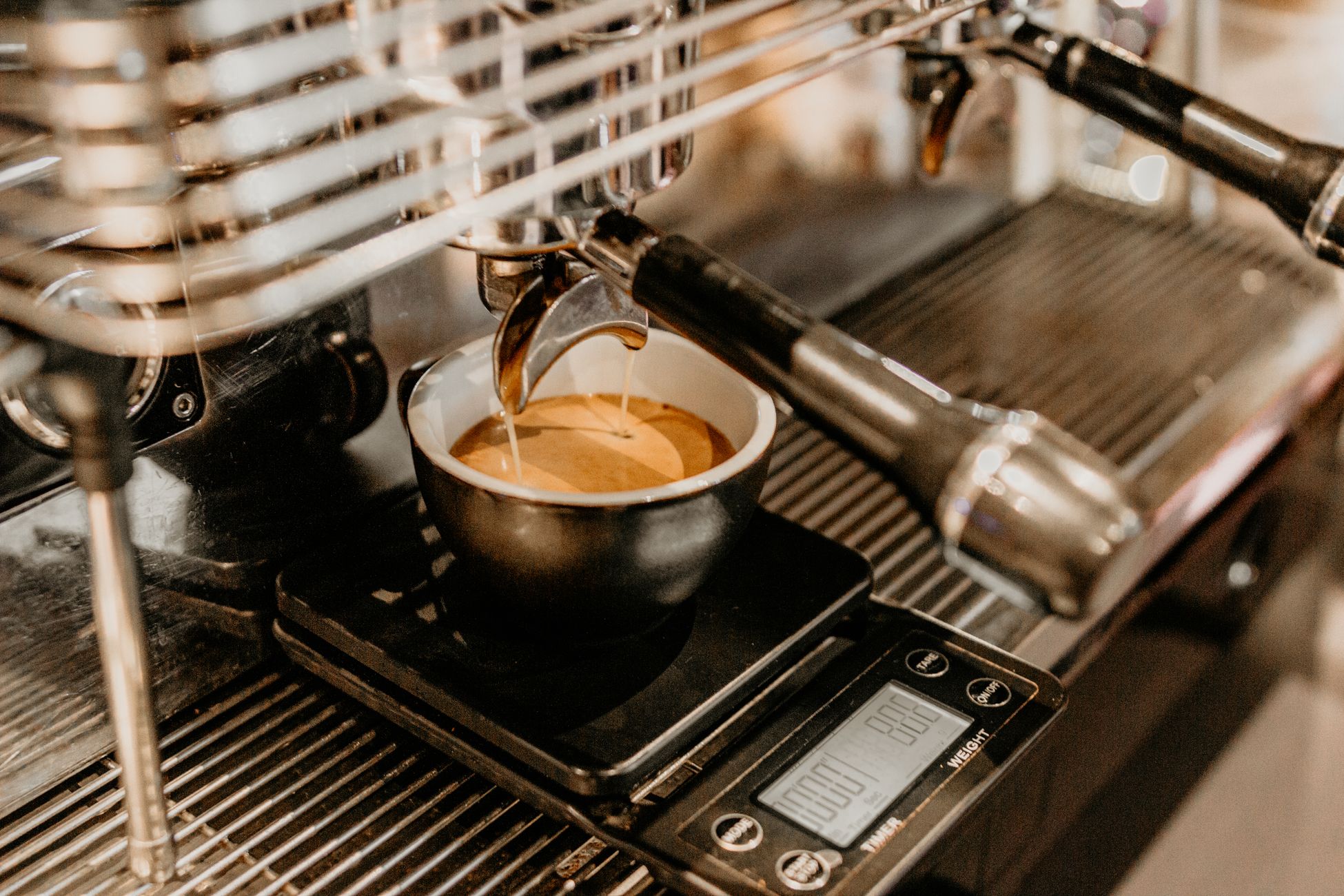
Ask most people how to pull a good espresso shot and you will get a number in seconds. Twenty five to thirty. Stop the shot when the clock hits it, and if the coffee tastes wrong, adjust the grind until the time comes right.
That advice has been passed around for decades, and it is not useless. But it is measuring the wrong thing. Time tells you how long water was in contact with coffee. It does not tell you how much coffee ended up in the cup, and that second number is the one your tongue actually responds to. A scale under the cup gives you the number that matters, and once you start using one, the timer turns into a footnote.
What a Shot Time Is Really Telling You
When you time a shot, you are measuring flow. A fast shot means water moved through the puck easily. A slow shot means it met resistance. That is useful, because flow is connected to grind size and dose and how well you distributed the coffee in the basket.
But flow is not the same as extraction. Two shots can both take twenty eight seconds and be completely different drinks. One might have delivered thirty grams of liquid into the cup. The other might have delivered forty five, because the barista let it run at a slightly higher flow rate, or the puck channeled halfway through, or the pump on that particular machine pushes harder. Same time, different coffee.
The reverse is also true. A shot that takes thirty five seconds is not automatically over extracted. If it delivered the right amount of liquid, it might taste perfect. The time was slow because the grind was fine and the flow was gentle, not because the coffee was getting stewed.
Time is a symptom. Weight is a result.
Why Weight Is the Number Your Tongue Cares About
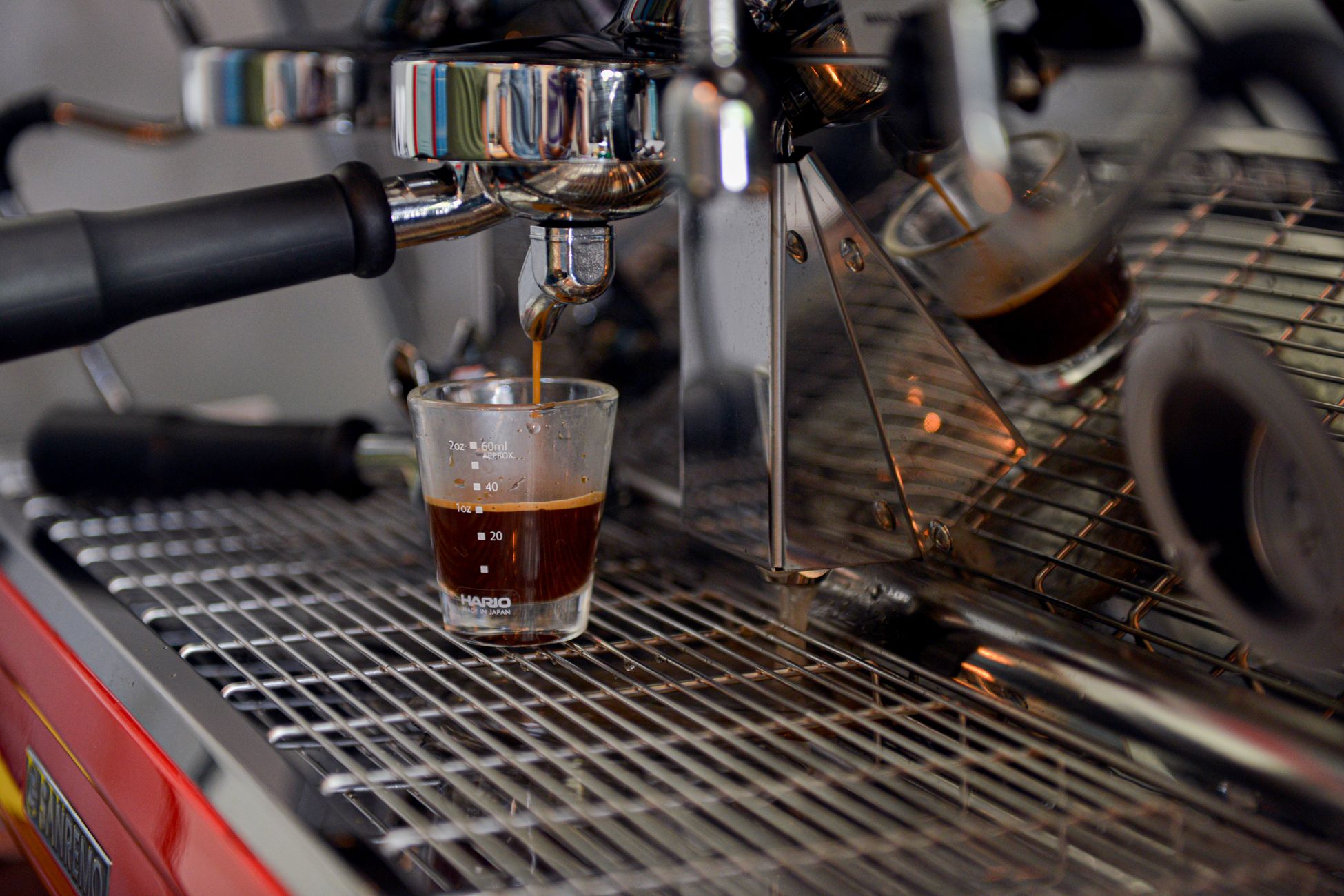
Espresso is a ratio. You put a certain amount of dry coffee into the basket, and you take a certain amount of liquid out. That ratio, dose in to liquid out, decides the strength and the balance of what you drink more than any other single variable.
A common starting point is one to two. Eighteen grams of coffee in, thirty six grams of espresso out. Shorter ratios, like one to one and a half, give you a syrupy, intense shot. Longer ratios, one to two and a half or beyond, give you something lighter and more transparent, with more of the coffee's acidity and sweetness showing.
None of that is visible on a clock. The only way to know what ratio you pulled is to weigh the output. The scale tells you exactly how much coffee you extracted, which is exactly what determines whether the shot tastes thin, balanced, or heavy.
Once you know the weight, the time becomes context. Thirty six grams in twenty eight seconds and thirty six grams in thirty four seconds are both fine shots, and the difference between them tells you something about the grind, not about whether you should drink it.
The Problem With Stopping on the Clock
Here is where timing actively hurts. If you stop every shot at thirty seconds regardless of what came out, your ratio drifts every time anything changes. A slightly coarser grind means more liquid in the same thirty seconds. A fresh bag with more gas means the puck swells and slows the flow, so less liquid comes out. A different bean with a different density behaves differently again.
Every one of those changes lands in your cup as a different strength, and you have no way to know why. You just know Tuesday tasted good and Wednesday tasted watery. So you start chasing the grind, and the grind was never the problem. The problem was that you were holding time steady and letting weight wander.
Flip it. Hold the weight steady and let the time tell you what is going on.
How to Dial In With a Scale
Put the scale on the drip tray, the cup on the scale, and tare it. Set a target output based on your dose. If you are dosing eighteen grams, aim for thirty six. Start the shot and the timer together.
Stop the shot when the scale hits your target, and note the time. That is your baseline.
Now taste it. If it is sour and sharp, the extraction was too low. Grind finer. The next shot at the same weight will take longer, and the extra contact time pulls out more sweetness. If it is bitter and dry, grind coarser. The next shot at the same weight will run faster and stop before the harsh compounds come out.
Notice what you are doing. The weight never moves. Only the grind moves, and the time responds. That is the correct order. You are using the time as a readout of what the grind did, not as a target.
Within three shots you will usually find the spot where the coffee tastes like the roaster intended. After that, the time is just a sanity check. If your usual thirty six grams suddenly takes forty five seconds, something changed, and now you know to look.
Find a coffee that rewards getting the ratio right
Why This Matters More for Lighter Roasts
If you drink dark roasts, the timer method gets you close enough most days. Dark roasted coffee is porous and soluble, extraction happens fast, and the margin for error is wider.
Lighter and medium roasts are denser and less soluble. They need more precise extraction to taste sweet instead of sour, and the window is narrow. A shot that is a few grams short can taste completely underdeveloped even though it looked and timed exactly right. The scale is what gets you inside that window reliably.
This is also where the roast quality shows up. A coffee roasted evenly, with the inside of the bean developed all the way through, extracts predictably. You find the ratio, and it holds. A coffee with a roasted outside and an underdeveloped center gives you a shot that is somehow both sour and bitter, and no ratio fixes it. Air roasting develops the bean from all sides in moving hot air, which is why our espresso dials in cleanly and stays there.
The Equipment Question
You do not need an expensive scale. You need one that reads in tenths of a gram, responds quickly, and fits under your cup on the drip tray. Plenty exist for the cost of a bag or two of coffee. A timer built in is nice but a phone works.
What you should avoid is a scale that is slow to update. A lag of a second or two means you overshoot the target every time, and the point of the exercise is precision.
Some machines now have scales built into the drip tray and will stop the shot for you at a target weight. That is convenient, but the principle is identical, and a manual setup teaches you more about what is happening.
Where the Timer Still Belongs
None of this means throw the timer away. It is a diagnostic tool, and a good one.
If your times drift over a week with the same coffee, the beans are aging and losing gas, and you may need to tighten the grind. If a shot suddenly runs fast, you likely have a channel, and the fix is distribution, not grind. If times are wildly inconsistent shot to shot at the same setting, your grinder may be retaining old grounds or your dosing is uneven.
All of those readings only mean something because the weight is fixed. The timer works when it is describing a shot, not defining one.
Grab a bag and put the scale under the cup this week
Espresso has a lot of moving parts, and most of the advice out there gives you one number to hold onto. Just make sure it is the right number. Weigh what comes out, let the time tell you what happened, and the coffee in the cup will finally match the coffee in the bag.
All images shown in this blog are sourced from pexels.com.