

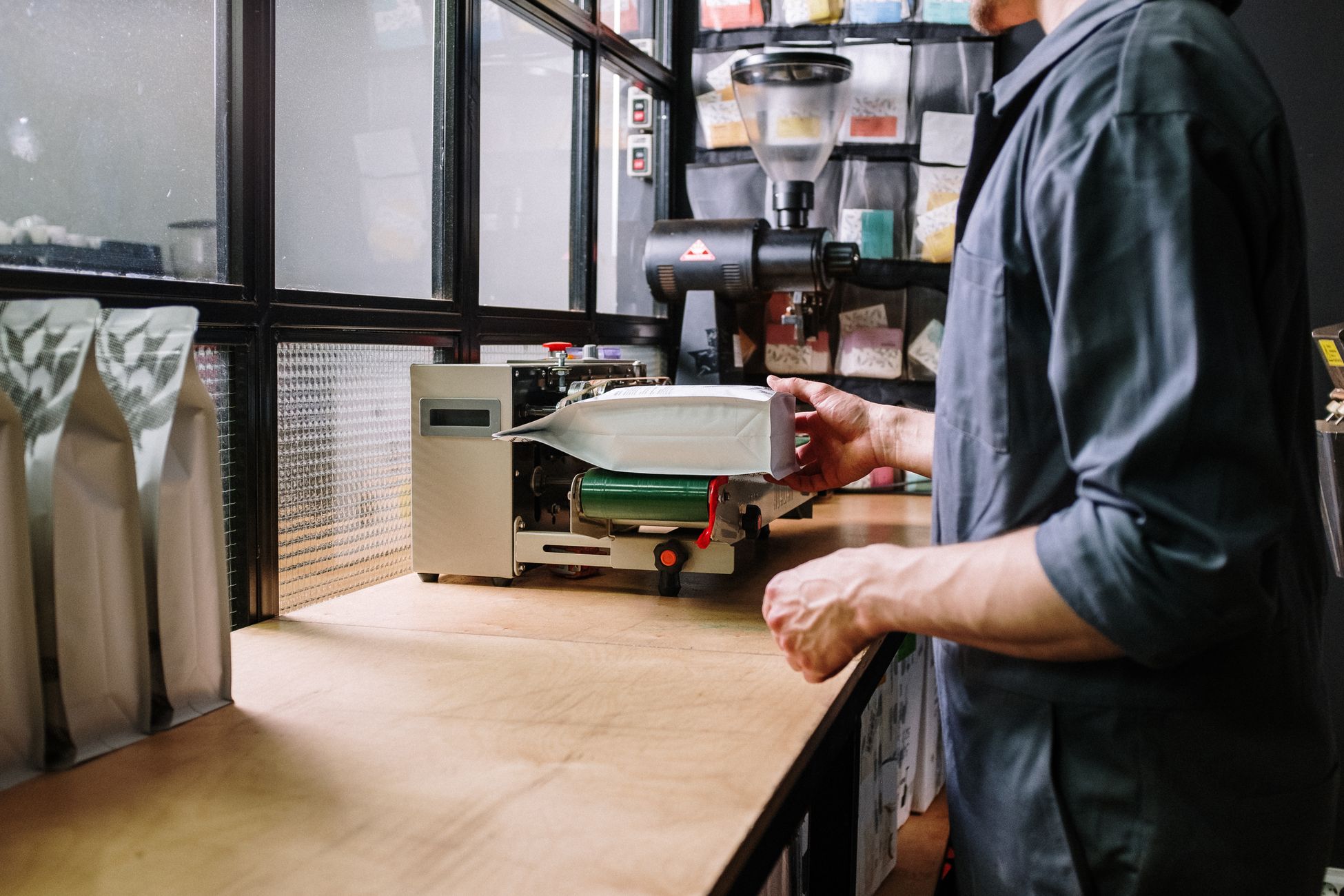
There is a small plastic disc on the front or side of most good coffee bags. Some people press it to smell the coffee through it, which is the best possible use of it. Most people never think about it at all. That disc is a one way degassing valve, and it is doing more to protect the coffee inside than the zipper, the foil, or the fold at the top.
If you understand what that valve is for, you also understand why some coffee arrives tasting alive and some arrives tasting like it has been sitting in a drawer. It is one of the clearest signals on the outside of a bag about how the roaster thinks.
Shop our freshest roasts and taste what a proper bag protects.
Roasted Coffee Is Still Working After It Cools
When coffee roasts, the chemistry inside the bean produces a large volume of carbon dioxide, and most of it stays trapped in the bean's cellular structure. The moment roasting ends, the bean starts releasing that gas. This is degassing, and it goes on for days.
The first day or two is dramatic. A freshly roasted whole bean coffee will push out enough CO2 to visibly inflate a sealed bag. Grind it and the release accelerates, because grinding opens up every one of those cells at once. That is exactly why fresh coffee blooms so vigorously when you pour water on it and why stale coffee barely reacts.
So a roaster has a problem. Seal the coffee immediately in an airtight bag and pressure builds until something gives. Leave the bag open or vented in both directions and oxygen walks right in.
What the Valve Solves
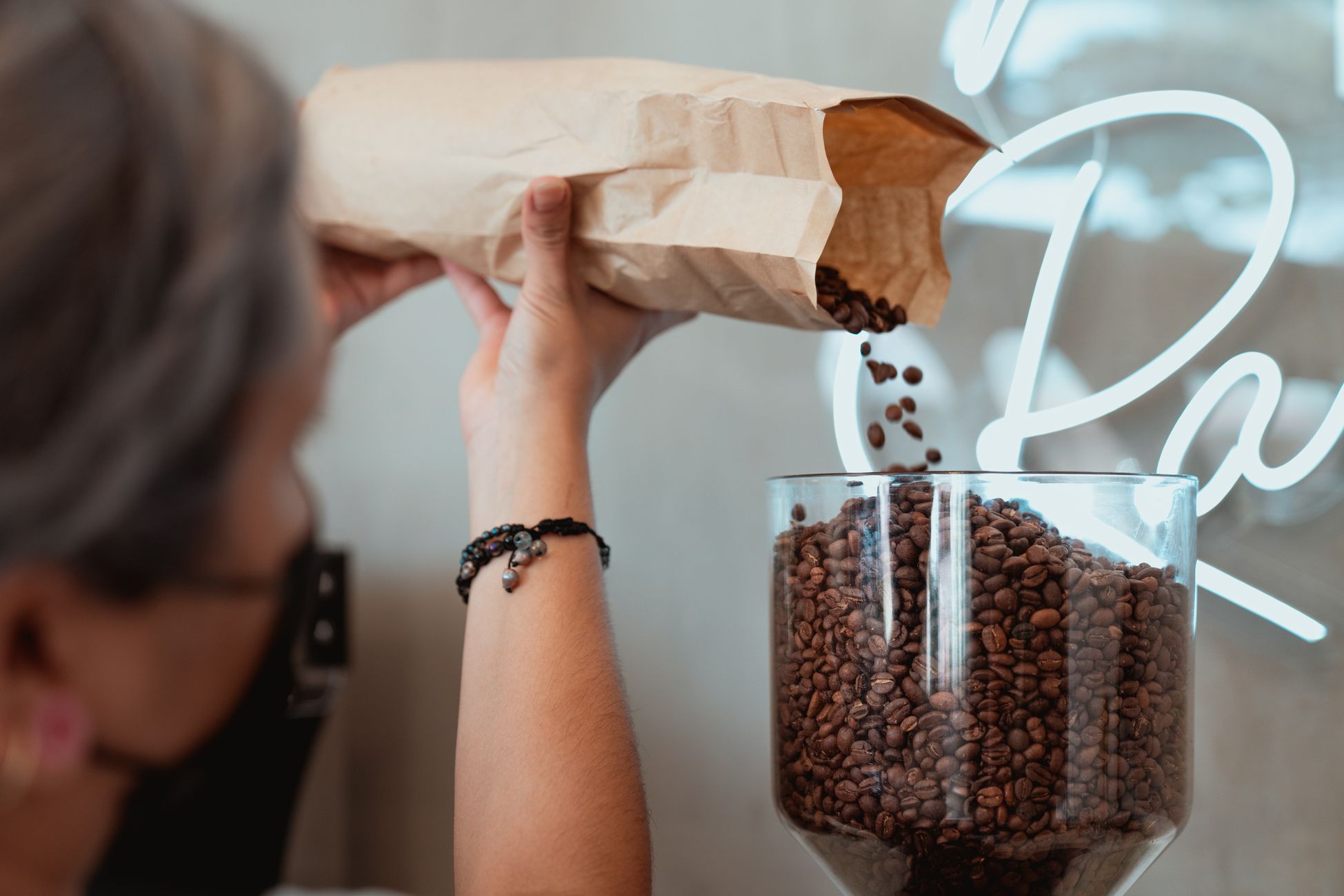
The one way valve is the answer to that problem, and the design is elegantly simple. It is a small chamber with a flexible membrane and usually a little food safe oil that seals the gap. When pressure inside the bag exceeds pressure outside, the membrane lifts and gas escapes. When pressure equalizes, the membrane seats back down and the seal closes.
Gas out. Nothing in.
That means the roaster can seal the coffee within minutes of it cooling, at peak freshness, without waiting for degassing to finish and without risking a burst bag. The CO2 the coffee produces actually works in your favor here, because as it fills the headspace it displaces oxygen. A bag with a working valve gradually becomes a low oxygen environment powered by the coffee itself.
Why Oxygen Is the Real Enemy
People blame time for stale coffee. Time is just the clock. Oxygen is what does the damage.
Coffee contains oils and aromatic compounds that are volatile and reactive. Exposed to oxygen, those oils oxidize and the aromatics escape. The result is the flat, cardboard, vaguely nutty sameness that describes every stale coffee regardless of how interesting it started out. The bright acidity goes first, then the sweetness, then any distinguishing origin character. What is left is generic brown.
Heat accelerates it. Light accelerates it. Moisture accelerates it. But oxygen is the one that has to be there for the reaction to happen at all, which is why controlling it is where all the packaging effort goes.
What a Bag Without a Valve Tells You
Now flip it around. A bag with no valve means one of a few things, and none of them are great news.
It might mean the coffee sat in bulk for days after roasting until it finished degassing, then got packed. That coffee is already well past its best window before it is even sealed. It might mean the bag is not truly airtight anyway, in which case oxygen has had free access the entire time. Or it might mean the coffee is pre ground and stale enough that there is no meaningful gas left to release, which is its own answer.
Some very high end packaging skips the valve by flushing the bag with nitrogen and sealing it under conditions that manage pressure differently. That exists, and it works. But it is rare, expensive, and usually announced on the packaging, because a roaster who invests in it wants you to know.
The default assumption when you see a plain sealed bag with no valve and no explanation is that freshness was not the priority.
Compare that to a bag roasted and sealed the same week.
Why the Zipper Is the Lesser Feature
Zippers are useful and they are also the part people overvalue. A resealable zipper helps after you open the bag, and only to a degree. Every time you open it, room air rushes in. The zipper does not remove that air, it just traps it in there with your coffee.
Worse, once you have opened the bag, the valve has nothing left to do. There is no more meaningful CO2 production to push oxygen out, and the pressure differential that operated the valve is gone. From that point forward the bag is a container, not a system.
That is why the practical advice about storage kicks in only after opening. Squeeze the air out before resealing. Keep the bag somewhere cool, dark, and dry. Buy a quantity you will finish in two or three weeks rather than a bulk bag you will nurse for two months. None of that is about the valve. It is about the fact that the valve's job ended when you broke the seal.
The Smell Test That Actually Works
Here is the one genuinely fun thing about the valve. Press the bag gently near it and sniff. You are smelling the gas the coffee is actively producing, which is about as direct a read on freshness as you can get without opening anything.
A fresh bag pushes out a strong, sweet, complex aroma with real intensity behind it. A bag that has been sitting gives you very little, and what you do get smells muted and flat. Do this in a shop with two bags side by side and the difference is not subtle. It is the fastest quality check available to you and it costs nothing.
You can also learn to read the bag's shape. A recently roasted whole bean bag has some firmness to it because gas is filling the headspace. A limp, deflated bag has either finished degassing long ago or is not sealing properly.
What This Means for How You Buy
The valve is a proxy. It tells you a roaster is packaging coffee at the point where it is at its best rather than waiting until it is convenient. Pair that with a roast date printed on the bag, not a best by date, and you have a reasonably reliable picture before you have tasted anything.
The pattern holds across price ranges too. Plenty of moderately priced coffee is packed properly, and plenty of expensive coffee sits in packaging that undoes the work that went into it. The valve does not tell you the coffee is good. It tells you somebody was paying attention to the part of the process that happens after the roast, which is the part most easily neglected.
For a bean that traveled across an ocean, got picked by hand at exactly the right ripeness, and got roasted by someone tracking temperature curves by the second, letting it die in the bag would be a strange place to give up. The little plastic disc is there so nobody does.
Find a coffee that arrives still working.
All images shown in this blog are sourced from pexels.com.