

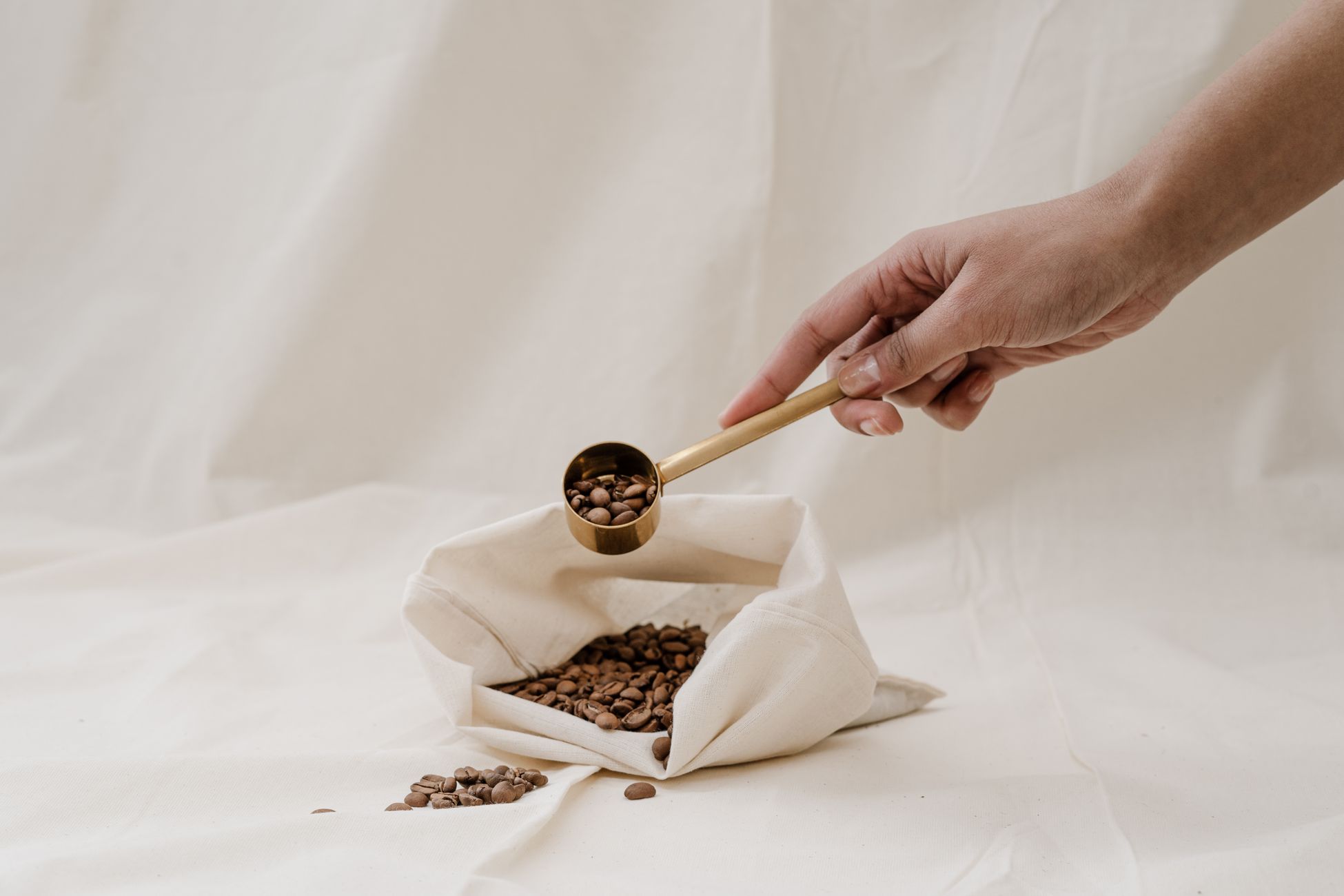
You dial in a new bag on a Monday. By Thursday it is perfect. Then two weeks later you are scooping out the bottom of the same bag, using the same grinder setting, the same water, the same everything, and the cup has quietly gotten worse. Flatter. Sometimes hollow. Sometimes bitter in a way it never was.
Most people blame themselves, or decide the coffee was not that good after all. But there are real, physical reasons the end of a bag behaves differently than the beginning, and once you know what they are, you can do something about them.
If you want to start from beans that are dated honestly so you can actually track where you are in a bag's life, take a look at our most popular coffees.
Every Time You Open the Bag, You Let Oxygen In
This is the big one, and it is cumulative.
Roasted coffee has an enemy, and it is oxygen. Oxidation attacks the aromatic compounds and the lipids in the bean. The aromatics are what give coffee its smell and most of what you perceive as flavor. The lipids carry a lot of the body and mouthfeel and also the fat soluble flavor compounds. Oxygen degrades both, steadily, from the moment the coffee is exposed.
A sealed bag with a one way valve is a decent environment. The valve lets carbon dioxide escape without letting air back in, and the coffee sits in a mostly carbon dioxide atmosphere of its own making. That is protective. Carbon dioxide displaces oxygen.
Then you open it. Air rushes in. You scoop out your dose, push the air out as best you can, seal it, and walk away. You just reset the clock a little. Do that fourteen mornings in a row and you have exposed the remaining coffee to fourteen doses of fresh oxygen, and each time there is less coffee in the bag and more empty volume for air to occupy.
That last point matters more than people expect. A nearly full bag has very little headspace. A nearly empty bag is mostly air by volume. So the coffee at the bottom is not just older, it is spending its final days in a much more oxygen rich environment than the coffee at the top ever did.

The Coffee at the Bottom Is Also Physically Different
Bags are not homogeneous, and gravity is the reason.
Whole beans vary in size and density even within a single roast batch. When you move a bag, ship it, set it on a counter, and pick it up every morning, the contents settle. Smaller and denser particles migrate downward through the gaps between larger beans. Lighter, larger, more brittle beans tend to stay higher.
The practical result is that the bottom of a bag often holds a slightly different population than the top. More small fragments. More of the dense pieces. And critically, more fines and broken bean material that accumulated during handling.
Those fines matter for extraction. They have enormous surface area relative to their mass, so they give up their solubles almost instantly. A dose with a higher proportion of fines will extract faster and can push into over extraction, which reads as bitter and dry, even at a grind setting that was perfect a week ago.
It also affects how your grinder behaves. Feeding a grinder a dose full of small dense fragments produces a slightly different particle distribution than feeding it uniform whole beans, which shifts your extraction again.
Degassing Runs Out
Fresh coffee is loaded with carbon dioxide, and that gas is doing work for you whether you notice it or not.
Early in a bag's life, the gas creates the bloom in a pour over, provides resistance in an espresso puck, and carries aromatics up into your nose as it escapes. It is part of the experience. As the coffee ages, that gas leaves for good.
By the end of a bag, especially one that has been open for two or three weeks, degassing is essentially over. The bloom shrinks to almost nothing. Espresso pucks offer less resistance and shots run faster at the same grind. The aromatic lift at the moment of brewing is weaker.
None of this is a defect. It is the normal arc of a bag. But it means the same setting produces a different extraction at day twenty five than it did at day eight, and if you are not adjusting, the cup drifts.
Browse our roasts and buy in sizes you will finish while they are still good

Moisture Moves In and Out
Coffee is hygroscopic. It exchanges moisture with the air around it.
Every time you open the bag in a humid kitchen, the beans pick up a little water. Every time you open it in dry winter air, they give a little up. Neither is good. Absorbed moisture accelerates staling and can make grinding inconsistent, because damp beans fracture differently than dry ones. Moisture loss changes bean density and how the coffee responds to heat during brewing.
If you store your coffee near the stove, near a kettle, or anywhere steam collects, this happens faster. Same if the bag lives next to a window in direct sun, where daily temperature swings drive moisture cycling.
The bottom of the bag has been through every one of those cycles. The top was consumed before most of them happened.
How Roast Style Affects the Fade
Not every coffee ages at the same rate, and roast level is the main variable.
Dark roasts have been taken far enough that the cellular structure is significantly broken down and oils have migrated to the surface. Surface oil is exposed oil, and exposed oil goes rancid comparatively fast. This is why very dark, shiny beans can taste noticeably stale within two weeks while a light roast from the same day still tastes fine.
Light and medium roasts hold their structure better. The oils are still largely inside the bean where the cell walls protect them. They fade, but more gradually.
Roasting method plays in as well. Evenly developed beans age more predictably than unevenly developed ones. In a drum roaster, contact with hot metal can develop bean surfaces further than their interiors, and scorched surface material degrades faster than properly developed material. Air roasting suspends the beans in hot air so heat arrives from every direction at once, producing more uniform development and carrying chaff out of the chamber rather than letting it burn against the beans. A batch that started uniform stays coherent longer as it ages, instead of turning into a mix of stale and fresh partway through the bag.
What to Actually Do About It
You cannot stop coffee from aging, but you can flatten the curve considerably.
Buy smaller bags more often. This is the single highest impact change. A twelve ounce bag you finish in twelve days will taste better across its entire life than a five pound bag you work through for two months, even if the five pound bag was cheaper per ounce. You are paying less for worse coffee most mornings.
Transfer to a proper container. A canister with a real gasket seal and a one way valve beats a folded over bag with a clip. Some have vacuum pumps that pull air out after each use. If you use a plain airtight jar, keep it appropriately sized so you are not storing a small amount of coffee in a large volume of air.
Store at stable room temperature, out of light, away from heat. Not the fridge. Refrigerators are humid, full of odors, and cause condensation every time you take beans in and out. The cold does not buy you enough to offset that.
Adjust as the bag ages. Expect to grind slightly finer toward the end to compensate for reduced degassing and faster flow. Expect to maybe increase your dose a touch as aromatics fade. Treating your settings as fixed for the life of a bag guarantees the cup drifts.
Shake the bag before dosing. It sounds trivial, but redistributing the settled fines and fragments gives you a more representative scoop than pulling straight from the bottom.

When It Is Time to Let Go
There is a point where adjustment stops helping. When the aroma out of the bag is faint, when the bloom barely rises, when the cup tastes papery or cardboard like, the coffee has crossed from aged into stale. No grind adjustment fixes that.
Most roasted coffee is genuinely good for about three to four weeks past roast when stored well, with lighter roasts often holding a bit longer and very dark roasts fading sooner. Past that, you are drinking a memory of what the coffee was.
The last cup from a bag will never quite match the fifth cup. That is chemistry, not failure. But the gap between them is largely in your hands. Buy for your actual consumption rate, store it properly, and stay willing to move your settings as the coffee moves, and the end of the bag can be genuinely close to the beginning.
Find a size that matches how much you actually drink
All images shown in this blog are sourced from pexels.com.