

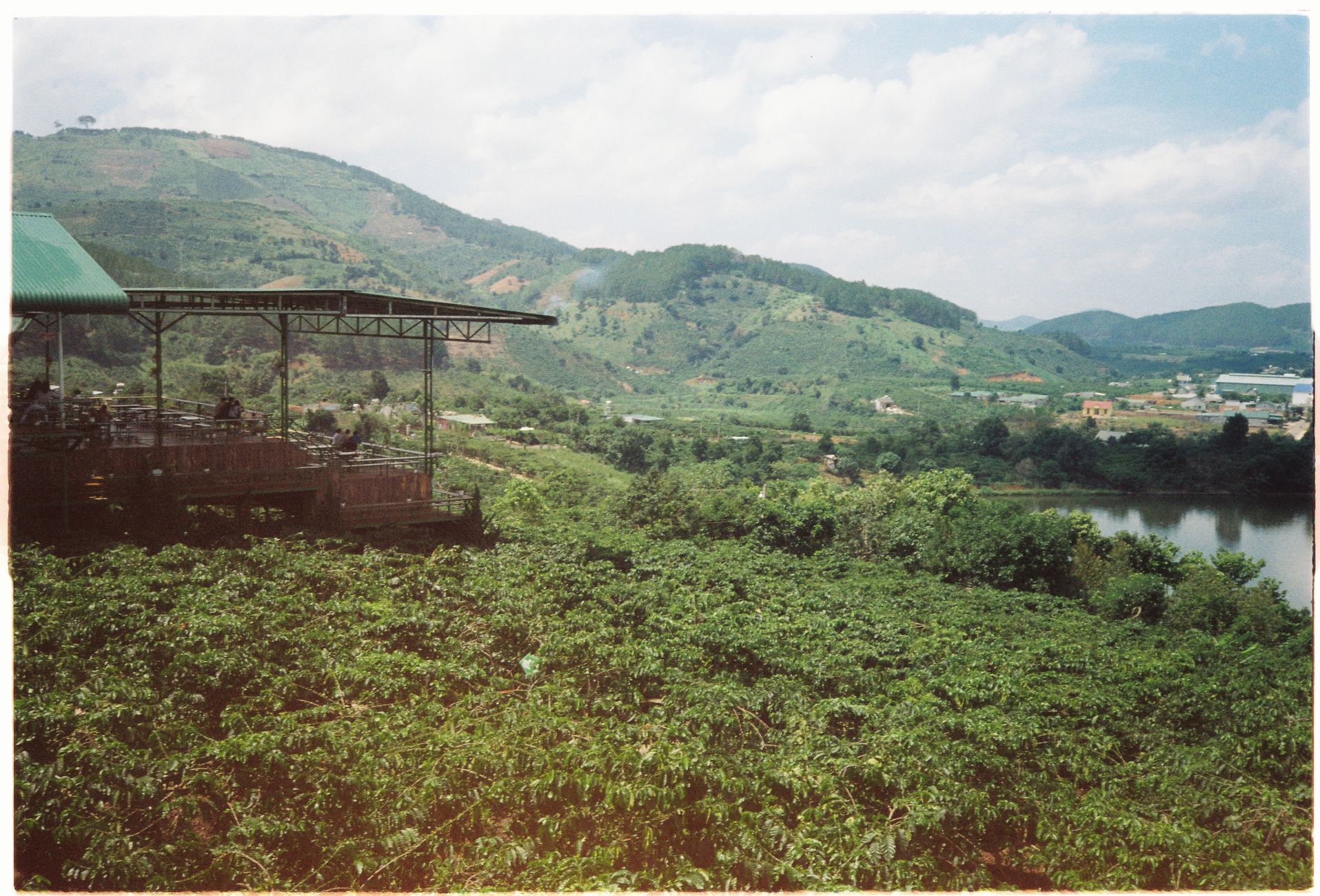
Coffee grows in a band around the equator, roughly between the Tropic of Cancer and the Tropic of Capricorn. That band is called the coffee belt, and every bag you have ever bought came from inside it.
The belt is not moving sideways. It is moving upward. Farms that produced excellent coffee at 1,200 meters thirty years ago are producing merely acceptable coffee today, and farmers who can afford to are buying land higher up the mountain. That shift is already changing what is available to buy, what it costs, and what it tastes like.
Drink well while the good lots are still around.
Why Altitude Was Always the Variable
Arabica is a fussy plant. It wants an average temperature somewhere between 18 and 22 degrees Celsius, roughly 64 to 72 Fahrenheit, with a reliable wet season and a reliable dry one.
Near the equator, that temperature range does not exist at sea level. It exists partway up a mountain. Temperature drops about 6.5 degrees Celsius for every thousand meters you climb, so altitude is how equatorial regions manufacture a temperate climate.
Altitude also does something to the coffee itself. Cooler nights slow the cherry's maturation, and a cherry that takes longer to ripen accumulates more sugars and more of the acids and aromatic precursors that survive roasting. The bean grows denser, which is why high grown coffee holds up to a longer, hotter roast without going flat.
That is why a bag says 1,800 meters and expects you to be impressed. Density, sugar, acidity, and complexity all correlate with elevation, and the relationship is real rather than marketing.
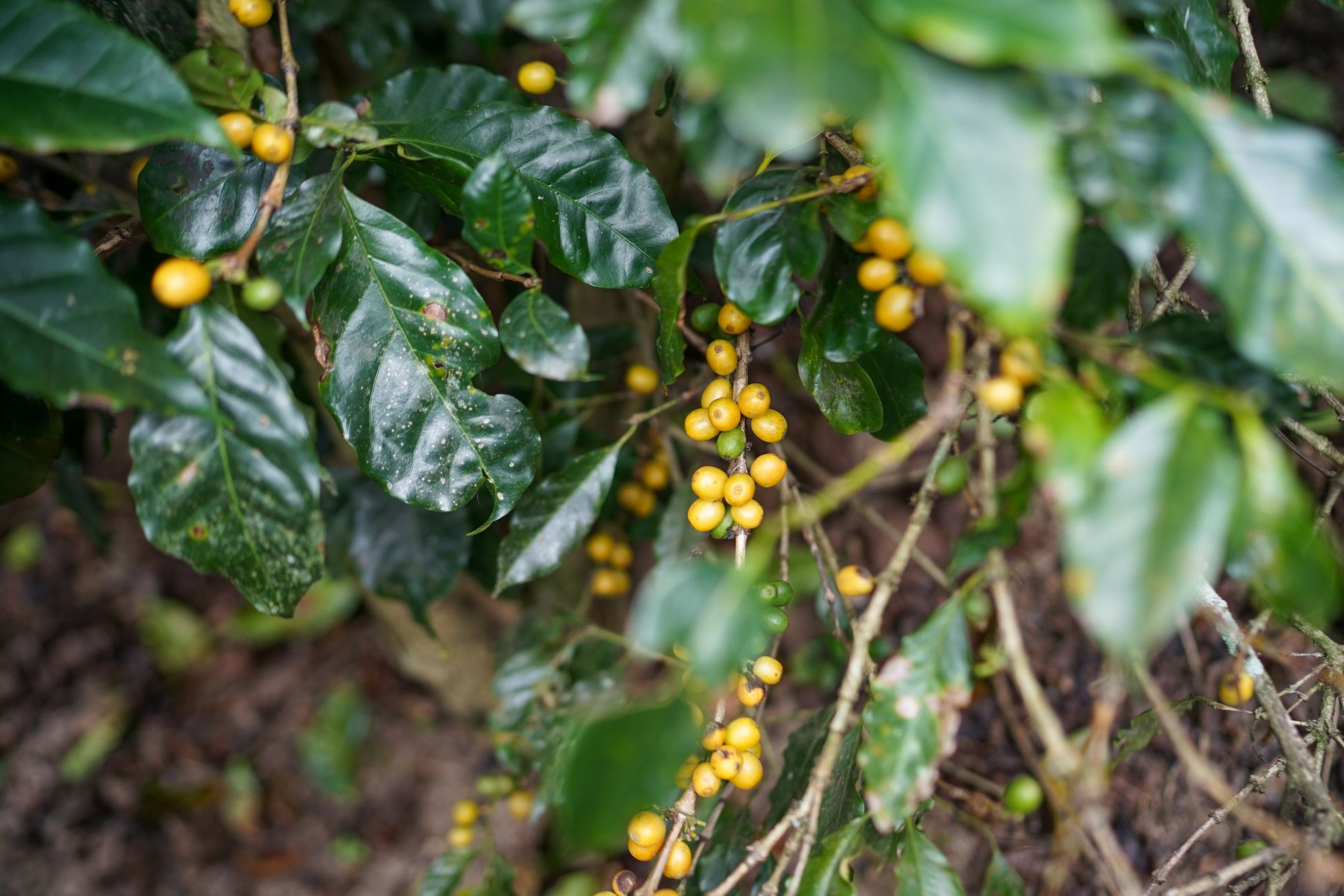
What Warming Does to That Arrangement
If the plant wants a specific temperature band and the whole mountain gets warmer, the band moves up.
The numbers vary by region and by model, but the general estimate is that the suitable zone shifts upward by roughly 100 to 170 meters for every degree Celsius of warming. Regions that have already warmed by a degree since the middle of the last century have already lost their lowest producing elevations, and the projections for the next few decades are considerably larger.
The most cited studies suggest that the land globally suitable for arabica could shrink by around half by 2050. Even the conservative versions of that estimate describe a major contraction.
The catch is that mountains are cones. Every hundred meters you climb, there is less land. Moving the belt up does not relocate the same acreage, it relocates a fraction of it. And above a certain point you run out of mountain entirely, or you hit forest that is legally protected, or should be.
What Actually Goes Wrong on a Warmer Farm
It is not simply that hot coffee plants die. The failures are more specific and more annoying.
Ripening accelerates. A cherry that develops too fast has less time to build sugar, and the resulting coffee is flatter and less sweet. This happens well before any plant is in danger, which means quality declines long before yield does.
Flowering gets erratic. Coffee flowers in response to rain after a dry period. When the dry season becomes unpredictable, trees flower multiple times in a season, which produces cherries at several different stages of ripeness on the same branch at the same time. That makes selective picking far more expensive and drives up the number of underripe cherries in a lot.
Pests move up with the temperature. The coffee berry borer, historically limited by cold at higher elevations, now survives where it previously could not. Coffee leaf rust behaves the same way.
And drought stress at the wrong moment causes cherries to drop before they mature.
Support farms doing this work well.

What This Means for the Bag on Your Counter
Several things are already visible in the market.
Prices have moved and will keep moving. Specialty coffee has always cost more than commodity coffee, and the gap is widening because the specific conditions that produce specialty coffee are exactly the conditions getting scarcer.
Origin availability is becoming less predictable. A farm that was a reliable annual purchase for a roaster can have a bad year that has nothing to do with anything the farmer did. That is why the coffee you loved last year sometimes does not come back, and why blends get rebuilt more often than they used to.
Varietals are shifting. There is serious work on hybrids that keep arabica cup quality while tolerating heat and resisting rust. Some of these are excellent. Some are not yet. You will see more unfamiliar varietal names on bags over the next decade, and they are not a gimmick.
Robusta is being reconsidered. It tolerates heat and lower elevation far better than arabica, and fine robusta, grown and processed with specialty care, is a genuinely interesting category rather than the filler it has historically been.
The Regions Feeling It First
The effect is not evenly distributed, and the places most exposed are often the ones with the least room to move.
Brazil grows a large share of the world's coffee at relatively low elevation on gently rolling land, which means there is no mountain to climb. A frost or a drought there moves the global price, and the last few years have made that lesson expensive for everyone.
Central America has elevation available but also has a rust problem that arrived with warming and never fully left. Farms there have already replanted once and some are facing a second round.
Ethiopia has both altitude and enormous genetic diversity in its wild coffee populations, which is a real long term advantage, since resistance and heat tolerance likely already exist in those populations and just need finding.
Vietnam grows mostly robusta at low elevation, and robusta's heat tolerance is exactly why it is often the first thing planted where arabica stops working.
What Farmers Are Actually Doing
Shade trees are the most common adaptation and one of the most effective. A canopy over a coffee plot lowers the temperature underneath it by several degrees, buffers moisture, and slows ripening back toward where it should be. It also costs land that could be planted with coffee, so it is a real economic tradeoff.
Some are replanting with rust resistant and heat tolerant varietals, which means several years without income from those plots while the new trees mature.
Some are moving. Buying higher land is only possible if it is available, if it is legal, and if the money exists.
And some are leaving coffee entirely, which is the quiet part of this story. Coffee farming is already thin margin work, and adaptation costs money that a smallholder does not necessarily have.

Why This Is Worth Knowing as a Drinker
None of this makes coffee a lost cause. Good coffee is still being grown and it will keep being grown. But the economics of it are changing under your feet, and the response of paying as little as possible for coffee makes the problem worse rather than better.
Farms that can adapt are the ones earning enough to invest in adapting. A farmer selling at the commodity price has no capital for shade trees or replanting, and their most rational decision is to grow something else. When a coffee costs more because a roaster paid a price that lets the farm keep operating, that premium is buying the continued existence of the thing you like.
That is the practical version of caring about this. Buy from roasters who tell you where the coffee came from and what they paid to get it. Drink less of it and better, since one cup you actually taste beats three you do not. And expect the map to keep moving, because it will.
The coffee belt is climbing. What ends up in your cup in ten years depends a great deal on which farms are still standing when it gets there.
Buy coffee that pays its way back to the farm.
All images shown in this blog are sourced from pexels.com.