


There is a small indignity familiar to anyone who has invested in home coffee gear. You buy the grinder, you get the scale, you learn the pour, you dial it in over weeks. Then you order the plain drip coffee at a good cafe, the one that comes out of a big machine into a big carafe and gets poured in eight seconds, and it is better than yours.
It feels like it should not be. Batch brew is the least glamorous method in a specialty shop, made in bulk, sitting in a dispenser. But there are real reasons it wins, and almost all of them are things you can borrow.
Start with the same thing they start with.
Batch Brewers Are Better Machines Than People Assume
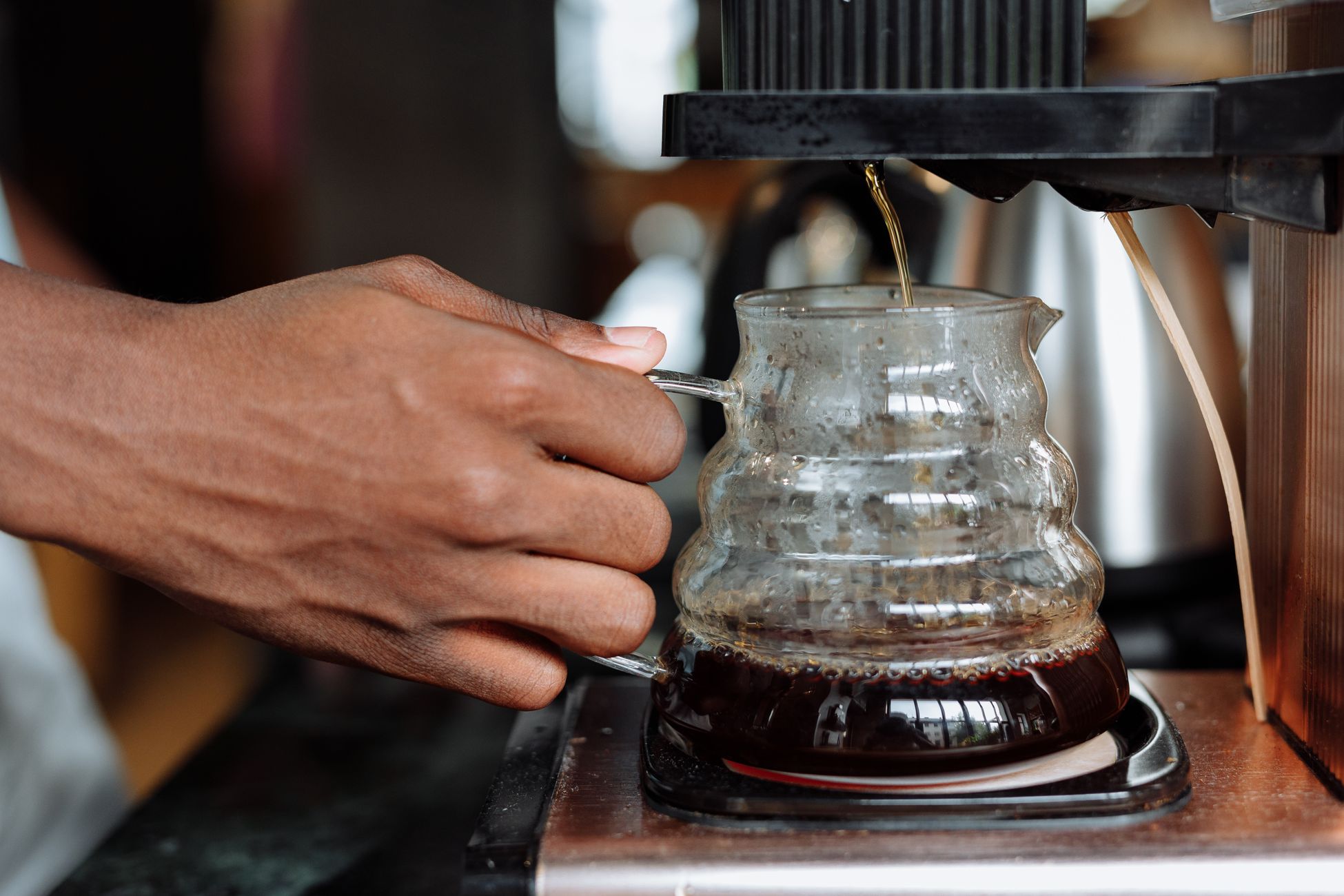
The commercial brewers a serious cafe uses are not the same category of object as a supermarket drip machine, and the differences are all in the places that matter.
They hold water temperature within a tight band throughout the brew, rather than starting hot and sagging. Cheap drip machines routinely brew at temperatures well below the target range, which is a major reason home drip has a reputation for weak, sour coffee.
They deliver water across the whole bed evenly, through a spray head designed for the job, rather than dribbling from a single point and channeling straight through the middle.
They can do a proper pre wet, pausing after the initial soak so the coffee blooms and degasses before the main pour, which improves evenness. And they control flow rate deliberately across the brew instead of just dumping water as fast as it heats.
None of that is exotic. It is just competent execution of the same variables you manage by hand, done identically every single time.
Volume Is a Genuine Advantage
This is the one that is hardest to replicate and easiest to overlook. Larger brews are simply easier to get right than small ones.
A big bed of coffee holds heat much better than a small one. When you brew a single cup, the thermal mass of the coffee and the brewer is tiny relative to the surrounding air, and the temperature falls through the brew. A two liter batch stays close to target from start to finish without any effort.
A deeper bed also distributes water more evenly and is more forgiving of small errors in pour technique or grind consistency. The margin for error is wider, so the average result is better even when nothing special is done.
This is why the same person can make an excellent full carafe and an inconsistent single cup. It is not a skill problem. Small brews are harder.
The Grinder Is Doing a Lot of Work
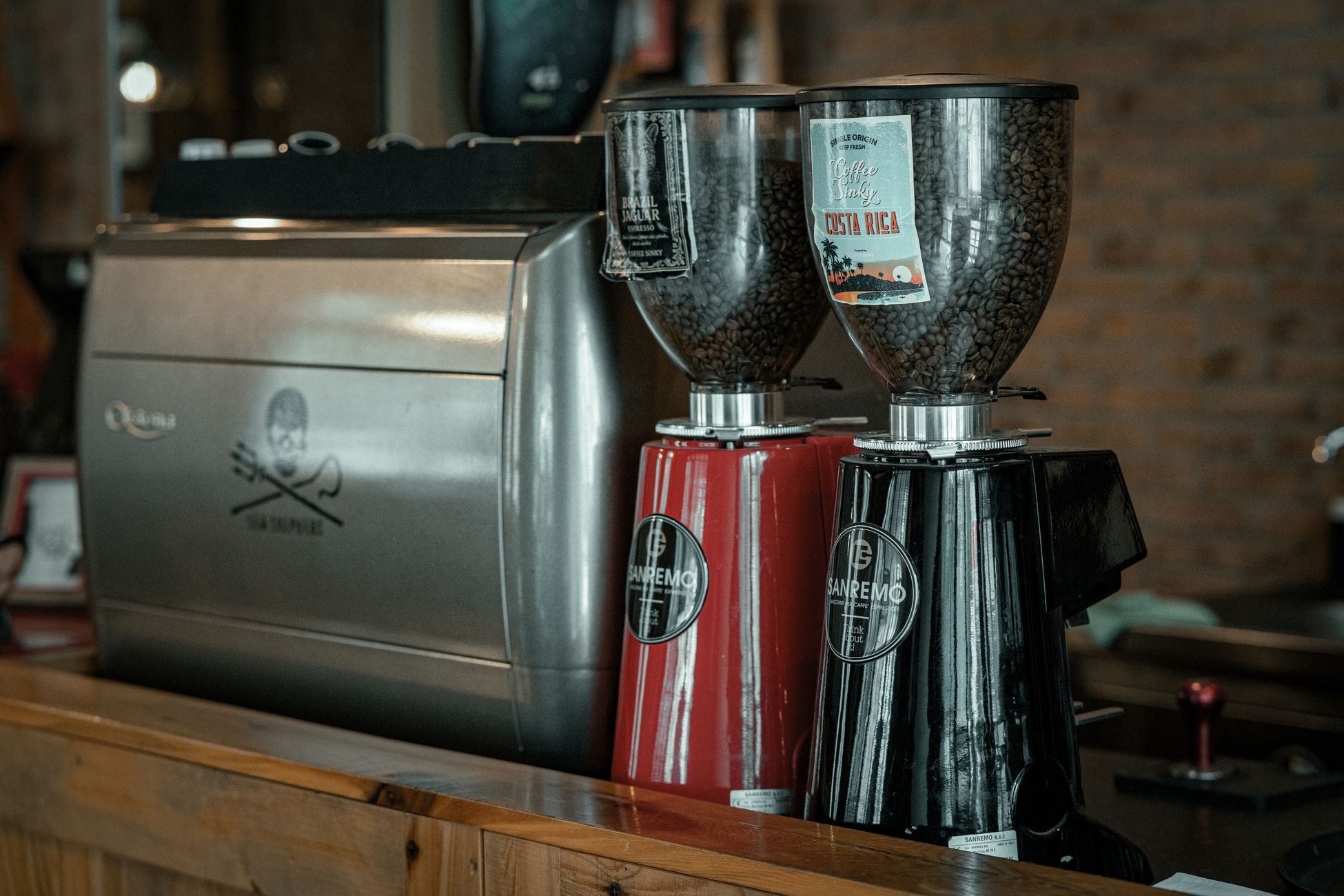
A cafe's batch grinder is a commercial machine with large, flat, well maintained burrs, dialed in for one recipe and used constantly.
Grind consistency, meaning how narrow the spread of particle sizes is, has an outsized effect on extraction. A wide spread means fines that over extract into bitterness sitting alongside boulders that under extract into sourness, and the cup averages out to something muddled. Narrow the spread and the whole extraction becomes cleaner and sweeter.
Good home grinders have closed a lot of this gap in recent years and a decent conical or flat burr grinder gets you most of the way. But an entry level blade grinder, or a burr grinder that has not been cleaned in a year, is producing a much messier particle distribution than the machine at the cafe, and that shows up in every cup.
Buy coffee good enough to expose the difference.
Their Coffee Is Fresher Than Yours in the Way That Counts
A cafe goes through green coffee and roasted coffee fast. The bag they are brewing from was probably opened that morning or the day before, and it will be finished before the week is out.
Your bag sits open on the counter for two or three weeks. Every day it loses a little more. The coffee at day eighteen is a different product than it was at day four, and if your reference point for how a coffee tastes is formed halfway through the bag, you are comparing your average against their best.
They also almost certainly dial in the batch each morning, tasting it and adjusting the grind based on that day's result rather than assuming yesterday's setting still applies. Coffee changes as it ages off the roast date, and a setting that was correct last week is not correct now.
Water Is the Invisible Variable
Serious cafes filter and often remineralize their water to a specification. They do this because water chemistry has a large effect on extraction and because it protects their equipment.
Most home brewers use whatever comes out of the tap. Depending on where you live, that water might be very hard, very soft, or heavily chlorinated, and every one of those produces a measurably different cup from the same beans.
If you have never experimented here, it is the single largest improvement available for the least money. Try the same coffee brewed with your tap water and with a bottled water that has moderate mineral content and see how far apart they land.
What You Can Actually Take Home
Most of the cafe advantage is reproducible. The parts that are not, mainly the commercial brewer and the daily turnover of beans, can be worked around.
Brew bigger. If you drink two cups, brew two cups at once rather than one at a time. Larger batches are more thermally stable and more forgiving. A carafe you finish within thirty minutes is fine.
Weigh everything. A scale removes the largest source of inconsistency in home brewing. Sixty grams of coffee per liter of water is a solid starting ratio.
Fix your water before you fix your gear. Filtered or appropriately mineralized water often does more than a grinder upgrade.
Preheat the brewer and the vessel. Cold ceramic and glass steal a surprising amount of heat from a small brew.
Buy smaller bags more often. Two weeks of coffee at a time keeps you inside the window where it is at its best.
Taste and adjust rather than setting and forgetting. If the cup is sour, grind finer. If it is bitter and heavy, grind coarser. Do this once a week rather than once a year.
The Uncomfortable Conclusion
The good batch brew is not beating you because it is more sophisticated. It is beating you because every variable is controlled, every day, by someone who tasted it that morning and adjusted.
That is available to you. It costs a scale, some attention, and the willingness to stop treating your grind setting as permanent. The gear is rarely the limiting factor once you are past the entry level, and the last real gap is usually the freshness of the bag and the consistency of the routine.
Which is a much cheaper problem to solve than a new machine.
Get a bag fresh enough to make the routine worth it.
All images shown in this blog are sourced from pexels.com.