

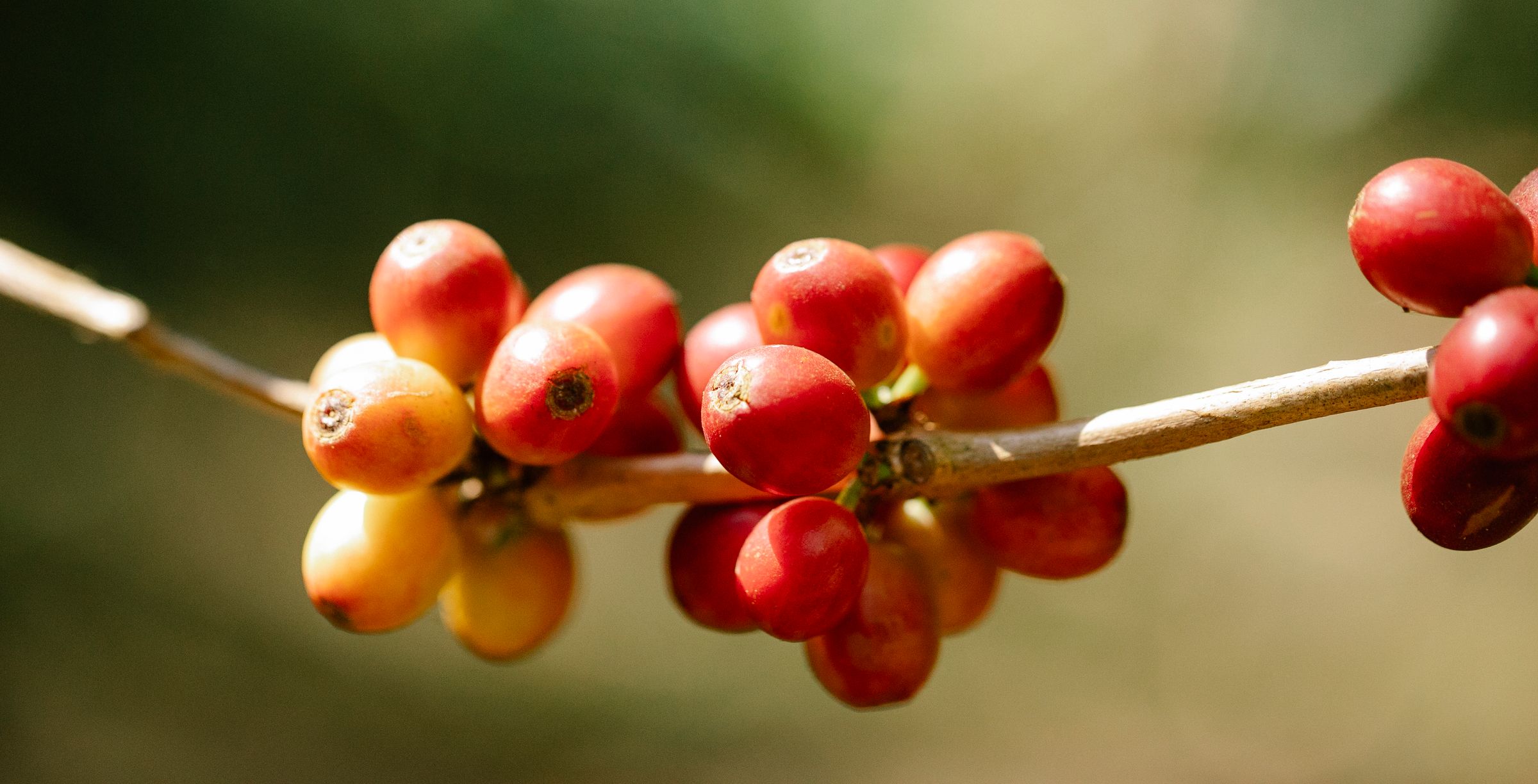
Pour a cup of Sumatran coffee next to a Kenyan and they barely seem related. The Kenyan is bright, juicy, almost sharp. The Sumatran is dark and low and heavy, with notes people reach for words like cedar, forest floor, tobacco, and dried herbs to describe. Some drinkers love it immediately. Others taste it once and decide something has gone wrong with the coffee.
Nothing has gone wrong. That flavor is the direct, traceable result of a processing method used almost nowhere else on earth, and once you understand what happens to the bean before it ever reaches a roaster, the cup makes complete sense.
Explore our current lineup and taste the difference processing makes.
The method is called wet hulling, or giling basah in Indonesian. It is not a variation on washed processing. It is its own thing, and it changes the bean physically in ways you can see with your eyes before you ever taste it.
What Normally Happens to a Coffee Bean After Picking
To understand why wet hulling is unusual, you need the standard version first.
A coffee cherry gets picked. The fruit and skin come off, either by machine with water in washed processing or by drying the whole cherry in natural processing. Whatever the route, the bean ends up wrapped in a papery layer called parchment, and it sits in that parchment while it dries slowly down to about 10 to 12 percent moisture. That drying takes anywhere from a week to a month depending on climate and method.
The parchment matters. It is a protective shell. The bean rests inside it, stable and shielded, sometimes for months in storage, and only gets hulled off shortly before export. The bean that comes out is dense, uniform, and a pale blue green or jade color.
That is the standard. Sumatra does something else.

What Wet Hulling Actually Does
In much of Sumatra, particularly around Lake Toba, Aceh, and Mandheling, coffee is grown by smallholders on small plots, often less than two hectares. Rain falls most of the year. Humidity sits high. There is no long stretch of reliable dry weather to lean on, and most farmers need to sell quickly rather than sit on inventory for a month.
So the process gets compressed. The cherry is pulped, fermented briefly, washed, and then dried only partway, down to roughly 30 to 50 percent moisture instead of 11. At that point, while the bean is still soft and swollen with water, the parchment is stripped off.
That is the whole trick, and it is why the method is called wet hulling. The protective layer comes off early, while the bean is still wet and pliable.
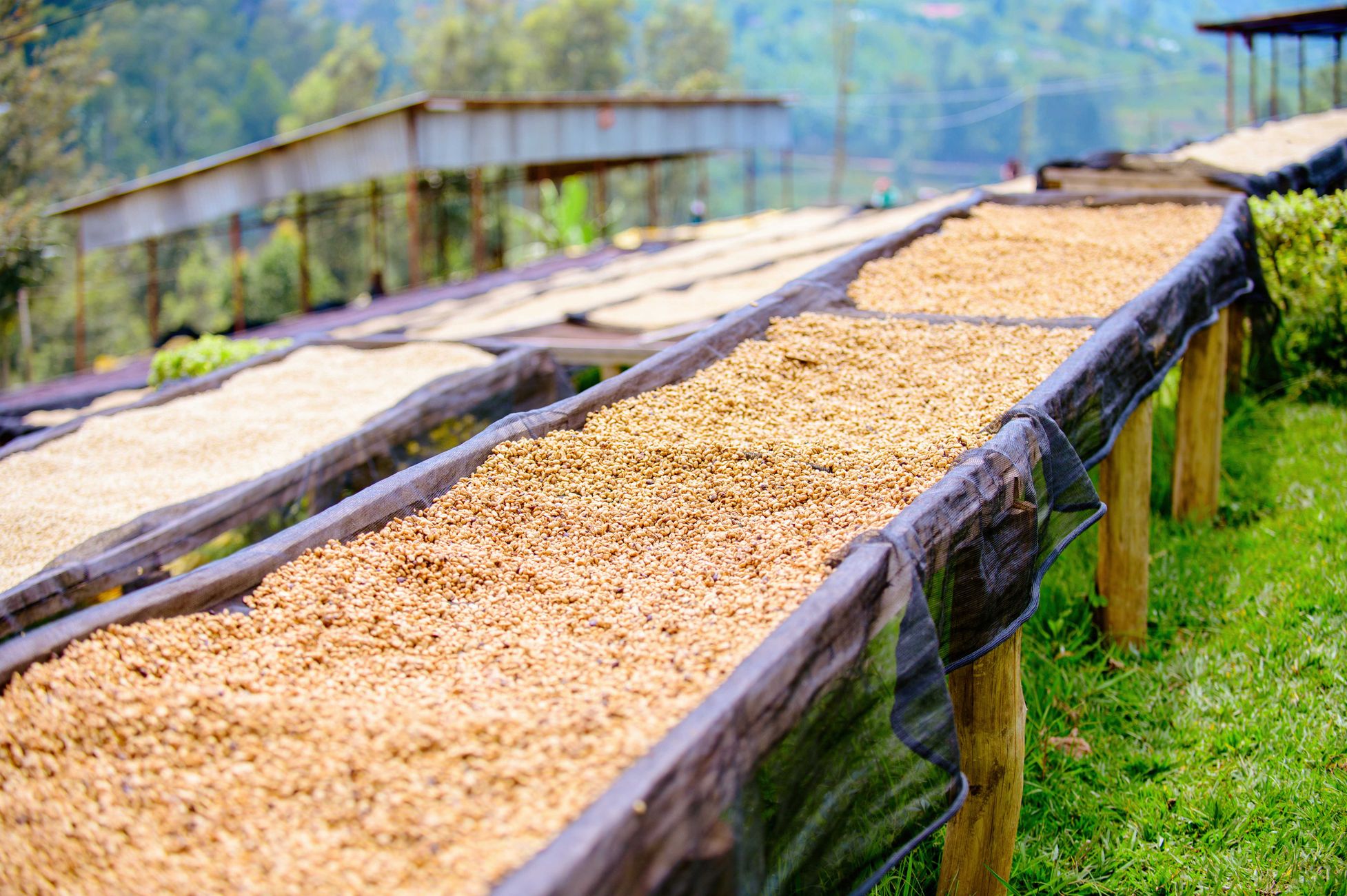
What happens next is the interesting part. The naked bean, still soft, still holding a lot of moisture, continues drying in the open. It sits on patios, on tarps, sometimes on the side of a road. It is exposed directly to air, humidity, microbes, and whatever else is around it, for however long it takes to reach a stable moisture content in a climate that is actively working against drying.
You Can See It Before You Taste It
Hull a bean while it is soft and it deforms. Green Sumatran coffee has a distinctive look that green buyers recognize instantly. The beans are often a deep blue green rather than jade, they are frequently cracked or split, and the edges get pushed out into a shape people call the hippo foot or the crab claw.
They are also less uniform than washed coffees from Central America. Bean size varies, color varies, and defect rates run higher because so much of the process happens outside a controlled environment. Sorting matters enormously with these coffees, which is one reason quality varies so much between two bags both labeled Sumatra.
The physical damage is not cosmetic. A cracked, deformed, unevenly dense bean roasts differently. It absorbs heat differently. Roasters who work with Sumatra regularly adjust their approach specifically because the bean does not behave like a washed Colombian in the drum.
Where the Earthiness Comes From
Here is the part most explanations skip.
The flavors people call earthy, musty, herbal, or woody come from what happens during that extended, exposed, high moisture drying phase. A bean sitting at 30 percent moisture in humid open air is a hospitable environment. Microbial activity continues well past the point where it would have stopped in a normally dried coffee. The bean also absorbs volatile compounds from its surroundings, because there is no parchment layer standing between it and the world.
The result is a flavor profile that is genuinely different in kind, not just in degree. Acidity drops way down, because the acids that give a washed coffee its brightness get consumed or transformed. Body climbs way up, thick and syrupy in the mouth. And in place of fruit you get depth: cedar, leather, dried tobacco, baking spice, sometimes a savory quality that edges toward soy or mushroom.
Whether that reads as complex or as dirty depends on execution. Done carefully, with clean fermentation and attentive sorting, a Sumatran coffee is deep, sweet, and structured, with an almost chocolate weight underneath the herbal notes. Done carelessly, the same process produces mold, mustiness, and a flat sourness that has nothing to recommend it.
That gap is wider in Sumatra than in almost any other origin, and it is the single biggest reason to buy Sumatran coffee from someone who actually tastes what they buy.
Shop coffees we selected by cupping, not by catalog description.
Why Farmers Do It This Way
It would be easy to read all this as a compromise, a lesser method used because the good one is unavailable. That is partly true and partly unfair.
The climate reason is real. You cannot slow dry parchment coffee for three weeks in a place where it rains most afternoons. The coffee would spoil.
The economic reason is just as real. Smallholders in Sumatra typically sell to local collectors within days of harvest. Wet hulling gets the coffee to a sellable state fast, which means the farmer gets paid fast. Asking a farmer with two hectares and no cash reserve to hold inventory for a month so a distant buyer gets a cleaner cup is asking them to absorb a risk they cannot afford.
And there is a market reason. People want this flavor. Sumatra built a global reputation on exactly the profile wet hulling produces. Buyers who go to Sumatra are usually going for that heavy, earthy, low acid cup. Producing a clean washed coffee there would mean competing directly with origins better equipped for it, and losing the one thing that makes Sumatran coffee distinctive.
How to Brew It Well
Sumatran coffee rewards a different approach than a bright African coffee does.
Body is the strength here, so use a method that keeps it. A French press or a metal filter lets the oils and fines through and plays directly into what the coffee does best. A paper filter pour over strips some of that weight out, and while it produces a cleaner cup, it also removes part of the reason you bought the coffee.
Go slightly coarser than you would with a lighter coffee and keep your water a touch below boiling, around 200 to 203 degrees Fahrenheit. These coffees are typically roasted a bit past the light end, and pushing hot water hard through an already developed roast is a fast route to bitterness.
Ratio matters too. Sumatran coffee is dense in flavor, and going too strong turns depth into sludge. Start at 1 to 16 and adjust from there.
It also handles milk unusually well. The low acidity means it will not fight dairy or oat milk, and the heavy body survives dilution better than a delicate washed coffee.

Who Should Actually Buy It
If you like bright, tea like, fruit forward coffee, Sumatra is probably not going to convert you, and there is no reason it should.
But if you like a cup with weight to it, if you drink coffee in the evening and want something that feels substantial, if you take milk and want the coffee to still be the loudest thing in the cup, this is one of the most distinctive coffees available anywhere. It is also a genuinely useful reference point. Tasting a well made Sumatran next to a washed Ethiopian teaches you more about what processing does than any article can, because the beans came from the same plant species and ended up in completely different places.
That is the real lesson underneath all of it. Origin gets most of the attention on the bag, but the decisions made in the week after picking shape the cup at least as much. Sumatra is the clearest proof of that anywhere in coffee.
All images shown in this blog are sourced from pexels.com.