

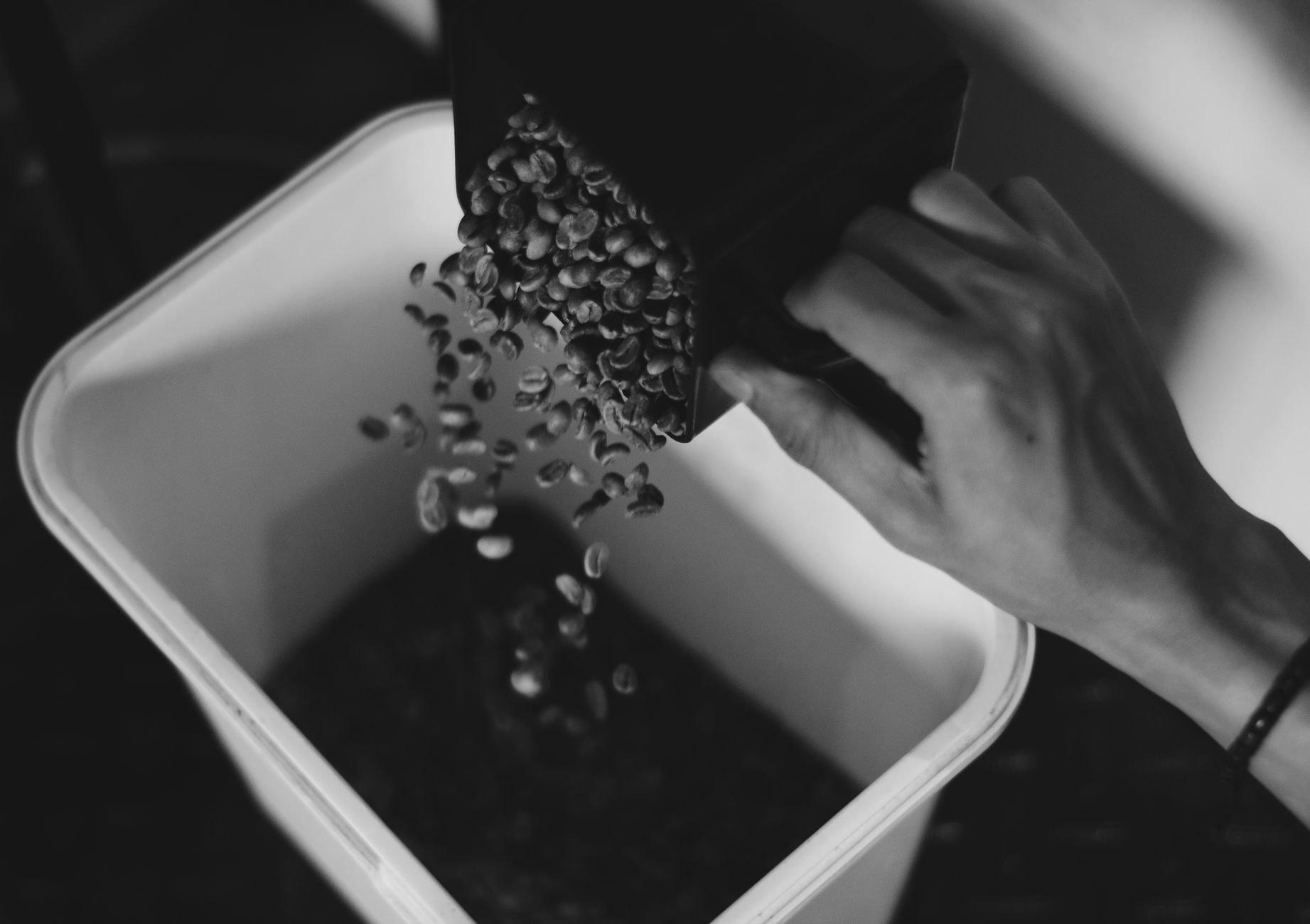
Every blend involves a decision that never appears on the bag, and it happens before a single bean gets hot.
The roaster has three or four component coffees and has to choose between two approaches. Combine the green coffee first and roast it all together as one batch. Or roast each component separately, each to its own profile, and combine them afterward.
The industry calls these pre roast blending and post roast blending. They produce genuinely different coffee from identical inputs, they suit different situations, and there are good roasters who feel strongly in both directions. It is one of the more interesting arguments in coffee and almost nobody outside the trade knows it is happening.
Try a blend somebody thought about carefully.
Pre Roast Blending, and Why It Is the Default
Pre roast blending, also called blending green, is simple. Weigh out the components, mix them, load the whole thing into the roaster, and roast it as a single batch.
The advantages are mostly operational and they are substantial. It is one roast instead of three or four, which means less machine time, less labor, and less risk of the mistakes that come with handling more batches. Your production planning is simpler. You can roast a blend in the same batch size as any single origin instead of doing several small batches and combining.
There is also a quality argument, and it is not just an excuse for convenience. Roasting the components together produces genuinely uniform coffee. Every bean in the bag has experienced the same profile, so the color is even and the degassing state is identical across the whole batch. Roasters describe the components as having married, which is imprecise language for a real effect: the coffee behaves as one thing rather than as several things sharing a bag.
That matters most in a grinder. More on that shortly, because it is the strongest argument for pre blending and the one people underrate.
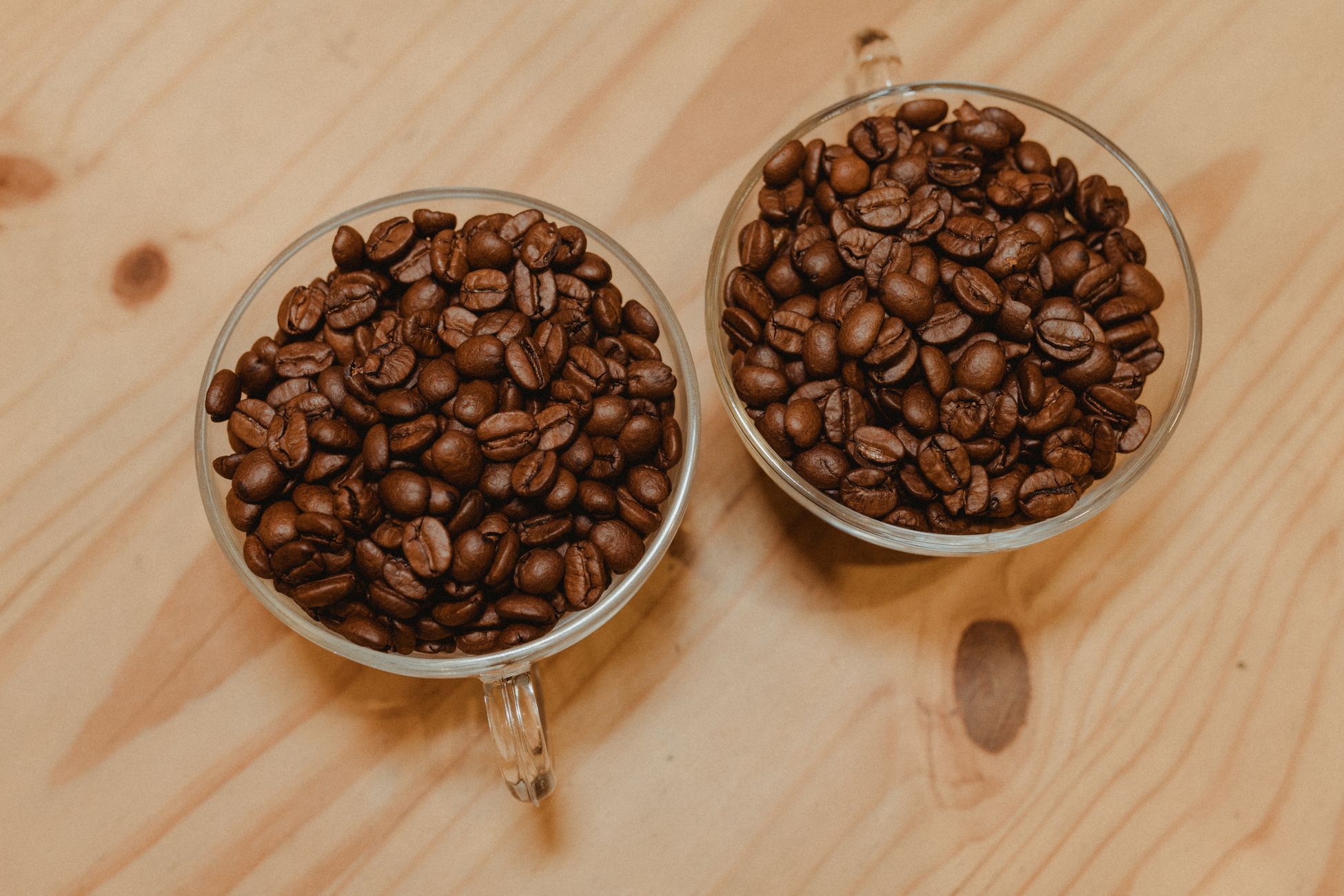
The Physics Problem With Roasting Everything Together
Here is the objection, and it is a serious one.
Different coffees want different roasts, and not as a matter of taste preference. As a matter of heat transfer.
A dense, high grown washed Kenyan and a soft, low grown Brazilian have different densities, different moisture contents, different bean sizes, and different sugar compositions. They absorb heat at different rates and they reach first crack at different times under identical conditions.
Put both in one drum and apply one profile, and you have a problem with no solution inside that batch. First crack does not arrive as a clean event, it arrives as a scattered series of pops as the different components get there at their own pace. Whatever moment the roaster chooses to drop the batch, part of it is wrong. The dense component may be underdeveloped, contributing sourness and a dry, grassy edge. The soft component may be pushed past where it wanted to stop, contributing flat roast notes and losing its sweetness.
Those two errors do not cancel out. They both end up in your grinder, and the cup is the sum of them. This is the technical case against pre blending, and it is strongest exactly when a blend combines coffees that are very different from each other, which is often why someone built the blend in the first place.
Post Roast Blending, and What It Buys
Post roast blending, sometimes called blending after the roast or single roasting, treats each component as its own project. The Brazilian gets roasted to the profile that makes the Brazilian taste best. The Ethiopian gets its own profile. Then they get weighed and combined.
The control this gives you is the entire point, and it extends past simply avoiding under and over development. You can roast components to different levels on purpose, as a compositional decision.
Take a common espresso blend structure. You want body and chocolate sweetness as a base, plus brightness and floral aromatics on top. Post roast blending lets you take the Brazilian a little further into development to build body and caramelized sweetness, while stopping the Ethiopian earlier to preserve the delicate floral compounds that a longer roast would destroy. Both components arrive at their best version, doing the job you assigned them.
You cannot do that in one drum. In a pre blend, every component gets the same treatment, so you are always choosing a compromise profile and hoping it flatters everything.
Post roast blending also makes iteration much easier. Once components are roasted and stored separately, you can adjust ratios by weighing differently, tasting, and adjusting again the same afternoon. Changing a pre blend ratio means roasting a whole new batch to try it.
What Post Roast Blending Costs
It is not free, and the costs are why most volume production does not work this way.
Labor and machine time. Four components means four roasts, and often four small roasts, since you need less of each. Small batches are less efficient and, in many machines, harder to roast well because there is less thermal mass to stabilize the roast.
Batch size floors. Most roasters have a minimum viable batch below which the machine cannot control the roast properly. If a component is only eight percent of a blend, roasting the right proportional amount may be below that floor, which forces you to roast more than you need and hold the surplus.
Inventory complexity. You are now storing roasted components, each with its own roast date, in addition to green coffee. Roasted coffee is on a clock, so that inventory has to move.
Ratio errors. Every combining step is an opportunity to weigh something wrong, and a blend that is ten percent off is a blend that does not taste like it should. Pre blending has one weighing step at the start. Post blending has weighing at both ends.
Degassing mismatch. If your components were roasted on different days, they are at different points in their degassing curve when they get combined. For espresso this genuinely matters, since carbon dioxide content affects how a shot flows and how the crema behaves. Careful operations roast components close together to avoid this.
Find a bag where the roaster made deliberate choices.
The Grinder Argument, Which Is the Best Case for Pre Blending
This is the part that convinces people who assumed post roast blending was simply the better method.
Roast level changes a bean's physical properties. Darker roasted coffee is more porous, more brittle, and less dense. Lighter roasted coffee is harder and denser. Those differences change how a bean fractures in a grinder.
Put a light roasted component and a dark roasted component through the same burr set at the same setting, and they do not produce the same particle size distribution. The brittle darker beans shatter more readily and yield more fines. The harder lighter beans resist and yield a coarser fraction. What lands in your basket is not one grind, it is two overlapping grinds mixed together.
That heterogeneity has consequences during extraction. Fines extract faster and contribute to over extraction and to flow restriction. Coarser particles extract slower and contribute under extracted material. The blend can end up simultaneously over and under extracted, which is a difficult problem to dial out because moving your grind setting moves both populations at once.
For espresso, where extraction is fast and unforgiving and everything depends on even flow through the puck, this is not a minor consideration. It is why a number of very serious espresso roasters pre blend deliberately, having tried both, and it is the strongest counterargument to the physics objection above.
The size of the effect depends on how far apart the components are in roast level. Post blending components roasted to similar levels causes little trouble. Post blending a very light Ethiopian with a very dark Brazilian causes a lot.

When Each Approach Is Clearly Right
The choice is not a matter of principle. It follows from what is being blended.
Pre blending suits components that are physically similar. Two washed Central Americans at comparable altitude with comparable density and screen size will roast together happily, since they want nearly the same profile anyway. You gain uniformity in the grinder and lose almost nothing. Plenty of excellent blends are built specifically so they can be pre blended, with the roaster choosing components that behave alike.
Post blending suits components that are physically or intentionally different. A dense high grown African coffee alongside a soft Brazilian is a mismatch that one profile cannot serve. And whenever the blend design calls for different roast levels as part of the concept, post blending is the only way to get there.
The most common professional answer is a hybrid. Group components that roast alike and pre blend those, then post blend the groups. You get most of the control with a fraction of the batches.
Where Heat Transfer Comes Into It
One thing worth adding, because it changes the size of the pre blending penalty.
The uneven development that hurts a pre blend has two sources. One is the density and moisture difference between components, which no roasting method eliminates. The other is variation in how heat reaches individual beans inside the batch, and that one depends on the machine.
In a drum roaster, a portion of the heat arrives by conduction from a hot metal surface. Beans nearer the drum wall receive more, beans in the middle of the mass receive less, and the mixing is imperfect. That adds bean to bean variance on top of the component to component variance you already had.
Air roasting removes that layer. Beans are suspended in a stream of hot air, all of them moving, none of them resting against anything hot, so every bean in the batch sees close to the same conditions. The component mismatch remains, since a dense Kenyan still needs more energy than a soft Brazilian. But you are dealing with one source of unevenness instead of two, which makes pre blending a less costly choice than it would otherwise be.
What You Can See in the Bag
There is one visible tell, and it is genuinely ambiguous, so it is worth explaining properly.
A pre blended coffee looks uniform. All the beans went through the same roast, so the color is even.
A post blended coffee often looks varied, with visibly lighter and darker beans mixed together. That is not a defect. It is evidence of components roasted separately to different levels, quite possibly on purpose and quite possibly well.
The ambiguity is that uneven color is also exactly what a badly roasted single origin looks like, whether from scorching, from a wide moisture spread in the lot, or from unremoved quakers. So color variation on its own tells you nothing conclusive. If the bag says blend and the colors vary, that is probably post roast blending. If it says single origin and the colors vary, that is a different conversation.
The reliable move is to ask, or read. Roasters who post blend usually mention it, because it costs them money and they would like credit for the effort.

The Short Version
Blend the green coffee and roast it once, and you get operational simplicity plus real uniformity in the grinder, at the cost of applying one profile to beans that wanted different ones. Roast the components separately and combine them afterward, and you get complete control over each one, at the cost of labor, complexity, and a mixed particle distribution when you grind.
Neither is the correct answer. What tells you a roaster is thinking clearly is whether the choice matches the coffees. Components that behave alike should probably be roasted together. Components chosen precisely because they are different probably should not be.
All images shown in this blog are sourced from pexels.com.