

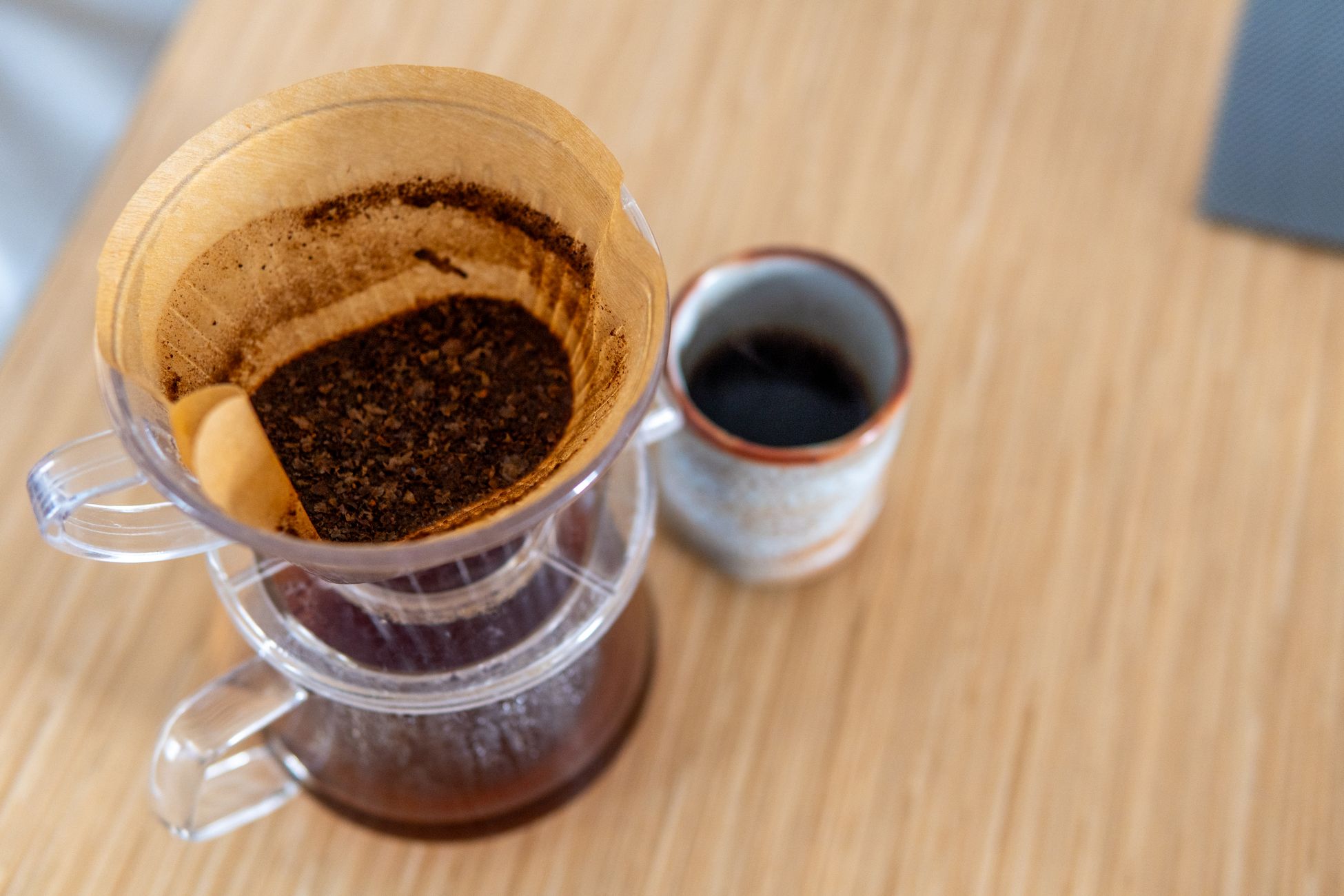
Nearly every pour over guide includes the same step near the top. Put the filter in the cone, pour hot water through it, dump the water out. Then it moves on without explaining why, and most people either skip it because it seems fussy or do it out of obedience without knowing what it accomplishes.
It accomplishes three separate things, only one of which is the one everybody talks about. And once you know all three, you also know the situations where rinsing matters enormously and the situations where you can skip it without losing anything.
Start with beans worth this level of attention.
The Paper Taste Everyone Mentions
Paper filters are made from wood pulp, and wood pulp carries flavor compounds. The processing involved in turning pulp into a thin, porous, consistent filter leaves residue behind. When hot water hits an unrinsed filter, some of that comes out.
The taste is not dramatic. Nobody drinks an unrinsed pour over and spits it across the room. It reads as a faint dryness, a papery edge that sits on top of the cup and dulls the top notes. In a light roast with delicate floral or citrus character, that muting is the difference between tasting the coffee and tasting most of the coffee.
Bleached and unbleached filters behave differently here. Unbleached, the brown ones, tend to carry noticeably more papery flavor because they have gone through less processing. This is the great irony of the brown filter, which people often choose because it seems more natural, and which more urgently needs rinsing as a result. Bleached filters, made with oxygen based bleaching rather than chlorine in any reputable brand, are cleaner tasting out of the box.
If you want to hear the difference for yourself, rinse a filter into a cup and taste the rinse water. It is not offensive, but it is definitely not nothing.
The Reason That Matters More: Preheating
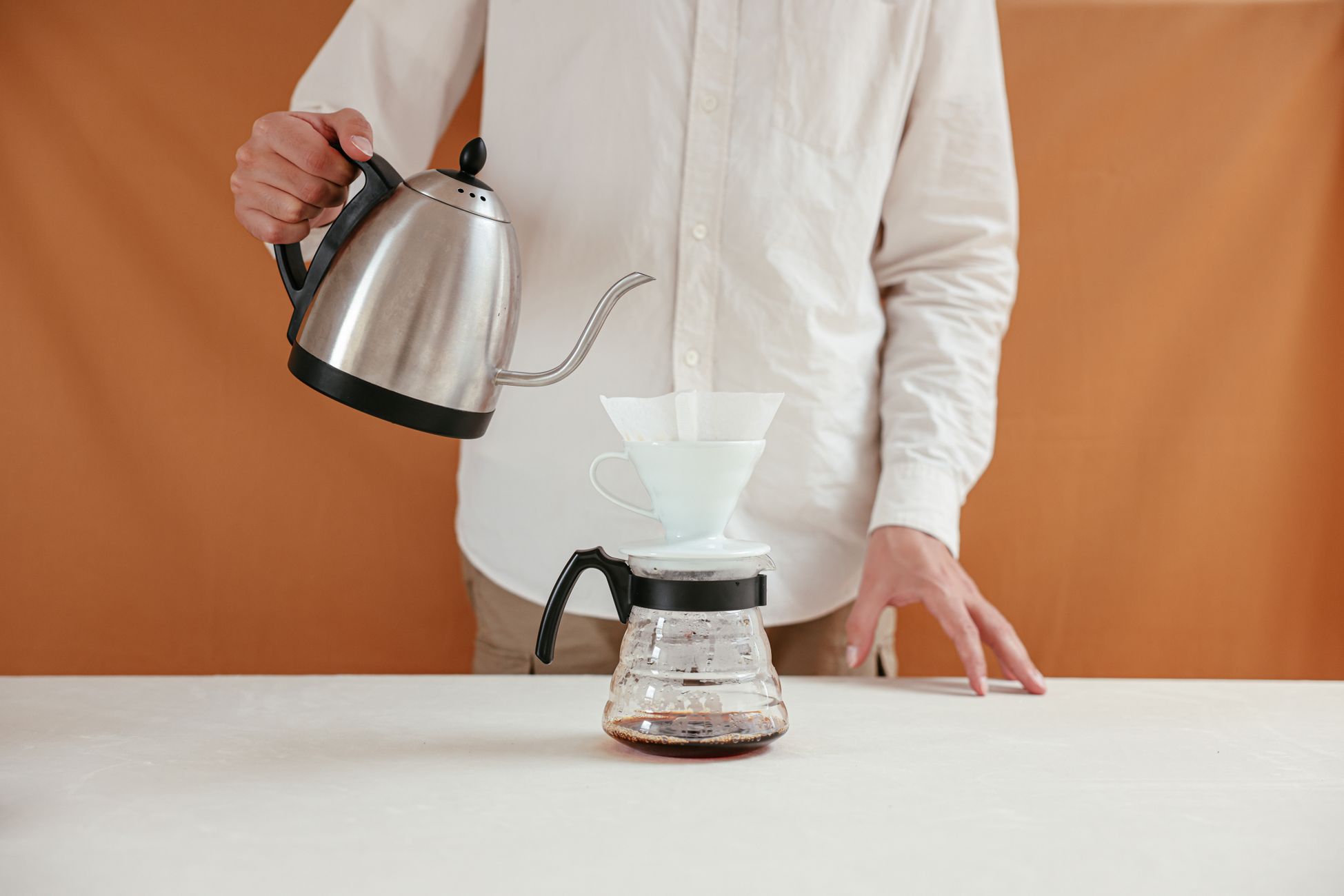
Here is the part most guides bury. Rinsing preheats your brewer, and thermal stability is one of the largest and least discussed variables in pour over.
Think about what happens with a cold ceramic dripper. You pour water at ninety five degrees Celsius onto coffee sitting in a cone that is at room temperature. The ceramic pulls heat out of the water immediately. Your actual brew temperature is meaningfully lower than what your kettle said, especially in the first thirty seconds, which is exactly when the bloom is happening and when you most need heat to drive the initial extraction.
Ceramic is the worst offender because it has real thermal mass. Glass is close behind. Plastic drippers are much less affected, which is one legitimate reason some people prefer them despite the aesthetics. Metal varies depending on thickness.
Rinsing with hot water brings the cone up to temperature so the water you brew with stays close to the temperature you chose. This is not a small effect. Skipping the rinse on a cold ceramic V60 can drop your effective brew temperature by several degrees, which shows up in the cup as a thinner, more sour, under developed result. People then chase that by grinding finer, which introduces a different set of problems.
The same rinse water also preheats the vessel underneath. A carafe or mug at room temperature will pull heat out of your finished coffee just as readily.
The Third Reason: Seating the Filter
A dry paper filter does not sit flush against the walls of the cone. It holds its folded shape and leaves gaps and air channels between the paper and the ribs of the dripper.
When you rinse, the wet paper clings to the cone and settles into position. That matters for flow. Water follows the path of least resistance, and a gap between the paper and the wall is a very easy path. Coffee that flows down that channel instead of through the bed is water that never extracted anything, which dilutes your cup and leaves the grounds under extracted at the same time.
This is a bigger issue with flat bottom brewers and with cones that have less aggressive ribbing. It is also why the rinse should be done with intention, wetting the entire surface of the paper rather than dumping water down the middle.
Brew something worth doing this carefully.
How to Rinse Properly
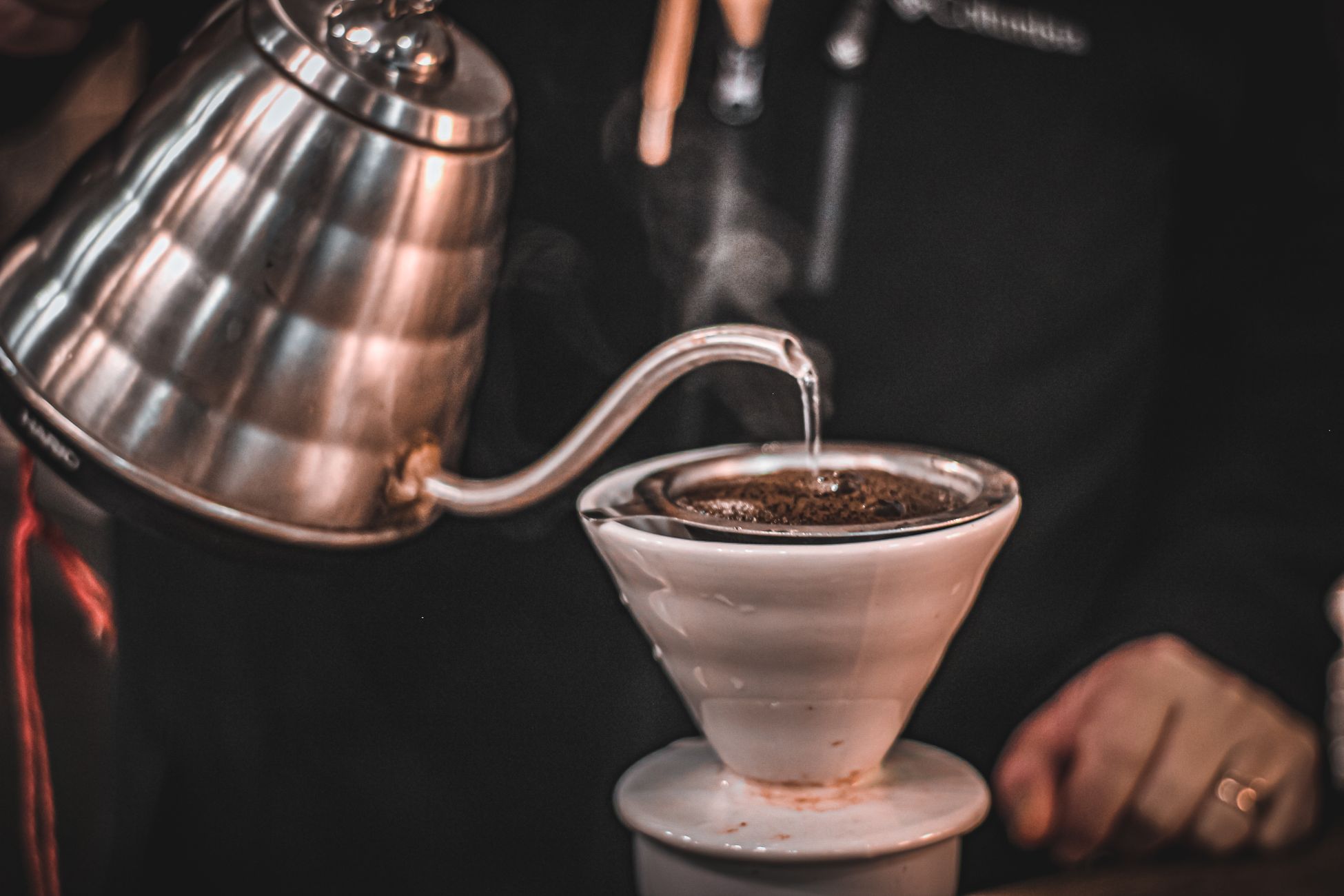
The technique is simple but a few details make it more effective.
Use water at or near your brewing temperature. Rinsing with lukewarm water addresses the paper flavor but does almost nothing for preheating, which means you lose the biggest benefit.
Use enough water to wet the whole cone, spiraling from the center outward so the paper is saturated up to the top edge. A quick splash down the middle leaves the upper walls dry and unseated.
Dump the rinse water out before you add coffee. Water sitting in your carafe will dilute the finished brew and throw off your ratio. If you are brewing into a mug, pour it out and put the cone back on.
Do it right before you brew, not five minutes ahead, because the whole point of the thermal benefit is that the cone is still hot when the coffee goes in.
The entire process takes about ten seconds and it uses water you already have hot in the kettle.
When You Can Skip It
Not every situation demands it, and being honest about that is more useful than treating it as an unbreakable rule.
An immersion brewer like a French press has no paper at all, so there is nothing to rinse. A metal filter carries no paper flavor, though preheating the vessel still helps.
An AeroPress filter is a small disc with very little paper surface relative to the volume of coffee, and the brew time is short. Rinsing it still helps seat it and warm the chamber, but the effect is smaller than on a full cone.
An automatic drip machine with a paper basket filter is the case where most people skip it and where it arguably matters least, because the machine is usually pouring a larger volume and the ratio of paper to coffee is lower. Still, if you are brewing a delicate single origin in a machine you care about, running the brew cycle with just a filter and no coffee once beforehand does the same job.
And if you are brewing a dark roast, the paper flavor is going to be completely buried under roast character. Rinsing is still worth doing for the thermal reason, but you will not taste the paper difference.
What to Take Away From This
The rinse is a good example of a habit that survives in coffee culture because it works, even though the usual explanation for it is the least important of its three benefits. People repeat the paper taste reason, skip the step when they cannot taste paper, and unknowingly give up the temperature stability that was doing most of the work.
Ten seconds, water you already boiled, and a measurably more consistent brew. That is a better return than most of the gear upgrades people consider when their coffee is not tasting right.
Find a coffee that rewards the details.
All images shown in this blog are sourced from pexels.com.