

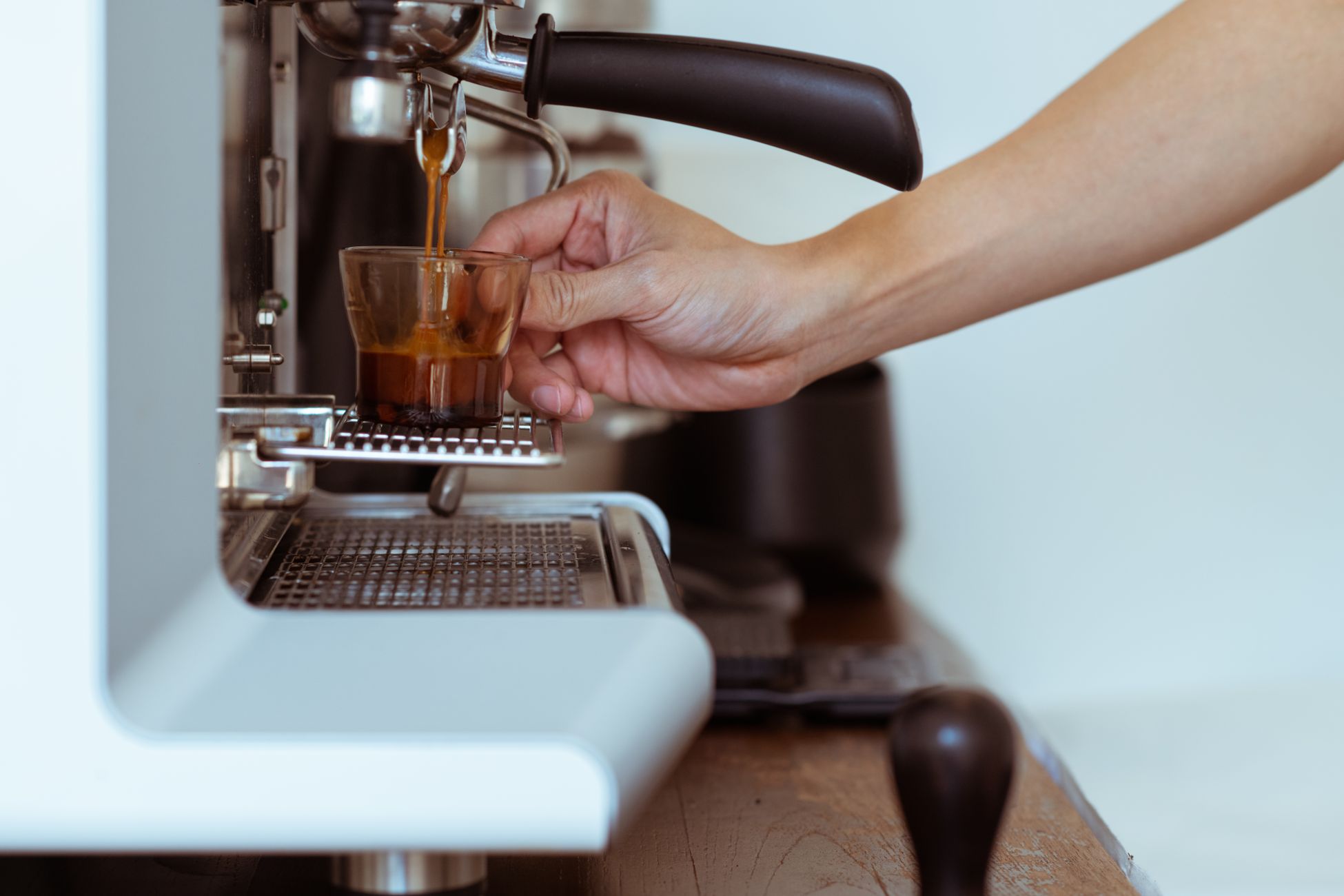
If you have ever bought a bag of coffee, pulled a shot the next morning, and watched it gush out of the portafilter like a faucet, you have run into one of the least discussed rules in coffee. Espresso wants older beans than filter does. Not stale beans. Older ones. There is a real difference, and understanding it will save you a lot of wasted coffee and a lot of frustration standing at your machine wondering what you did wrong.
The short version is that freshly roasted coffee is full of carbon dioxide, and espresso is the brew method least equipped to handle it. Filter brewing gives that gas somewhere to go. Espresso does not. So the same bag that makes a gorgeous pour over on day four can make an ugly, sour, fast-running shot on day four, and then turn into something excellent on day twelve. Same beans. Same grinder. The only variable that moved was time.
If you want beans that were roasted with this timeline in mind and labeled honestly so you know exactly where you are in it, start with our most popular coffees and pay attention to the roast date on the bag.
What Degassing Actually Does to a Shot
Roasting creates carbon dioxide inside the bean. A lot of it. The bean holds that gas in its cellular structure like a sponge holds water, and over the days following the roast, it seeps out. This is why a fresh bag puffs when you open it and why one way valves exist on coffee packaging in the first place. Without that valve, fresh bags would swell and split.
In a pour over, that escaping gas shows up as the bloom. You pour a little water, the bed rises and foams, and within thirty to forty five seconds the gas has largely cleared out. Then you brew. The bloom is a built in release valve, and it means filter brewing can tolerate very fresh coffee. Plenty of people prefer their pour over at five to eight days off roast precisely because that liveliness is pleasant.
Espresso has no bloom. You have nine bars of pressure pushing water through a compressed puck in twenty five to thirty seconds. There is no pause, no venting stage, no time for gas to leave on its own terms. So the carbon dioxide leaves during extraction, and it leaves violently. It pushes back against the incoming water. It carves channels through the puck. It forces water to find the path of least resistance instead of soaking the grounds evenly.
The result is a shot that runs fast, tastes sour and thin, and produces a big head of foam that looks like crema but collapses in seconds. That foam is mostly carbon dioxide, not the emulsified oils and dissolved solids that make real crema. It looks impressive and tastes like nothing.

Why the Shot Runs Fast and Tastes Sour
Channeling is the mechanism, and it is worth understanding because it explains why the fix is not simply grinding finer.
When gas breaks through the puck, it opens a route. Water follows that route. Once water has a low resistance path, it stops distributing evenly across the coffee bed. Some grounds get flooded and over extracted. Most get barely touched and stay under extracted. What lands in your cup is a blend of both, and under extraction dominates because that is where most of the coffee is.
Under extracted espresso tastes sour and sharp. Not bright and pleasant, but aggressively acidic, with a hollow middle and no sweetness. People taste that and assume the coffee is too light or the beans are bad. Usually the beans are simply too young.
Here is the trap. The instinct is to grind finer to slow the shot down. Sometimes that helps a little. But grinding finer on gassy coffee often makes channeling worse, because a tighter puck gives the escaping gas even fewer places to go, so it forces its way through with more energy. You end up chasing the grind setting further and further down, getting inconsistent results, and burning through beans. Then the coffee rests a week on its own and suddenly your original setting works.
How Long Espresso Actually Wants
There is no universal number, and anyone who gives you one is oversimplifying. But there are reliable ranges.
For most medium roasts destined for espresso, the window opens somewhere around day ten and stays good through day thirty or so. Lighter roasts often want longer, sometimes fourteen to twenty one days before they settle, because denser, lighter roasted beans hold their gas more stubbornly. Darker roasts move faster, because more of the cellular structure has been broken down during roasting and the gas escapes more readily. A dark roast might be ready for espresso at day seven.
Filter coffee, by contrast, is frequently at its best between day four and day fourteen. The bloom handles the gas, so you get to enjoy the aromatics while they are at their peak.
That gap is the whole point. A single bag of coffee has two different optimal windows depending on how you plan to brew it. If you brew both ways, buying one bag and using it for everything means one of those methods is getting a compromised version of the coffee.
The practical move is to buy espresso beans slightly ahead. If you know you go through a bag in two weeks, buy it and let it sit four or five days before you start pulling shots with it. Your first shots will be better and you will not waste a third of the bag dialing in a moving target.
Browse our current roasts and check the dates so you can plan your rest window instead of guessing at it.

Why Air Roasting Changes the Timeline
Roasting method affects how gas is held and released, which affects how long the rest needs to be.
In a traditional drum roaster, beans tumble against a heated metal surface. Heat transfers by conduction at the point of contact and by convection from the surrounding air. That contact heating tends to develop the outside of the bean faster than the inside, which can leave a bean that is darker on the surface than its interior would suggest. Uneven development means uneven gas retention, and uneven gas retention means the rest window is less predictable. Some beans in the batch settle sooner than others.
Air roasting suspends the beans in a stream of hot air. Every bean gets essentially the same treatment, heated on all sides at once, with no hot metal to press against. Development runs more evenly from surface to center. Chaff, the papery skin that comes off during roasting, gets carried away instead of sitting in the roasting chamber and scorching.
The consequence for rest time is consistency. When beans in a batch are developed evenly, they degas on a similar schedule. The window is tighter and more predictable, and when it opens, more of the batch is actually in it. You are not fighting a bag where a third of the beans are ready and the rest are not.
This does not mean air roasted coffee skips the rest. It still needs it. But the guessing shrinks considerably.
How to Tell Where Your Beans Are
You do not need equipment. You need attention.
Watch the shot time at a fixed grind setting. If a setting that gave you a twenty eight second shot last week now gives you thirty four seconds this week, the coffee has degassed and become more resistant to water flow. That is normal and it is a good sign. The coffee has entered its window.
Watch the crema. Gassy coffee produces a thick, pale, foamy layer that vanishes fast. Rested coffee produces a thinner, denser, more reddish brown layer with more staying power. If your crema looks like bubble bath, wait a few days.
Taste for sweetness. Under extraction from channeling reads as sour and empty. As the coffee rests and the puck starts behaving, sweetness fills in the middle of the cup. That shift from sharp to round is the clearest sign you have arrived.
And listen when you open the bag. A fresh bag hisses and puffs. A rested bag opens quietly. It is crude, but it tells you something.
The Other End of the Window
Rest is not infinite improvement. Coffee that has degassed also continues to oxidize. Somewhere past a month for most roasts, the aromatics start flattening, the oils begin to go stale, and you lose the top notes that made the coffee interesting.
So the goal is not old coffee. The goal is coffee that has released its gas but not yet lost its character. That is a window, not a direction. Two weeks past roast is often the sweet spot for espresso. Ten weeks is not better than four. It is worse.
Store beans in a sealed container at room temperature, away from light and heat. Do not put them in the fridge, where moisture and odor will do more damage than the cold prevents. Buy in quantities you will actually finish inside a month.

What This Means for Your Morning
If you have been blaming your grinder, your machine, or your technique for shots that will not behave, check the roast date before you change anything else. A four day old bag of espresso is not a problem you can grind your way out of. It is a problem you wait out.
Give the beans a week and a half. Keep your grind setting where it was. Pull a shot and taste it. Most of the time, the coffee that seemed impossible has quietly become the coffee you were trying to make.
Find your next bag and give it the time it needs
All images shown in this blog are sourced from pexels.com.