

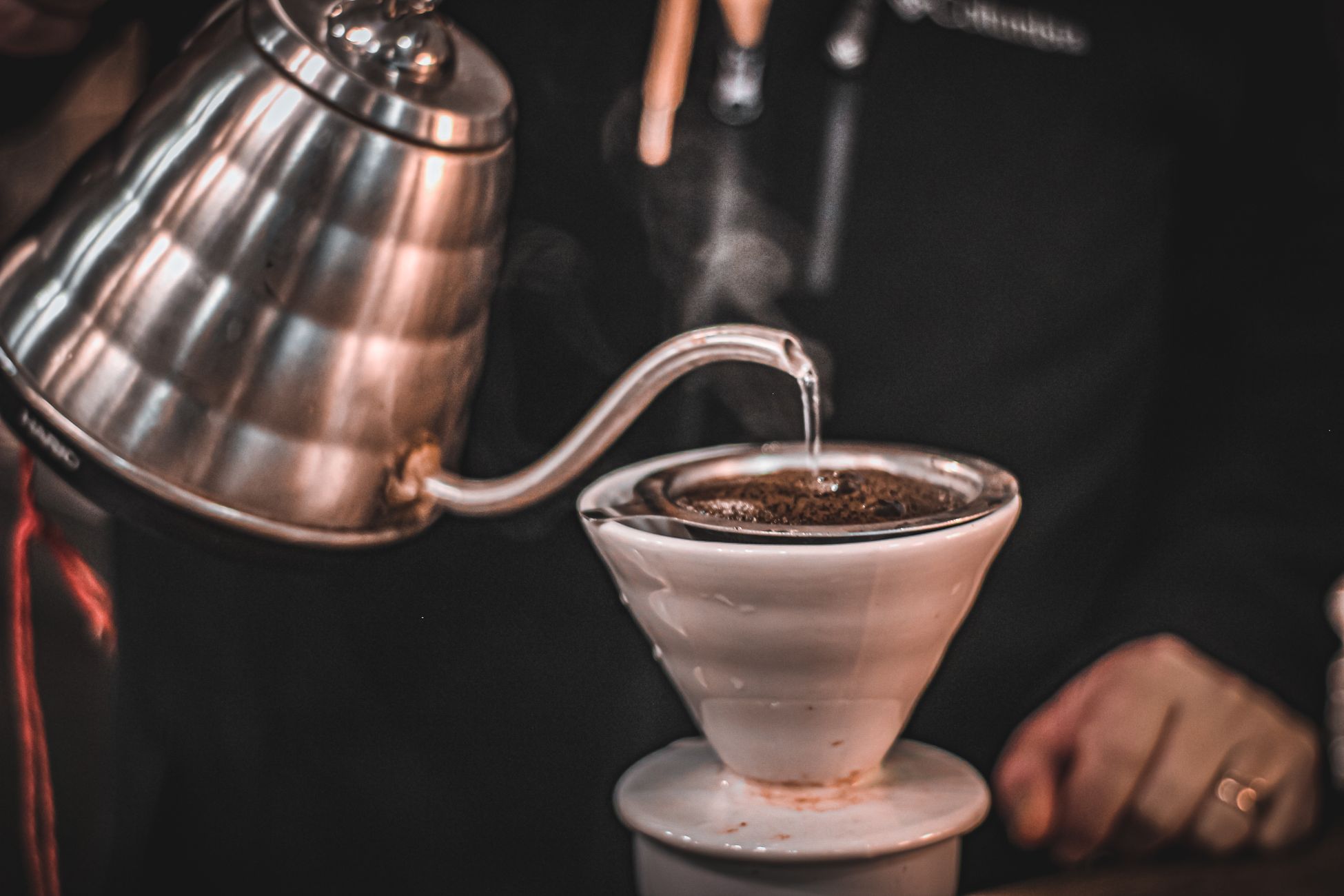
Watch two people make a pour over and you will often see two completely different approaches to the same brewer. One pours a steady unbroken stream from bloom to finish. The other pours in stages, waiting for the water to drop before adding more, ending up with four or five distinct additions.
Both make coffee. They do not make the same coffee, and the reason has to do with what the water level in the cone is doing to your extraction the entire time. Once you understand what each pour is controlling, choosing between them stops being a stylistic preference.
Brew something worth the extra attention.
What the Water Level Is Actually Doing
In a cone brewer, extraction happens as water moves through the coffee bed, dissolving soluble compounds and carrying them into the cup. How fast that water moves is determined by the grind, the bed depth, and the pressure pushing it down.
That pressure comes from the head of water sitting above the bed. A deep pool pushes harder and flows faster. A shallow one pushes gently and flows slower.
With a single continuous pour, the level rises as you pour and never returns to zero until the end. You spend most of the brew with a substantial column of water on top of the bed, driving flow steadily, and you have limited ability to change anything once you have committed.
With pulse pouring, the level rises with each addition and falls between them. The bed is repeatedly saturated, drained partway, and saturated again. You have a decision point at every pulse.
Each Pulse Is a Chance to Correct
This is the practical advantage and the reason competition brewers overwhelmingly pulse.
If your first pulse drains faster than expected, you can slow the next one down, pour more gently, or add a smaller volume to keep the bed from running dry. If it drains slowly and you can see you are heading for a long brew, you can pour more aggressively into the center to speed the flow.
A single pour gives you one decision, made at the start, before you have any information about how this particular coffee is behaving today. Every coffee has a slightly different bed permeability depending on grind, roast level, freshness, and how much carbon dioxide it is still releasing. A pulse approach lets you read that and respond.
Fresh coffee in particular is unpredictable. A bag three days off roast degasses vigorously and the bed behaves quite differently than the same coffee at three weeks. Pulses give you feedback about that in the first minute rather than a surprise at the end.
Agitation Is the Second Lever
Every time you pour water onto the bed, you disturb it. The stream stirs the grounds, redistributes them, and brings water into contact with particles that had settled into low flow pockets.
That agitation raises extraction, and it does so fairly evenly if the pour is controlled. Coffee that has settled into a compacted bed with water flowing around it rather than through it is coffee that is not contributing much to your cup, and stirring it back into circulation is how you get the whole dose participating.
Pulse pouring builds several agitation events into the brew, spaced out through the extraction. A continuous pour has one long agitation event at the surface, and the lower bed settles undisturbed the whole time.
This is why pulse brews often taste more complete, with more body and more sweetness, from the same dose and the same grind. You are extracting more of the coffee you paid for.
Get beans that reward this kind of attention.
Where Continuous Pours Actually Win
The continuous stream is not a beginner's mistake. It has real advantages, and skilled brewers use it deliberately.
It is more consistent. Fewer variables means fewer things to get wrong, and if you pour the same way every day at the same rate you will get very repeatable results. A pulse brew has more decision points and therefore more opportunity for inconsistency between one morning and the next.
It is gentler overall. Less total agitation means less extraction of the fine particles that contribute bitterness and astringency, and some coffees, particularly very light roasts or delicate washed lots, taste cleaner brewed this way.
It is also faster and simpler, which matters more than people admit. A continuous pour done well beats a pulse pour done impatiently.
And on flat bottom brewers, where the bed is shallow and wide, the difference between the two approaches is much smaller than it is on a steep cone. The geometry already evens things out.
A Practical Pulse Structure
If you want to try it, a reliable starting point looks like this for a standard three hundred gram brew.
Bloom with roughly double the coffee weight in water, so about forty grams for a twenty gram dose, and give it thirty to forty five seconds. Swirl gently to make sure every ground is wet.
Then pour in four additions of about sixty five grams each, timing each one so it begins as the previous addition has drained down to just above the bed. Not all the way dry, which stalls the extraction and cools things off, and not while the cone is still half full, which turns your pulse into a continuous pour.
Pour in circles from the center outward, staying off the paper. Water hitting the filter runs down the side without passing through coffee, and that is a straightforward loss of extraction.
Aim to finish drawdown somewhere around two and a half to three and a half minutes depending on your brewer and grind. If it is running long, go coarser. If it is running short, go finer, and keep the pulse structure constant while you adjust so you are only changing one thing.
What to Listen For and Watch
The bed tells you a lot if you are paying attention.
A bed that stays flat and level through the brew has been poured on evenly and is extracting evenly. A bed with a deep crater in the middle got hit too hard in the center. A bed with a high rim of grounds stuck up the paper had water running down the walls.
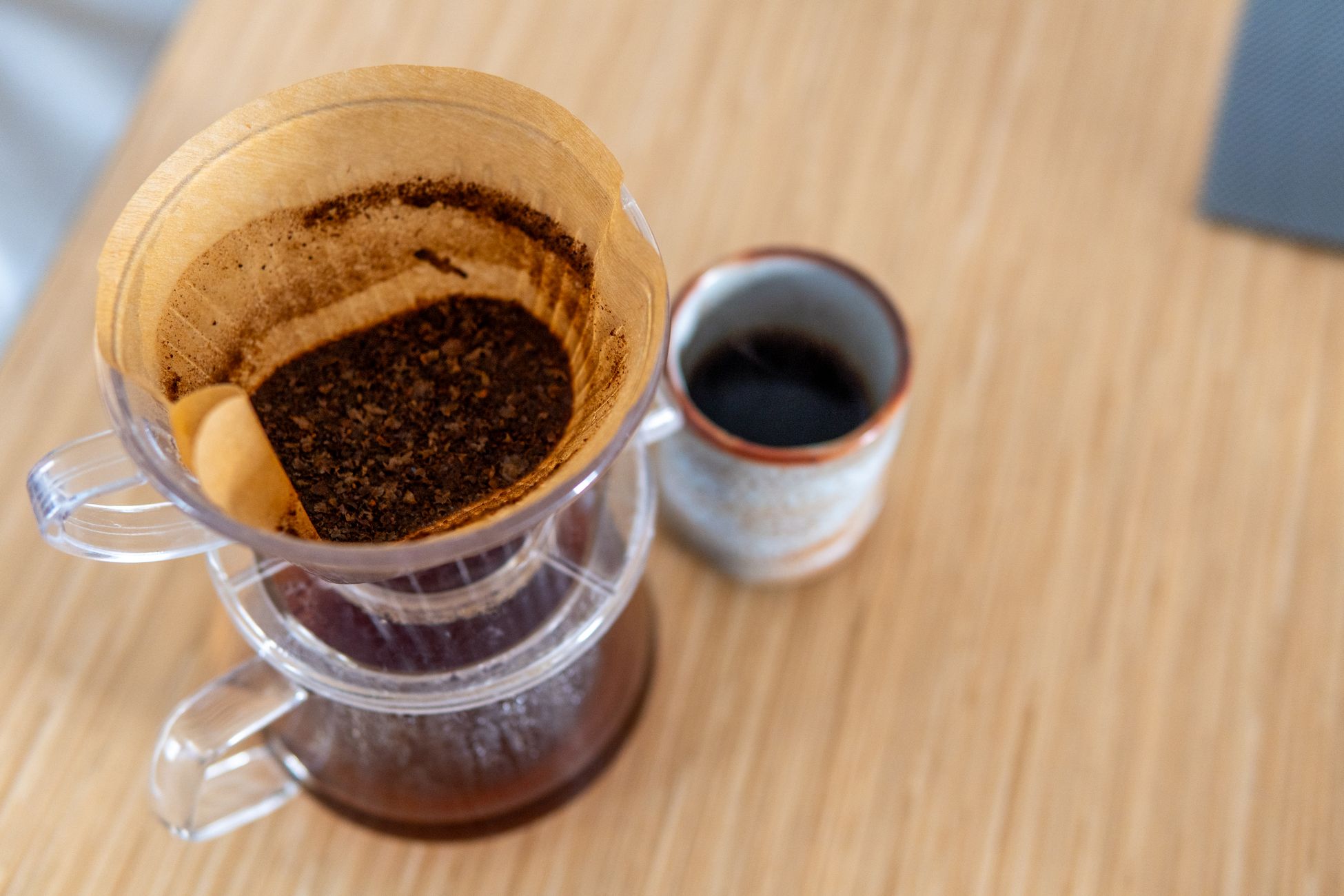
After drawdown, look at the surface. A flat even bed with a smooth finish means good distribution. Ridges, holes, or a lot of coffee stranded high on the filter means the pours were uneven and part of your dose was underextracted.
Taste is the final check. A brew that is thin and sour was underextracted, so pour with more agitation or go finer. A brew that is bitter and drying was overextracted, so ease off the agitation or go coarser. Pulse pouring gives you both levers independently, which is exactly why it is worth learning.
The point is not that one method is correct. It is that pouring in stages hands you control over agitation and flow that a single stream simply does not offer, and control is what lets you get the same good cup out of a coffee that changes as the bag ages.
Find a coffee worth dialing in.
All images shown in this blog are sourced from pexels.com.