


Before a roaster tastes a single cup from a new lot, someone has already run two measurements on the green coffee that can disqualify it outright. Neither has anything to do with flavor directly. Both are about water.
One is moisture content, the total percentage of the bean's weight that is water. The other is water activity, which sounds like the same thing and is not. Together they predict how long a coffee will hold its quality, how it will behave in the roaster, and whether it is going to be a problem in three months. A roaster who ignores them ends up with beautiful coffee that goes flat before it sells.
Drink coffee that was checked before it was bought.
What Moisture Content Actually Is
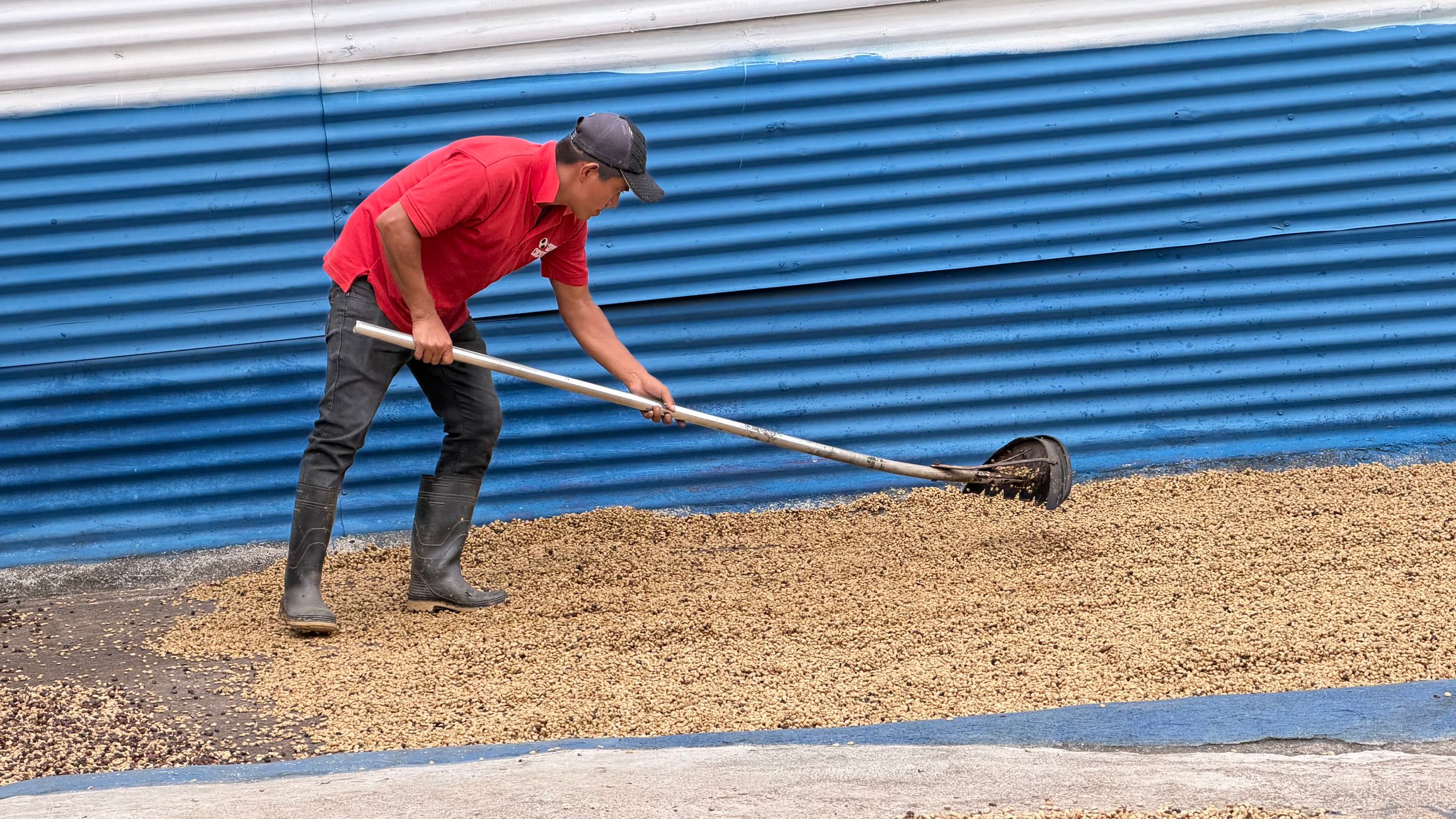
Green coffee arrives from origin having been dried down from a cherry that was mostly water to a seed that is mostly not.
The target for that drying is a moisture content somewhere between ten and twelve percent, with roughly eleven considered ideal for most specialty coffee. That number is a simple ratio of water weight to total weight, measured with a meter that either bakes a sample or reads its electrical properties.
Both directions of error cause real problems.
Coffee dried too far, down toward eight or nine percent, has been pushed past the point where the bean structure holds together well. It becomes brittle, it tends to break during hulling and handling, and it ages faster because the protective structure is compromised. Overdried coffee often tastes woody and hollow, and it loses whatever aromatic character it had unusually quickly.
Coffee left too wet, above about twelve and a half percent, is the more dangerous case. There is enough available water for mold to grow, for fermentation to continue when it should have stopped, and for the coffee to develop the musty phenolic flavors that ruin an entire container. Wet coffee is also heavier, which means a buyer paying by weight is paying for water.
Water Activity Is a Different Question
Here is where it gets more useful, and where the two numbers separate.
Moisture content tells you how much water is present. Water activity tells you how much of that water is free rather than bound up inside the bean's structure, and free water is the only kind that microorganisms can use and chemical reactions can run on.
Water activity is expressed on a scale from zero to one, where one is pure water. Green coffee typically sits somewhere around 0.50 to 0.60, and the widely used specialty target is at or below roughly 0.60. Above that, the risk of mold and rapid staling climbs sharply. Below about 0.45, the coffee has usually been dried too aggressively and tends to age poorly in a different way.
The reason both measurements matter is that they can disagree. Two lots can both read eleven percent moisture while one has a water activity of 0.53 and the other 0.68. The second one was dried too fast, so the outside of the bean gave up water quickly while the interior kept more of it in a loosely held state. It will look fine on a moisture meter and it will deteriorate far faster in storage.
That divergence is the single most common thing water activity catches. Fast mechanical drying, drying in direct heat, or rushing a patio in bad weather all produce this signature.
Why Drying Speed Leaves a Fingerprint
Coffee that dries slowly and evenly ends up with water distributed uniformly through the bean, and most of it bound rather than free.
Slow drying on raised beds with good airflow, turned regularly, often takes two to three weeks. It is expensive in labor and in time, and it is one of the practices that separates carefully processed coffee from commodity lots.
Rushing it, whether on a concrete patio in full sun or through a mechanical dryer running too hot, drives moisture off the surface faster than it can migrate out from the center. The result is a bean that measures acceptably on average while being genuinely uneven inside, and unevenness inside a bean is a roasting problem before it is a storage problem.
Find coffee that was dried properly, not quickly.
What This Does Inside the Roaster
Water in the bean is not a passive passenger during roasting. It is a participant.
Moisture conducts heat through the bean's interior in the early phase of the roast, so a drier bean transfers heat differently than a wetter one. It also drives first crack, since that fracture happens when water turned to steam builds enough internal pressure to break the structure. A lot at nine percent moisture reaches first crack sooner, with less energy behind it, and gives a quieter crack than the same coffee at eleven and a half.
The practical consequence is that a roaster cannot apply the same profile to a wetter lot and a drier lot and expect the same cup. Wetter coffee needs more energy early to drive off the additional water before development can proceed properly. Drier coffee needs a gentler approach because it will run ahead of the profile and scorch.
Uneven moisture within a lot is worse than any single wrong number, because there is no correct adjustment. Half the beans are ahead and half are behind, and whatever the roaster does splits the difference. That shows up in the cup as a muddled flavor with both underdeveloped and overdeveloped notes present at once.
This is why serious roasters measure every lot on arrival rather than trusting a spec sheet, and why they measure again after the coffee has been in storage for a few months.
Why the Numbers Move in Storage
Green coffee is hygroscopic. It exchanges moisture with the air around it continuously.
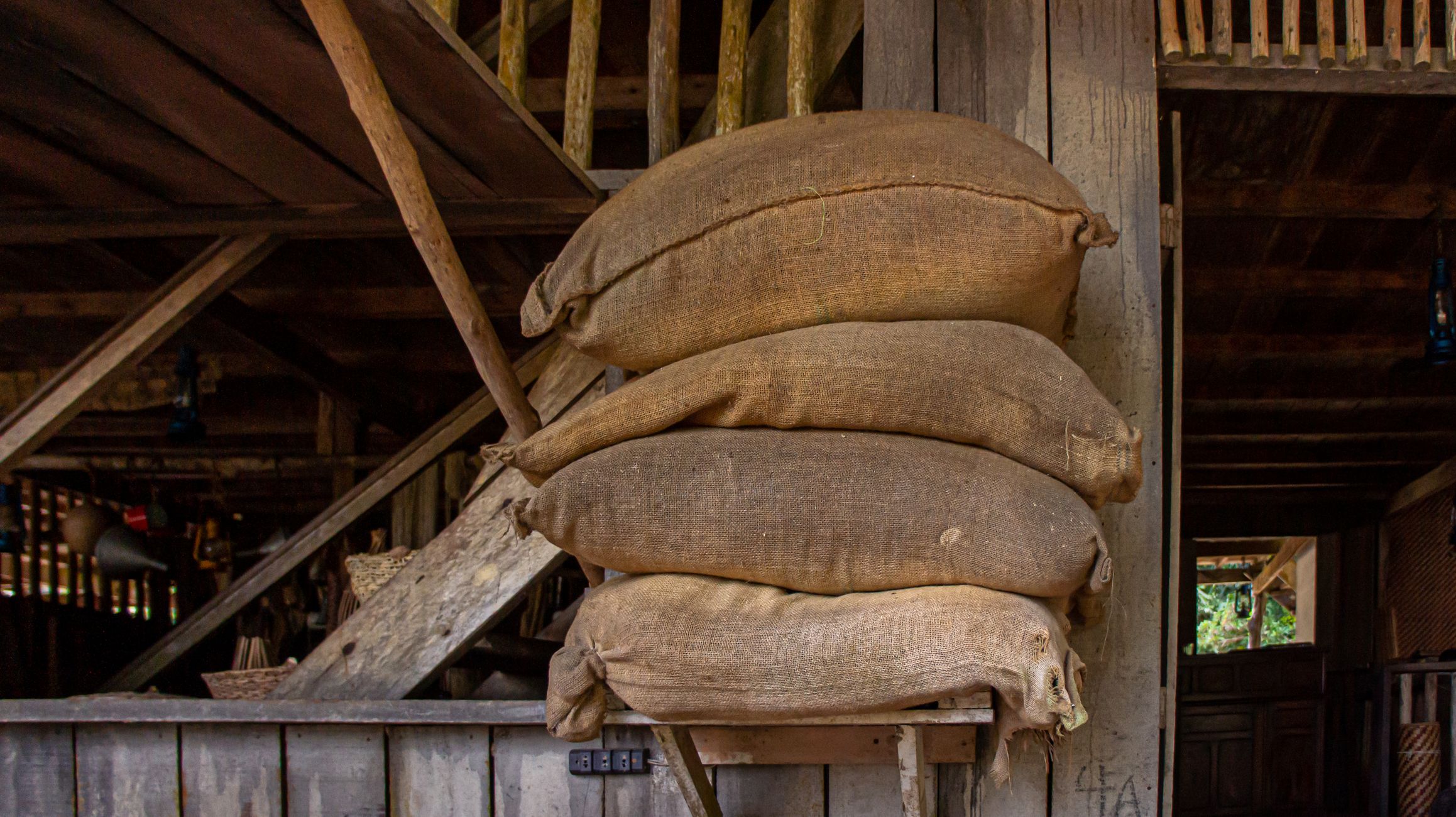
A lot stored in a humid warehouse gains water. A lot stored in a dry one loses it. GrainPro liners and vacuum packing exist specifically to slow this exchange, and coffee stored in plain jute in an uncontrolled space can drift meaningfully within a single season.
Water activity drifts along with it, and it is usually the first of the two to move somewhere problematic. A coffee that arrived at 0.55 and has crept to 0.65 over a humid summer is on a much shorter clock than its moisture reading alone suggests.
This is part of why crop year matters and why the freshest arrival is not always the best choice. A coffee held well for six months can be in better condition than one held badly for two.

What You Can Actually Do With This
You cannot measure water activity on a bag of roasted coffee, and no roaster prints it. What you can do is read the signals that indicate someone is paying attention.
A roaster who names the harvest year is tracking crop cycles. A roaster who talks about how a coffee was dried, on beds, for how long, is buying from producers where that was controlled. A roaster whose single origins change with the seasons rather than sitting on the menu year round is rotating out of lots before they fade rather than selling them until they are gone.
And you can taste the failure mode. Green coffee that was stored past its useful life produces a roast that smells fine and tastes papery and blank, with the acidity gone and a dry finish. It is not bitter and it is not sour. It is just absent, which is the specific signature of a coffee that lost its life before anyone roasted it.
Two numbers taken months before the roast decide whether that happens. They are among the least glamorous things in coffee and among the most reliable predictors of whether a bag is worth what you paid.
Start with green coffee somebody actually vetted.
All images shown in this blog are sourced from pexels.com.