

Kenyan coffee does not taste like anything else. Blackcurrant, tomato, grapefruit, a sharp winey acidity that some people chase for years and others find genuinely too much. It is one of the few origins where a blind taster can often name the country, which is rare in a world where most coffees can be placed in a region at best.
People credit the varietals, SL28 and SL34, developed by Scott Laboratories in the 1930s and planted widely across the country. They credit the volcanic soil around Mount Kenya and the altitude and the rainfall pattern. All of that is real and all of it matters.
But a significant amount of that signature comes from something that happens after the cherry is picked, in a concrete tank, overnight, twice. The Kenyan double wash is a processing method that almost nobody else uses, and it does something specific to the cup that the varietal alone does not explain.
If you have never tried a properly processed Kenyan, it is worth the experience. Browse our most popular roasts and look for something with real acidity when you want to understand what this method produces.
What Ordinary Washed Processing Does
To see what is different, you need the baseline.
A coffee cherry is a fruit with a seed inside. Between the skin and the seed there is pulp, and clinging directly to the seed there is a layer of sticky, sugar rich material called mucilage. Under that is a papery parchment layer, and inside that is the bean.
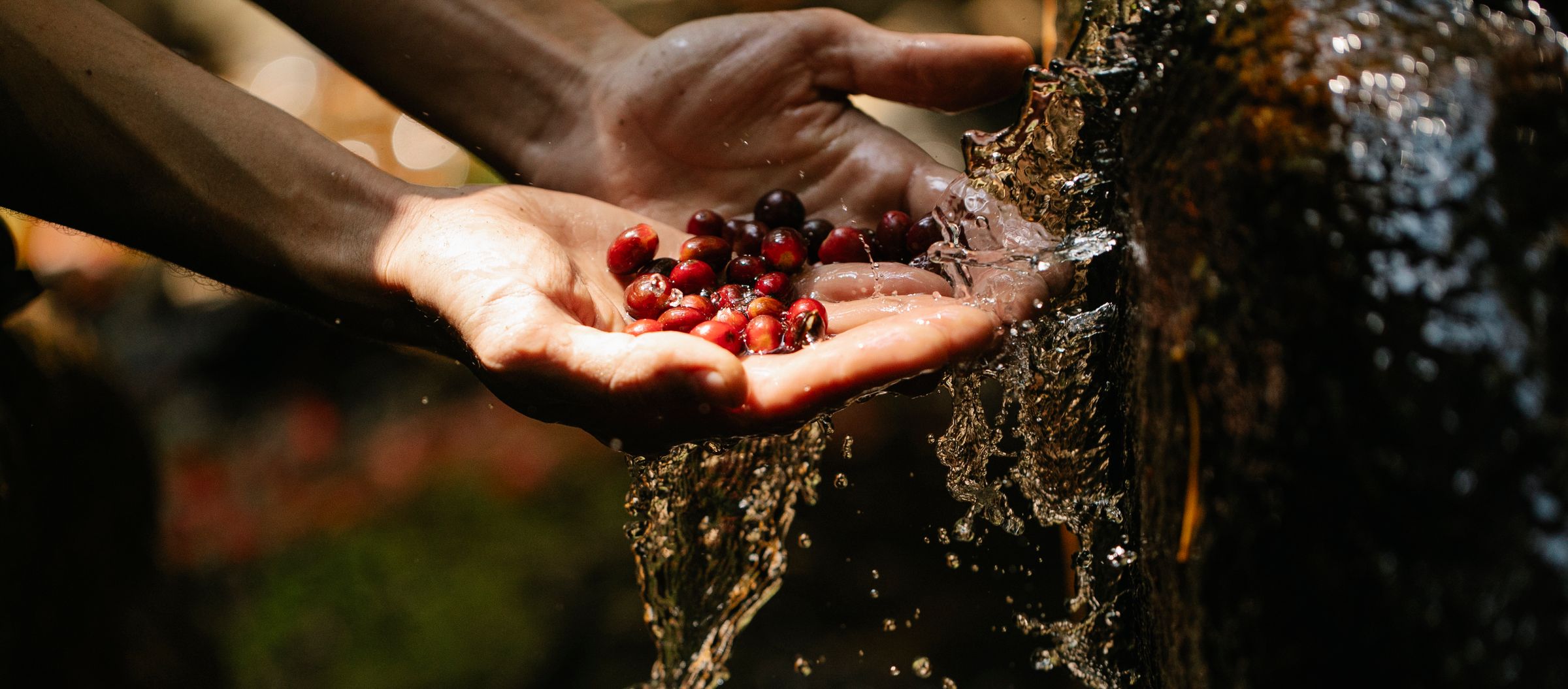
In standard washed processing, ripe cherries are depulped within hours of picking, which mechanically strips the skin and most of the pulp. What comes out is a slippery seed still coated in mucilage. That mucilage has to come off before drying, because it will not dry evenly and will ferment unpredictably if left.
The standard removal method is fermentation. The depulped beans go into a tank, usually with water, and sit for somewhere between twelve and thirty six hours. Naturally occurring microorganisms, yeasts and bacteria present on the fruit and in the environment, break down the pectin that makes the mucilage adhere. When it has degraded enough, the beans get washed clean and go to drying.
That is one fermentation, one wash, and the great majority of washed coffee in the world is made exactly that way.
What Kenya Adds
The Kenyan method, sometimes called double fermentation or the Kenya 72 hour process, splits that into stages with a soak in between.
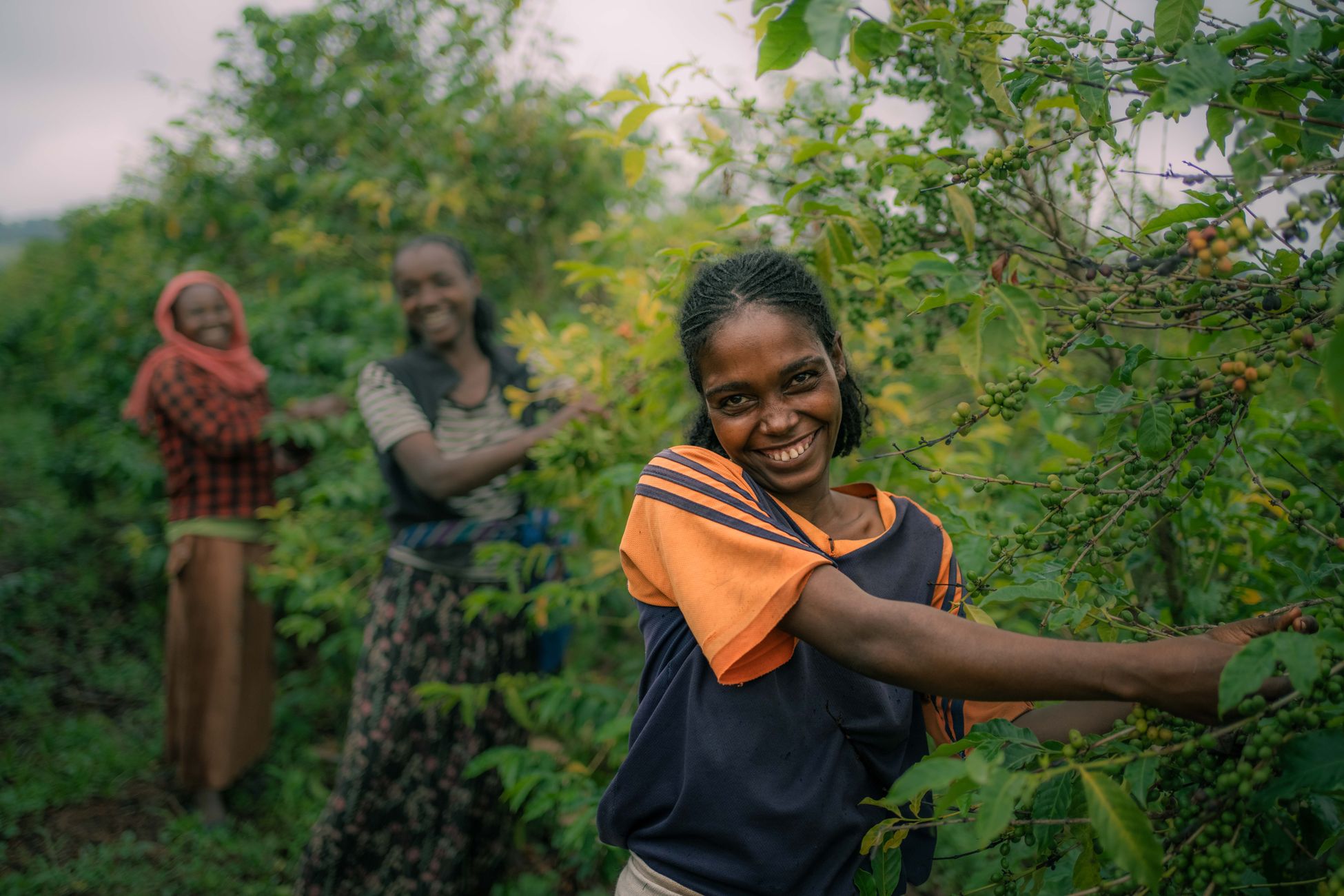
Cherries are picked, and Kenyan picking standards are unusually strict. Most coffee comes from smallholders who deliver to centralized washing stations called factories, typically run by cooperatives. The cherries get floated first, and anything that rises is separated out as underripe or damaged. Then they are graded by density.
Depulping happens the same day. Then comes the first fermentation, dry or with minimal water, usually twelve to twenty four hours. The mucilage breaks down substantially but not completely.
Then the beans are washed and moved into a second tank, and this is the part that is distinctive. They are submerged in clean water and left to soak, typically another twelve to twenty four hours, sometimes longer. The water is often changed during this period.
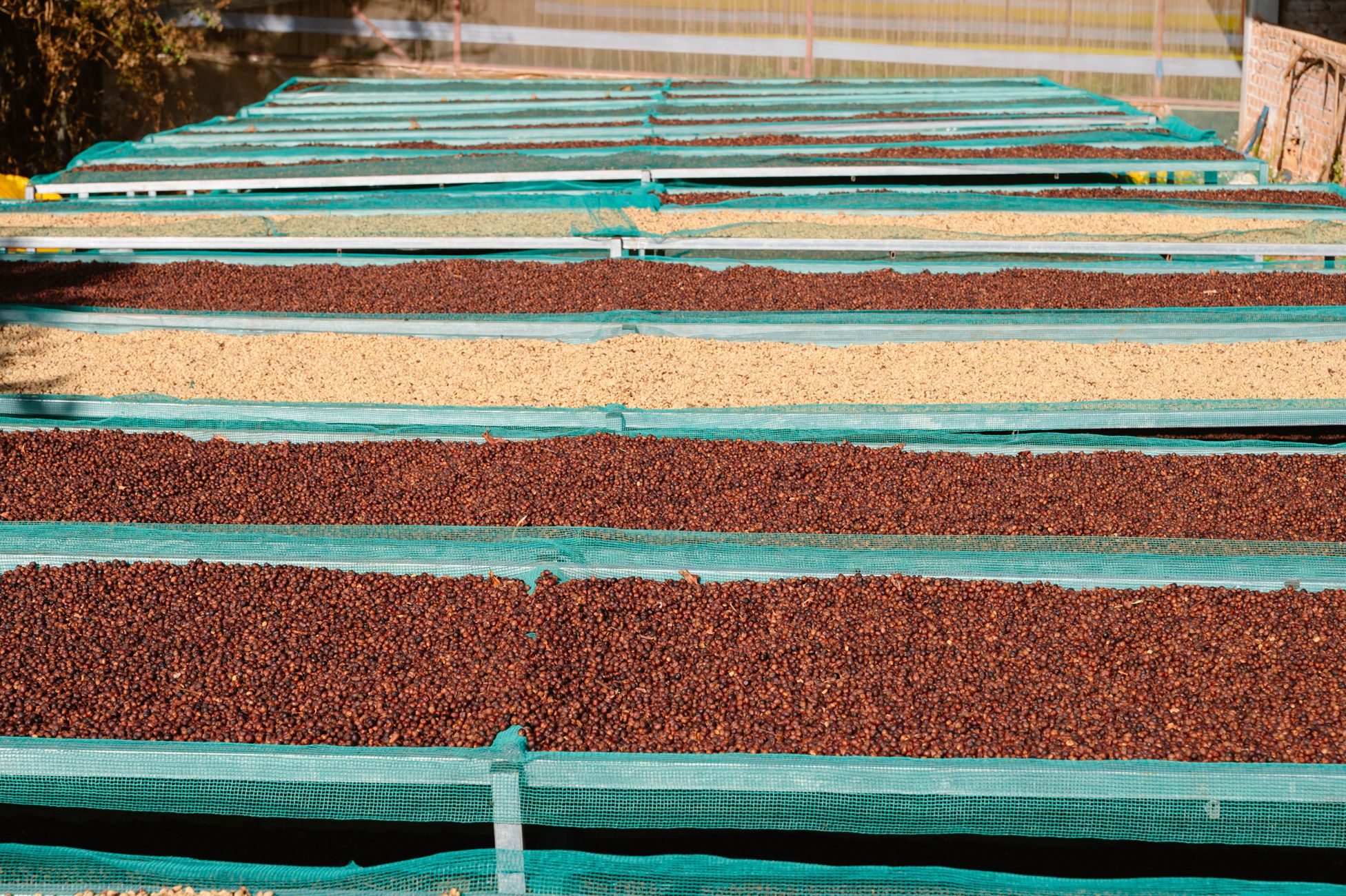
After the soak comes a final wash through grading channels, where beans are agitated in flowing water and separate by density. Denser beans sink and travel differently than lighter ones, which gives another round of sorting. Then they go onto raised drying beds for anywhere from one to three weeks, hand sorted repeatedly during the process.
Total time from cherry to dry parchment can run past seventy two hours before drying even begins, against maybe twenty four for a standard washed coffee.
What The Second Soak Is Actually Doing
There are several things going on and the industry does not fully agree on the relative weight of each.
The most defensible explanation is completion and cleanliness. The first fermentation degrades the mucilage but leaves residue. A second stage in clean water removes what is left thoroughly, so nothing sugary remains on the parchment to ferment erratically during the long drying period. A coffee that goes onto the beds genuinely clean dries predictably and does not develop the fermented, boozy off notes that plague sloppier processing.
The second explanation involves what happens inside the bean during the soak. A submerged coffee bean is still biologically active and still absorbing and releasing compounds. Extended submersion in clean water appears to leach out some of the compounds associated with bitterness and astringency while leaving the acids largely intact. The result is a cup where the acidity is exposed, unbuffered by the roughness that might otherwise sit alongside it.
The third is a slow, controlled continuation of enzymatic activity. Even in clean water, enzymes in the bean keep working, and some researchers attribute part of the Kenyan flavor complexity to organic acid development during this window. This is the least settled part of the picture.
What is not really in dispute is the result. Double washed Kenyan coffee is exceptionally clean, meaning free of defect and muddiness, while carrying an acid intensity that would normally come with harshness attached. That combination is the whole thing.
Why This Method Stayed In Kenya
If it works this well, an obvious question is why everyone does not do it.
Water is the first answer. The soak uses a great deal of clean water, and changing it partway uses more. In regions where water is scarce or where wastewater treatment is not feasible, this is a non starter. Coffee processing wastewater is high in organic load and is genuinely polluting if discharged untreated, which is a real problem even in Kenya.
Time is the second. Seventy two hours of tank occupancy before drying means a washing station needs far more tank capacity to handle the same daily cherry intake. That is capital and it is space.
Infrastructure is the third. The Kenyan factory system, with centralized cooperative washing stations serving many smallholders, is unusually well suited to this. A single farmer processing their own cherries would struggle to justify the tanks. The system evolved around the method and the method around the system.
And then there is the coffee itself. SL28 and SL34 have high acid potential to begin with. Running this process on a low acid Brazilian would remove roughness from a coffee that needed some, and the result would likely be thin rather than brilliant. The method amplifies what is there. It does not create it.
What This Means For Roasting
Kenyan coffee is difficult to roast and a lot of it gets ruined.
The beans are dense, a consequence of high altitude and the density sorting the process includes. Dense beans need more energy to develop fully, and a roaster who applies that energy carelessly scorches the exterior before the interior is done.
The acidity is the asset and it is also fragile in one direction. Roast too light and you get sour, grassy, aggressive coffee with all the acid and none of the sugar to balance it. Roast too dark and you destroy the acidity you paid a premium for, leaving a generic dark roast that could have come from anywhere. The usable window is narrow.
Heat application method matters here more than with most origins. In a drum roaster, dense beans in prolonged contact with a hot metal surface are prone to tipping and scorching, and those defects produce exactly the ashy note that fights against the clean profile the processing worked so hard to achieve. Air roasting suspends the beans in circulating hot air so heat arrives evenly from all directions with no contact surface, which makes it easier to drive enough energy into a dense bean without damaging its exterior. For a coffee whose entire appeal is clarity plus intensity, that difference is not academic.
Find a roast that respects the origin rather than burning past it.
How To Brew Kenyan Coffee Without Fighting It
The acidity that makes these coffees special will punish a careless brew.
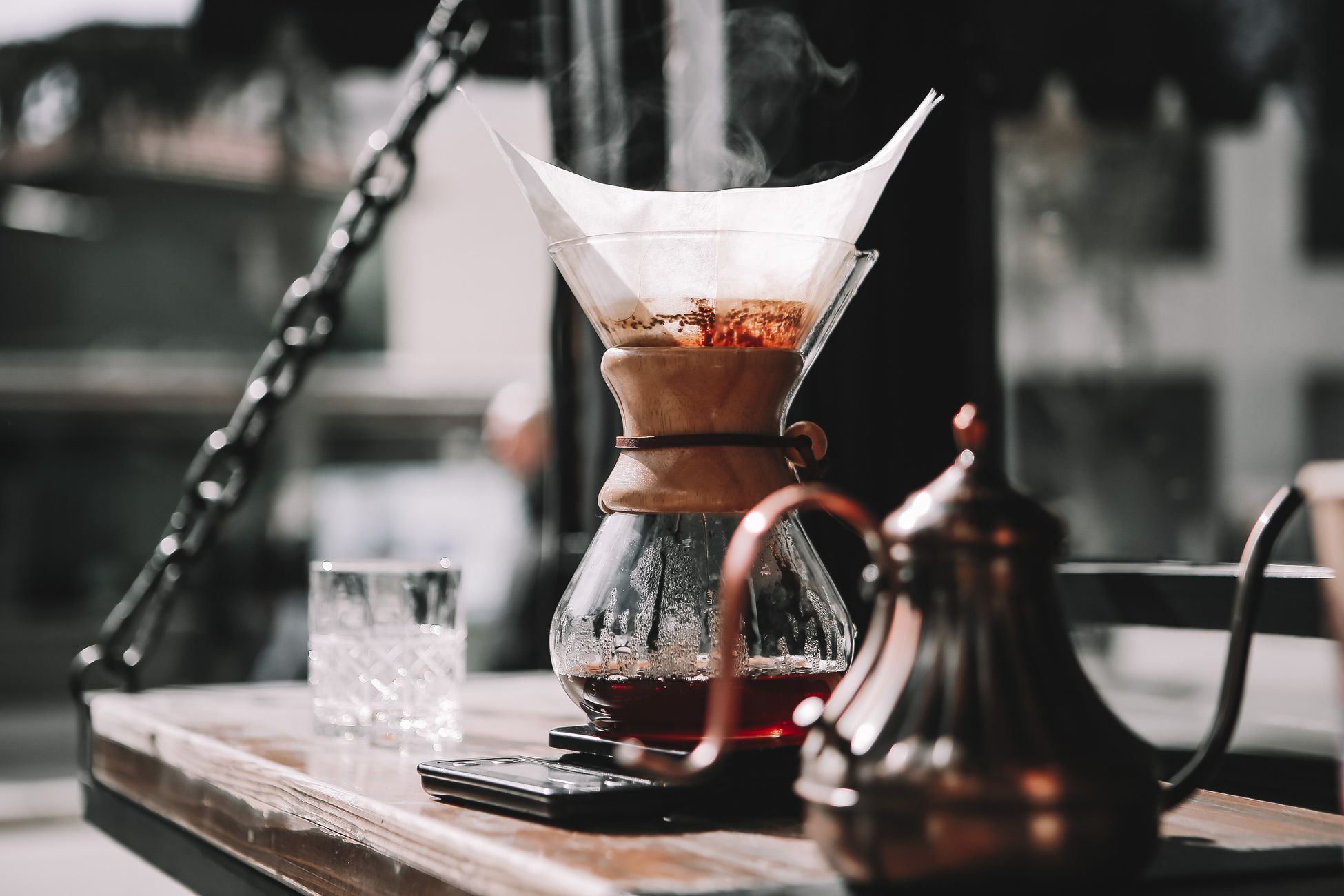
Grind slightly finer than your default and extract fully. Under extracted Kenyan is the most common home brewing failure, and it tastes like sour fruit juice. You need enough extraction to bring the sweetness forward so the acid has something to sit against.
Water temperature at the higher end of the range, 200 to 205, helps for the same reason. These dense beans give up their solubles reluctantly.
Water chemistry matters more than usual. Brew water with very low mineral content will make Kenyan taste harsh and sharp, because there is nothing to buffer the acids. A moderate mineral content, with adequate magnesium, produces a noticeably rounder cup from the same beans.
Paper filtration suits it. Clean processing plus clean filtration lets the specific fruit notes separate out. A French press blurs them.
And let it cool. A Kenyan at drinking temperature and a Kenyan ten minutes later are meaningfully different coffees, and the second one is often where the blackcurrant actually shows up. Rushing it is the easiest way to miss the point.
Reading A Kenyan Label
Kenya uses a screen size grading system and it confuses people. AA means the largest screen size, AB is the next, PB is peaberry. These are size grades, not quality grades, though AA lots do tend to be sold as the premium tier and priced accordingly. An AB lot from an excellent factory will frequently outcup an AA from a mediocre one.
The factory name is the more useful signal. Kenyan coffee is traceable to the specific washing station, and factories build reputations. A named factory on the bag means someone bought a specific lot rather than a blended regional offering.
Auction lot numbers occasionally appear and indicate the coffee moved through the Nairobi Coffee Exchange, which is the traditional route. Direct trade Kenyan exists and is growing, bypassing the auction entirely.
What you will not see on the bag is the processing detail, because almost every Kenyan coffee gets the double wash. It is the default there, which is exactly why the country tastes the way it does.
All images shown in this blog are sourced from pexels.com.