

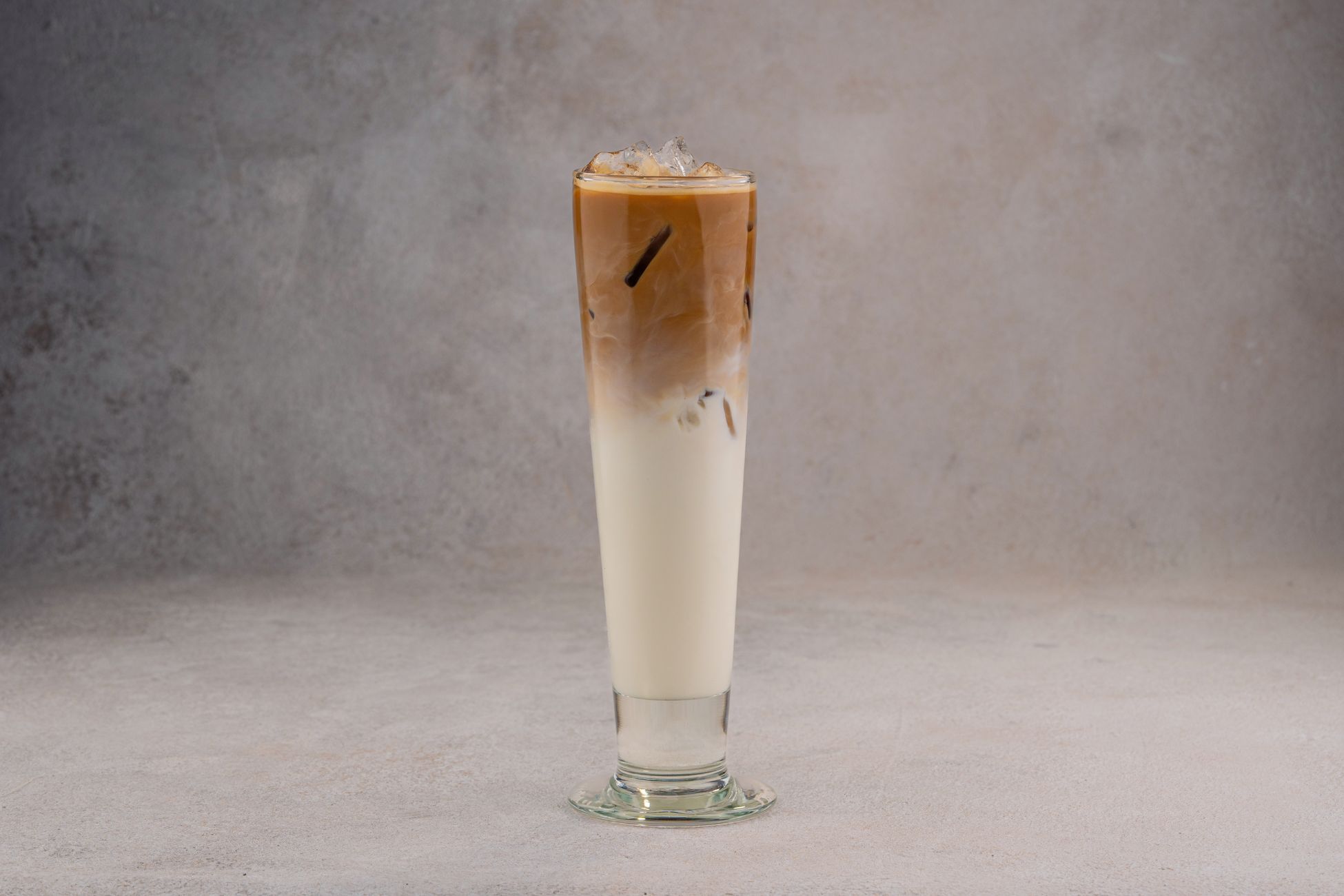
There is a moment every summer where you make a good cup of coffee, look at it, look at the weather, and pour it over a glass of ice. What comes back is disappointing in a way that is hard to name. It is cold, technically. It is also weak, weirdly sour, and gone in about four minutes.
The method that fixes this has been standard in Japanese cafes for decades and takes exactly as long as your normal pour over. It is called flash brewing, or Japanese iced coffee, and the entire idea is that you brew hot directly onto ice instead of brewing hot and adding ice afterward. The difference in the cup is not subtle.
Start with beans worth brewing twice.
Why Pouring Hot Coffee Over Ice Fails
Two separate problems hit at once, and they compound.
The first is dilution you did not account for. When hot coffee meets ice, the ice melts, and that meltwater is added to a brew that was already at full strength. A cup that was correctly extracted at, say, fourteen hundred parts per million of dissolved solids ends up somewhere well below that. Everything gets quieter. The sweetness thins out, the body vanishes, and the acidity, which is more resistant to dilution than the sugars are, starts to stick out on its own.
That is why over-ice coffee so often tastes sour rather than bright. You did not brew a sour coffee. You diluted away everything that was balancing it.
The second problem is aroma, and it is the one people underestimate. Most of what you experience as coffee flavor arrives through your nose, from volatile aromatic compounds lifting out of the cup. Those compounds are volatile because heat drives them off. A cup of hot coffee sitting on the counter is actively losing its aromatics to the room, and the longer it sits before you chill it, the more of them are gone for good.
By the time you have brewed, waited for it to cool enough to be worth chilling, and poured it over ice, a meaningful share of the reason you bought good coffee has evaporated into your kitchen.
What Flash Brewing Actually Does
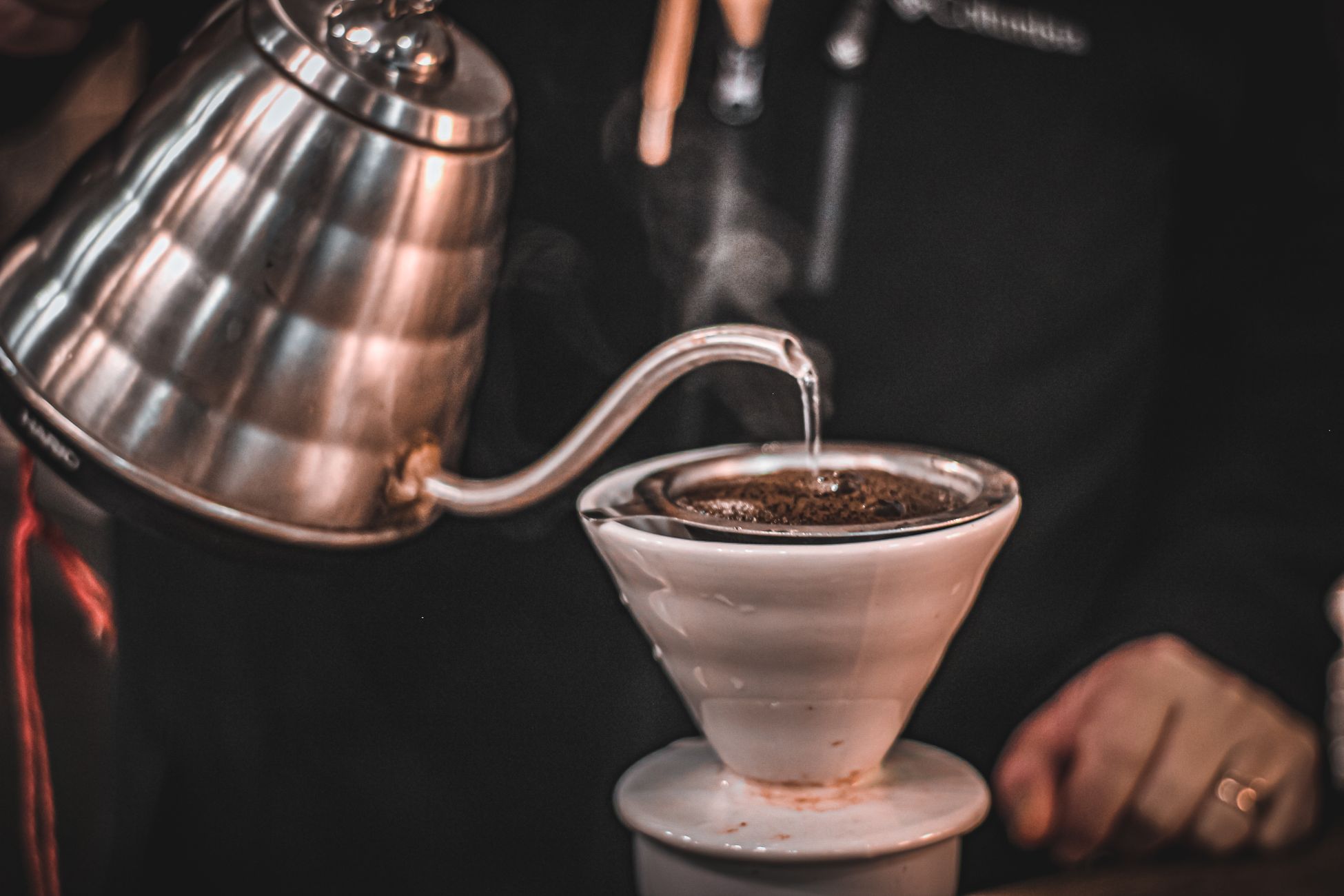
The method is simple. You put a measured weight of ice in the vessel you are brewing into, then brew hot coffee at full strength directly onto that ice, using less hot water than you normally would by exactly the weight of the ice you added.
Everything good about the hot brew happens as normal. Full temperature water, proper extraction, all the sweetness and body and complexity that hot water pulls out of coffee and cold water never fully does.
Then the extract lands on ice and drops from brewing temperature to cold within seconds. The aromatic compounds that would have escaped over the next ten minutes get trapped in the liquid instead, because chilling something rapidly is how you keep volatiles from leaving it.
The ice melts, but you already subtracted its weight from your brew water, so the final drink lands at exactly the concentration you designed. Nothing is diluted. Nothing is missing.
The Ratio Math, Which Is the Whole Trick
This is the part people get wrong, and it is worth being precise about.
Take your normal recipe. Say twenty five grams of coffee to four hundred grams of water. For flash brew, you keep the coffee dose and the total water weight the same, but you split the water between ice and hot water.
A common split is forty percent ice, sixty percent hot. So four hundred grams of total water becomes one hundred and sixty grams of ice in the carafe and two hundred and forty grams of hot water through the coffee bed.
That is it. Twenty five grams of coffee, one hundred and sixty grams of ice waiting below, two hundred and forty grams of water poured over the grounds. The finished drink is four hundred grams of liquid at full strength, chilled.
Some people prefer a fifty fifty split for a colder result, or a thirty percent ice split if they plan to pour it over more ice in a serving glass. If you are going to add ice to the glass at the end, subtract that ice from your ratio too, or you are right back where you started.
Weigh the ice. Do not eyeball it. Ice cubes vary enormously in size, and the entire method rests on knowing how much water is going to arrive from underneath.
Adjusting the Grind and the Pour
Two hundred and forty grams of water through twenty five grams of coffee is a tighter ratio than you usually run, which means the water has less volume to work with and the brew finishes faster.
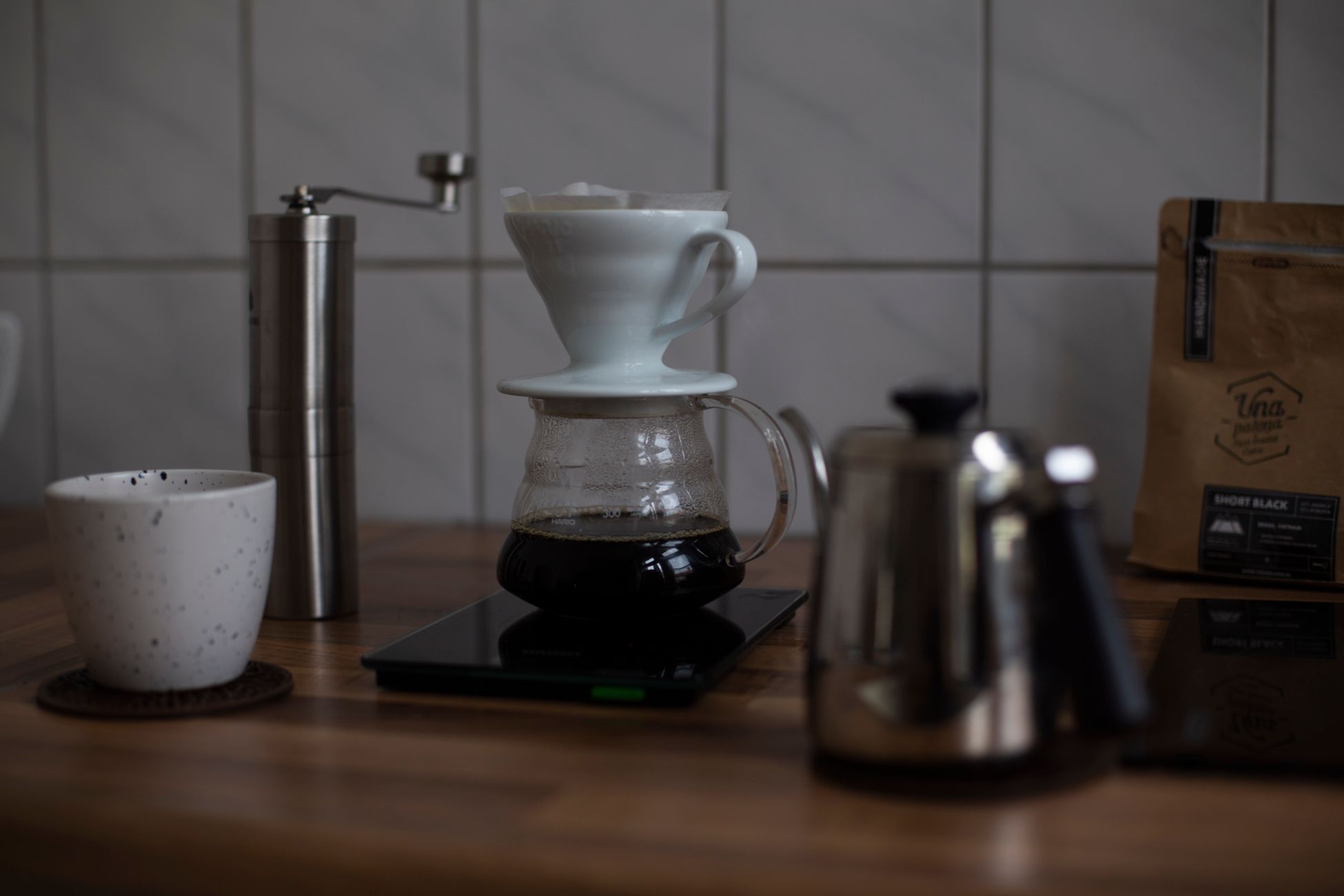
Grind slightly finer than you would for the same coffee hot. Not dramatically, just a notch. This compensates for the reduced contact time and keeps extraction where it should be.
Bloom as normal, with about twice the weight of the dose in water, and give it thirty to forty five seconds. Then pour in stages the way you would for any pour over, keeping the bed even.
Do not stir the ice while brewing. Let the coffee land on it and melt it from the top down. Swirl the carafe once at the end if the ice has not fully melted, which sometimes happens on a cool day, and that last bit of agitation finishes the job.
Pick a coffee with enough fruit to shine cold.
Which Coffees Work Best Cold
Flash brewing rewards a different kind of coffee than cold brew does.
Cold brew flattens acidity and emphasizes chocolate and nut character, which is why dark roasts and Brazilian coffees taste so good made that way. Flash brew does the opposite. It preserves everything the hot brew produced, and then chilling it sharpens perception of acidity while slightly muting perceived sweetness.
So the coffees that shine are the fruity, floral, high acidity ones. Washed Ethiopians turn into something that tastes closer to iced tea in the best sense. Kenyans get intense and blackcurrant heavy. Naturals from anywhere become tropical and loud.
A dark roast made this way tends to taste harsh and ashy, because chilling exposes bitterness that the warmth was hiding. If dark roast is what you have, cold brew is the better method for it.
Roast level matters more than usual here. Light to medium is the range where this method looks like a magic trick.
Why It Is Not the Same as Cold Brew
They are two different drinks that happen to both be cold, and treating them as substitutes leads to disappointment in both directions.
Cold brew is a long, low temperature extraction, usually twelve to twenty hours, which selectively pulls certain compounds and leaves others behind. Many of the acids and aromatics simply do not dissolve well without heat, which is why cold brew is smooth and sweet and low acid, and why it tastes broadly similar regardless of which good coffee you use.
Flash brew is a hot extraction that gets chilled. It contains everything a hot cup contains. It is bright, complex, and origin specific, and it tastes noticeably different from bean to bean.
Cold brew takes a day and makes a batch. Flash brew takes four minutes and makes one drink. If you want to taste the character of a particular coffee on a hot afternoon, flash brew is the answer. If you want a smooth concentrate in the fridge for the week, cold brew still wins.
Making It Work in Practice
Brew directly into a carafe or a server with the ice already in it, not into a cup you will transfer later, since every transfer costs you temperature and aroma.
Drink it soon. Flash brew is at its best in the first several minutes, and while it holds up in the fridge for a day, it loses some of the aromatic lift that made it worth the trouble.
Use decent ice. Ice made from old, off tasting freezer water will show up in the glass, since roughly forty percent of the drink is that meltwater.
And if the result tastes thin, check your math before blaming the coffee. Nine times out of ten it is unweighed ice or forgotten ice in the serving glass, not the recipe.
Once the ratio is written down, it becomes the fastest good cold coffee you can make at home, and it holds onto the exact qualities you paid for when you bought the bag.
Find your next bag before the weather turns.
All images shown in this blog are sourced from pexels.com.