

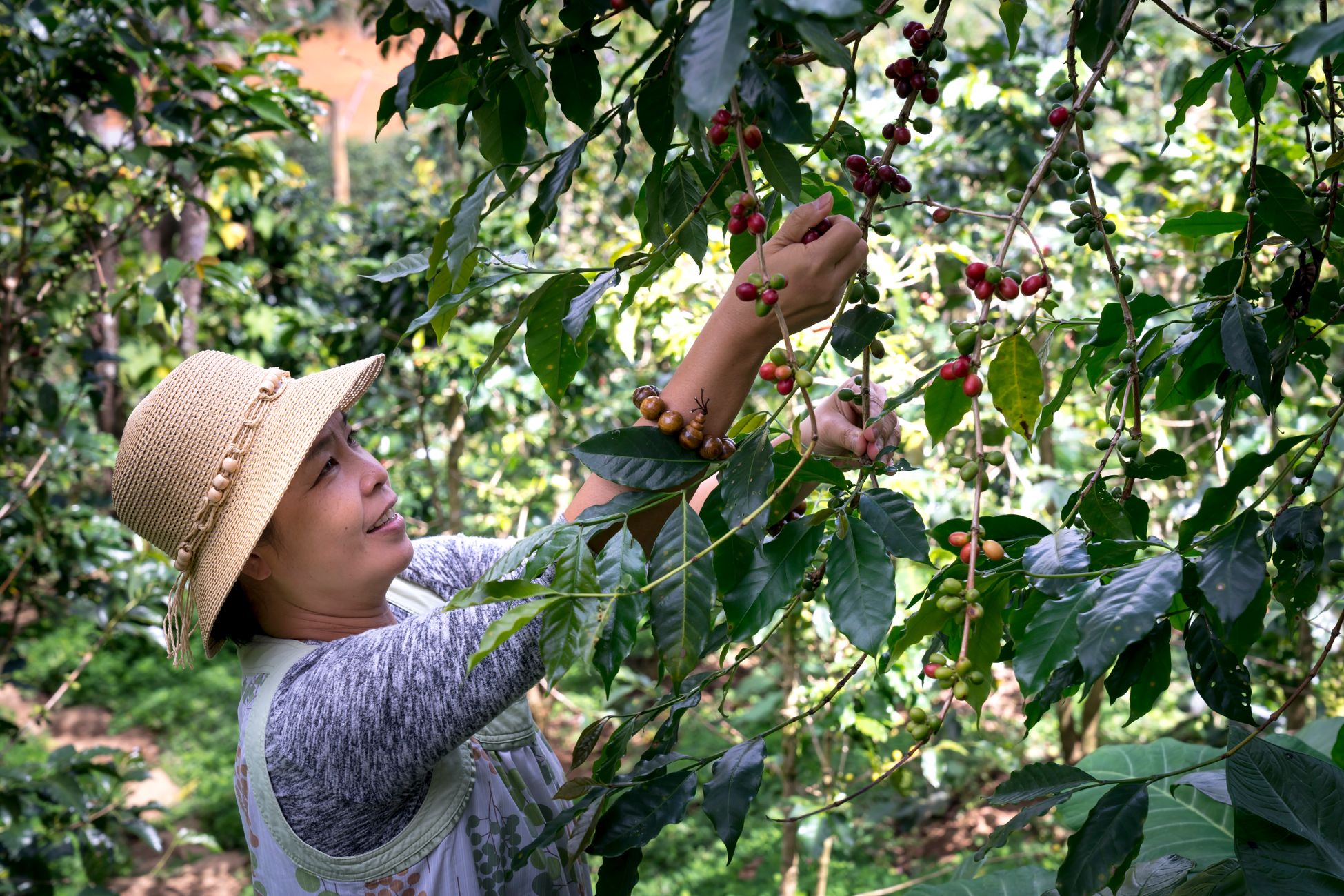
Every conversation about coffee quality eventually reaches the roaster, the grinder, or the brew. Almost none of them start where the difference actually begins, which is a person standing on a slope with a basket tied around their waist, deciding one cherry at a time whether it is ready.
That decision, repeated a few thousand times a day across a harvest season, does more to determine what ends up in your cup than anything that happens afterward. It is also the single largest cost on most specialty coffee farms, and understanding why explains a lot about the price of a bag.
See what careful sourcing tastes like.
Coffee Does Not Ripen All at Once
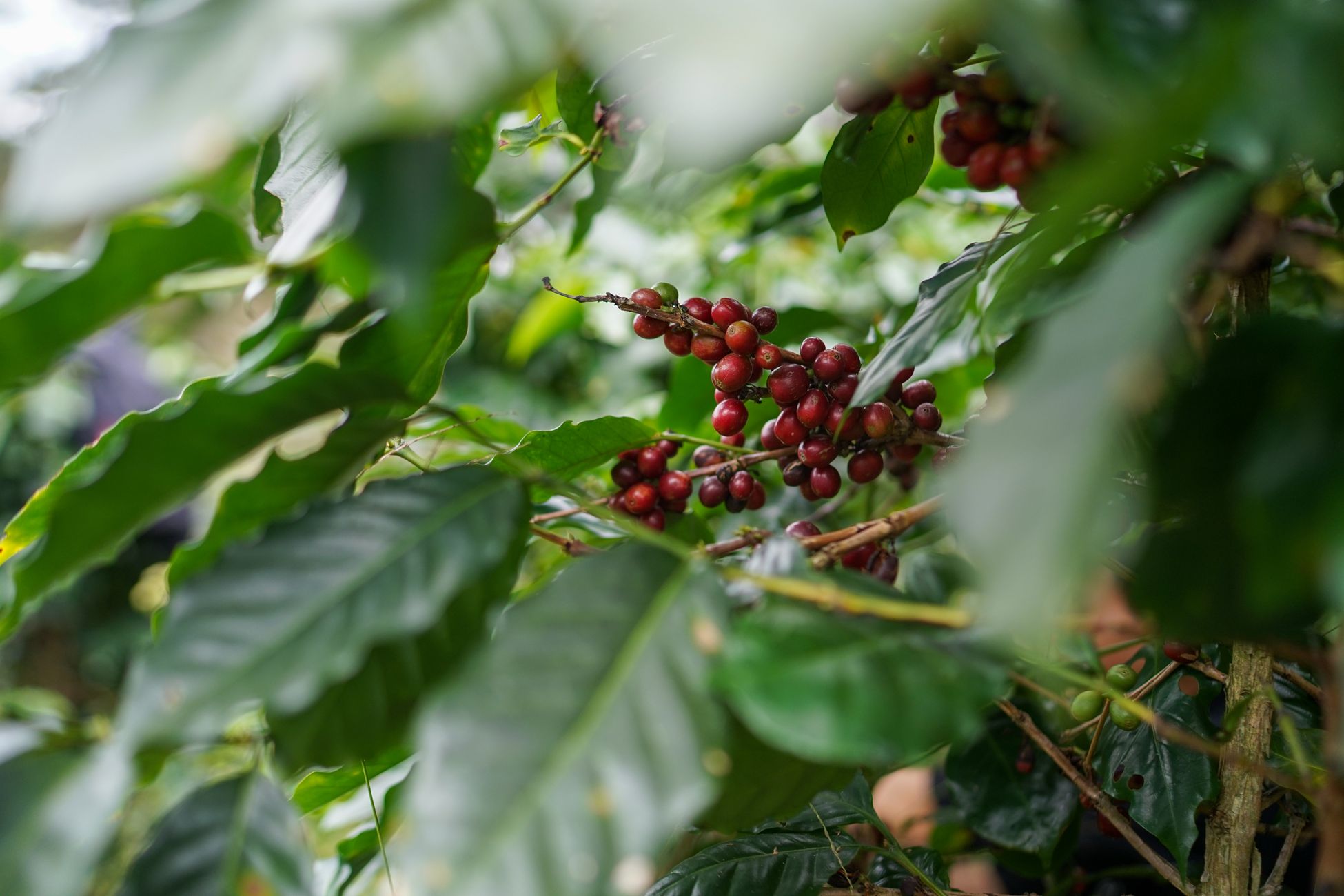
A coffee tree is not a wheat field. On a single branch, at the same moment, you will find hard green cherries, yellowish ones turning, deep red ripe ones, and dark overripe ones already starting to shrivel. The tree flowers in waves, often triggered by separate rain events, and the fruit follows those waves.
That means a farm cannot harvest once. A block of trees gets picked repeatedly through the season, sometimes four or five times, sometimes more on the highest farms where ripening stretches out over months. Each pass takes only what is ready and leaves everything else on the branch to be collected on the next round, a week or two later.
Selective picking, done properly, is a repeated visit to every tree on the farm. That is the real cost. You are not paying for one harvest, you are paying for four or five, plus the transport, the organization, and the labor to run each one.
What Strip Picking Does Instead
The alternative is to take everything at once. A picker runs a hand down the branch and pulls all the fruit off in one motion, or a mechanical harvester straddles the row and shakes the trees until the cherries fall onto a conveyor.
It is dramatically cheaper and faster. A machine can cover in a day what a crew would take a week to do by hand, and a strip picking crew moves several times faster than a selective one because no decision is being made per cherry.
What you get is a mix. Ripe fruit, unripe green cherries, overripe and fermenting fruit, leaves, twigs, and whatever else came off the branch, all in the same bag heading to the mill.
Machine harvesting is not automatically bad. On flat land with uniform ripening, with modern harvesters that can be tuned to shake at frequencies that mostly dislodge ripe fruit, and with good sorting afterward, it produces perfectly acceptable commercial coffee. Brazil runs enormous volumes this way and does it well.
But it is a volume answer, not a quality answer. And on the steep slopes where most high altitude specialty coffee grows, a machine cannot physically get there anyway.
What Unripe Cherries Do to a Cup
Here is the part that connects the hillside to your kitchen.
An unripe cherry has not finished making sugar. The seed inside is underdeveloped, denser and paler than a ripe one, with less of the sugar and acid precursors that the roast turns into flavor. When it goes through the roaster alongside properly developed beans, it does not roast the same way, because roasting behavior depends on density and moisture content.
The result is the pale bean in an otherwise even roast, and it brings grassy, astringent, papery flavors into the cup. It also drags down sweetness, because it contributes almost none of its own while taking up space in your dose.
Overripe cherries cause a different problem. Fruit that has been on the tree too long, or that fell and sat on the ground, has usually begun fermenting uncontrolled. That brings sharp, vinegary, sometimes rotten notes, and unlike an unripe bean it can taint a much larger volume than its own share.
A small percentage of either is enough to be noticeable. This is not a subtle background effect. A handful of bad cherries in a batch is one of the most common reasons a coffee from a good farm still tastes muddled.
Ripeness Is Measured, Not Guessed
On serious farms, ripeness is not left entirely to the eye. Producers use refractometers to measure the sugar content of the fruit, expressed in degrees Brix, and set a threshold that cherries have to hit before a block gets picked.
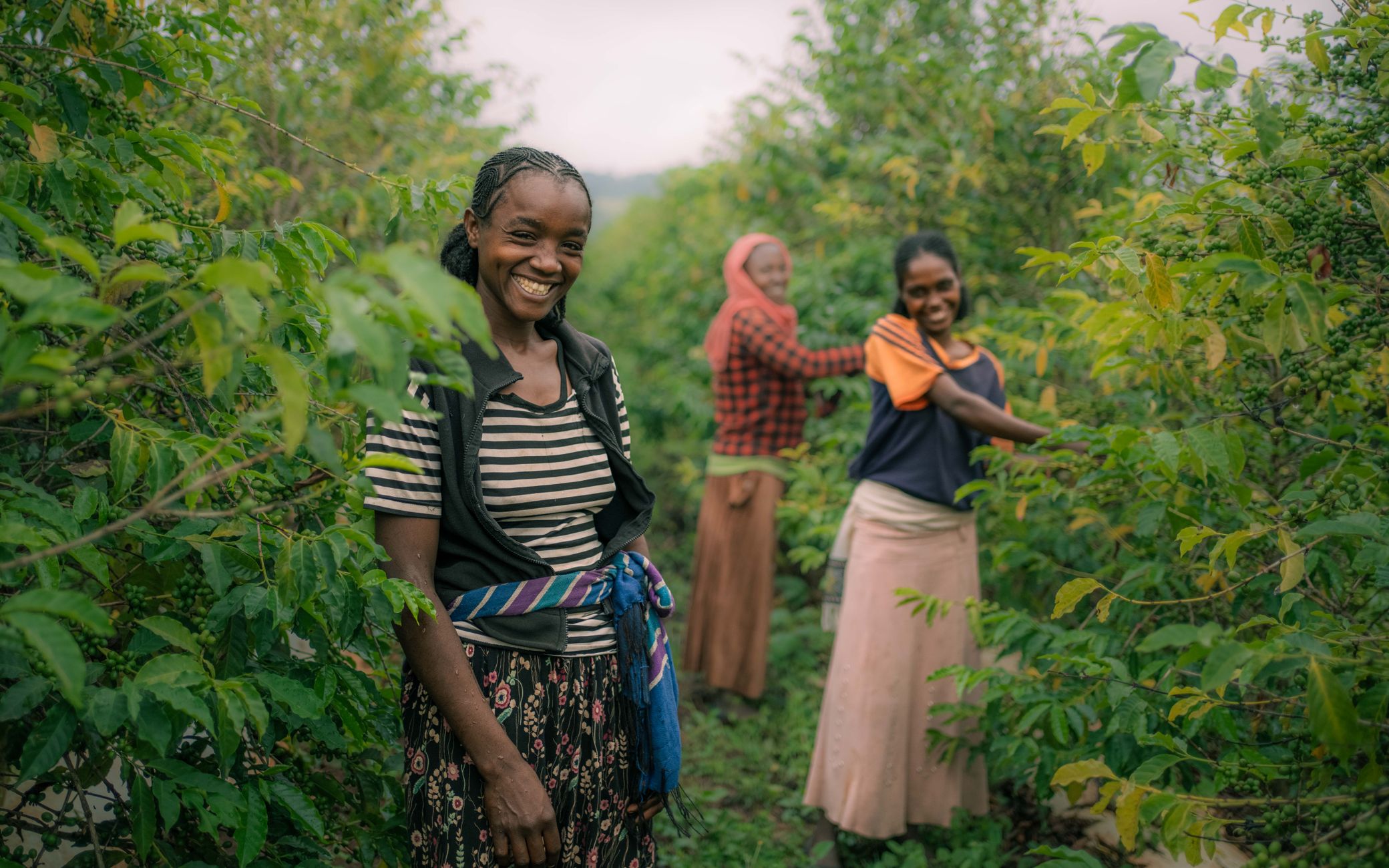
Pickers get trained on color charts, since the target color varies by varietal. Most cherries ripen to deep red, but some varietals ripen yellow or orange, and a picker trained only on red will strip a yellow bourbon tree of half its unripe fruit.
Payment structures matter as much as training. If pickers are paid purely by weight, the incentive is to take everything, since green cherries weigh the same as ripe ones. Farms that care about quality pay a premium for selectively picked lots, run quality checks at delivery, and sometimes reject or discount bags that fail a ripeness sample.
There is also a float tank at the mill, where cherries go into water and the underdeveloped ones float while dense ripe fruit sinks. That catches a portion of what got through, but it is a safety net rather than a substitute for picking well.
Buy coffee from people who sort it properly.
Why This Is the Hardest Cost to Cut
Coffee farming has mechanized almost everywhere it can. Pulping, fermenting, drying, hulling, sorting, all of it has machinery available at various scales.
Harvesting on a steep hillside is the holdout. It requires a person to walk to every tree, several times per season, and make thousands of judgment calls, and there is no machine that does this at any price on that terrain.
Labor for that work has become steadily harder to find. Younger generations in many producing regions have moved toward cities and other industries, and harvest is seasonal, physically punishing work. Some regions now import pickers from neighboring countries. Some farms have lost part of a crop simply because there was nobody to pick it during the window when the fruit was ready.
So when a farm keeps selective picking going, it is holding onto the most expensive, most labor dependent, hardest to staff part of the entire operation because it is the part that decides whether the coffee is good.
How to Spot the Difference on a Bag
You will rarely see the words hand picked on a label, and when you do, it is often decoration. Look for the signals that make selective picking likely instead.
Altitude. High grown coffee on steep terrain is picked by hand because there is no other option.
Farm level traceability. A named farm or a microlot means someone was tracking quality at a granularity that makes careless picking pointless.
Score and price. Specialty grade coffees are cupped and scored, and a lot full of unripe fruit does not reach a high score. If a roaster is paying well above commodity price, they are buying against a quality standard that selective picking is required to meet.
A roaster who talks about the producer. Roasters who visit farms and buy relationships know how the coffee was harvested and will usually tell you if you ask.

What It Actually Buys You
Sweetness, mostly. A lot picked at consistent ripeness brews sweeter than the same coffee picked carelessly, because every bean in the dose is contributing developed sugars rather than diluting the batch.
Cleanliness is the other half. No grassy edge, no sour off notes, nothing distracting sitting behind the flavors you are supposed to be tasting.
And consistency, which is the quiet one. When every bean in the bag started at roughly the same ripeness and density, the roast is even, the grind behaves predictably, and the same recipe gives you the same cup on Tuesday that it gave you on Sunday.
None of that is glamorous. It is all upstream, invisible, and finished months before the coffee reaches a roaster. But it is the reason two bags from the same country, the same altitude, and the same varietal can taste like different products, and the reason the more expensive one usually is.
Taste what a careful harvest gets you.
All images shown in this blog are sourced from pexels.com.