

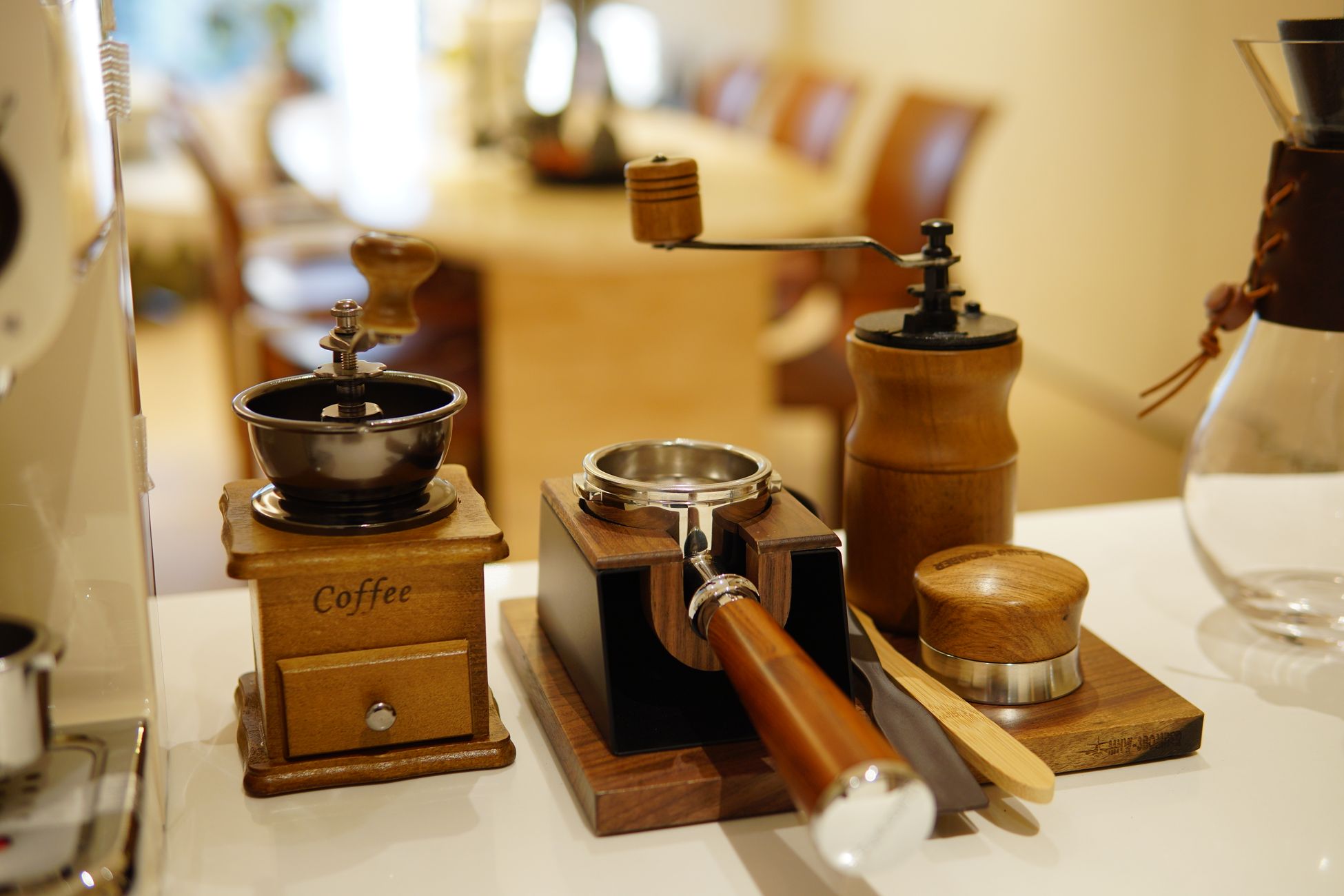
For a long time the hand grinder was the compromise. It was what you took camping or kept in a drawer for travel, and everyone understood that a real setup meant something with a motor. Recommending a hand grinder to someone serious about coffee would have been slightly insulting.
That stopped being true somewhere in the last decade, and the change was not gradual. A modern hand grinder in the middle of the market now outperforms electric grinders costing several times as much, and the reasons why are worth understanding, because they also explain exactly where hand grinders still lose badly.
Grind something worth the effort.
What Actually Changed
Three things happened roughly at once.
Burr manufacturing got much better and much cheaper. Precision machined conical and flat burrs, and later burrs designed with computer modeling and cut on modern equipment, became available at prices that suited a hand grinder. The burr is the part that determines grind quality, and for the first time you could buy a genuinely excellent burr set in a small package.
Materials got better. Stainless steel bodies, hardened steel burr sets, and proper bearings replaced the cast pot metal and loose tolerances of the old crank grinders. This matters more than it sounds, and the reason is the next point.
Someone finally fixed the axle. The single biggest weakness in traditional hand grinders was the shaft holding the burr, which was supported at one end and free to wobble at the other. A wobbling burr means the gap between burrs changes constantly during grinding, which produces a wide, inconsistent particle distribution. Modern designs support the shaft with bearings above and below the burr set, holding it rigidly in alignment. That one change transformed what a hand grinder is capable of.
The Physical Advantage Nobody Mentions
Here is the part that explains why hand grinders punch above their weight, and it is not about engineering ambition. It is about torque and speed.
An electric grinder at a given price point has to compromise between motor power and cost. Underpowered motors either stall or have to spin fast to get through the coffee, and speed generates heat and can worsen consistency.
A person turning a crank produces enormous torque at very low speed. Your arm is, in this specific application, a better power source than a small cheap motor. Low speed grinding generates almost no heat, which matters for aromatics, and it lets a small burr set do work that would demand a much bigger motor to accomplish electrically.
Alignment is also easier at small scale. Holding two burrs parallel to within a few microns is much simpler when they are forty millimetres across and rigidly mounted in a small steel body than when they are eighty three millimetres across in a machine that also has to house a motor and absorb its vibration.
So the hand grinder gets to skip the two most expensive problems in grinder design. That is why the price difference is so stark.
Where a Good Hand Grinder Genuinely Competes
For filter coffee, a well made hand grinder in the middle of the market produces particle distribution that competes with electric grinders several times the price. That is not a marketing claim, it is consistently what particle analysis and blind tasting show.
For espresso, the picture is nearly as good on grind quality. A hand grinder with a suitable burr set and a fine adjustment mechanism can produce espresso grind that pulls excellent shots.
Retention is often better too. Hand grinders have short, simple grind paths and no motor housing for grounds to hide in, so less coffee gets left behind between doses. For anyone switching between coffees frequently, that is a real advantage.
They are quiet, which sounds trivial until you make coffee at five in the morning in a house with other people in it. They do not need power. They are small enough to travel with. And they have almost nothing to break, since there is no motor and no electronics.
Buy beans that reward a good grind.

Where They Still Lose, and It Is Not Close
Volume. This is the decisive one. Grinding twenty grams for a pour over takes twenty to forty seconds of moderate effort. Grinding sixty grams for a large batch brew is genuinely tiring, and grinding enough for a group of guests is unpleasant. Anyone brewing large volumes regularly should own an electric grinder, and that is the end of the discussion.
Espresso effort. Fine grinding takes substantially more force than coarse grinding. An espresso dose through a hand grinder is a real physical task, taking perhaps thirty to fifty seconds of firm cranking. Doing that once a day is fine. Doing it for four drinks in a row on a Saturday morning is a chore, and people with wrist or hand problems often find it impossible.
Speed and workflow. Pressing a button and doing something else is a different experience from standing still and cranking. In a busy morning routine, that difference decides which grinder gets used.
Dosing convenience. Most hand grinders require you to weigh beans into the hopper for every dose, since the catch cup and the small hopper do not lend themselves to grinding on demand from a large bean reservoir. Electric grinders with hoppers and timed or weight based dosing are simply easier.
The very top end. High end electric grinders with large flat burrs produce particle distributions and espresso characteristics that no hand grinder matches. If you are chasing the last few percent, the ceiling is higher on the electric side.
How to Choose Between Them
Answer three questions honestly.
How much do you grind at once? Under thirty grams, a hand grinder is entirely reasonable. Consistently over fifty, go electric.
Do you make espresso, and how many drinks? One or two espressos a day is very manageable by hand. Four or more, or milk drinks for a household, and the effort stops being charming.
What is your budget? This is where the hand grinder argument is strongest. At the lower end of the market, a hand grinder is dramatically better than any electric grinder at the same price. There is no contest, and it is not particularly close. As budget rises the gap narrows, and at the upper end electric wins.

What to Look For in a Hand Grinder
Dual bearing support on the shaft. Non negotiable. This is the feature that separates modern grinders from the wobbly ones and it is usually stated plainly in the specifications.
Burr type suited to your brewing. Conical burrs are the norm and work well across the range. Some newer designs use small flat burrs and are aimed at espresso or at particular flavor profiles.
Adjustment resolution. For filter only, coarse steps are fine. For espresso you want fine, repeatable clicks with enough of them in the espresso range to actually dial in.
Build materials. Steel body, steel burrs, and a mechanism that does not flex under load. Plastic bodies flex, and flex means alignment moves under pressure.
Handle length and grip. Longer handles give more leverage, which matters more than people expect when grinding fine.
The reasonable conclusion is that a hand grinder is no longer a compromise, it is a legitimate choice with a specific set of tradeoffs. If you brew one or two cups at a time and care about what is in them, it is very likely the best grinder you can buy for the money. If you brew for a household or make several espressos in a row, buy the motor and do not feel bad about it.
Start with coffee good enough to notice the difference.
All images shown in this blog are sourced from pexels.com.