

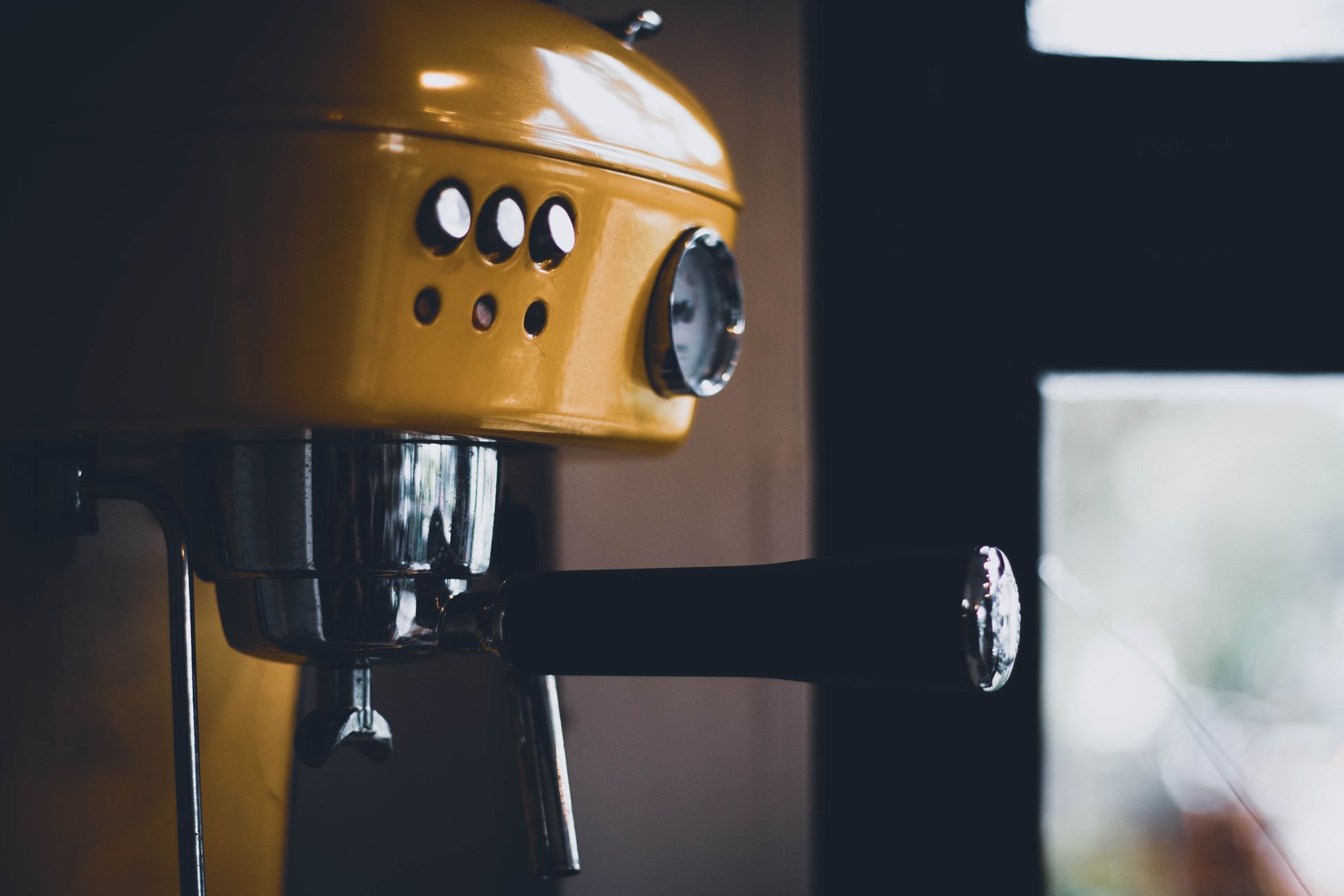
Espresso has a reputation for precision. Scales that read to a tenth of a gram, grinders adjusted in tiny steps, shots timed, tasted, and pulled again. It is easy to assume the drink was invented by people chasing the perfect cup.
It was invented by people chasing a faster one. Italian cafes at the end of the 1800s needed coffee quicker than their customers were willing to wait for it, and the espresso machine was the answer. Flavor came later, and for a long stretch of the drink's history it came a distant second. Knowing that story explains why the shot is small, why so many people drink it standing up, and why a good one still depends on choices the machine cannot make for you.
Find a coffee worth slowing down for
What The Word Espresso Was Pointing At
The word espresso carries a few overlapping meanings in Italian. It means pressed out, which describes water pushed through ground coffee. It also connects to express in the sense of something made expressly for you, on the spot, and to express in the sense of fast, like an express train. All three fit. Coffee made quickly, to order, one cup at a time.
That last part was the real novelty. Before espresso machines, cafes brewed coffee in batches or one slow pot at a time. It took a while to make, and once it was made it sat. A customer either waited for a fresh pot or drank whatever had been keeping warm.
Italian cities in the late 1800s were getting busier, and their cafes were full of people who wanted a coffee and then wanted to get on with their day. Slow brewing did not fit that rhythm. The pressure to change was commercial, not culinary. Cafe owners wanted to serve more people, faster.
The First Machines Were Built For Volume
In 1884, Angelo Moriondo patented a steam-driven coffee machine in Turin. It used steam and hot water to brew coffee in bulk, far faster than the methods cafes had been relying on. It was a machine for making a lot of coffee quickly, not a machine for crafting a single cup.
That distinction matters. Moriondo solved the speed problem for a busy room, but the coffee still came out in quantity and still had to be served from that quantity. The idea of brewing each cup fresh for the person in front of you was not there yet.
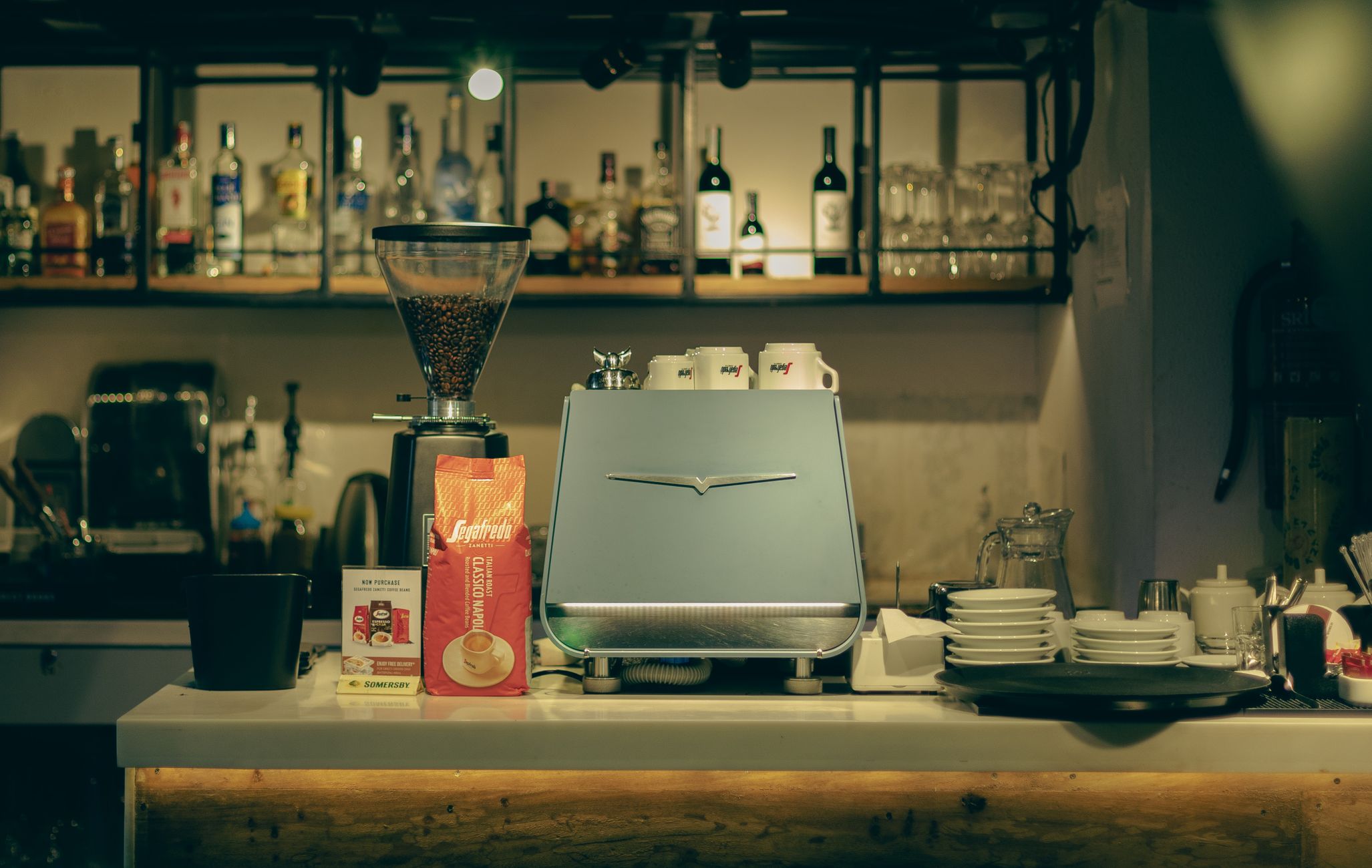
That step came in the early 1900s. Luigi Bezzera, in Milan, patented a machine that brewed single servings quickly using steam pressure. Each cup was brewed directly for the customer, in roughly the time it took to order and pay. Desiderio Pavoni bought the patent, and the two of them showed the machine at the 1906 Milan fair.
Those tall, gleaming machines became the centerpiece of the Italian cafe counter. They were fast, and they turned coffee into something you could get on demand. What they did not do was make especially good coffee.
Fast, Hot, And Often Bitter
Here is where speed and flavor parted ways. The early machines relied on steam from a boiler to push water through the coffee. Steam can only generate so much force in a machine like that, and the brewing pressure sat at only around 1.5 bar. Building even that much pressure meant heating the water well past the temperature coffee brews best at.
The result was coffee that came out fast but often tasted bitter and burnt. Water that hot drags harsh compounds out of the grounds, and the low pressure could not produce the layer of foam we now expect on top of a shot. There was no real crema. The drink was strong, quick, and rough around the edges.
People drank it anyway, because it solved the problem it was built to solve. You walked in, ordered, drank a hot, strong coffee at the bar, and walked out. In a busy city that convenience was worth more than nuance.
Gaggia And The Shot We Recognize
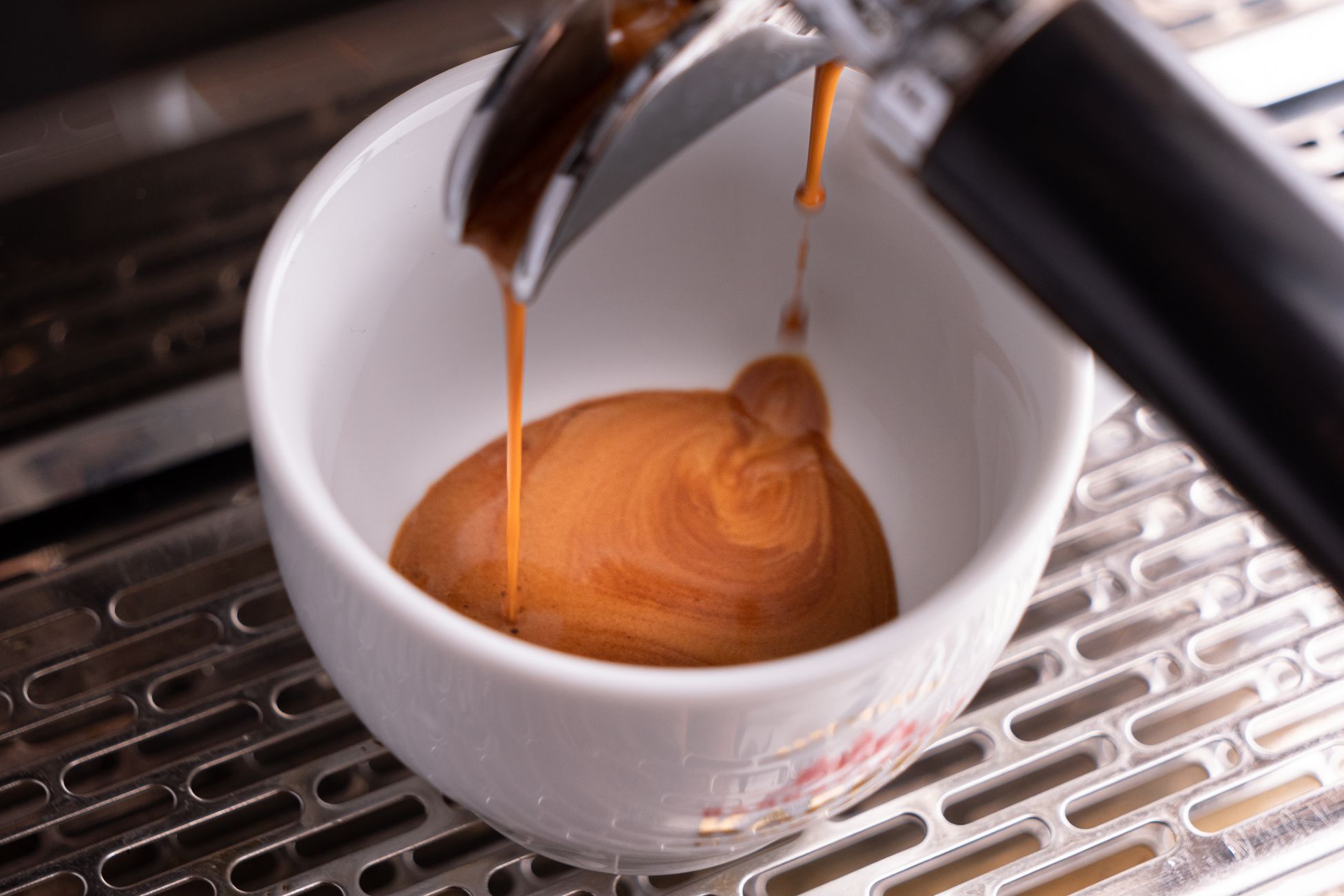
The big shift came after World War II. In the late 1940s, Achille Gaggia's spring-lever piston machines arrived in cafes. Instead of relying on steam, the barista pulled down a lever that loaded a heavy spring. As the spring released, it drove a piston that forced water through the coffee at far higher pressure, roughly 8 to 10 bar. It is a big part of why we still talk about pulling a shot.
Because the spring supplied the pressure, the water no longer had to be superheated to get it. That alone took much of the burnt edge off. And the higher pressure produced something customers had never seen on their coffee: a thick layer of foam. It was unfamiliar enough that it needed a sales pitch, so it was presented to customers as caffè crema, coffee with cream, turning a strange new foam into something that sounded rich and appealing.
The improvement in taste was real. But look at the format, and it had not changed at all. A small, concentrated cup, brewed in seconds, served to someone standing at the counter, followed by the next customer and the next. The lever made espresso better, and it made it just as fast.
Every shot pulled today starts with that pressure problem already solved, which means the beans finally get a fair chance to show what they taste like.
Find a coffee that rewards a well-pulled shot
The E61 Set The Template For Modern Machines
In 1961, Faema released the E61. It replaced the barista's arm and the lever's spring with an electric pump, so pressure no longer depended on how the lever was pulled. It also had a group head designed to stay at a stable temperature, so a shot late in the morning came out much like the first one.
That combination set the template. Pump-driven pressure, a heat-stable group, a portafilter locked in by hand. Nearly every espresso machine since, from cafe workhorses to home machines on kitchen counters, follows that basic layout, and plenty of machines sold today still use a group head based on the E61 design.
Notice what the E61 delivered: consistency at volume. A cafe could run a long line of customers through one machine and get the same result shot after shot, without a barista fighting a lever. That is a huge gain. It is also, once again, a gain that serves speed first.
Why The Format Still Looks Like A Rush Order
Almost everything about espresso's shape comes from this history. The cup is small because the drink was meant to be finished quickly. The coffee is concentrated because it is brewed in seconds rather than minutes. In Italy, a great deal of espresso is still drunk standing at the bar, ordered and finished in a few minutes.
The classic Italian bar blend reflects the same priorities. Many were roasted dark and built for consistency, body, and a dependable crema, sometimes with robusta in the mix. They were designed to taste the same every day, under heavy use, across a long morning rush. That is a sensible goal for a busy bar. It is a different goal from showing off what one particular farm's coffee tastes like.
The idea that a shot should highlight origin character, so that espresso from one farm tastes clearly different from espresso from another, is much more recent. So is the habit of weighing doses and yields, adjusting grind in small steps, and tasting until a shot is dialed in. For most of espresso's history, nobody was asking those questions. The specialty coffee movement brought them to the bar over the last few decades.
Speed Is Built In, Flavor Has To Be Chosen
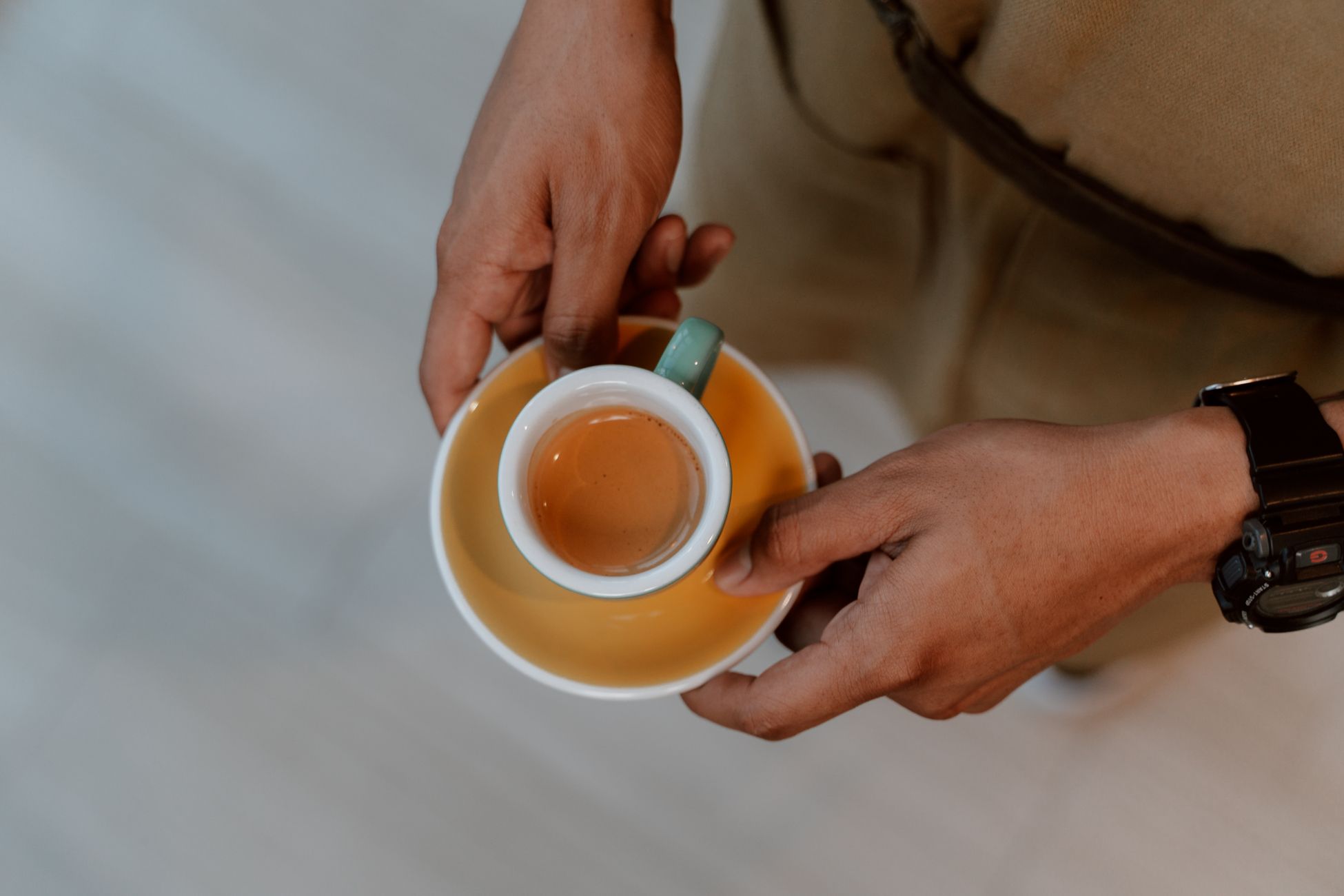
This is the useful part for anyone making espresso today. Your machine, whether it sits in a cafe or on your counter, inherited more than a century of engineering aimed at one goal: getting a hot, concentrated shot into a cup quickly. It will do that every time you press the button. Speed comes free.
Flavor does not. The machine has no opinion about whether your beans are fresh, whether they were roasted well, or whether your grind suits them. It will push water through stale coffee just as fast as fresh coffee, and through a bad grind just as reliably as a good one. Every decision that makes a shot taste good happens before you lock in the portafilter.
Start with the beans. Choose a coffee you would enjoy brewed any other way, with sweetness and a clean finish, because espresso concentrates everything in the cup, good and bad. The roast matters a lot here. Air roasting tumbles the beans in a column of hot air instead of resting them against a hot metal drum, so the heat is even, nothing scorches against metal, and the chaff blows away before it can burn. That cleaner starting point shows up clearly in a drink this concentrated.
Then mind freshness. Buy amounts you will finish within a few weeks and keep the bag sealed between shots, because a machine built for speed will happily turn a tired bag into a tired shot.
Finally, dial in. Treat the first shot from a new bag as a test, adjust the grind, and taste again. The machine will make the shot fast whether you do this or not. Taking those extra few minutes is the part of espresso that history left for you to finish.
The beans are the first choice, and the easiest one to get right.
Choose the beans for your next shot from our most popular collection
All images shown in this blog are sourced from pexels.com.