

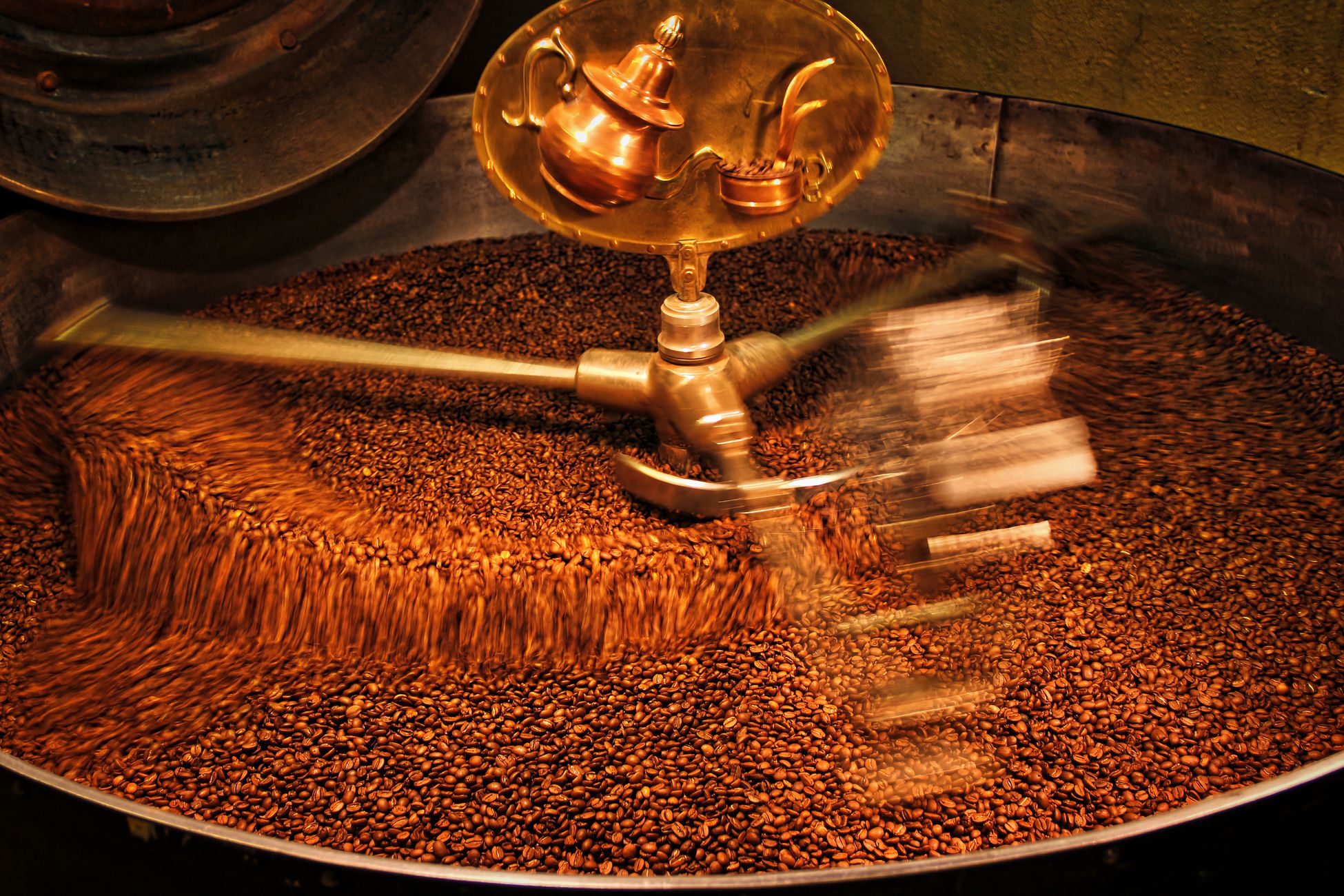
Decaf has a bad reputation that it earned honestly and has mostly outgrown. For decades it was flat, woody, and vaguely burnt, and the standard assumption was that removing caffeine wrecks the coffee.
The decaffeination itself is only part of the story. The bigger reason so much decaf tasted bad, and the reason good decaf is genuinely impressive, is that a decaffeinated bean behaves nothing like a regular one inside a roaster. Everything a roaster relies on to judge a batch, color, sound, timing, smell, either changes meaning or stops working. Roasting decaf well means learning a second set of rules.
Find coffee roasted by people who pay attention.
What Decaffeination Does to the Bean Before Anyone Roasts It
Every commercial decaffeination method, whether it uses water, carbon dioxide, or a solvent, starts the same way. The green coffee is soaked or steamed to open up the bean structure so caffeine can migrate out.
That step alone changes the bean permanently.
The cell structure becomes more porous and more fragile. Moisture moves in and out during the process, and the bean is then dried back down, which stresses it further. Some of the sugars and other soluble compounds leave along with the caffeine, no matter how selective the process claims to be. Even the best modern methods lose some of the precursors that flavor is built from during roasting.
The bean also changes color. Decaffeinated green coffee is not green. It ranges from pale brown to a deep reddish brown before it ever sees heat, and that single fact breaks the oldest tool in roasting.

Color Stops Telling You Anything
A roaster judging a normal batch watches the bean go from green to yellow to tan to brown, and those transitions are reliable markers of what stage the roast is in.
Decaf starts brown. There is no yellowing phase to watch, and the bean looks well along in the roast before any meaningful development has happened. A roaster reading color the usual way will conclude the batch is further ahead than it is and drop it early, producing exactly the underdeveloped, papery cup that gave decaf its reputation.
The end point is just as difficult. Judging a finished roast by color requires knowing what the color means, and decaf runs darker at every equivalent stage. A decaf that looks like a medium roast is often considerably lighter in actual development, and one that looks correct for a medium is frequently past it.
Roasters who work with decaf regularly stop trusting their eyes and lean on time, temperature, and rate of rise instead. Those who use a color meter recalibrate, because the numbers that mean medium for a regular coffee mean something else here.
It Absorbs Heat Faster and Burns Sooner
The porous, weakened structure that decaffeination leaves behind conducts heat more readily than an intact bean.
That means a decaf batch charged into the same drum at the same temperature as a regular coffee will heat faster, move through the early phase quicker, and reach first crack sooner. Left on the same profile, it scorches on the surface while the interior is still catching up.
The usual response is to charge cooler and apply less heat overall. A roaster might drop the charge temperature meaningfully and run a gentler ramp, accepting a longer total time in exchange for not burning the exterior.
There is less margin at the end too. Decaf goes from correctly developed to overdone in less time than a regular coffee, because there is less structure left to buffer the heat. The window a roaster is aiming at is simply narrower.
First Crack Gets Quiet and Sometimes Vanishes
First crack is the audible marker roasters use to know exactly where they are. Water inside the bean turns to steam, pressure builds, and the structure fractures with a sound like popcorn.
In decaf, that crack is muted, uneven, and occasionally almost inaudible. The bean structure has already been compromised, so the pressure that would have built up escapes more gradually. Some batches produce a scattering of pops across a long window rather than the clear onset a roaster is listening for.
Lose the crack and you lose the reference point that most roast profiling is organized around. Development time is normally measured from first crack, so if you cannot hear where it started, you cannot measure what came after it.
This is why decaf roasting relies more heavily on data. Bean temperature curves, rate of rise, and repeatable profiles matter more when the sensory cues are unreliable.
Keep a decaf on hand that you actually enjoy.
Less Sugar to Work With
Roasting flavor comes largely from the Maillard reaction and caramelization, both of which need sugars and amino acids to work on.
Decaffeination removes some of that raw material. Not all of it, and modern processes are far more selective than older ones, but some. A decaf roast is therefore building flavor from a smaller starting inventory, and the practical consequence is that there is less sweetness available and less complexity to develop.
This pushes roasters toward extending the Maillard phase, giving the reactions more time at moderate temperature to extract what is available, rather than rushing to the finish. A gentler, slightly longer roast tends to produce a sweeter decaf than an aggressive one.
It also means that green quality matters even more than usual. A mediocre coffee that gets decaffeinated has almost nothing left to give. The best decafs on the market start as coffees that would have been good in their caffeinated form, and roasters who care buy them at that quality specifically because there is no way to add flavor back later.
Batch Size and Airflow Both Change
Decaffeinated beans are less dense than their regular counterparts, having lost mass and gained porosity.
That matters mechanically. A lighter bean moves differently in a drum and gets picked up more easily by airflow, so the same fan setting that works for a normal batch can lift decaf chaff and beans in ways that disturb the roast or create fire risk. Roasters often reduce batch size and adjust airflow when switching over.
Chaff behaves differently too, and it burns readily. Decaf batches tend to demand more attention to keeping the roaster clean between runs.
What Good Decaf Tastes Like Now
The gap has narrowed enormously, and it is worth knowing what to expect.
A well made modern decaf tastes clean, sweet, and recognizably like the origin it came from. A Colombian decaf should still read as Colombian, with the caramel and red fruit character intact, though a step quieter than the caffeinated version.
What you generally do not get is the top end of aromatic intensity. The most delicate floral and fruit notes are the most fragile, and they are the ones most likely to be lost in processing. A decaf Ethiopian will be good and will not be as loud as the original.
Body usually holds up well. Sweetness holds up well when the roast was handled properly. Acidity is typically softened.
If a decaf tastes woody, papery, or hollow, that is a roast problem or an old green problem far more often than it is an inherent limit of decaffeination.

What to Look for When You Buy It
A roast date, same as anything else. Decaf stales faster than regular coffee because the porous structure lets oxygen in more easily. A bag that has been sitting for two months is much further gone than a caffeinated one of the same age.
The process named on the bag. Water based processes and carbon dioxide processes are widely used in specialty coffee and generally preserve more character. A roaster who names the method is a roaster paying attention to it.
Origin information. If the bag says only decaf with no origin, the green was probably bought on price. If it names a country, a region, or a producer, someone selected it for quality first.
A roaster who sells it seriously. Decaf as an afterthought tastes like an afterthought. Decaf that gets its own profile, its own tasting notes, and its own place on the menu usually tastes like someone did the work.
Brew it exactly as you would anything else, with one adjustment. Because the beans are more porous and less dense, they tend to extract a touch faster, so if your usual recipe tastes harsh, go one step coarser before you change anything else.
Stock a shelf worth drinking from any hour.
All images shown in this blog are sourced from pexels.com.