

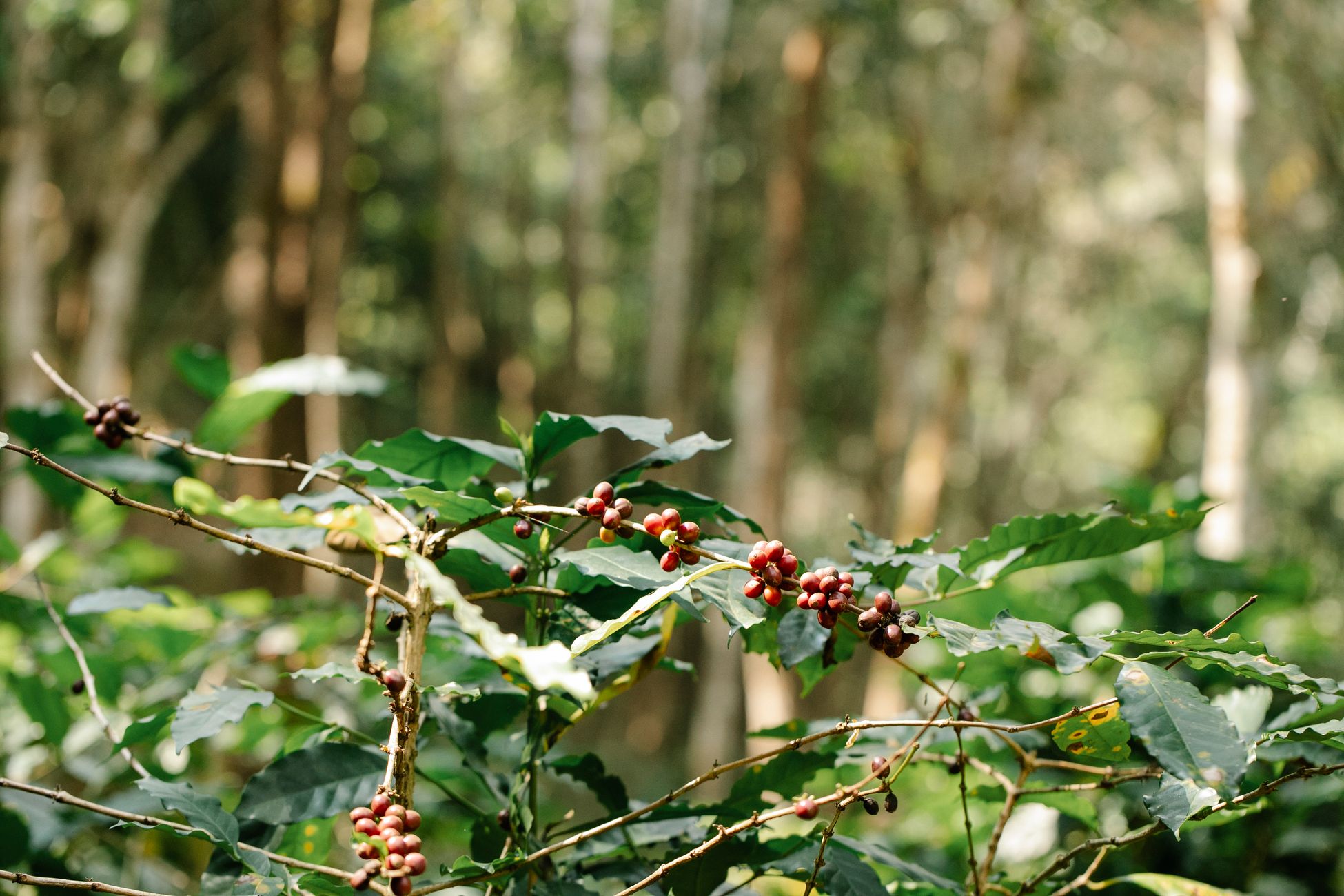
A coffee tree left entirely alone will produce coffee. It will also grow to twenty feet, push most of its fruit to the ends of branches you cannot reach, and lose productivity every year until it is barely worth picking.
So farms cut them. Sometimes a light trim, sometimes a saw taken to the trunk a foot off the ground, leaving a stump that looks like the tree has been killed. Both are deliberate, both are planned years in advance, and both change what ends up in your bag in ways that are easy to taste and almost never explained on a label.
Try coffee from farms that plan in decades.
Coffee Fruits on New Wood
The whole practice rests on one fact about how coffee grows.
An arabica tree produces cherries on branches that grew the previous season, and a given section of branch fruits well for a couple of cycles before it declines. After that the wood is still alive, still drawing resources, and producing very little. The tree keeps extending outward, putting its new productive growth further from the trunk each year, and the interior becomes a tangle of old unproductive wood.
Left alone, the tree spends more and more of its energy maintaining structure and less on fruit. Yield per tree drops steadily after roughly the fifth or sixth year of production, and the quality of what it does produce usually drops with it, since a stressed tree fills cherries less completely.
Pruning is how a farm forces the tree to keep making new wood. Cutting removes the exhausted branches and redirects the tree's energy into fresh growth that will fruit properly.
Light Pruning Versus Stumping
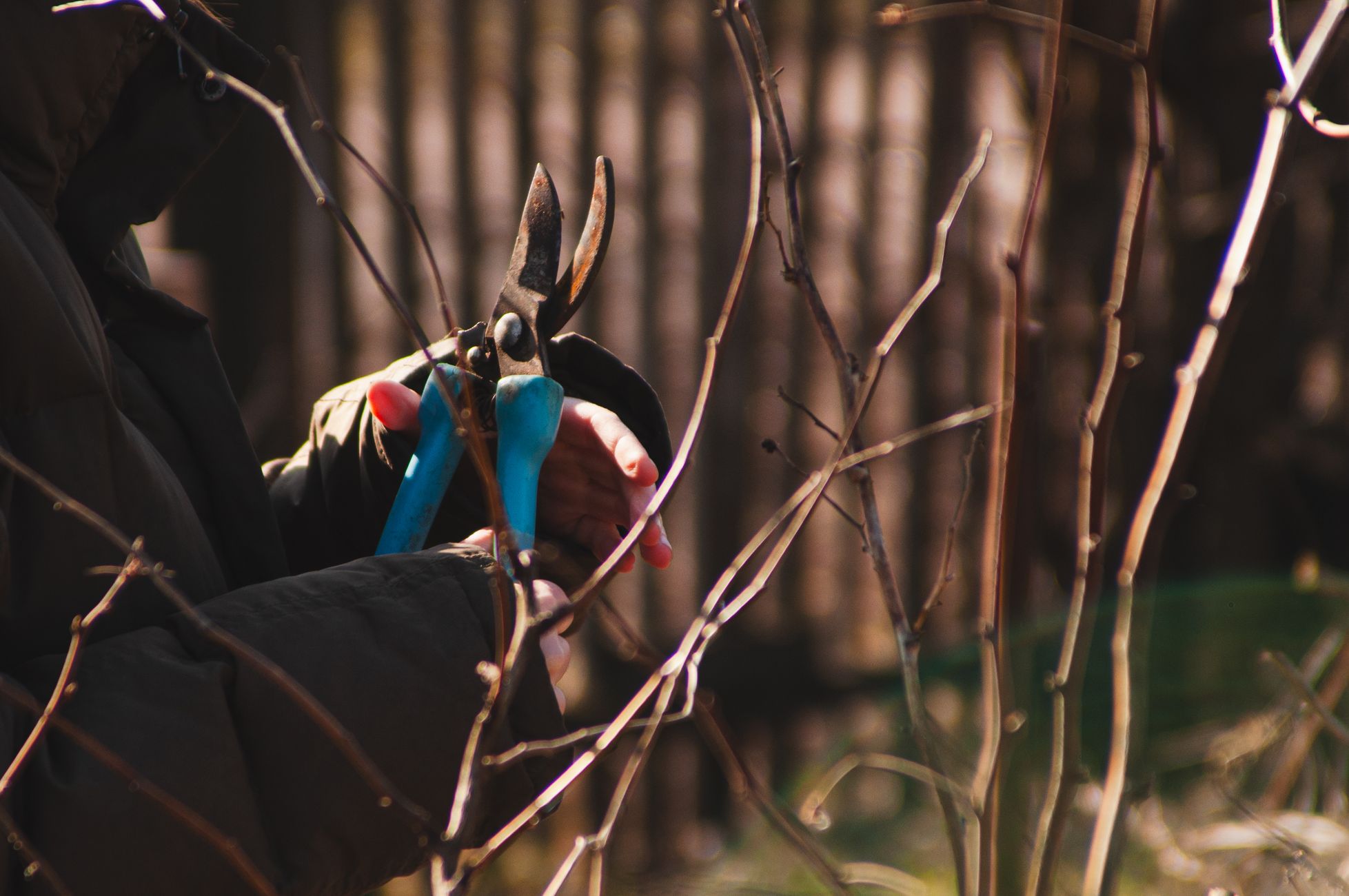
The gentler version is selective pruning, done annually after harvest. Workers remove dead branches, branches that already fruited out, suckers growing straight up from the trunk, and enough interior growth to let light and air into the middle of the tree.
The dramatic version is stumping, sometimes called a hard prune or recepa. The trunk is cut back to somewhere between six inches and three feet, leaving a stump. The root system is intact and full of stored energy, and within weeks it pushes out new vertical shoots. The farm selects one or two of the strongest and removes the rest, and those become the new tree.
A stumped tree produces nothing for a year, sometimes closer to two, and then comes back into production with the vigor of a young plant on a root system that is already established. It will out produce an old unpruned tree for years afterward.
This is why a stump is not a dead tree. It is a reset.
Losing a Year on Purpose
The obvious problem is that a stumped block produces no income during the recovery period.
Farms solve this by cycling. The property is divided into sections, and a fixed share is stumped each year on a rotation, often a fifth or a quarter of the farm. Every block gets renewed on a predictable schedule, and total farm output stays roughly level because the blocks coming back into production offset the ones taken out.
Doing this properly requires capital and planning. A farm running on thin margins with no reserve cannot afford to take a fifth of its trees offline, so it postpones. The trees keep aging, yields keep sliding, and the farm ends up harvesting more and more marginal fruit from exhausted plants to hit the same volume.
That deferred maintenance shows up in the cup. Old overextended trees produce smaller, less dense beans with less sugar in them, and a lot built from that fruit tastes thin and flat regardless of how well it was processed or roasted.
When people talk about coffee prices needing to support producers, this is one of the concrete things they mean. Renovation is expensive, it is the difference between a farm that lasts and one that declines, and it is invisible to anyone reading a bag.
Pruning Steadies the Biennial Swing
Coffee trees naturally alternate between heavy and light years. A big crop drains the tree's reserves, so the following year it produces less while it recovers.
Pruning damps this. Removing some of the wood that would otherwise set fruit prevents the tree from overcommitting in a heavy year, so it comes out the far side less depleted and the following year is closer to normal. The farm gives up some peak volume in exchange for consistency.
Consistency is what a roaster is buying when they commit to a producer for multiple seasons. A farm that swings wildly makes it nearly impossible to keep a blend tasting the same, and it makes offering the same single origin two years running a gamble.
Buy from a roaster who keeps their sourcing steady.
Airflow, Light, and Disease
Opening up the canopy does more than redirect energy.
Coffee leaf rust and various fungal problems thrive in still humid air trapped inside a dense tree. A pruned tree dries faster after rain and gets more air movement through the interior, which reduces the conditions those diseases need. Farms in humid regions prune partly as disease management rather than purely for yield.
Light penetration matters too. Interior branches shaded by their own tree produce weak growth and poorly filled cherries. Removing enough wood to let light reach the middle means the whole tree contributes rather than just its outer shell.
There is a balance, though. Strip too much and you expose branches and cherries to direct sun that scorches them, and you lose the leaf area the tree needs to photosynthesize. Good pruning is a judgment call made tree by tree, which is why it is skilled work rather than something you can hand to anyone with clippers.
Height Is About Picking
There is a purely practical reason coffee trees are kept short.
Almost all specialty coffee is picked by hand, cherry by cherry, by a person who has to reach it. A tree topped at around six feet can be picked from the ground quickly and safely. A tree at fifteen feet requires ladders, slows picking down enormously, and pushes the picker toward stripping whatever is reachable rather than selecting ripe fruit carefully.
Selective picking is the single largest quality lever on the farm. Anything that makes it harder makes the lot worse. Keeping trees at a workable height is therefore a quality decision as much as a yield decision, and it is one of the reasons well managed farms consistently deliver cleaner lots than neglected ones with the same varieties in the same soil.
What This Means When You Buy
You will not find pruning cycles printed on a bag. You will find proxies for them.
A named farm or producer rather than just a country suggests a relationship where this kind of management is known and discussed. A harvest year on the label tells you the roaster is tracking crop cycles rather than buying undifferentiated green. A roaster who returns to the same producer season after season is usually buying from someone whose farm is being renewed rather than run down, because that is what makes a multi year relationship possible at all.
You can also taste it indirectly. Coffee from well managed trees tends to be denser, sweeter, and more consistent from bag to bag. Coffee from exhausted trees tends to be flat in the middle, short in the finish, and variable between lots that supposedly came from the same place.
The tree that produced your morning coffee was probably cut back hard at some point in the last five years by someone who accepted a lost season in exchange for a better decade. That decision is upstream of everything a roaster or a brewer can do, and it is one of the quieter reasons careful sourcing costs what it does.
Taste what careful farm management puts in the cup.
All images shown in this blog are sourced from pexels.com.