


You brew a good cup at home. It smells great over the kettle, sweet and a little fruity, and you pour it straight into your travel mug for the drive. Twenty minutes later you take a sip at a red light and it tastes like nothing in particular. Hot, brown, vaguely coffee. The sweetness is gone, and what is left is flat with a bitter edge.
The beans did not change in the car. The travel mug changed how you experience them, in four separate ways: the lid, the seals, the heat, and the surface inside. Each one has a fix, and most of the fixes take less than a minute.
Find a coffee sweet enough to survive the commute
The Lid Is Blocking Most Of What You Taste
A large share of what we call flavor is actually smell. Your tongue handles sweet, sour, salty, bitter, and savory. Everything else, the chocolate, the berry, the toasted nut, reaches you as aroma. Some of it arrives through your nose as the cup approaches your face. The rest travels up the back of your throat after you swallow.
An open mug gives you both. As you lift it, steam rising off a wide surface of coffee carries aromatic compounds straight to your nose before the liquid touches your lips, and your brain pairs that smell with the taste that follows.
A travel mug lid shuts most of that out. You drink through a slot barely wider than your thumb, with your nose pressed against plastic instead of hovering over open coffee. You still get some aroma after swallowing, but you lose the first wave entirely, and the first wave is where a lot of the sweetness and fruit live.
That is why the same coffee can taste flat through the lid and come alive the moment you pop it off and drink from the rim. You are finally smelling it.
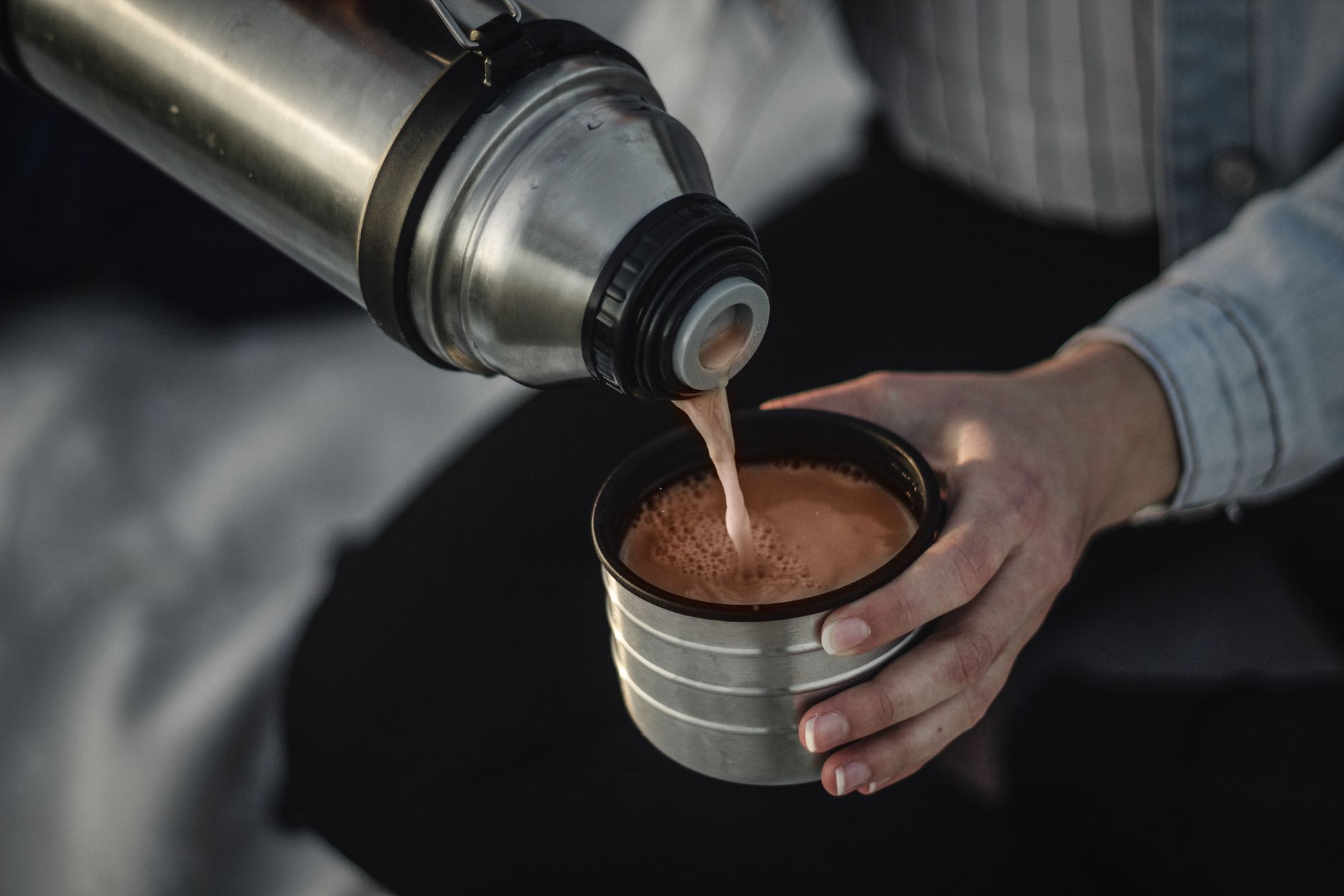
The Gasket Is Holding On To Old Coffee
Turn your lid over and look at it. There is usually a silicone ring around the edge that seals against the body, often a second one around the sliding or flip-top opening, and between them a set of grooves and hinges that coffee runs through every time you tip the mug.
Those parts are where the stale flavor comes from. Coffee oils cling to silicone and settle into crevices that a quick rinse never reaches. A thin film forms that you cannot see, and it sits there in the dark, exposed to air, for days or weeks. Coffee oil oxidizes as it ages, and oxidized oil tastes rancid: stale, papery, a little like cardboard.
Every fill washes hot coffee over that film and picks up a trace of it. The amount is small, but coffee flavor is delicate, and old oil lands right on top of the sweetness you wanted to taste. The mug can look spotless and still do this, because the problem hides under the gasket rather than on the walls.
Silicone also absorbs odors. If the mug has carried tea, a flavored latte, or a smoothie, or sat closed while still damp, the seal can pass a faint memory of all of it into your coffee.
The Heat Never Leaves
Vacuum insulation is the selling point of a good travel mug. Coffee poured in hot stays close to that temperature for hours, and for flavor that is a mixed blessing.
Brewed coffee keeps changing after it leaves the filter. Heat drives slow reactions in the cup, and over time some of the compounds behind coffee's bright, pleasant acidity break down into harsher, more bitter ones while aromatics keep slipping away. The hotter the coffee, the faster this happens. It is the same reason coffee held hot for a long time tastes stewed. A vacuum mug is far gentler than a hot plate because it adds no heat, but it holds the coffee hot enough and long enough that the same drift happens on a smaller scale.
Temperature also changes how well you taste. Very hot coffee mutes sweetness and makes individual flavors harder to pick out. That is why professional tasters keep sampling a coffee as it cools, and why so many coffees taste sweeter ten minutes after brewing. In a well insulated mug, the coffee may not reach that range until you are nearly finished, so it turns harsher while staying too hot to taste what sweetness is left.
What The Inside Of The Mug Is Made Of
Clean stainless steel is close to neutral. It does not absorb flavors, and it is the right material for most travel mugs. The words that matter are clean and smooth. Steel scraped by a wire brush or an abrasive pad picks up fine scratches, and those scratches hold the same oily film as the gasket. A metallic taste is a separate story, one we have covered with kettles and filters.
Plastic interiors are a different matter. Plastic is slightly porous, and it absorbs both oils and odors over time. A plastic-lined mug that has seen a year of daily use carries a background note that rinsing will not fully remove. Some travel mugs now come with ceramic-coated interiors, which are smooth and do not hold odors, and they are worth a look if you are shopping for a new one.
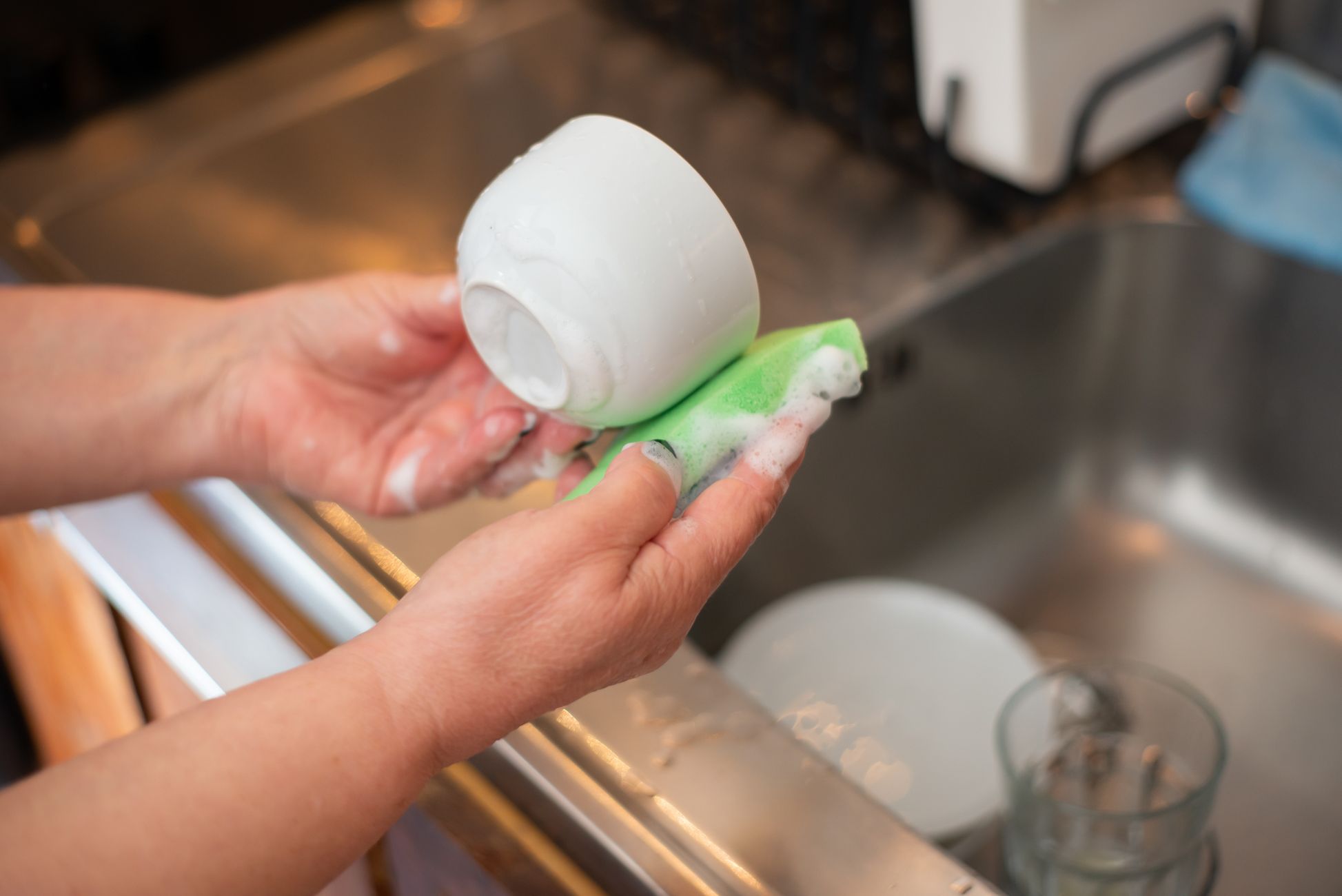
How To Clean A Travel Mug Properly
Start with the lid. Pull the gasket out, which usually takes nothing more than a fingernail or the tip of a butter knife. Wash it on its own, then run a small brush or a cotton swab through every groove and hinge. If the slider or flip mechanism comes apart, take it apart.
For the bonded film that dish soap misses, use something made to break down coffee oils. A paste of baking soda and a little water works on the walls and the gasket with some scrubbing. A coffee equipment cleaner, the powder sold for espresso machines and drip brewers, works even better: dissolve it in hot water, soak the body, lid, and gasket for about twenty minutes, then rinse thoroughly.
Let every part dry completely, apart, before you reassemble the lid, because a gasket sealed in damp turns musty. After that, rinse the mug as soon as you finish each day and repeat the soak every week or two.
Once the mug is clean, the coffee you put in it finally gets a fair hearing.
Shop coffees worth tasting in a clean mug
How To Fill It So The Coffee Holds Up
Preheat the mug. Fill it with hot water while the coffee brews, then dump it right before you pour. A cold steel wall pulls heat out of the first few ounces fast, and preheating keeps the coffee at the temperature you poured it.
Then choose that temperature on purpose. The mug will hold whatever you seal inside it, so there is no reason to seal coffee at brewing temperature if you plan to drink it over two hours. Let the fresh brew sit for a few minutes with the lid off until it is closer to a temperature you would actually sip. It then spends the morning in a range where it changes more slowly and where you can taste it.
Fill the mug fuller. The empty space above the coffee is where aromatics drift off to and where the coffee meets oxygen. Less headspace means less of both.
And whenever you can, open it. At your desk or on a bench outside, flip the lid open or take it off and drink from the rim. The aroma comes back instantly.
Brew For The Mug You Are Using
Coffee sipped through a lid over a long stretch needs a little more presence than coffee you finish from an open cup in ten minutes. Brew it slightly stronger. If you normally use about 1 gram of coffee for every 16 grams of water, try 1 to 15.
Make sure it is well extracted too. An underextracted cup, from a grind that is too coarse or a brew that runs too fast, tastes thin and sour on its own, and hours in a hot mug push it further in the wrong direction. A properly extracted cup has the sweetness and body to absorb some drift and still taste like itself.
Choose the coffee with the mug in mind. Delicate, floral, tea-like coffees shine in an open cup and are the first to lose their top notes under a lid. Coffees built around chocolate, caramel, nuts, and ripe fruit have more body and sweetness, and those qualities hold up through heat and time.
Roast matters as well. By the bottom of the mug the coffee has finally cooled, and that is when harsh or scorched notes are easiest to taste. Solude air roasts, so the beans tumble in a column of hot air instead of resting against hot metal. The heat reaches every bean evenly, nothing scorches against a drum, and the chaff blows away before it can burn. That evenness shows up most in the last few sips.
If your travel mug is your main coffee cup most mornings, pick beans with enough sweetness and body to carry it.
Find a coffee built to hold up from the first sip to the last

A Better Cup On The Way Out The Door
None of this requires new gear. Clean the gasket properly, preheat the mug, let the coffee settle before you seal it, fill it high, brew a touch stronger, and open the lid when you can. Do that for a week and your travel mug will start tasting like the coffee you brewed.
All images shown in this blog are sourced from pexels.com.