

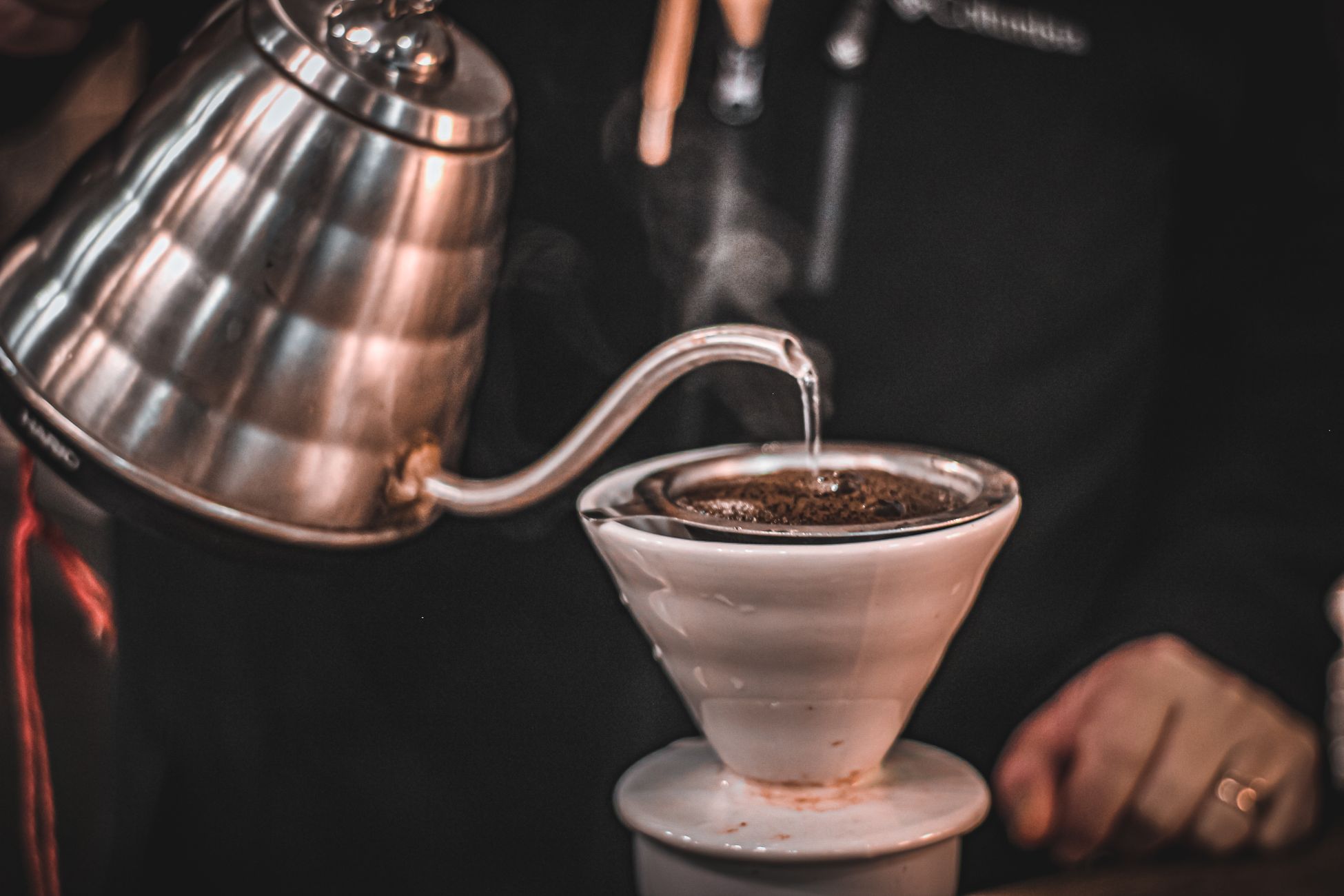
Everyone in specialty coffee talks about altitude on the growing side. High grown beans, dense seeds, slower maturation, more sugar development. It is printed on bags and it matters.
What almost nobody mentions is that altitude affects your coffee a second time, in your own kitchen, on the day you brew it. If you have moved from sea level to Denver, or taken your setup on a mountain trip, or wondered why a recipe that works for a friend produces a different cup for you, elevation is a variable sitting quietly in the middle of your process.
Whatever elevation you brew at, you want beans worth adjusting for. Start with one of our most popular roasts and dial it in for where you actually live.
Water Boils Colder Where the Air Is Thinner
This is the mechanism behind almost everything else.
Water boils when its vapor pressure equals the atmospheric pressure pushing down on it. At sea level, that atmospheric pressure is about 14.7 pounds per square inch, and water reaches the balance point at 212 degrees Fahrenheit. Go up in elevation and there is less atmosphere above you, so there is less pressure, so water reaches that balance at a lower temperature.
The rough rule is a drop of about one degree Fahrenheit for every five hundred feet of elevation. Denver, at roughly a mile up, boils water around 202 degrees. Santa Fe, closer to seven thousand feet, boils around 199. A mountain cabin at nine thousand feet is down near 195.
Now put that against brewing guidance. The commonly cited ideal range for coffee extraction is roughly 195 to 205 degrees Fahrenheit. At sea level, boiling water and letting it rest thirty seconds lands you comfortably in that band. At seven thousand feet, water fresh off a rolling boil is already at the bottom of the range and dropping fast.
You are not brewing too hot at altitude. You are frequently brewing too cool, and you cannot fix it by boiling harder. Boiling harder does not make water hotter. It just makes it evaporate faster.
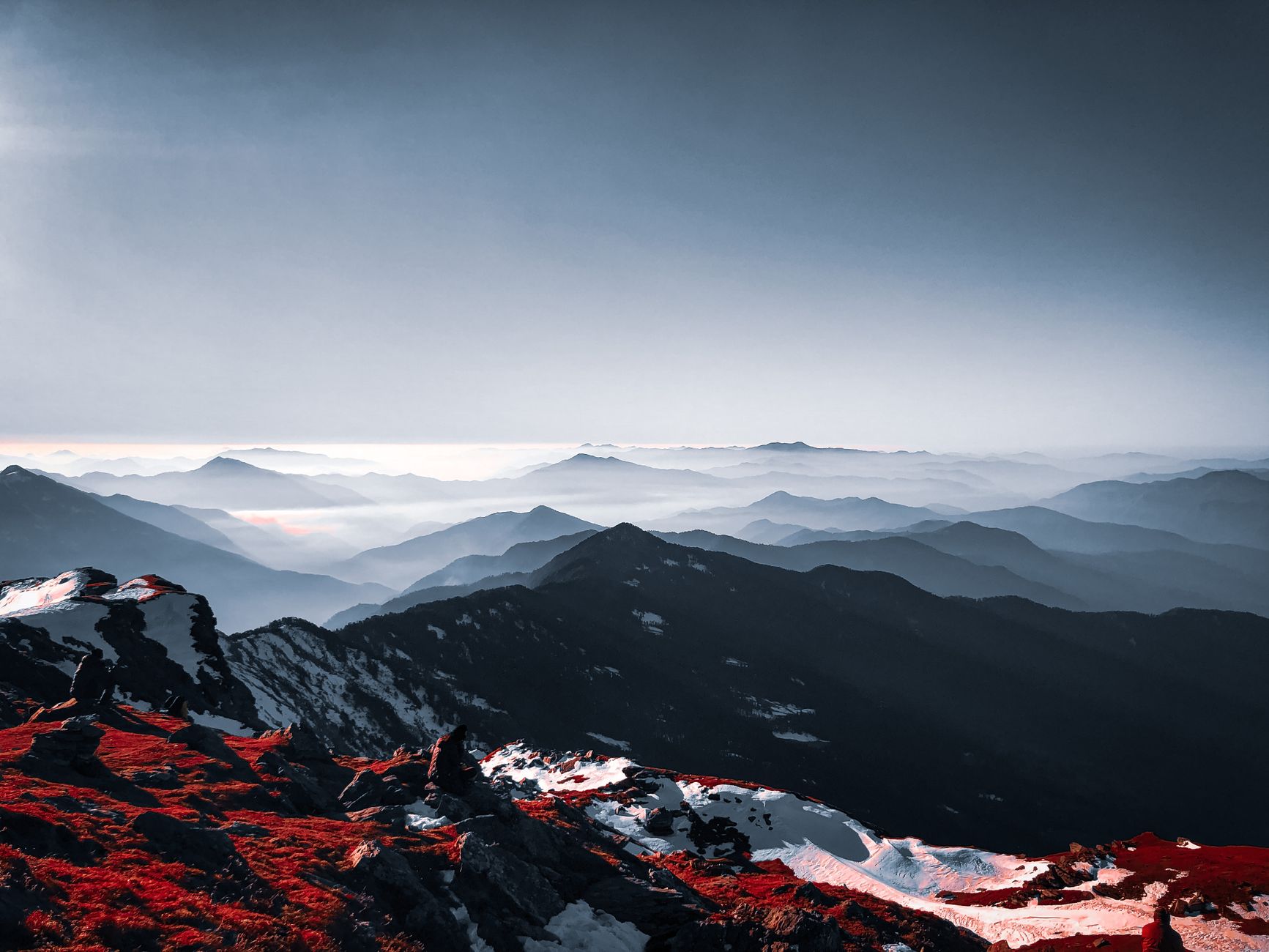
What Cooler Water Does to Extraction
Temperature controls how fast and how completely coffee compounds dissolve, and not everything dissolves at the same rate.
Acids come out first and easily. They are highly soluble and they do not need much thermal energy. Sugars and the compounds that build sweetness and body need more heat and more time. Bitter compounds come out last.
So when you brew cool, you get the acids without much of what should balance them. The cup reads as sour, thin, and hollow in the middle. Not bright. Sour. The exact fault most people blame on the beans being too light.
This is why coffee drinkers who move to high elevation often report that their usual coffee suddenly tastes worse, and why they sometimes conclude they now prefer darker roasts. What actually happened is that their extraction dropped, and darker roasts, which are more soluble and less dependent on high temperature to give up their flavors, mask the problem better.
The reverse is worth noting too. Someone who dialed in a recipe in Denver and takes it to sea level will find the same coffee brewing hotter and possibly tipping into bitterness.
Find a roast you can build a proper recipe around
How to Compensate
You cannot raise your boiling point, but you have several other levers, and they work.
Grind finer. This is the most direct fix. Smaller particles mean more surface area, which means more extraction at any given temperature. If your coffee tastes sour at altitude, going a step or two finer will usually pull it back into balance faster than anything else you try.
Extend contact time. More seconds in the water compensates for slower dissolution. In a pour over, slow your pour and let the drawdown take longer. In a French press, push from four minutes to five or six. In an AeroPress, extend the steep before pressing.
Increase the dose slightly. Using a bit more coffee per unit of water raises strength even when extraction percentage lags. It is not addressing the root cause, but it makes a noticeably fuller cup.
Preheat everything. This matters more at elevation than at sea level because you have less thermal headroom to lose. Rinse the filter with hot water, warm the brewer, warm the carafe, warm the cup. A cold ceramic dripper can pull several degrees out of your brew water in the first pour, and at altitude you do not have several degrees to spare.
Use a kettle that holds temperature. If you have a variable temperature kettle, set it to boiling and it will hold at whatever boiling is where you are. The value is in maintaining that through the pour rather than letting it fall.
For espresso, elevation matters less, because the machine is generating pressure independent of atmosphere and the boiler is pressurized. Your brew temperature is whatever the machine says. The larger altitude effect on espresso shows up in how the puck behaves as the coffee degasses, since lower ambient pressure means beans release carbon dioxide somewhat faster.

Why the Same Bean Tastes Different Up There
Beyond the physics of water, there are effects on you.
Air is drier at elevation, and dry air affects your nose. Most of what you perceive as flavor is actually retronasal olfaction, aroma reaching your olfactory receptors from the back of your mouth. Dry nasal passages are less sensitive. Coffee that seemed aromatic and complex at sea level can read as muted at altitude partly because your equipment for detecting it is working less well.
Dehydration compounds it. People are chronically a little dehydrated at elevation without noticing, and dehydration dulls taste perception across the board.
Evaporation runs faster in dry thin air, which means your cup cools faster and concentrates slightly as it sits. A cup that starts balanced can drift as it evaporates, and since coffee changes character as it cools anyway, the arc from first sip to last is compressed.
Why Even Roasting Gives You More Room to Adjust
Compensating for elevation is easier when the coffee itself is consistent, and that comes back to how it was roasted.
A batch where beans were developed unevenly contains a mix of solubility levels. Some beans give up their flavors readily, others resist. At sea level with plenty of thermal energy, that variation gets partly papered over. At altitude with cooler water, the underdeveloped portion simply never extracts, and grinding finer to reach it pushes the already developed portion into bitterness. You end up trapped between two faults.
Drum roasting transfers heat through contact with a hot metal surface, which tends to develop bean exteriors ahead of interiors and produces more variation across a batch. Air roasting suspends the beans in hot air so every surface heats at the same rate, and the airflow carries chaff out of the chamber before it can scorch. The batch comes out with more uniform solubility.
Uniform coffee responds predictably to adjustment. Grind two clicks finer and the whole dose moves together, which is exactly what you need when you are compensating for a variable you cannot change.

Working Out Your Own Numbers
The honest approach is to stop borrowing recipes and calibrate for your kitchen.
Find your elevation. Subtract roughly one degree Fahrenheit per five hundred feet from 212 and you have your approximate boiling point, which at most elevations is also your practical maximum brew temperature.
Then brew a coffee you know well and taste critically. If it is sour and thin, grind finer and go again. Keep going until sweetness arrives and the sourness resolves into brightness. Note that setting. That is your baseline, and it will sit finer than the setting the same coffee wants at sea level.
Once you have it, everything else becomes normal dialing in. You are just doing it from a different starting point than the person who wrote the recipe you found online.
The larger point is that brewing guidance almost always assumes sea level without saying so. If your results have never quite matched what you read, and you live somewhere high, the recipe was not written for your kitchen. Adjust it and the coffee you already own will get noticeably better.
Pick out something worth calibrating for
All images shown in this blog are sourced from pexels.com.