
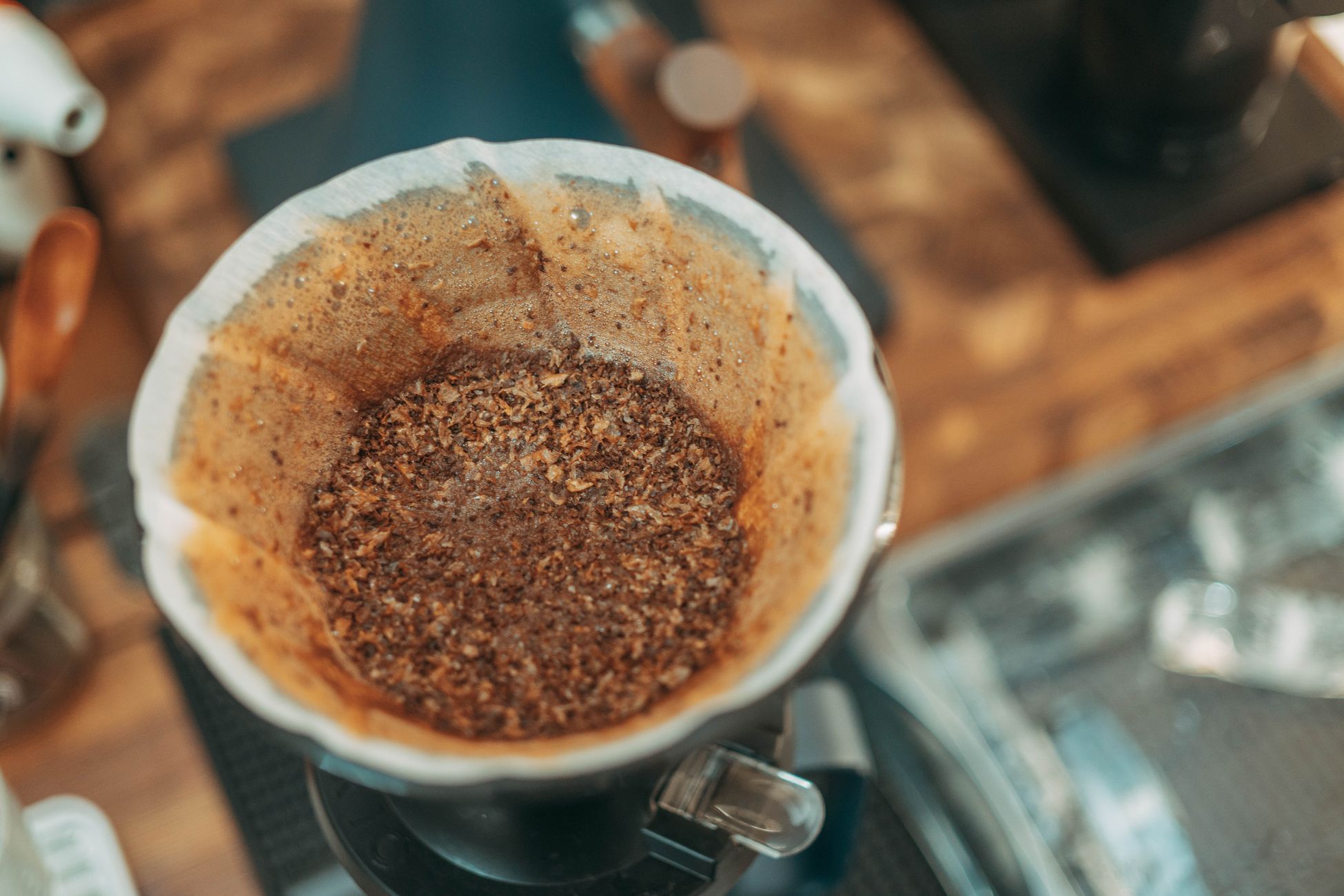
Everyone has done it at least once. The pot is empty, the bag is empty, and there is a filter full of wet grounds sitting right there. So you pour more hot water through and hope. What comes out is pale, thin, and faintly bitter, like a memory of coffee.
The reason is not that the grounds are used up in some vague sense. It is that brewing is selective. Water pulls compounds out of coffee in a specific order, and by the end of a normal brew the good ones are in your cup and the ones left behind are mostly the ones you never wanted. A second pass through the same grounds does not give you weaker coffee. It gives you different coffee, made from the leftovers.
What Is in a Coffee Bean Before You Brew It
Roasted coffee is roughly 70 percent insoluble material, mostly cellulose and other plant fiber that will never dissolve in water no matter what you do. The remaining 30 percent is soluble, and that is what brewing is after.
But you do not want all of it. Extracting every soluble compound produces a harsh, bitter, astringent cup. The target for a good brew is to dissolve around 18 to 22 percent of the coffee's mass. That range is where the sweet, acidic, aromatic compounds have come out and the bitter ones have mostly stayed behind. Go lower and the coffee is sour and thin. Go higher and it turns bitter and dry.
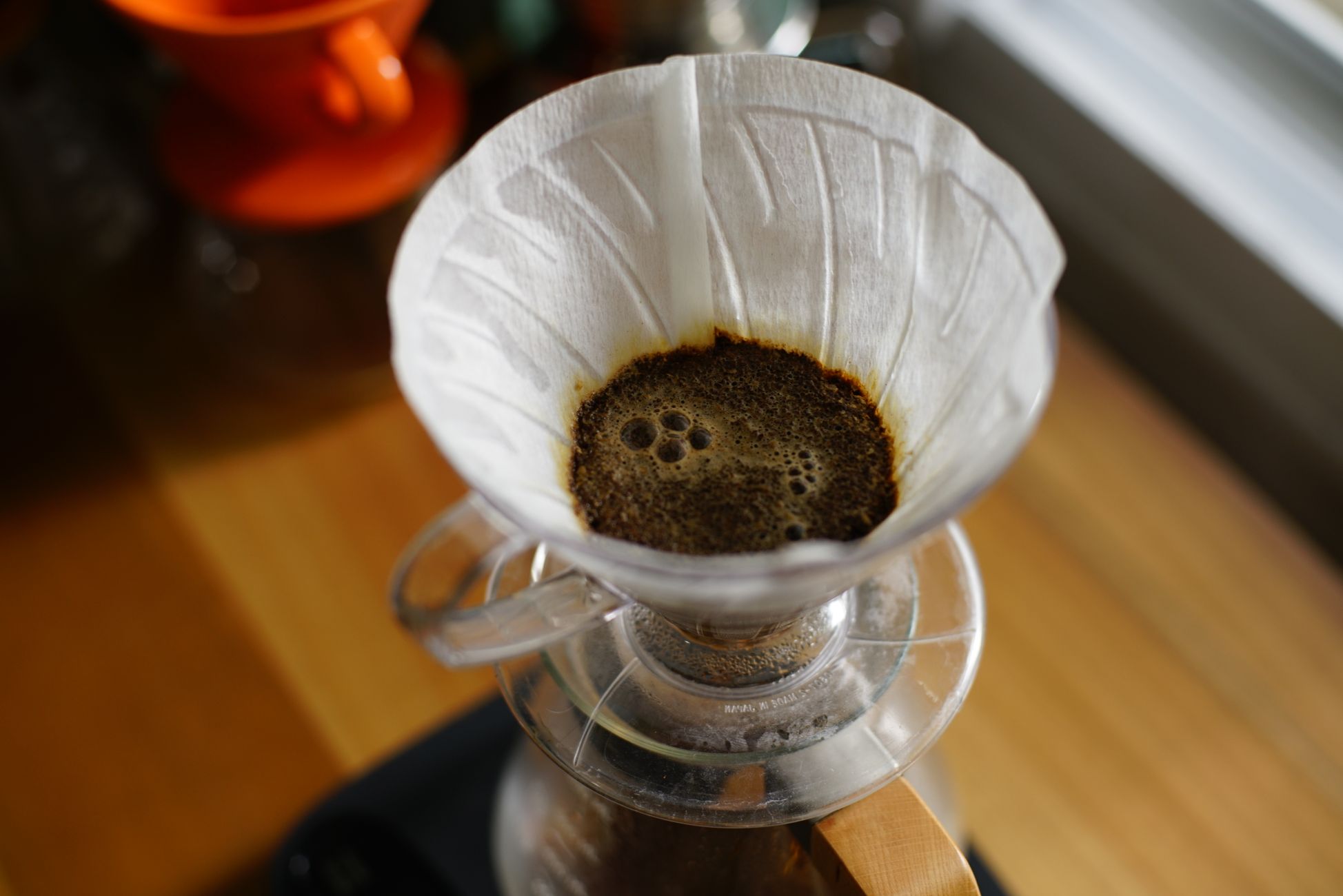
So a well brewed cup has already taken the best 20 percent. What is sitting in the filter afterward is 70 percent fiber and about 10 percent solubles that the first brew deliberately left there.
The Order Things Come Out
Extraction is not uniform. Different compounds dissolve at different rates, and that order is the whole story.
First out are the acids and the fruity, floral aromatics. These are small molecules, highly soluble, and they leave the grounds within the first seconds of contact. If you have ever tasted the first few drops of a pour over, they are sharp and bright and almost sour.
Next come the sugars and the compounds that give coffee its sweetness and body. These take a little longer. They are what balances the acids and makes the middle of the brew taste round.
Last are the heavy, bitter compounds. Chlorogenic acid lactones, phenylindanes, and the products of over roasted sugars. These are large, slow to dissolve, and they keep coming out as long as water is in contact with the grounds. A good brew stops before too many of them arrive.
A second brew starts where the first one ended. The acids are gone. The sugars are mostly gone. What remains soluble is disproportionately the bitter tail. Run water through and that is what you get, along with a lot of nothing.
Why It Tastes the Way It Does
The second cup is thin because there is very little left to dissolve. It is bitter because the little that is left skews bitter. And it is often slightly papery or woody, because prolonged hot water contact starts pulling flavor from the plant fiber itself, which was never meant to be part of the drink.
There is also a temperature problem. Wet grounds have cooled. Pouring hot water over them drops the water temperature immediately, so the second brew happens cooler than the first, and cooler water is even less efficient at pulling out anything pleasant.
You can make the second brew stronger by using less water or letting it steep longer. That does not help. Concentrating the bitter leftovers just gives you a more intense version of the same problem.
Start with a coffee worth brewing once, properly
How This Explains Other Things You Have Noticed
The same chemistry is behind a few common coffee experiences.
It is why the last cup from a pot left on a hot plate tastes bitter. The coffee is not being re brewed, but heat keeps breaking down compounds in the liquid and the balance shifts toward bitterness over time.
It is why a French press that sits on the grounds after pressing turns harsh within minutes. The water is still in contact with the coffee, still pulling out the slow bitter compounds long after the good ones came out.
It is why over extracted espresso tastes the way it does. A shot that runs too long, or is ground too fine, keeps extracting past the sweet spot and into the bitter tail. Same order, same result, compressed into thirty seconds.
And it is why a cheap, over roasted coffee tastes bad from the first drop. Dark roasting converts a lot of the sugars into bitter compounds before the water ever arrives, so there is less of the good stuff to extract in the first place and more of the bad stuff waiting.
Why Roast Quality Shows Up Here
A coffee that was roasted evenly has a full supply of the sweet, soluble compounds a good brew is designed to capture. The water has plenty to work with in the early and middle stages, and stopping at the right point leaves a balanced cup.
A coffee that was roasted unevenly, with a scorched surface and an underdeveloped center, has a strange mix. The outside gives up bitter, burnt compounds early. The inside holds onto grassy, sour compounds that are hard to extract. The brew fights itself, and no amount of technique makes it come out right.
Air roasting develops the bean uniformly because hot air surrounds every bean at the same temperature, with no drum wall to scorch one side. That evenness means the soluble compounds are where they should be and come out in the order they should. It is a big part of why a clean roast tastes sweeter at the same ratio and grind as a drum roasted coffee from the same origin.
What to Do With Spent Grounds Instead
Do not brew them again. Do put them to use.
Spent grounds are excellent in the garden as a soil amendment, mixed into compost or worked lightly into beds. They are mildly acidic, add nitrogen, and improve texture. They also work as a deodorizer in the fridge, a gentle abrasive for scrubbing pans, and a hand scrub for getting garlic or onion smell off your fingers.
If you want a second cup, the answer is to brew a second cup. Grind fresh, use the right dose, and stop at the right time. The coffee you are hoping to find in the old grounds was already in the first mug.
How to Get More From the First Brew
If the reason you reached for the spent grounds was that the first pot did not feel like enough, the fix is in the recipe.
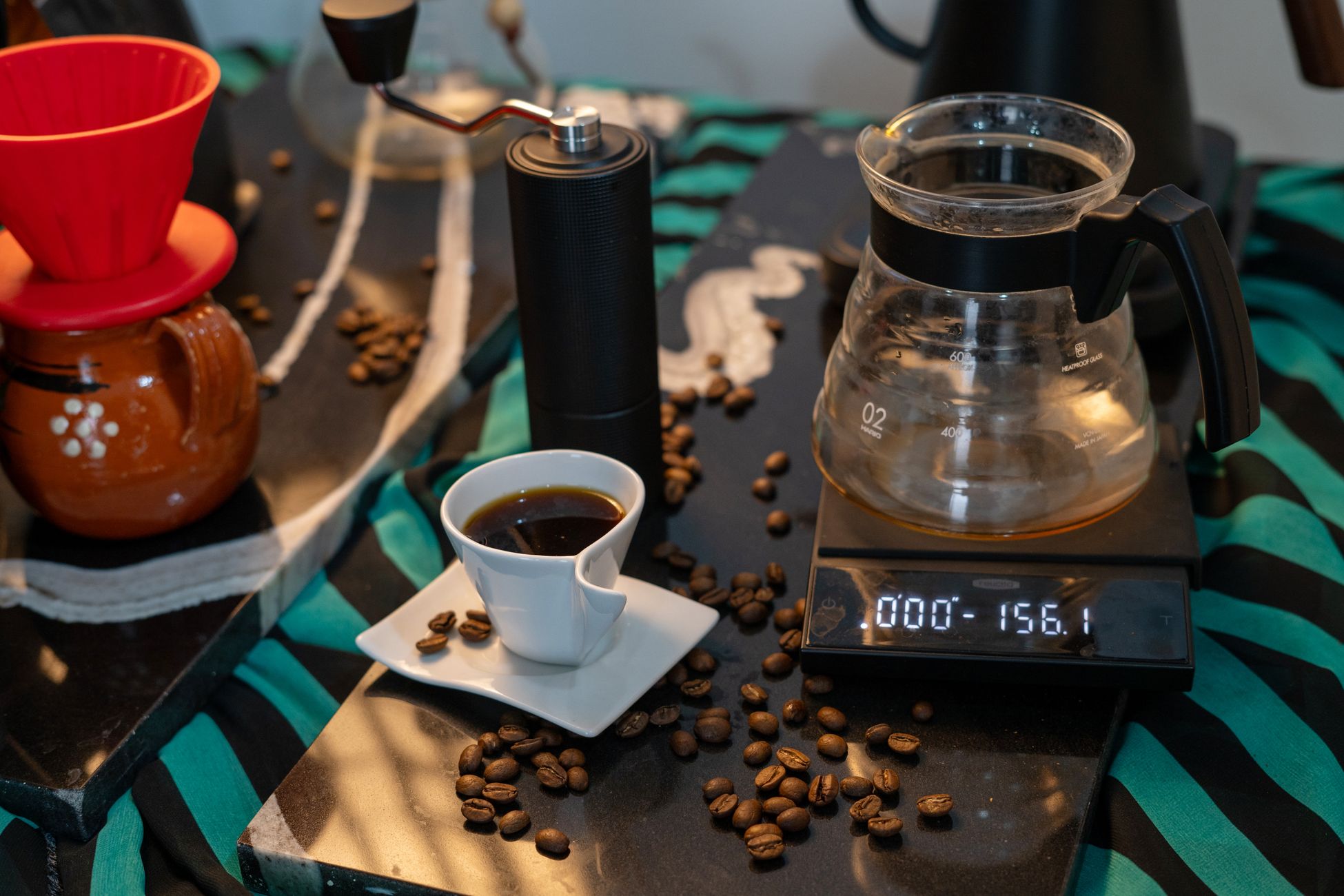
Use a scale. A common starting ratio is one gram of coffee to fifteen or sixteen grams of water, and most people who feel their coffee is weak are using far less than that. Grind just before brewing, because pre ground coffee has already lost a lot of what water would otherwise pull out. Use water just off the boil for hot brews. And buy fresh coffee, because beans that are months past roast have less to give before the water even arrives.
Pick up a fresh bag and make the first brew count
Coffee grounds are not a resource you can tap twice. They are a package with a specific set of contents, and a proper brew takes the ones you want and leaves the ones you do not. The second brew is just the leftovers, and the leftovers were never the point.
All images shown in this blog are sourced from pexels.com.
0