


Almost every cafe has a chocolate something next to the espresso machine. A brownie, a chocolate croissant, a slab of dark chocolate on the counter by the register. Mocha is one of the most ordered drinks in the world. Coffee tasting notes lean on chocolate constantly: cocoa, dark chocolate, milk chocolate, chocolate covered cherry. And when you sit down with a good cup and a square of good chocolate, the pairing does not feel like a match. It feels like the same thing in two forms.
That instinct is more correct than most people realize. Coffee and chocolate are not just compatible. They are close relatives, produced by nearly identical processes from seeds that grow in the same part of the world, and the flavors that make them taste so good together were built by the same chemistry.
Find a coffee with the chocolate notes already built in
Both Start As A Seed Inside A Fruit
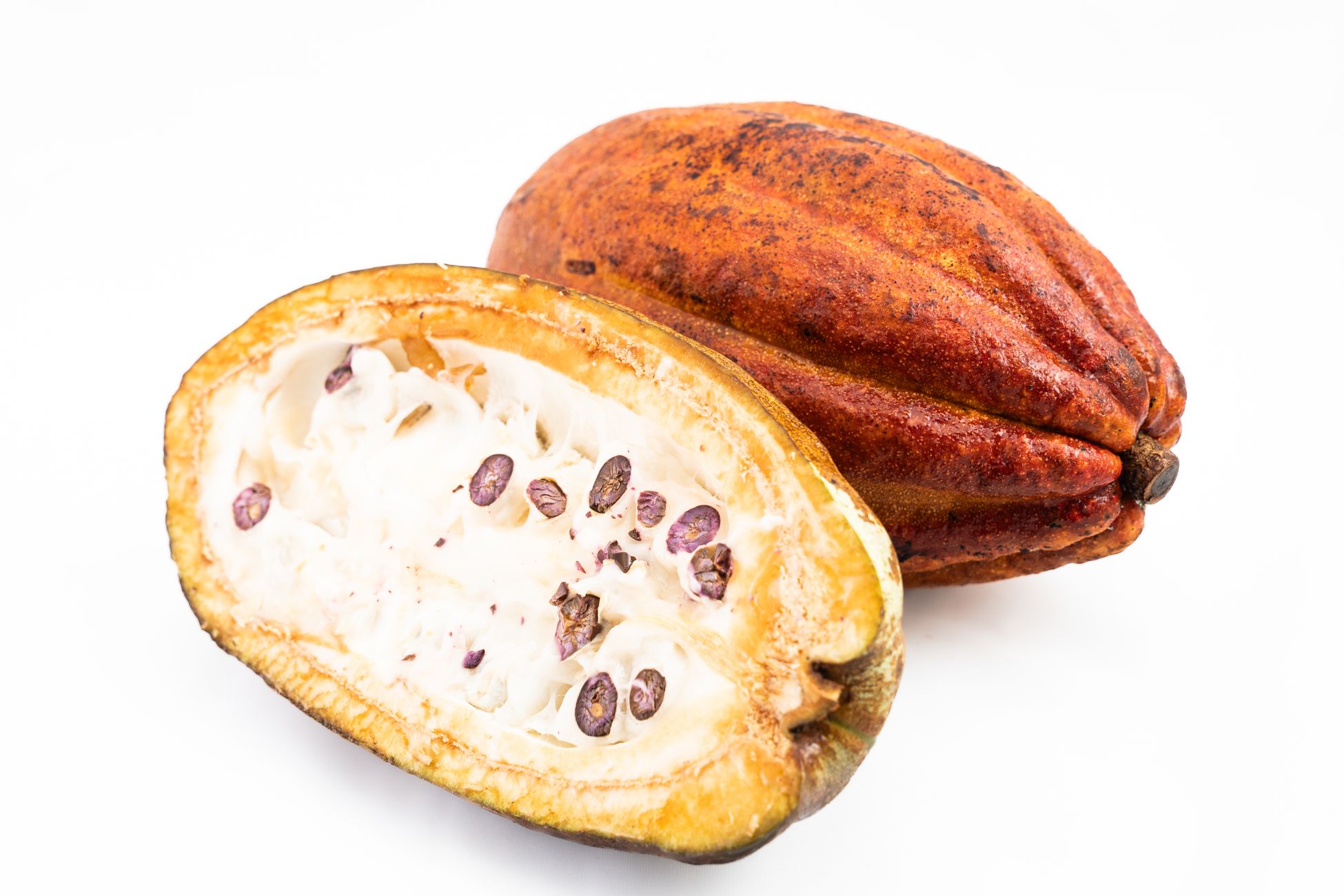
Coffee beans are the seeds of a fruit called the coffee cherry, a small red or yellow berry that grows on a shrub in tropical highlands. Cacao beans are the seeds of a fruit called the cacao pod, a football shaped fruit that grows directly from the trunk of a tree in tropical lowlands. In both cases, the part people eat and drink is not the fruit. It is the seed hidden inside, surrounded by sweet pulp.
Both plants grow in a narrow band around the equator, roughly between 20 degrees north and 20 degrees south. Both need warmth, humidity, rainfall, and shade. Countries like Brazil, Colombia, Ecuador, Peru, Indonesia, and several in West Africa and Central America grow both crops, sometimes on the same farms.
And in both cases, the raw seed tastes nothing like the finished product. A fresh coffee seed is grassy and astringent. A fresh cacao seed is intensely bitter and sour. Everything people love about coffee and chocolate has to be created, and it is created the same way.
Fermentation Comes First For Both
After harvest, both coffee and cacao go through a fermentation stage. Coffee cherries are pulped and the seeds sit in tanks, or the whole cherry is dried with the fruit on, while naturally occurring yeasts and bacteria break down the sugary mucilage clinging to the seed. Cacao seeds are scooped out of the pod with their sweet white pulp still attached and piled in boxes or under banana leaves, where the same kind of microbial activity ferments the pulp over several days.
Fermentation does two things in both cases. It removes the fruit pulp so the seed can be dried. And it changes the chemistry inside the seed. Acids move in, proteins break down into amino acids, and sugars are freed up. This sets the stage for roasting. A poorly fermented coffee or a poorly fermented cacao will never develop good flavor no matter how well it is roasted, because the precursors were never built.
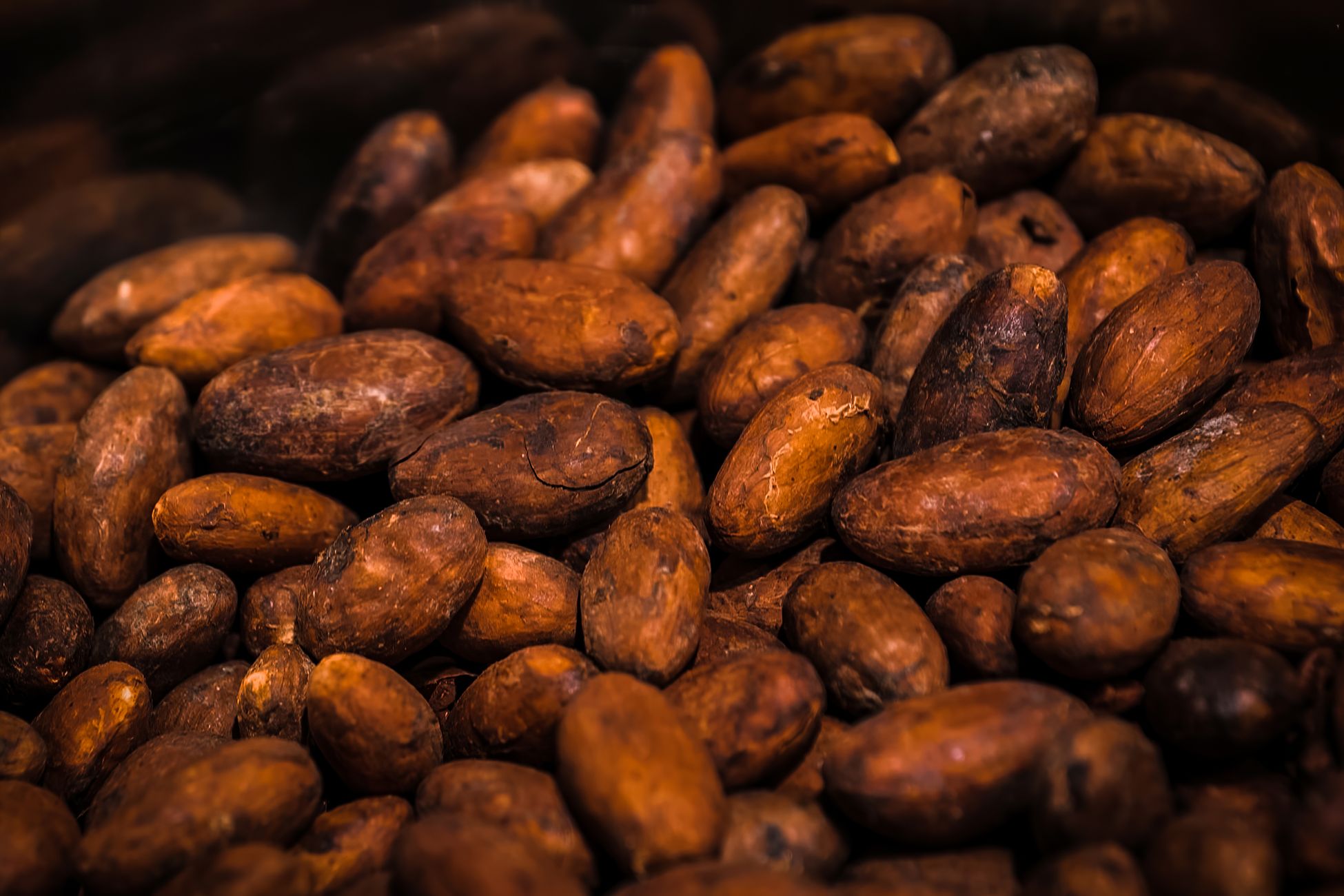
After fermentation, both seeds are dried in the sun on patios or raised beds until their moisture content drops to a level where they can be stored and shipped. At this stage, a bag of green coffee and a bag of dried cacao are surprisingly similar objects: dry, hard, brownish seeds that smell faintly of fruit and earth and taste of nothing you would want to eat.
Then They Are Both Roasted
Roasting is where the resemblance becomes chemical. Both coffee and cacao are roasted with dry heat, coffee usually at 190 to 230 degrees Celsius for 8 to 15 minutes, cacao usually at 110 to 150 degrees for 20 to 60 minutes. The temperatures differ but the reactions are the same.
The central one is the Maillard reaction. When sugars and amino acids are heated together, they react to form hundreds of new compounds, including the brown pigments called melanoidins and a huge range of aromatic molecules. This is the reaction that browns bread crust, sears a steak, and turns both green coffee and raw cacao into something that smells and tastes rich. The specific compounds that come out of the Maillard reaction depend on which sugars and which amino acids were present, and coffee and cacao share many of the same starting materials.
Caramelization happens alongside it. Sugars heated on their own break down into sweet, slightly bitter, nutty compounds. In coffee, caramelization gives you the brown sugar, toffee, and caramel notes. In cacao, it contributes to the same profile.
Then there is the family of compounds called pyrazines, which form during roasting and are responsible for the nutty, roasted, earthy notes in both coffee and chocolate. Certain pyrazines are found in nearly identical concentrations in roasted coffee and roasted cacao. When a coffee taster writes cocoa on a tasting card, they are often detecting the same pyrazines and aldehydes that a chocolate maker would identify in their own product. The word chocolate on a coffee bag is not a metaphor. It is a shared molecule.
Taste the cocoa and caramel in a well roasted medium coffee
They Even Share Their Stimulants
Coffee is famous for caffeine. Cacao contains caffeine too, in smaller amounts, along with a related compound called theobromine that is responsible for much of chocolate's gentle, long lasting lift. Both are alkaloids in the same chemical family, produced by the plants for the same reason, which is to deter insects, and both contribute a characteristic bitterness that is part of the flavor rather than a flaw in it.
This shared bitterness is one reason coffee and chocolate feel so natural together. The bitter edge of a dark chocolate and the bitter edge of a coffee sit in the same register. Neither clashes with the other because they are essentially the same note.
Why The Pairing Works On The Palate
Put a piece of chocolate in your mouth and follow it with a sip of coffee, and several things line up.
The fat in chocolate coats your tongue, softening the acidity and bitterness of the coffee and letting its sweetness come forward. This is the same reason milk makes coffee taste smoother.
The sugar in chocolate balances coffee's acidity, so a bright, fruity coffee that might taste sharp on its own tastes rounder next to chocolate.
The shared roasted, nutty, caramel notes reinforce each other. Instead of two competing flavors, you get one flavor with more depth, because the chocolate is amplifying compounds that were already in the coffee.
And where the two differ, they complement. Coffee's fruit acidity brings a lift that chocolate on its own lacks, and chocolate's rich fat brings a texture that black coffee lacks. Each fills in what the other is missing.
Matching Specific Coffees To Specific Chocolates
The pairing gets more interesting when you stop treating coffee and chocolate as single categories.
A washed Central American coffee with cocoa and caramel notes, like a Guatemalan or a Costa Rican, pairs almost perfectly with a 60 to 70 percent dark chocolate. The coffee's own chocolate notes are mirrored, and the chocolate's sugar softens the acidity.
A fruity, floral Ethiopian coffee pairs better with a lighter milk chocolate or a chocolate with fruit inclusions. The milk and sugar tame the coffee's brightness and the fruit echoes the coffee's berry notes.
A heavy bodied Sumatran or a dark roasted blend wants something intense: 80 percent or above, or a chocolate with sea salt. The salt cuts through the coffee's earthiness and the high cacao percentage stands up to the body.
A natural process coffee with big wine like fruit notes can be extraordinary with a single origin dark chocolate from the same country, since the fermentation character in both will have something in common.
There is no wrong answer here, but paying attention to which pairings work best is one of the fastest ways to train your palate to notice what is actually in your coffee.
What This Says About Roasting
The reason a good coffee tastes of chocolate is that its roast developed the Maillard and caramelization reactions fully without pushing past them into carbonization. The cocoa and caramel notes live in a specific window. Roast too light and the sugars have not developed, so the coffee tastes grassy and sour. Roast too dark and the same sugars have burned, so the cocoa turns to ash and the caramel turns to char.
Air roasting hits that window cleanly. Because every bean is suspended in hot air rather than resting against a hot drum wall, the batch develops evenly from the inside out, with no scorched surfaces and no under developed centers. The chaff is carried away rather than smoldering into the beans. The result is a coffee where the chocolate note is clear and sweet rather than muddied by smoke, because the roast built exactly the compounds it was supposed to build and stopped before it destroyed them.
Two Seeds, One Story
The next time you have a coffee with a piece of chocolate and it feels like more than a snack, know that you are tasting a shared history. Two seeds from two tropical fruits, fermented by the same kinds of microbes, dried under the same sun, roasted through the same reactions, and carrying many of the same molecules into your mouth. They pair well because, in the ways that matter most to your palate, they are the same thing.
Start with a coffee that was roasted to bring that side of it forward.
Explore our most popular coffees, chocolate notes and all
All images shown in this blog are sourced from pexels.com.