

The roast level question gets all the attention. Light or dark, which one has more caffeine, and the answer turns out to be that the difference is small enough to be nearly irrelevant to how your morning feels.
The variable nobody argues about is the one that actually moves the number. How you brew changes the caffeine in your cup by multiples, not by percentages. Two people drinking the same beans from the same bag on the same morning can end up with wildly different doses, and the entire explanation sits in the brewer they chose and the numbers they used.
Find a coffee you will want more than one cup of.
Caffeine Is Water Soluble and Extracts Early
Start with the mechanism, because everything else follows from it. Caffeine dissolves readily in hot water. It is one of the first things to come out of the grounds, and it comes out fast.
That has a useful consequence. Caffeine extraction is close to complete well before flavor extraction finishes. By the time you have pulled the acids, sugars, and heavier compounds that give a cup its character, the caffeine is essentially all in the water already.
Which means caffeine in your cup is driven overwhelmingly by two things. How much coffee you started with, and how much water it ended up in. Contact time, grind size, and temperature matter at the margins, but dose and ratio do the heavy lifting.

The Ratio Is the Whole Story
Here is where the multiples come from.
A standard drip brew runs somewhere around one part coffee to sixteen or seventeen parts water. A full mug of that gets you a moderate caffeine load spread across a lot of liquid.
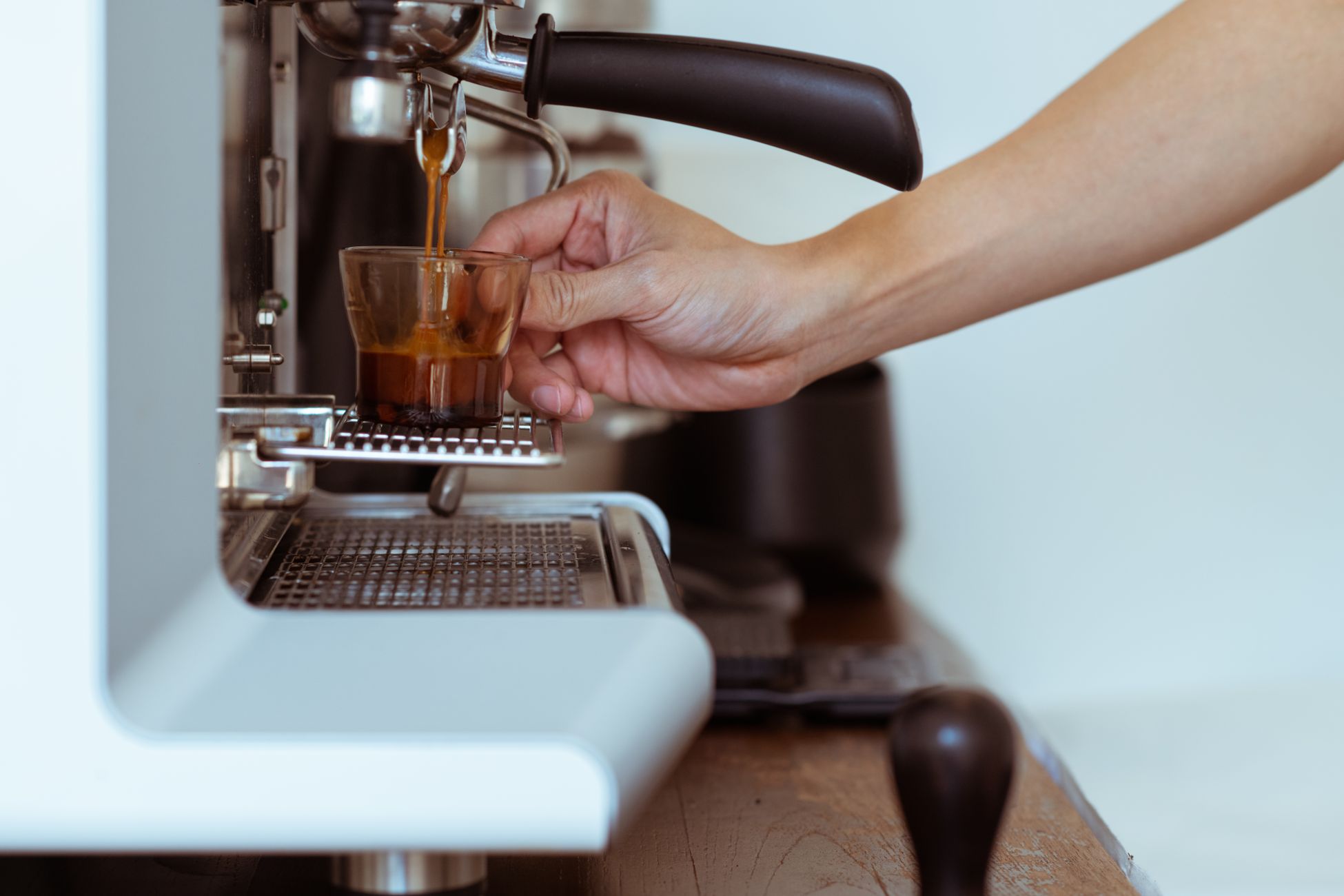
Espresso runs closer to one part coffee to two parts water. That is an enormously more concentrated extraction. Per milliliter, espresso is loaded with caffeine compared to drip. But a single shot is a tiny volume, so the total caffeine in one shot often ends up similar to or lower than a full mug of drip coffee.
This is the confusion that trips everyone up. Espresso is far stronger by concentration and frequently weaker by total dose, and people argue past each other because one of them means per sip and the other means per drink. Both are right about the thing they are measuring.
Cold brew concentrate is the other extreme. It typically uses a much heavier coffee to water ratio, sometimes one to four or one to five, steeped for many hours. Drink that undiluted and you are consuming a genuinely large amount of caffeine. Dilute it properly and it lands in normal territory. The number of people who have had an unpleasant afternoon because they treated concentrate as ready to drink is not small.
Contact Time Does Less Than You Think
Because caffeine extracts early, extending the brew time does not add caffeine in proportion. A French press steeped for eight minutes instead of four does not deliver twice the caffeine. It delivers a bit more, along with a great deal more of the bitter compounds that come out late.
Cold brew is the apparent exception, and it is not really an exception. A twelve hour steep at room temperature or in the fridge is compensating for the fact that cold water is a much less efficient solvent. The long time is buying back what the low temperature costs. The reason cold brew is high in caffeine is the ratio, not the duration.
Similarly, a longer espresso shot pulled to a larger volume does extract more total caffeine than a short one, because more water passed through the same grounds. But the increment is modest compared to simply using more coffee in the basket.

Where the Real Household Variation Comes From
If you want to know why your coffee hits differently on different days, look at the practical stuff.
Scooping instead of weighing. A scoop of a light roast and a scoop of a dark roast contain different masses of coffee, because roasting changes bean density. A scoop of finely ground coffee packs more mass than a scoop of coarse. Volume measurement introduces swings of twenty percent or more without you noticing.
Cup size. A mug that looks normal can be anywhere from two hundred fifty to five hundred milliliters. If you brew to fill it, your dose scales with the mug.
Cafe portions. A large drip coffee from a shop can contain two or three times the coffee of a home mug. A drink built on two shots contains twice a drink built on one, and many default builds use two without saying so.
Get a bag good enough to brew deliberately.
Rough Numbers Worth Carrying Around
Precise figures vary with beans and technique, but the general shape holds.
A single shot of espresso lands in a moderate range. Two shots, which is what most espresso based drinks contain, roughly doubles it. A standard mug of drip coffee tends to land somewhere between one and two shots worth. A large cafe drip is comfortably above that. A serving of undiluted cold brew concentrate can exceed all of them by a wide margin.
Decaf is not zero. The processes that remove caffeine remove the large majority of it, not all of it. A few cups of decaf across an evening add up to a real, if small, amount. For most people that is irrelevant. For someone who is genuinely sensitive, it is worth knowing.
Why Roast Level Barely Registers
Since it always comes up, the short version. Roasting does destroy a small amount of caffeine, but the loss is minor because caffeine is stable at roasting temperatures. Roasting also removes moisture and makes the bean less dense, which means a scoop of dark roast contains fewer beans than a scoop of light.
That density effect is where the entire dark roast has less caffeine claim comes from, and it disappears the moment you measure by weight instead of volume. Weigh your coffee and the difference between roast levels is small enough to be lost in the noise of everything else.
Which is exactly the point. Your grinder, your scale, and your brewer are making decisions that dwarf the roast level, and most people never look at them.

How to Actually Control It
If you want more caffeine, use more coffee. Not a longer steep, not a finer grind, not a darker roast. More grams in the brewer.
If you want less, use less coffee, or drink a smaller volume of the same brew. Switching to a lighter roast will not do it. Switching to decaf will, mostly.
If you want the same amount every day, buy a scale. This is the entire answer. Weighing your dose removes the single largest source of day to day variation, and it costs less than a bag of good coffee. It also happens to make everything else about your brewing more consistent, which is why people who start weighing rarely stop.
And if a cup at a certain hour keeps you up, the fix is the hour and the dose, not the beans. The coffee is not the variable you thought it was.
Find a coffee worth measuring properly.
All images shown in this blog are sourced from pexels.com.