

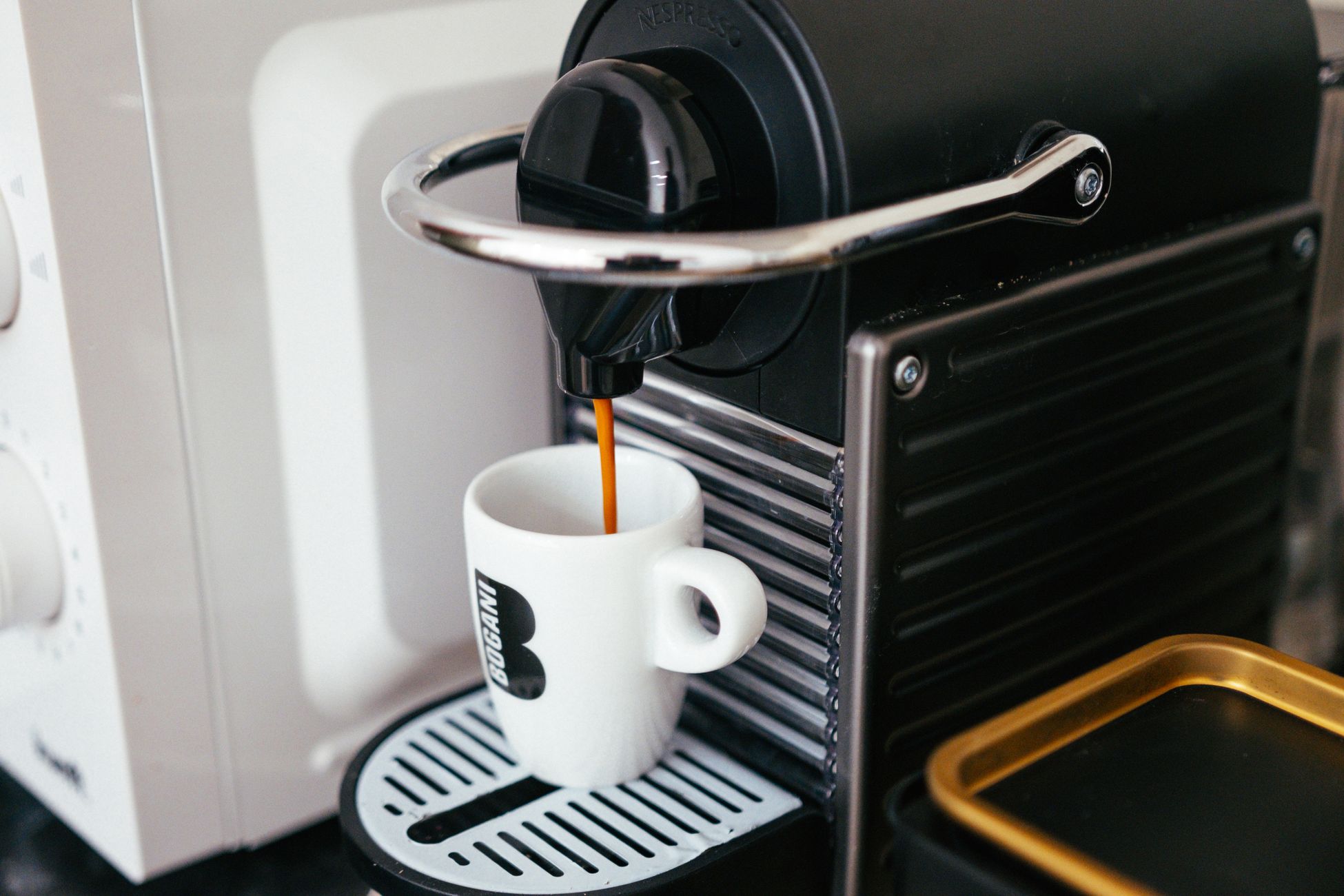
Ask someone who brews coffee for a living about the hardest cup to make well, and a surprising number will say a single small one. Not a full carafe, not a big batch for a crowd. One modest cup, alone, on a quiet morning.
That runs against intuition. Less coffee, less water, fewer things to go wrong. But scaling down a brew is not simply doing the same thing in miniature, and the physics working against you get less forgiving the smaller you go.
Whatever size you brew, the beans set the ceiling. Have a look at our most popular roasts and then let us talk about why the small ones are tricky.
Heat Loss Scales Against You
This is the fundamental problem, and it is geometry.
As you shrink a volume of liquid, its surface area does not shrink proportionally. Surface area scales with the square of linear dimension while volume scales with the cube. So a small brew has substantially more surface area relative to its volume than a large one, and surface area is where heat escapes.
The practical result is that a small brew cools dramatically faster. Two hundred grams of water in a cone brewer can lose ten or fifteen degrees Fahrenheit over the course of a brew, sometimes more in a cold kitchen with a cold brewer. A thousand gram batch loses a fraction of that, because it has vastly more thermal mass and proportionally less exposed surface.
Temperature controls extraction. Brewing that starts at 205 degrees and ends at 185 is not brewing at 205. Much of your coffee extracted at temperatures well below the useful range, and what you get is a cup that tastes under extracted, sour, and thin regardless of how carefully you measured.
Every cold surface the water touches steals from a small brew disproportionately. The brewer itself, the filter, the carafe, the cup. A ceramic dripper at room temperature can absorb a meaningful fraction of a small brew's thermal energy in the first few seconds.
Bed Geometry Gets Awkward
The second problem is the shape of the coffee bed.
Pour over brewers are cones or flat bottomed vessels with fixed dimensions. Put a small dose in a large brewer and the bed is shallow and wide. Put a large dose in the same brewer and the bed is deep.
Bed depth matters because it determines how long water is in contact with coffee as it passes through, and how evenly that contact is distributed. A shallow bed offers a short path. Water enters, passes through a thin layer, and exits. There is less opportunity for even saturation and more opportunity for water to find a fast route through.
Shallow beds are also more prone to disruption. A pour that would settle harmlessly into a deep bed can excavate a shallow one, exposing the filter and letting water bypass coffee entirely. Once you have a bare patch of filter with water running over it, that water contributes nothing but dilution.
Large brews have the opposite issue, but it is more manageable. Deep beds can compact under their own weight and slow drainage, which roasters and cafes handle by choosing appropriately sized brewers and adjusting grind.
This is why brewer sizing matters. A 200 gram brew in a large cone is fighting geometry. The same brew in a properly sized small cone behaves much better.
Find a coffee worth getting the small details right for
Measurement Error Gets Amplified
Small numbers magnify mistakes.
Suppose you are off by one gram of coffee. In a sixty gram dose for a large batch, that is under two percent and essentially invisible. In a twelve gram dose for a single cup, that is over eight percent, which is a meaningful shift in ratio that you will taste.
The same applies to water. Ten grams of extra water in a thousand gram brew is nothing. Ten grams in a two hundred gram brew is five percent, and it moves your ratio noticeably.
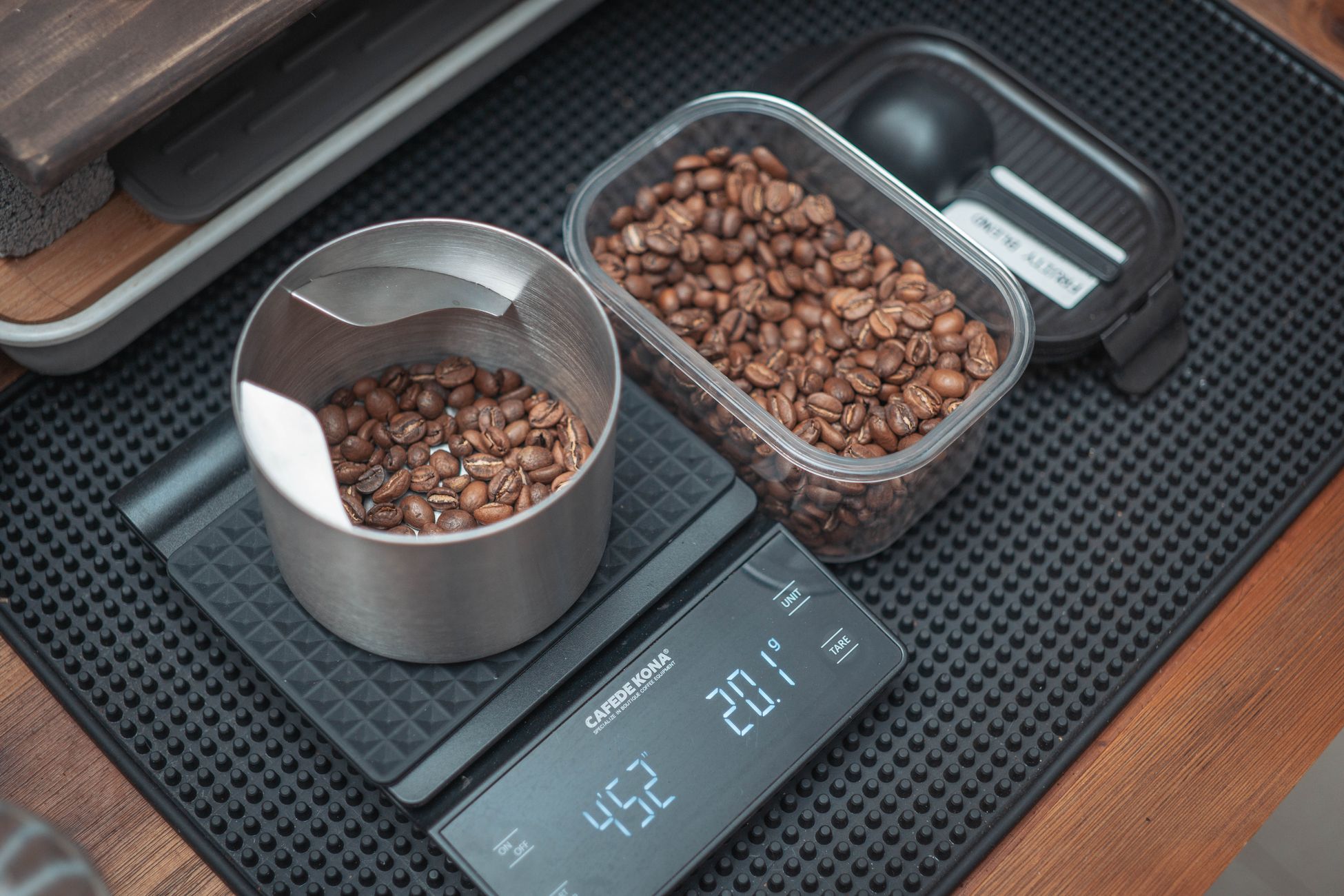
Scale resolution becomes a real constraint. A scale that reads to whole grams is adequate for large batches and marginal for small ones. For small brewing you want a scale that resolves to a tenth of a gram, and you want it to be accurate at low weights, which not all inexpensive scales are.
Timing errors scale similarly. A five second variation in a four minute brew is small. The same five seconds in a two minute brew is a larger proportion of total contact time.

Retention Takes a Bigger Bite
Every brewing setup holds back some water, and some coffee, and in a small brew that loss is proportionally larger.
The filter absorbs water. A paper filter can retain several grams once saturated, plus the coffee bed itself holds roughly two grams of water per gram of dry coffee. In a large brew that is a small fraction of total volume. In a small brew it is a substantial chunk of what you were expecting to end up in your cup.
Grinder retention matters too. Most grinders hold some grounds in the chamber between doses. If your grinder retains half a gram and you are dosing twelve grams, you are both losing a measurable portion of today's dose and receiving stale grounds from yesterday. At sixty gram doses, the same half gram is trivial.
This is why single dosing grinders and grinders designed for minimal retention have become popular among people brewing one cup at a time. The problem they solve barely exists at cafe volumes.
Why the Coffee Itself Has to Be More Consistent
Small brews have less averaging, and that puts more weight on the beans.
In a large batch, variation across a dose gets smoothed. If some beans in a sixty gram dose were roasted a little further than others, the cup blends thousands of particles and the differences average out. In a twelve gram dose you have far fewer particles, less averaging, and more chance that batch variation shows up as an off tasting cup.
Uneven roasting is the underlying issue. Beans developed to different degrees have different densities and different hardness, so they grind to different particle sizes and extract at different rates. Drum roasting delivers heat partly by contact with a hot metal surface, developing bean exteriors ahead of interiors and producing more variation across a batch. Air roasting suspends beans in a stream of hot air so each one heats evenly from every side, and chaff gets carried out of the chamber before it can scorch against the beans.
Uniform beans grind uniformly, and a uniform small dose extracts predictably. That predictability is exactly what small brewing lacks the margin to do without.

How to Actually Brew Small Well
None of this means small brewing is doomed. It means it needs attention where large brewing does not.
Preheat aggressively. This is the highest impact change available. Rinse the filter with hot water, warm the brewer thoroughly, warm the carafe or cup, and dump that water before you brew. You are removing the thermal sinks that would otherwise rob your brew.
Brew hotter than you would for a large batch. If you normally target 200 degrees, use water fresh off the boil for a small brew and let the inevitable cooling bring you into range rather than starting in range and falling below it.
Use a brewer sized for the dose. A small cone for small brews. The geometry alone solves several problems at once.
Grind slightly finer. Shorter contact time and lower average temperature both reduce extraction, and a finer grind compensates for both.
Pour more gently and more centrally. Shallow beds disrupt easily. Slow the flow, keep the stream low and controlled, and avoid pouring directly onto the filter wall.
Weigh everything with a scale that resolves finely. At small doses, guessing is not an option.
Consider immersion instead. An AeroPress or a small French press sidesteps the bed geometry problem entirely, since immersion brewing does not depend on water percolating through a bed. For small volumes, immersion is genuinely easier to do well, and that is worth knowing if pour over at small scale keeps frustrating you.
Why It Is Worth the Trouble
The reason to bother is that a single cup brewed attentively, from beans ground moments earlier, at the temperature you chose, is about as good as coffee gets. Batch brewing has real virtues, mostly convenience and consistency, but it also means the coffee sits, cools, and slowly changes while you drink it.
Small brewing is harder because it is less forgiving. That is also the reason it teaches you more. Every variable that a large batch quietly absorbs will show up plainly in a single cup, which means you find out immediately when something is off. Once you have learned to make one cup consistently well, everything larger becomes straightforward.
Pick out a bag and start paying attention
All images shown in this blog are sourced from pexels.com.