

Ask someone to name an exciting coffee origin and you will hear Ethiopia, Kenya, Panama, maybe Colombia. Brazil rarely comes up, and when it does it is usually described as safe, or nutty, or fine.
Brazil also produces roughly a third of the world's coffee, and if you have ever had an espresso blend, a house blend, a breakfast blend, or a cup of coffee at a place that did not tell you the farm, you have almost certainly had Brazilian coffee. It is the most consumed and least discussed origin in the world, and understanding why says a lot about how blends actually work.
Browse the blends and single origins we're pouring now.
The Scale Is Difficult to Overstate
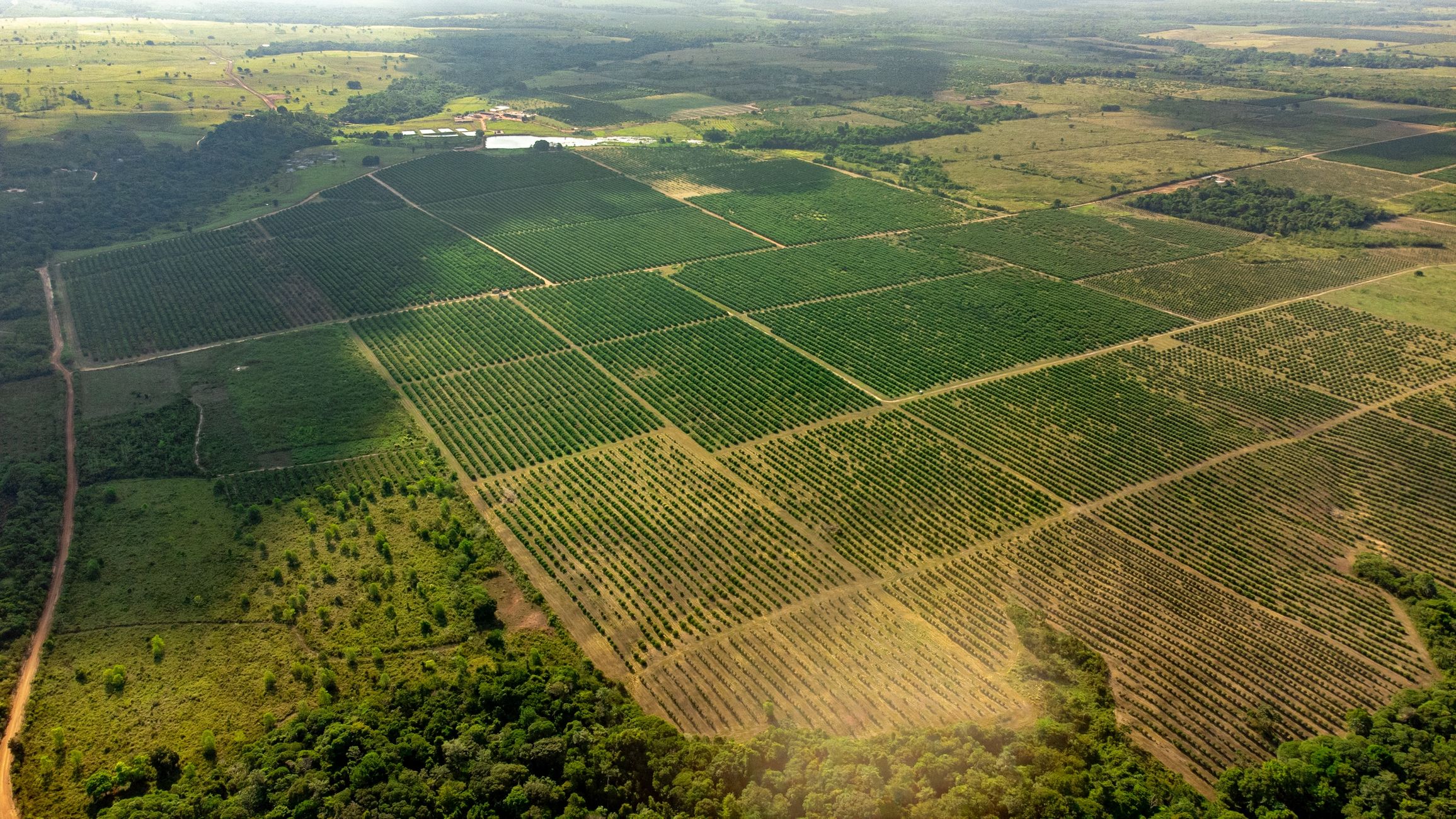
Brazil has been the world's largest coffee producer for over 150 years. In a typical year it accounts for somewhere near a third of global output, which is more than the next two producing countries combined.
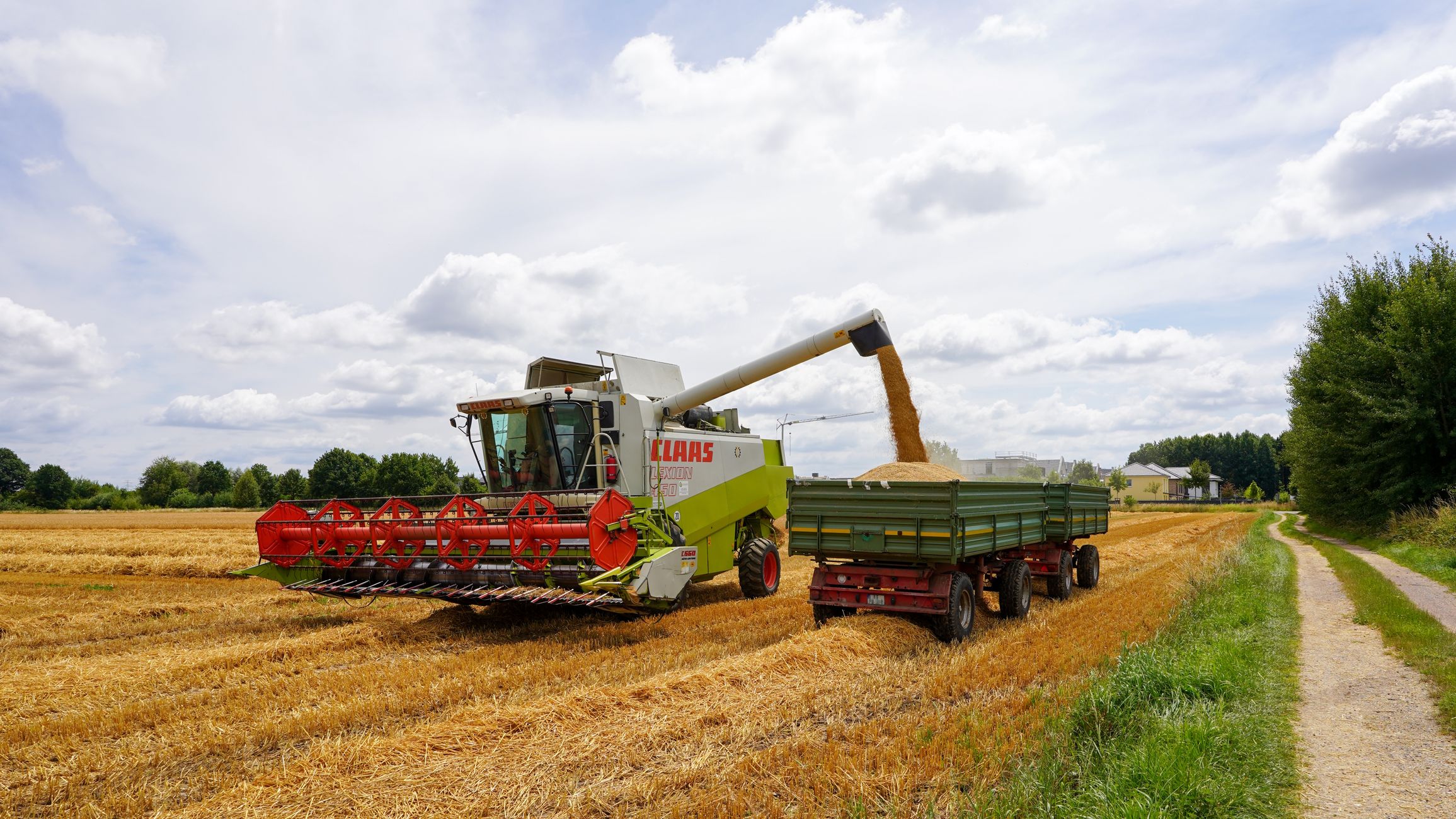
That scale is not just about land area. It is about how the coffee is grown. Much of Brazil's coffee sits on relatively flat or gently rolling terrain at moderate altitude, roughly 800 to 1,200 meters. Flat ground means machines can operate. Machine harvesting means enormous farms can pick at a fraction of the labor cost of hand picking on a steep hillside in Colombia or Ethiopia.
Brazil also has huge, sophisticated, well capitalized farms alongside its smallholders, plus mature infrastructure for drying, storing, grading, and exporting. A roaster who needs 40,000 pounds of a consistent profile, delivered on schedule, at a predictable price, can get that from Brazil in a way that is genuinely difficult from most origins.
Reliability at volume is the first reason Brazil anchors blends. It is not a flavor reason, but it is the reason any of the flavor reasons get to matter.
What Brazilian Coffee Actually Tastes Like
The classic Brazilian profile is remarkably consistent: milk chocolate, roasted nut, sometimes caramel or toffee, low acidity, heavy body, and a broad sweetness that sits in the middle of the palate.
Two things create that.
Altitude. Brazil's growing regions are lower than most specialty origins. Lower altitude means warmer temperatures, faster cherry maturation, and less dense beans. Dense high altitude beans develop the concentrated acids that give a Kenyan its sharpness. Brazil's beans develop differently, trading brightness for body and sweetness.
Processing. The dominant methods are natural and pulped natural, sometimes called honey. Both leave some or all of the fruit on the bean during drying, and Brazil's dry harvest season makes that practical at scale. Natural processing pushes sweetness and body forward and softens acidity further.
Add those together and you get a coffee that is round, sweet, low in acid, and heavy in the mouth. That combination is not a compromise. It is a specific and useful profile.
Why That Profile Makes It the Perfect Base
Blending is not about combining good coffees and hoping. It is about building a cup with a structure, and structures need foundations.
It fills the middle. Many high altitude coffees are bright at the front and clean at the finish, with a hollow spot in between. Brazil's body and chocolate sweetness fills that gap, so the blend reads as complete rather than as a series of separate impressions.
It does not compete. A Kenyan and an Ethiopian in the same blend fight each other, because both are loud in overlapping ways. Brazil's low acidity and mild character mean it supports whatever else is in the blend without arguing with it. A blender can add 20 percent of something distinctive and have it read clearly, because the base is not shouting.
It handles heat. Darker roasts destroy delicate acidity, which is why roasting a great Ethiopian dark is a waste of money. Brazil's flavors are heat tolerant, and its sugars caramelize into exactly the chocolate and nut notes people want in an espresso blend. It gets better where fragile coffees get worse.
It survives milk. A latte is mostly milk, and milk's fat and sweetness flatten delicate coffee flavor completely. Brazil's body and chocolate character push through dairy, which is why it appears in nearly every espresso blend built for milk drinks.
It stabilizes cost. Volume and mechanization make Brazilian coffee more affordable per pound than most specialty origins. A blend that is 60 or 70 percent Brazil can carry a smaller portion of an expensive lot and still land at a price people will pay.
Shop what we're roasting this week.
The Good Brazils Are Genuinely Good
Being useful in a blend has given Brazil a reputation as filler, and that is unfair to the top of the country's production.
The regions worth knowing are Sul de Minas, Cerrado Mineiro, Mogiana, and Chapada Diamantina, each with its own character. Cerrado Mineiro was Brazil's first designated origin region with protected status, which is not something a country does for coffee it considers filler.
Varietals matter here too. Yellow Bourbon is a Brazilian specialty with a distinct softness and a honeyed sweetness. Catuai and Mundo Novo are workhorses that can be excellent when grown well. Some producers are working at higher altitudes and with more careful processing, including anaerobic ferments, producing coffees that surprise people who thought they knew what Brazil tastes like.
There is also a competition circuit. Brazil's Cup of Excellence lots regularly score in the high 80s and low 90s and sell at prices that would shock anyone who thinks of Brazil as the cheap option.
Grading is worth a word too. Brazilian coffee is graded on defect count and screen size, with terms like Santos 17/18 or NY2, and cup quality descriptors like strictly soft, soft, and hard. Those are useful markers if you are buying green, and they are a reminder that the country has been quality sorting for a very long time.
How to Taste One on Its Own
If your experience of Brazil is entirely secondhand through blends, buy a single origin and pay attention to what it does.
Brew it in something that preserves body: a French press, a metal filter, or a flat bottom dripper. Paper filtered cone brewing is designed to produce clarity, and clarity is not this coffee's argument.
Do not over grind or over extract it. Brazil's low acidity means there is less brightness to balance bitterness, so pushing extraction too far leaves you with a heavy, dull cup. Slightly coarser and slightly shorter than your default is a good starting point.
Drink it black first, then with milk. It is one of the few origins where the milk version is not a downgrade, and comparing the two teaches you exactly why blenders reach for it.
And notice the finish. A good Brazil has a long, sweet, chocolate finish that lingers well after the sip, which is a quality that gets absolutely no attention on tasting notes and matters enormously in a daily cup.

The Broader Point
Specialty coffee tends to reward the unusual: the rare varietal, the tiny lot, the flavor nobody expected. That focus is part of what makes coffee interesting.
It also means the coffees doing the most work get the least credit. Brazil is the base of the pyramid. It is what makes a blend cohesive, what makes espresso work in milk, and what keeps a good bag of coffee at a price people can actually pay every week.
The next time you drink a house blend and think it tastes balanced, that balance is not an accident. Somebody built a foundation, and it almost certainly came from Brazil.
All images shown in this blog are sourced from pexels.com.