

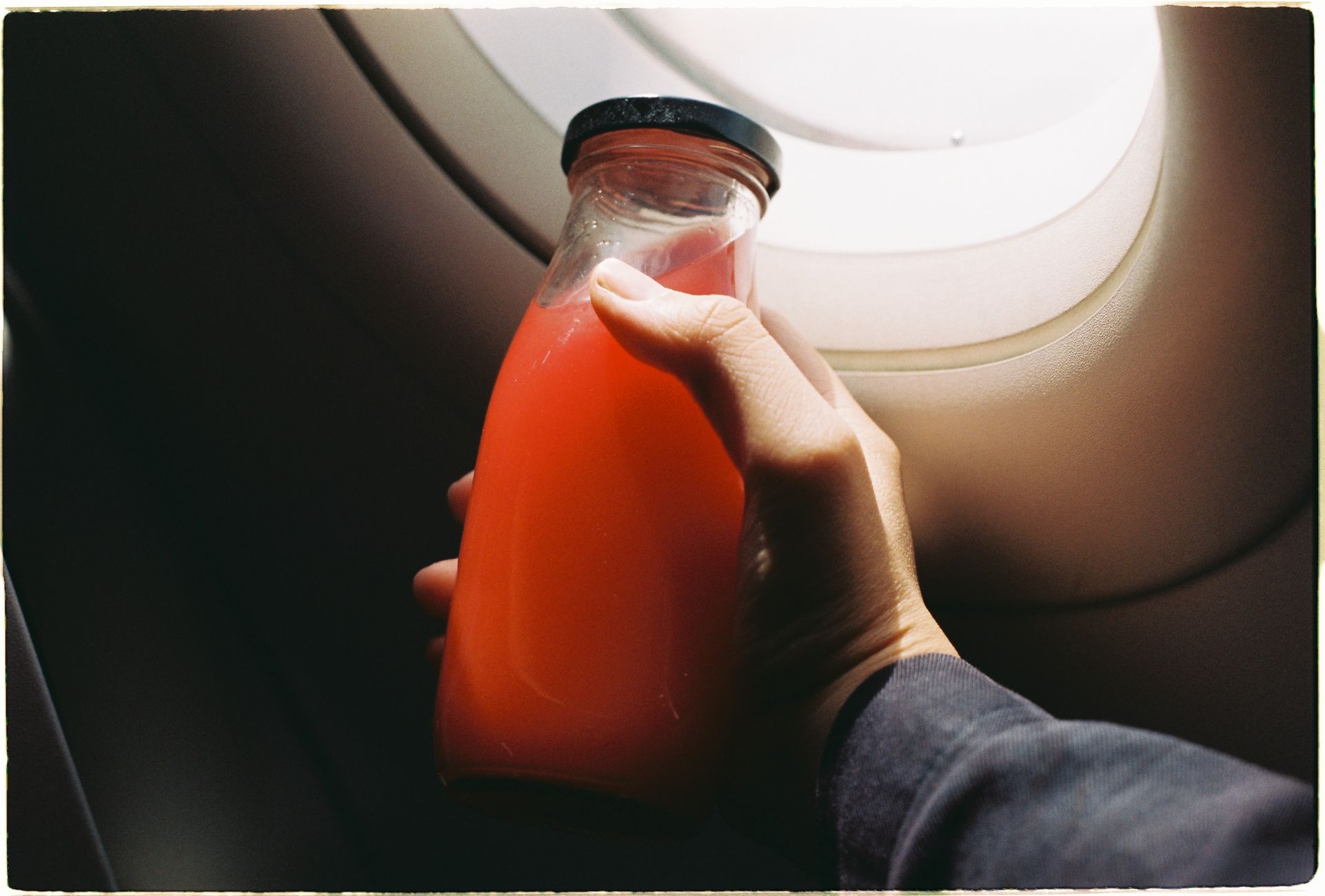
Somewhere over the middle of the country, a flight attendant hands you a paper cup of coffee. You take a sip. It is hot, it is brown, and it tastes like almost nothing. Flat, faintly bitter, vaguely stale. You drink it anyway because it is there and the flight is long, but you would never accept that cup on the ground.
The usual explanation is that airline coffee is bad coffee, and that is partly true. But it is not the whole story. Even a genuinely good coffee, brewed well, would taste worse at 35,000 feet than it does in your kitchen, because the cabin is doing something to your ability to taste. The coffee is one problem. Your tongue is the other.
Shop coffees worth tasting with a fully working palate
The Cabin Is Dry And Your Nose Knows It
Most of what you experience as flavor is not taste at all. Your tongue detects five basic qualities: sweet, sour, salty, bitter, and savory. Everything else, the fruit, the chocolate, the floral notes, the caramel, comes from aroma. Volatile compounds rise from the coffee, travel up through the back of your throat into your nasal cavity, and your olfactory receptors read them. That retronasal smell is where the interesting parts of coffee live.
Those receptors need moisture to work. The mucus lining in your nose is what captures aromatic molecules and presents them to the receptors. Aircraft cabins are pressurized to the equivalent of roughly 6,000 to 8,000 feet of altitude, and the air pumped through them is extremely dry, often below 20 percent relative humidity and sometimes closer to 10 percent. A desert typically sits above that.
After an hour or two in that air, your nasal passages dry out. The receptors are still there, but their ability to catch and register aromatic compounds drops noticeably. The coffee is releasing its aromatics. You just cannot read them. What is left is the part the tongue can handle on its own, which for coffee is mostly bitterness and a little sourness. That is exactly the flat, one dimensional cup you remember.
Low Pressure Dulls Sweet And Salty
There is a second effect that has been studied in some detail because airlines and catering companies wanted to know why their food got so many complaints. Research conducted in simulated cabin conditions found that the combination of low pressure and low humidity reduces the perception of sweetness and saltiness by somewhere around 20 to 30 percent. Bitterness and sourness, meanwhile, come through at close to normal strength.
For coffee, that is a bad trade. Sweetness is what balances a cup. A well roasted coffee tastes pleasant because its natural sugars soften the acids and the bitter compounds. Take away a third of the sweetness and leave the bitterness intact, and the balance tips. The same coffee that tasted round and smooth at sea level now tastes sharp and harsh.
This is also why airlines season their food more heavily than restaurants do and why tomato juice, which has a savory depth that survives the cabin better than sweet flavors, is so popular in the air. The palate is not broken. It is skewed, and coffee happens to fall on the wrong side of the skew.
The Noise Makes It Worse
One more piece of the puzzle is sound. Cabin noise sits at a steady 80 to 85 decibels, roughly the level of a busy street or a loud restaurant. Studies on the effect of background noise on taste found that loud environments further suppress the perception of sweetness and can slightly enhance the perception of savory or umami flavors.
Coffee has almost no umami to gain from that, and it has sweetness to lose. Between the dry air, the low pressure, and the constant drone of the engines, the cabin has quietly stripped out most of what would make a coffee taste good and left the parts that make it taste harsh.

Now Add Actually Bad Coffee
All of that would apply to a perfectly brewed pour over from your favorite bag. Airline coffee, unfortunately, is not that. It compounds a palate problem with a preparation problem.
The coffee itself is usually a commodity blend, roasted dark for shelf stability and ground long before the flight. Pre ground coffee loses most of its aromatic compounds within a short time of grinding, and by the time it is brewed in the air, the volatile oils that would have carried the flavor are long gone.
The water is the next issue. Aircraft water tanks are periodically tested and treated, but the water is still often mineral poor or oddly treated, and both extremes brew badly. Water with very few minerals extracts weakly and tastes flat. Water treated heavily enough to be safe in a tank sometimes carries its own faint chemical note.
Then there is the brewing temperature. Water boils at a lower temperature at reduced pressure. At the cabin equivalent of around 7,000 feet, water boils closer to 92 degrees Celsius than to 100. Most galley brewers are designed to bring water to a boil, so they are brewing at the low end of the ideal range or below it. Cooler water extracts less, especially from a dark, coarse grind, and the result leans toward thin and sour.
Finally, the coffee sits. It is brewed in a batch, held in a pot on a warming plate, and poured out over the course of a service that can take 30 to 45 minutes. A hot plate slowly cooks the coffee, driving off the last of the aromatics and concentrating the bitter compounds. The last cup poured from the pot is meaningfully worse than the first.
Taste a coffee that was ground fresh and brewed at the right temperature
Why This Matters On The Ground Too
The airplane is an extreme case, but the same mechanisms show up in everyday life at a smaller scale. If you drink coffee in a dry, heated office in the middle of winter, your nasal passages are drier than they would be in humid summer air, and your coffee will taste a little flatter. If you drink it in a loud cafe, you are getting a small dose of the noise effect. If you have a cold and your nose is blocked, you already know what happens: the coffee becomes hot bitter water with no aroma.
Understanding this changes how you evaluate a coffee. When a cup tastes off, the first question is whether the coffee changed or whether you did. A coffee that tasted sweet and fruity yesterday and tastes dull today may be exactly the same coffee, sipped by a palate that is dehydrated, congested, or tired. Cuppers and roasters know this and taste under controlled conditions, at the same time of day, well hydrated, in a quiet room, precisely because the palate is so easy to skew.
How To Get A Better Cup In The Air
You cannot fix the cabin, but you can tilt the odds.
Hydrate before and during the flight. A drier nose is a worse nose, and plain water is the only real countermeasure. Drink it steadily rather than in one go.
Bring your own coffee. Some travelers carry a small bag of freshly ground beans and a pocket sized brewer, then ask for hot water. The water is still the aircraft's water and the temperature is still low, but fresh grounds with their aromatics intact will taste dramatically better than what comes out of the galley pot. Even a good specialty instant coffee, which has improved enormously in recent years, will beat the airline brew.
Ask for the coffee early in the service. The first cups from a fresh pot have been sitting on the hot plate for the least time. If you are seated near the back and the service starts at the front, the pot has been cooking for a while by the time it reaches you.
Skip the milk and sugar reflex. On the ground, adding sugar can rescue a slightly harsh coffee. In the air, your perception of sweetness is already suppressed, so you will add more sugar than usual to get the same effect and end up with a strangely sweet, still bitter cup. Milk helps more, because its fat carries some aromatics and its texture softens bitterness in a way the palate registers even when it is dulled.

What A Good Coffee Is Really Made Of
The airplane accidentally runs an experiment that every coffee drinker should think about. Strip away aroma and sweetness, and what is left of the cup? For a commodity dark roast, almost nothing but bitterness. For a carefully roasted specialty coffee, still not much, because the things that made it special were exactly the things the cabin took away.
That is the lesson. The character of a good coffee lives in its volatile aromatics and its developed sugars, both of which are fragile. They are damaged by stale grounds, by wrong temperatures, by sitting on a hot plate, and, as it turns out, by a dry nose at altitude. Everything about brewing well is really about protecting those two things long enough to get them into your mouth.
Roasting evenly, so the sugars develop without scorching. Grinding fresh, so the aromatics are still in the bean when the water hits it. Brewing at the right temperature, with decent water, and drinking it promptly. When all of that lines up, and your palate is working, the difference between a great coffee and an airplane coffee is not subtle. It is the whole point.
Explore our most popular coffees, best enjoyed at sea level
All images shown in this blog are sourced from pexels.com.