


There is a category of coffee accessory that sells almost entirely on anxiety. You spent good money on fresh beans, you know oxygen is the enemy, and here is a canister with a pump on the lid promising to remove it. Fifty dollars feels like cheap insurance.
The insurance is thinner than the marketing suggests. Vacuum canisters do something, but they do considerably less than people assume, and for most home drinkers the bag the coffee arrived in is already handling the job better than the canister will.
Buy fresh and the storage question mostly answers itself.
What Is Actually Degrading Your Coffee
Four things stale coffee, and they do not contribute equally.
Oxygen causes oxidation of the lipids and aromatic compounds in the bean. This is the slow rancidity that turns coffee papery and flat over weeks.
Moisture is absorbed by roasted coffee, which is hygroscopic, and it accelerates every other kind of degradation while also dulling the coffee directly.
Heat speeds up all chemical reactions, including all of the above.
Light, specifically ultraviolet, breaks down compounds directly and is why clear containers on a sunny counter are a bad idea.
And then there is the fifth thing, which is not degradation at all. Carbon dioxide leaves the bean continuously after roasting, taking aromatic compounds with it. That is degassing, and no container stops it.

What a Vacuum Canister Removes
A pump lid canister removes some of the air. Not all of it. Household vacuum canisters typically reach somewhere between 20 and 50 percent of atmospheric pressure, which is a meaningful reduction and nowhere near a vacuum.
So you have removed roughly half to four fifths of the oxygen in the headspace. That is genuinely useful, and it slows oxidation of the surface of the beans.
Here is the complication. Coffee is porous, and roasted beans hold a substantial volume of gas inside them. A vacuum pulls on the headspace, and the coffee immediately begins releasing carbon dioxide into that space to equalize. Within hours, the pressure in the canister has climbed back up.
That rebound is not a failure. The gas filling the space is carbon dioxide from the beans, not oxygen from the room, and CO2 is inert as far as staling goes. Effectively the coffee blankets itself.
But this reveals the actual mechanism at work, and it is the same mechanism that a decent coffee bag already uses.
Why the Bag Is Better Than You Think
A specialty coffee bag with a one way valve is a well engineered piece of packaging. The valve lets carbon dioxide out so the bag does not inflate and burst, and it does not let air in.
Which means a sealed bag of fresh coffee is full of carbon dioxide the beans themselves produced. There is very little oxygen in there and it did not require a pump. The bag is also opaque, which handles light, and it is typically multi layer foil, which handles moisture far better than the rubber gasket on a canister lid.
The bag's weakness is the same as everyone's. Once you open it, you introduce air, and every time you reopen it you introduce more. If your bag is a simple fold over with a tin tie, it also stops sealing properly after a few days.
A bag with a good resealable zipper, rolled down to expel air before sealing, kept in a cool dark cupboard, is doing most of what a vacuum canister does. The canister's advantage over that setup is real but small.
Start with a recent roast date.
The Variable That Dwarfs All of This
Here is the thing that makes the whole debate somewhat academic.
Roasted coffee has a useful window. It needs a few days to degas, then it is at its best for roughly two to four weeks depending on the coffee and the brew method, and after about a month it is measurably declining regardless of how it was stored.
Storage does not extend that window very far. Excellent storage might buy you an extra week of quality. Terrible storage, meaning an open bag on a warm counter, might cost you two.
But the difference between coffee roasted five days ago and coffee roasted three months ago is enormous, and no container closes that gap. A vacuum canister full of coffee roasted in June is still coffee roasted in June.
Which means the money is better spent on buying smaller quantities more often. Two twelve ounce bags a month beats one two pound bag every six weeks, even though the larger bag is cheaper per ounce, because the second half of that big bag is going to be past its best by the time you get to it.
When a Canister Does Earn Its Place
There are situations where it makes sense.
If you buy in bulk and cannot change that, a vacuum canister slows the decline of the portion you are not drinking yet. Better still, split the bulk purchase into several smaller sealed containers and only open one at a time, since the enemy is repeated exposure rather than storage itself.
If your bag has a poor closure, moving the coffee to any decent airtight container is an upgrade, vacuum or not.
If you live somewhere very humid, a proper gasketed container is doing real work on moisture that a resealed bag will not do as well.
If you keep coffee near a stove, a kettle, or a sunny window, the container helps, though the actual fix is to move the coffee.
The Freezer Question, Briefly
Any discussion of storage eventually reaches the freezer, and it deserves a short and accurate answer.
Freezing whole beans in a genuinely airtight container works, and it works well. Cold slows every degradation reaction, and coffee frozen properly at a few days post roast holds its character for months rather than weeks. This is not folklore, it is well documented and used by competitors and by roasters holding reference samples.
The rules are strict, though. Freeze in small single use portions, since the damage comes from repeated temperature cycling rather than from cold itself. Freeze in something truly airtight, because freezers are dry and will pull moisture out while frost forms on anything exposed. And grind straight from frozen without thawing, which also happens to produce a slightly more uniform grind because cold beans fracture more cleanly.
The refrigerator is the opposite case and does none of this. It is not cold enough to meaningfully slow staling, it is humid, and it is full of food odors that coffee will happily absorb.
What to Do Instead
Buy coffee with a roast date printed on it, not a best by date, and buy it recently roasted.
Buy an amount you will finish in three to four weeks.
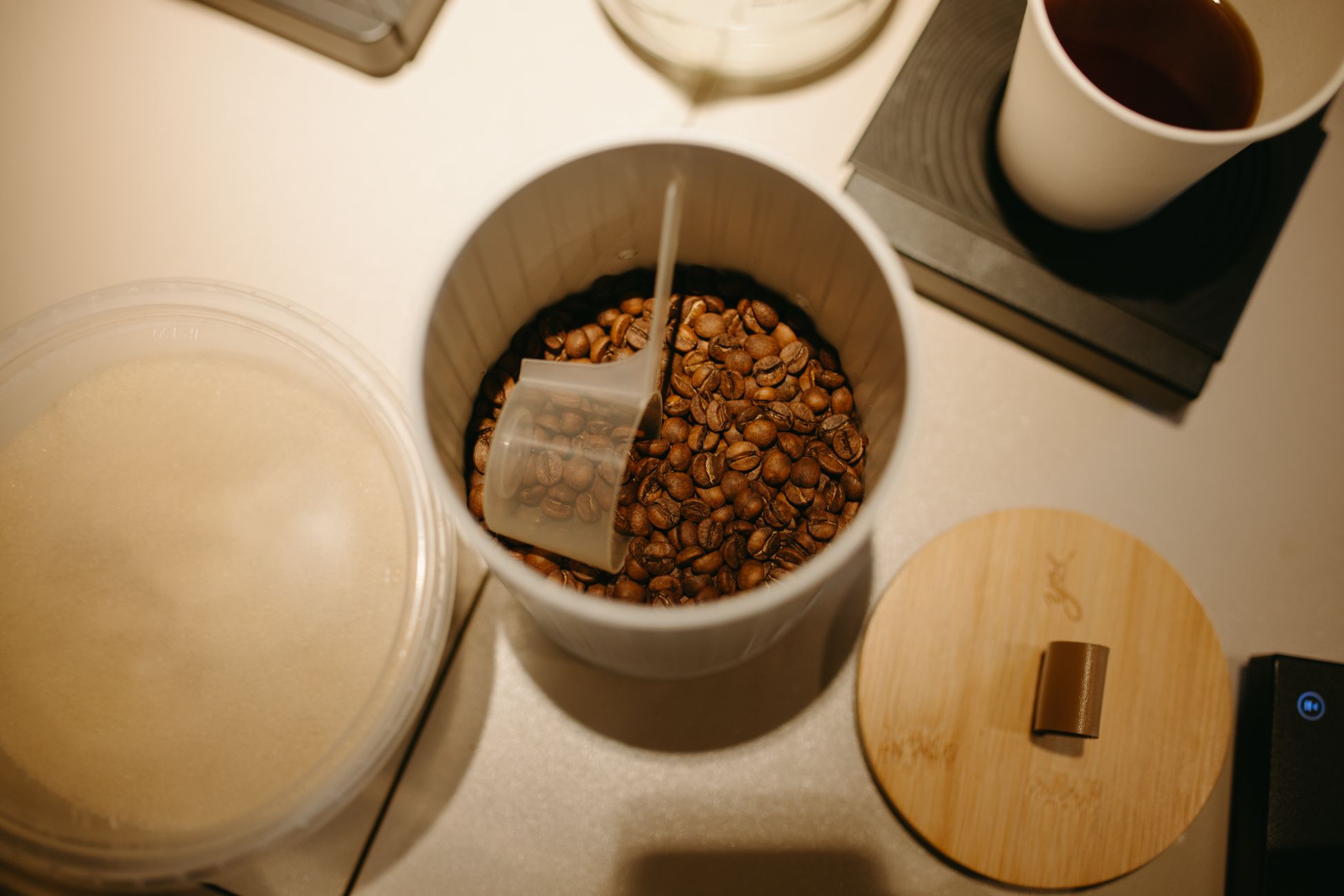
Keep it in its own bag if that bag reseals properly, rolled down to push out air, in a cupboard away from heat and light.
If the bag does not reseal well, use any airtight opaque container. The pump is optional and the marginal benefit is small.
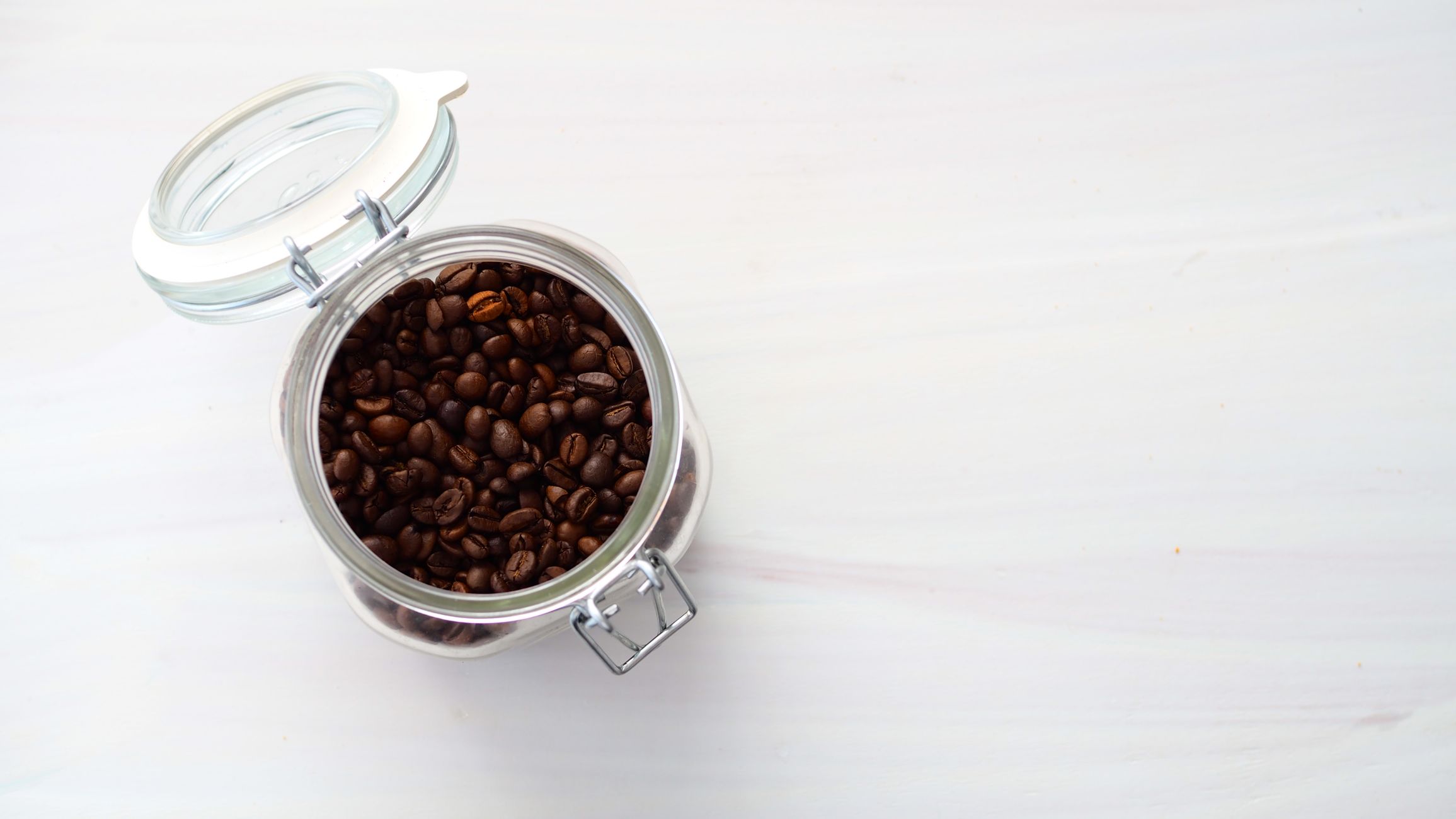
Do not decant into a nice glass jar on the counter, however good it looks. That is light and heat and a gasket that probably does not seal, all at once.
And grind immediately before brewing. Ground coffee loses aromatics within minutes, which is a far larger and faster loss than anything happening to whole beans in a cupboard over a week.
The vacuum canister is not a scam. It just solves the smallest problem on the list, and it solves it for people who mostly do not have that problem. The larger one, the one that actually determines whether your coffee tastes like anything, was decided before the beans reached your kitchen.
Fix the freshness problem at the source.
All images shown in this blog are sourced from pexels.com.