

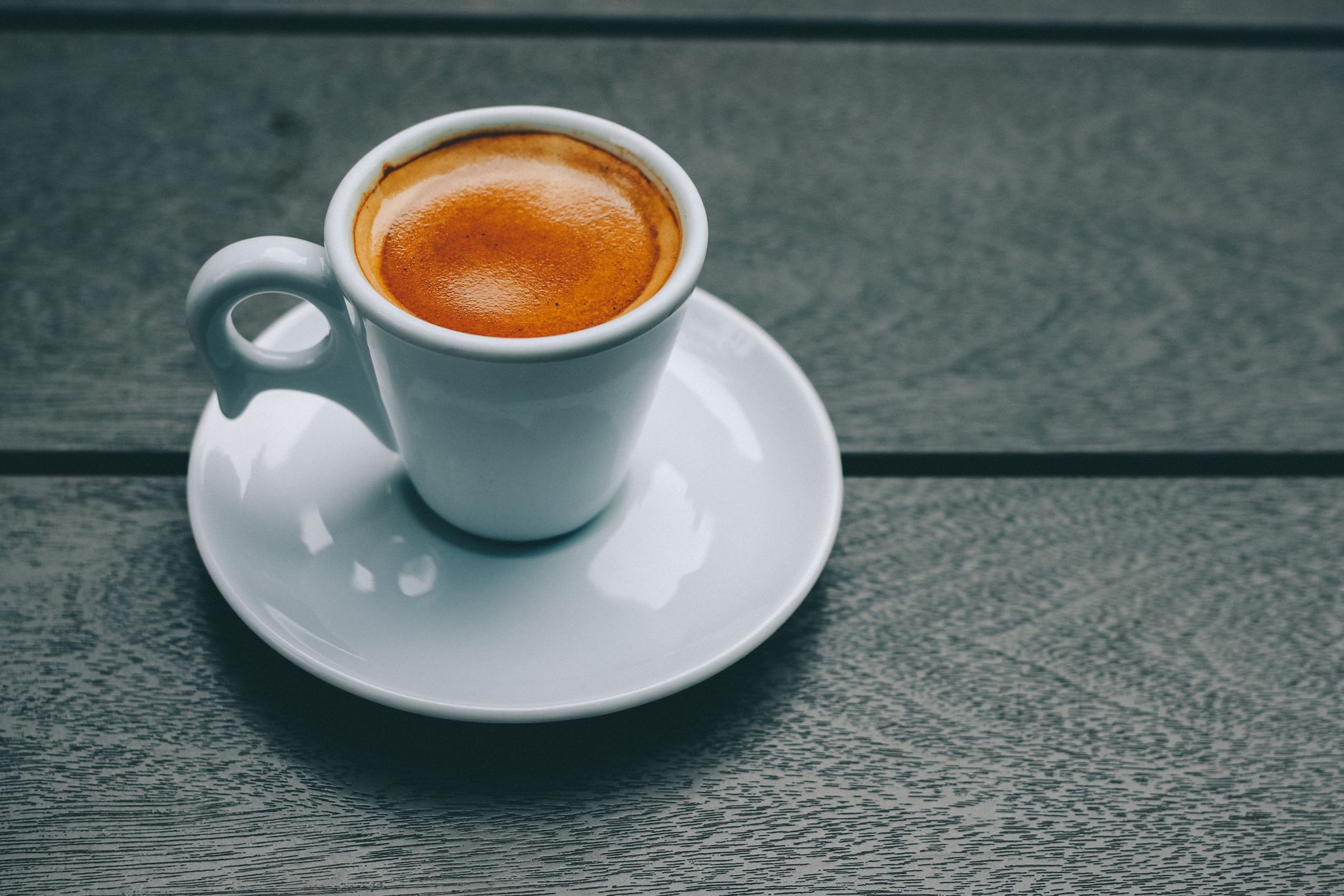
Order a macchiato at a small espresso bar in Milan and the barista slides a tiny cup across the counter: one shot of espresso with a little cap of milk foam in the middle of the crema. Three sips and it is gone. Order a macchiato at a big chain drive through and you get a tall cup of sweet steamed milk with espresso on top and a crosshatch of caramel. Same word, two drinks that share almost nothing except coffee and milk.
Neither place got it wrong. The word got stretched, and once you see how, ordering exactly what you want is easy. You also learn something useful about the espresso version: it is one of the most revealing drinks on any menu, because there is almost nothing in the cup to cover for the coffee.
Find a coffee that tastes great with almost nothing added
What The Word Macchiato Actually Means
Macchiato is Italian for stained, spotted, or marked. It describes something that carries a small mark.
In Italian cafe culture the default coffee is espresso. Ask for a caffè and you get a shot. So a caffè macchiato is espresso that has been marked, and the mark is a small spoonful of milk foam, just enough to leave a pale spot on the crema. The drink stays in a small cup and stays espresso first.
Flip the nouns and the meaning flips with them. Latte means milk, so a latte macchiato is milk that has been marked. The base is a tall glass of steamed milk, and the mark is the espresso, poured in last. The word does the same job in both names, describing a small thing added to a big thing. The only difference is which thing is big.
That is the whole key to the confusion. Macchiato is less the name of a drink than a description of one, and the description only makes sense if you know what is being marked.
The Espresso Macchiato Is Built Small On Purpose
The traditional espresso macchiato is a single or double shot in a demitasse, topped with a dab of foam. Some baristas spoon it on, others pour a tiny amount from the steaming pitcher. Either way, the milk is measured in teaspoons, not ounces.
That small amount still does real work. It softens the first sip, which is where espresso's acidity and bitterness hit hardest, and it adds a hint of sweetness and a creamy texture on top. What it does not do is change what the drink is. A macchiato tastes like espresso, gently rounded. A cortado, by comparison, uses equal parts espresso and milk, while the macchiato stays much closer to a straight shot.
The Latte Macchiato Is Built The Other Way Around
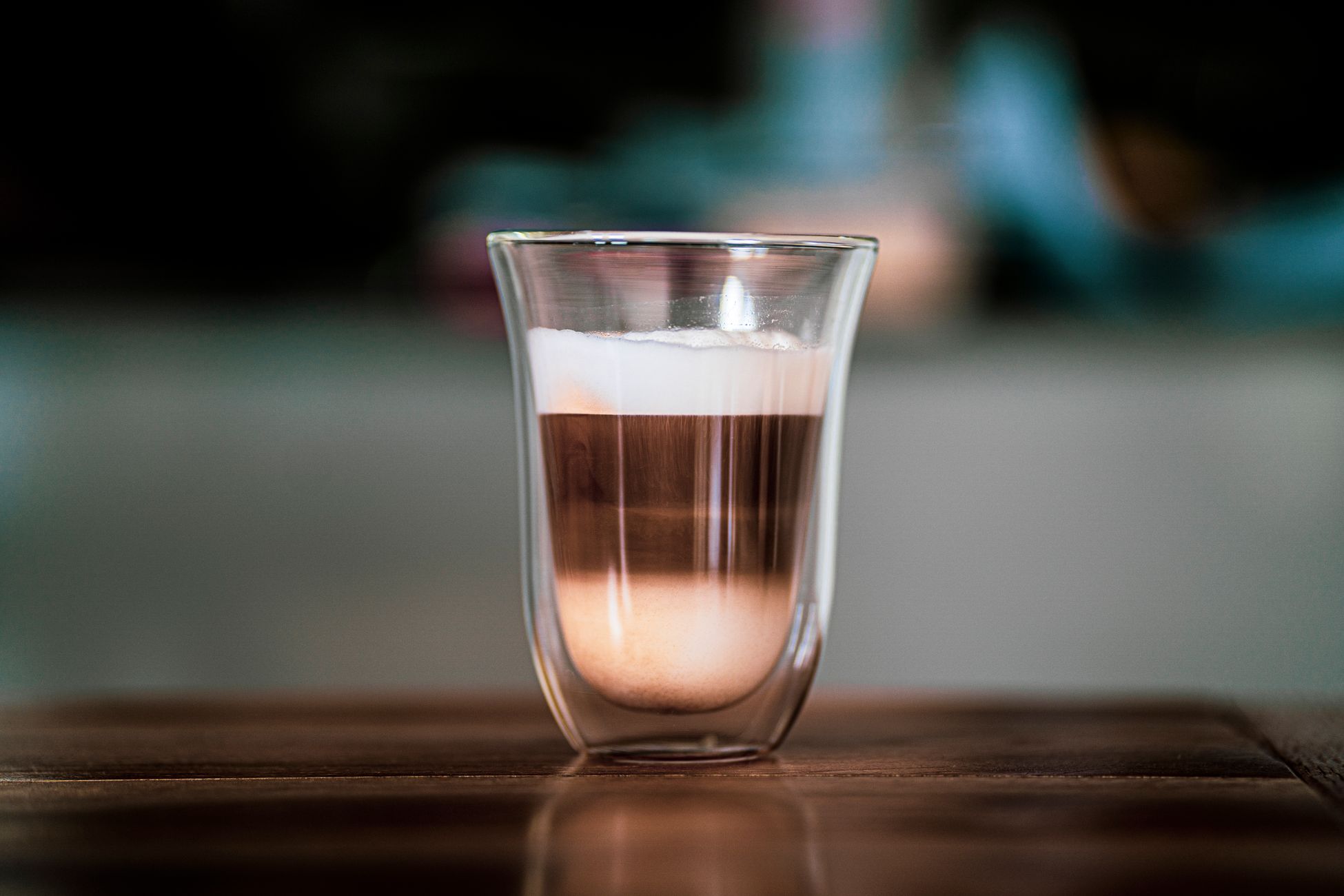
A latte macchiato starts with milk. The barista steams it, pours it into a tall glass, and lets it sit a moment so the foam rises. Then the espresso goes in last, poured slowly through the foam.
Because the shot arrives last, it settles into its own band. The hot espresso is lighter than the milk beneath it and heavier than the foam above it, so it comes to rest between them. In a clear glass you see pale milk at the bottom, a tan stripe of coffee in the middle, and white foam on top, marked with a brown spot where the espresso broke through.
This is a milk drink first. It tastes mostly of warm, sweet milk with coffee running through it, and plenty of people stir it before the first sip, which erases the layers anyway.
How One Chain Turned Macchiato Into A Sweet Drink
The third meaning is the one most Americans know. A large coffee chain added a caramel macchiato to its menu, and countless cafes followed its lead.
Look at how that drink is built and it is a latte macchiato with sugar. Vanilla syrup goes in the cup, then steamed milk, then the espresso is poured on top, and a caramel drizzle finishes it. The espresso lands last and marks the milk, so the name follows latte macchiato logic. The word latte simply fell off the front.
That drink was sold across thousands of stores, so for millions of people the first macchiato they ever ordered was a large, sweet milk drink. Other cafes used the name to match what customers were asking for, and iced, flavored, and seasonal versions followed onto menus. In much of the United States, macchiato came to mean something milky, sweet, and big.
How To Order The Drink You Actually Want
Be specific. If you want the small, espresso-forward drink, say espresso macchiato. That phrase is clear almost everywhere, chains included.
In a specialty cafe, ask what size cup it comes in. A small cup of a few ounces means the traditional style. Twelve ounces means you are in latte territory and should adjust your order.
You can also skip the name and describe the drink: a shot of espresso with a little foam on top, or a tall glass of steamed milk with a shot poured in. Baristas would much rather make what you want than guess. And if what you really want is the sweet one, order it by its full name. There is nothing wrong with liking it. It is a different drink with a borrowed name.
Why Specialty Cafes Make Theirs A Little Bigger
In a specialty cafe that takes its espresso seriously, the macchiato often looks a little different from the Italian original. It may arrive with a short pour of steamed milk and microfoam rather than a dry dab of foam, sometimes finished with a small dot or heart.
There are good reasons for the extra splash. Many specialty cafes pull a double shot as their standard, and a double holds up to slightly more milk than a single. The brighter, lighter-roasted espressos those cafes often favor can taste sharp on their own, and a little more milk takes the edge off without covering the coffee. If it comes in a small cup and tastes mostly of espresso, it is still a macchiato. The exact amount of milk is house style.
Why The Coffee Matters More Here Than In Any Other Milk Drink
In a latte, a double shot is a small part of a big drink. Milk sugar and fat soften bitterness, round off acidity, and fill in gaps, so even an ordinary shot can taste pleasant.
An espresso macchiato gives the shot nowhere to hide. The foam softens the first sip, then it is gone, and everything after that is the espresso itself. If the shot is bitter, the macchiato is bitter. If it is thin and sour, a teaspoon of milk will not rescue it. If it is sweet and balanced, the macchiato tastes like a slightly creamier version of a great espresso.
At home, pick a coffee you enjoy as a straight espresso, one with real sweetness and a clean finish. Notes like chocolate, caramel, and ripe fruit carry well under a little foam. Very dark roasts turn harsh and smoky with so little milk around them, and very light, sharp coffees can taste sour unless the shot is dialed in carefully.
Roast quality shows here too. Air roasting suspends the beans in a column of hot air instead of resting them against a hot metal drum, so heat reaches every bean evenly, nothing scorches against metal, and the chaff blows away before it can burn. In a drink that is almost all espresso, that cleaner cup is exactly what you taste.
That makes the bag you choose the biggest decision in the whole drink.
Shop coffees worth tasting with only a spoonful of milk
How To Make An Espresso Macchiato At Home
Warm a small cup, around three ounces, with hot water and pull a single or double shot straight into it.
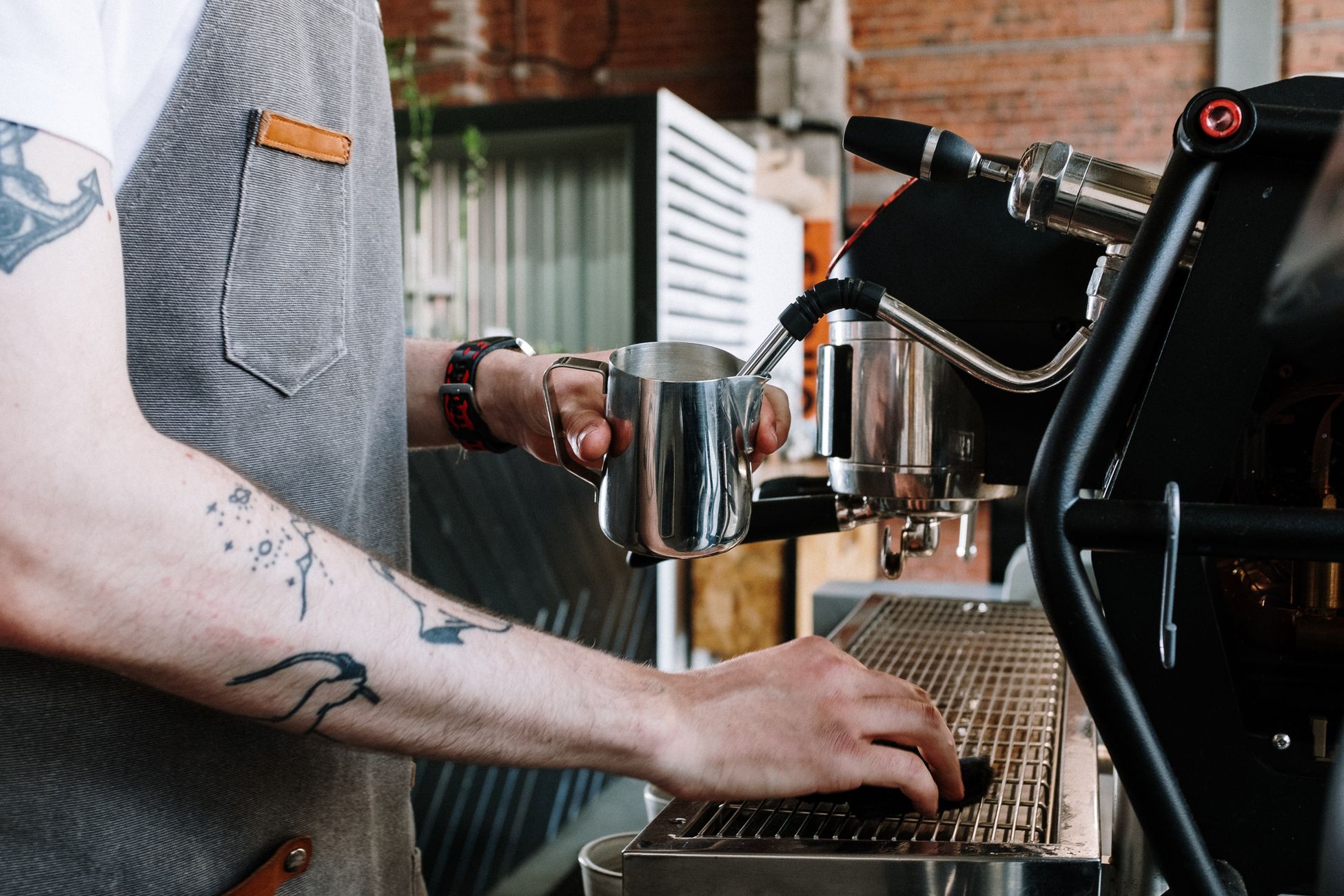
Steam a small pitcher of milk. A steam wand needs a minimum amount of milk to work properly, so you will steam more than you need and use only a little. Give it slightly more air than you would for a latte, since you want some foam to sit on the shot. Spoon a small dollop onto the center of the crema, or pour a short splash if you like the specialty cafe style, and stop as soon as there is a pale spot in the middle. Drink it within a minute or two, while the shot is hot.
No steam wand? A handheld frother, or warm milk pumped up and down in a French press, makes perfectly usable foam for a drink that needs so little.
For a latte macchiato, reverse the order. Pour steamed milk into a tall glass, wait about thirty seconds for the foam to rise, then pour the espresso slowly into the center, ideally from a small pitcher or over the back of a spoon so it settles into a clean layer.

One Word, Two Honest Drinks
The confusion comes down to one question: what is being marked? Mark espresso with milk and you get a small, intense drink that puts the coffee in front. Mark milk with espresso and you get a tall, gentle one that is mostly milk.
If you want to taste what your coffee really is, with just enough milk to soften the edges, the espresso macchiato is the one to learn. Order it by its full name, ask about the cup, and start with beans you would happily drink on their own.
Choose the coffee for your next espresso macchiato
All images shown in this blog are sourced from pexels.com.