

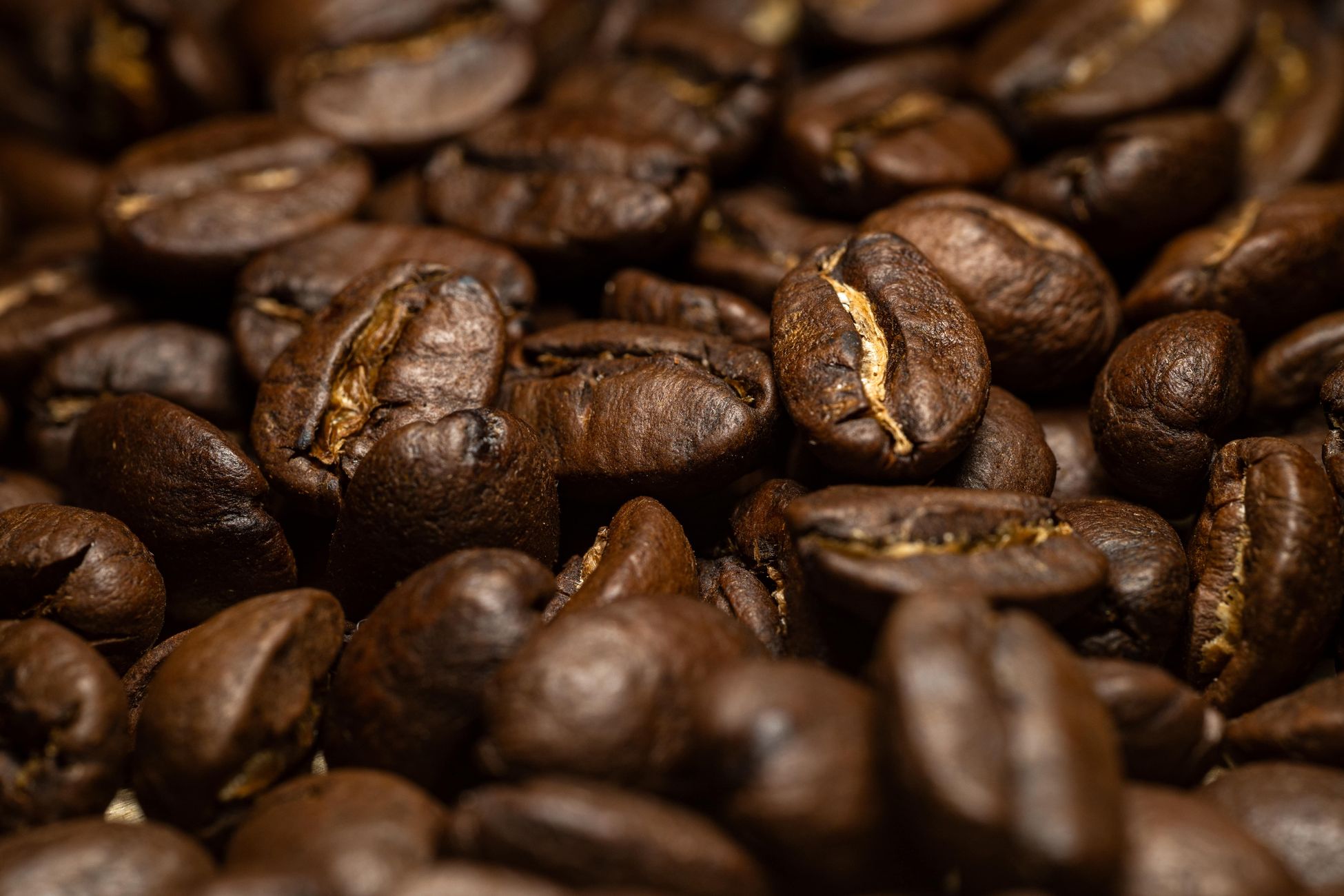
Coffee roasting has two sounds everyone talks about. First crack is the popcorn snap that tells a roaster the bean has fractured under internal steam pressure. Second crack is the finer, faster crackle that comes later as the bean's structure begins breaking down further.
There is a third sound after those. It is not a milestone, it does not appear on any roast curve anyone shares proudly, and hearing it means something has gone badly wrong. Third crack is the beginning of a fire.
Skip the burnt end of the roast spectrum entirely.
What the First Two Cracks Actually Are
To understand the third, it helps to be precise about the first two.
First crack happens somewhere around three hundred eighty to four hundred degrees Fahrenheit at the bean, when water inside the coffee has turned to steam and built enough pressure to rupture the cellular structure. The bean audibly pops, expands substantially, and loses a chunk of its remaining moisture in a burst. Everything that happens after this point is called development, and it is where most of the roaster's judgment lives.
Second crack arrives roughly forty to fifty degrees later. This is not steam. It is the bean's cell walls, made largely of cellulose, breaking down under heat, along with carbon dioxide escaping from a structure that can no longer contain it. The sound is quieter and quicker than first crack, more like rice cereal in milk than popcorn.
At second crack, oils that were held inside the bean begin migrating to the surface. This is why dark roasts look shiny. It is also where origin character starts giving way to roast character, since the acids and aromatic compounds that made the coffee specific are being destroyed faster than anything is being created.

Third Crack Is Not a Roast Stage
Push past second crack and the bean has very little structure left to lose.
What roasters call third crack is a sound that comes from the bean fracturing as it approaches combustion, or from the surface oils and remaining volatiles igniting. There is no standard temperature published for it because it is not a stage anyone profiles toward. By the time it arrives, the coffee is charcoal in everything but name and the roaster is dealing with an equipment emergency, not a batch decision.
The immediate danger is fire. A drum full of coffee that has passed second crack is full of dry, oily, carbon rich material at very high temperature, surrounded by moving air. Chaff in the cyclone and the ducting is also dry and extremely flammable. A roaster fire almost always starts either in the drum at this stage or in accumulated chaff downstream, and it can go from a smell to a serious problem in under a minute.
This is why roasteries have documented fire procedures, why the cooling tray and quench systems exist, and why the machines have doors and dampers designed to let an operator smother a batch. Any roaster who has been at this for a while has a story about a batch they dropped fast and drowned.
Why Anyone Ends Up There
Nobody sets out to roast into third crack. It happens through a small number of predictable failures.
A distracted operator is the simplest. Roasting is a continuous attention task, and a batch that is left running while someone answers a phone can travel a long way in ninety seconds.
Poor heat control is another. Applying too much gas late in a roast, particularly after second crack, means the coffee is accelerating exactly when the window between correct and destroyed is narrowest. The temperature climb per second is steepest at the end of the roast, and the margin for error smallest.
A dirty machine contributes. Accumulated chaff and oil residue in the ducting and cyclone lower the threshold for ignition, so a batch that is merely too dark can start a fire that a clean machine would not have.
And a misread probe will do it. If a thermocouple has drifted or is positioned badly, the number a roaster is steering by may be well below where the beans actually are.
Choose coffee roasted with a light hand and full attention.

What Happens to the Coffee Long Before That
Third crack is the dramatic version. The flavor damage starts far earlier and matters far more to what most people are drinking.
Past second crack, the sugars that provide sweetness have largely been carbonized rather than caramelized. The organic acids that gave the coffee brightness have been degraded. The aromatic compounds that made an Ethiopian smell like blueberries or a Colombian like caramel are gone. What replaces them is the flavor of pyrolysis, which is essentially the same regardless of what bean produced it.
That is the honest explanation for why very dark roasts from different origins taste so similar. You are not tasting Sumatra or Brazil at that point. You are tasting the roast, and the roast tastes like smoke, ash, and bitterness with a thin, drying finish.
There is nothing wrong with liking a dark roast, and traditional espresso styles in some regions lean that direction deliberately. The thing worth knowing is what the trade is. Past a certain point, the money paid for a distinctive high grown lot buys nothing, because the character it was bought for has been burned off.
The Signs You Are Drinking Something Roasted Too Far
You do not need a roasting machine to recognize the territory.
Look at the beans. Heavy oil across the surface a few days after roasting means the coffee went well into second crack. Some sheen after a couple of weeks on a medium roast is normal, since oils migrate slowly over time. A bag that is glistening on day two went dark.
Smell the dry grounds. Roast character should sit behind origin character, not in front of it. If the dominant aroma is ash and smoke with nothing underneath it, that is the roast talking.
Taste it black. Overroasted coffee is bitter in a flat, drying way, without the sweetness that balances a well roasted cup. The finish is short and it leaves the mouth feeling stripped. It also tends to taste the same across origins, which is the clearest tell of all.
And notice how it behaves in your brewer. Very dark roasts are brittle and produce more fines when ground, extract faster than lighter roasts, and go bitter easily if the recipe is not adjusted. If a coffee turns harsh with the smallest change to grind or time, it was probably roasted near the edge.

Why Roasters Talk About the Sounds at All
The cracks are the only real time sensory feedback a roaster gets from inside a sealed hot drum. Temperature probes lag, color changes are hard to judge through a small window, and smell tells you about the general direction rather than the exact moment.
The sounds are immediate and unambiguous. First crack means development has started. Second crack means origin character is beginning to disappear. And a sound after second crack means stop everything, because the batch is lost and the building is at risk.
Most good coffee never gets anywhere near that point. It is dropped somewhere between first crack and the very start of second, in the window where the roast has developed the sugars and preserved the acids and left the coffee tasting like the place it came from. That window is a couple of minutes wide, and staying inside it is most of what roasting well means.
Start with coffee dropped in the right window.
All images shown in this blog are sourced from pexels.com.