

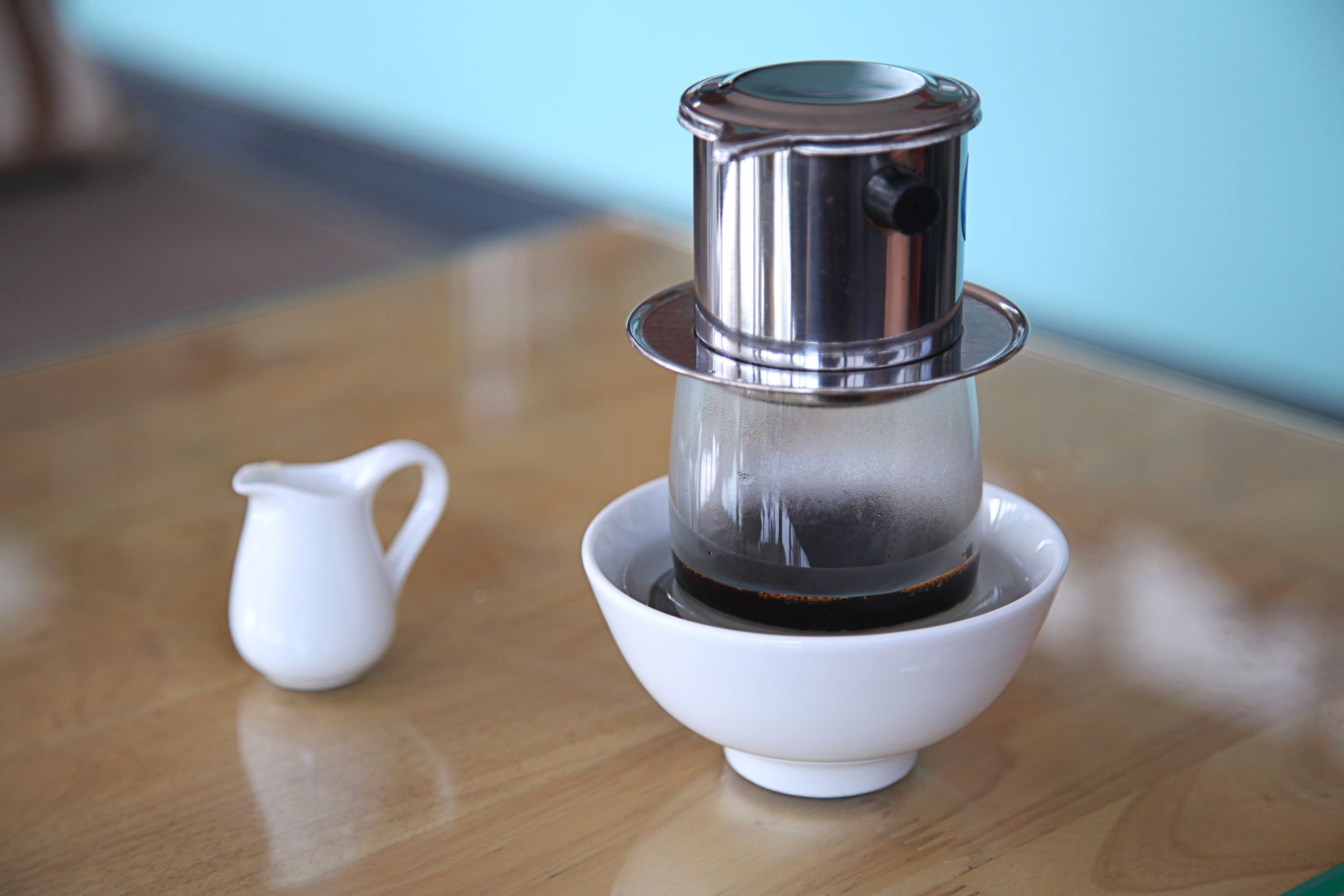
The phin is a small stack of stamped metal that costs less than a bag of good coffee. There is no paper, no plunger, no gasket, no electricity, and nothing to break. It sits on top of your cup and drips for five minutes while you do something else.
It also makes a cup that no other brewer produces, and once you understand why, you stop thinking of it as the thing that makes iced coffee with condensed milk and start thinking of it as a genuinely distinct brewing method that happens to be very good at that.
Pick up a bag that can stand up to a slow drip.
What the Thing Actually Is
A phin has four parts.
The chamber is a small cup with a perforated base, so fine that the holes look like pinpricks. This is the filter. There is no paper anywhere in the system.
The gravity press or insert is a flat perforated disc that sits on top of the coffee. Some versions screw down, some just rest. Its job is to hold the bed together and keep water from blasting through it.
The lid keeps heat in during the brew.
The saucer catches drips and gives you somewhere to set the hot chamber when it is done.
That is the entire device. Nothing consumable, nothing to replace.

What Makes It Different From Everything Else
Three features combine in a way no other brewer replicates.
It is a metal filter with extremely fine holes. A French press uses a metal mesh but the coffee is coarse and the plunge is quick. A phin uses a much finer grind against a perforated plate, which means oils and very fine particles pass through into the cup. You get body and texture that a paper filter removes entirely.
It is gravity fed and deliberately slow. No pressure, no pumping, no pouring technique. Water sits above the bed and works its way down over four to six minutes. That is a long contact time for a percolation brew, which is why the resulting cup is concentrated without being espresso.
It brews a small volume. A standard phin makes 60 to 100 milliliters of very strong coffee, not a mug. That volume is closer to a lungo than to a filter coffee, which is exactly why it works with condensed milk rather than being drowned by it.
The output is a syrupy, heavy, low acidity, intensely flavored coffee with visible oils on the surface. If you have only ever had paper filtered coffee, the texture alone is worth trying once.
Why Robusta and Condensed Milk
The traditional pairing is not an accident, and it is not a compromise either.
Vietnam grows enormous quantities of robusta, and Vietnamese coffee culture built itself around what grows there. Robusta has roughly double the caffeine of arabica, less acidity, more body, and a nutty, dark chocolate, sometimes rubbery character that gets described unkindly by people who have only tasted the low grade stuff. Good robusta, roasted well, is heavy and powerful and holds up to milk in a way most arabica cannot.
Condensed milk entered the picture through the French colonial period, when fresh dairy was difficult to keep and canned sweetened condensed milk was not. What began as a practical substitute turned into the defining preparation. Cà phê sữa đá, phin brewed coffee poured over condensed milk and ice, is one of the most recognizable coffee drinks in the world and it works because every element is doing something: intense coffee, thick sweetness, dilution from ice.
There is also cà phê trứng, egg coffee, where whipped egg yolk and condensed milk make a custard like foam served over the coffee. It sounds strange to anyone who has not had it and it is genuinely excellent.
How to Brew One Properly
Most bad phin coffee comes from three fixable mistakes.
Grind. Aim for medium fine, roughly the texture of table salt or slightly finer, coarser than espresso and finer than pour over. Too coarse and the water races through, giving you weak, sour coffee in ninety seconds. Too fine and it clogs completely and you stand there watching nothing happen.
Dose. Use about 15 to 20 grams for a standard phin, which should fill the chamber somewhere between a third and half full. Leave room for the coffee to swell.
The bloom. This is the step people skip and it matters. Pour just enough hot water to wet the grounds, around 20 to 30 milliliters, put the lid on, and wait 30 to 45 seconds. Then fill the chamber. Skipping this gives you an uneven, weaker brew.
Press pressure. With a screw down insert, snug is enough. Cranking it tight chokes the bed and the brew stalls. With a gravity insert, just let it sit.
Water temperature. Just off boil, around 200 degrees Fahrenheit. The metal chamber sheds heat quickly during a long brew, so starting too cool leaves you under extracted by the end.
Total drip time should land between four and six minutes. Faster than three and go finer or tighten the press. Slower than seven and go coarser or loosen it.
Shop coffees that taste good strong.
Using Specialty Arabica in a Phin
You do not have to use robusta, and plenty of people brew single origin arabica in a phin with good results. It just requires an adjustment in expectations.
Denser, heavier coffees perform best. A Brazilian, a Sumatran, a Central American with chocolate and nut character, or a medium roast blend will give you the body the method is built around. A delicate high altitude washed Ethiopian works, but the phin's heavy extraction and metal filter tend to muddy exactly the clarity you paid for with that coffee. Brew that one in a cone and save the phin for something with weight.
Roast level matters too. Very light roasts can come out sour and underdeveloped in a phin, because the long slow extraction never fully compensates for a hard, dense bean. Medium and medium dark roasts suit it much better.
If you want to drink it black, which is completely reasonable, dilute it. Brew as normal, then add 100 to 150 milliliters of hot water to the finished coffee. That is essentially an Americano built from phin concentrate, and it is one of the better black coffees you can make with no equipment at all.

Why It Deserves Counter Space
A phin costs almost nothing and has no ongoing cost. That alone makes it worth owning.
But the real argument is that it fills a gap. If you own a pour over setup, you make clean, bright, light bodied coffee. If you own an espresso machine, you make small, intense, high pressure coffee. The phin makes something in between that neither can: a small volume, heavy bodied, oily, unfiltered concentrate produced entirely by gravity and time, with no skill required beyond getting the grind right.
It is also one of the most travel friendly brewers ever made. It is metal, it packs flat, it needs no filters, and it survives being thrown in a bag. Compared to hauling a dripper, a stand, and a stack of papers, it wins on every practical measure.
Buy one, grind a little finer than you think, bloom it, and let it drip while you make breakfast. Then try it once with condensed milk over ice, because that combination has been perfected over a century and it is not the place to start experimenting.
All images shown in this blog are sourced from pexels.com.