

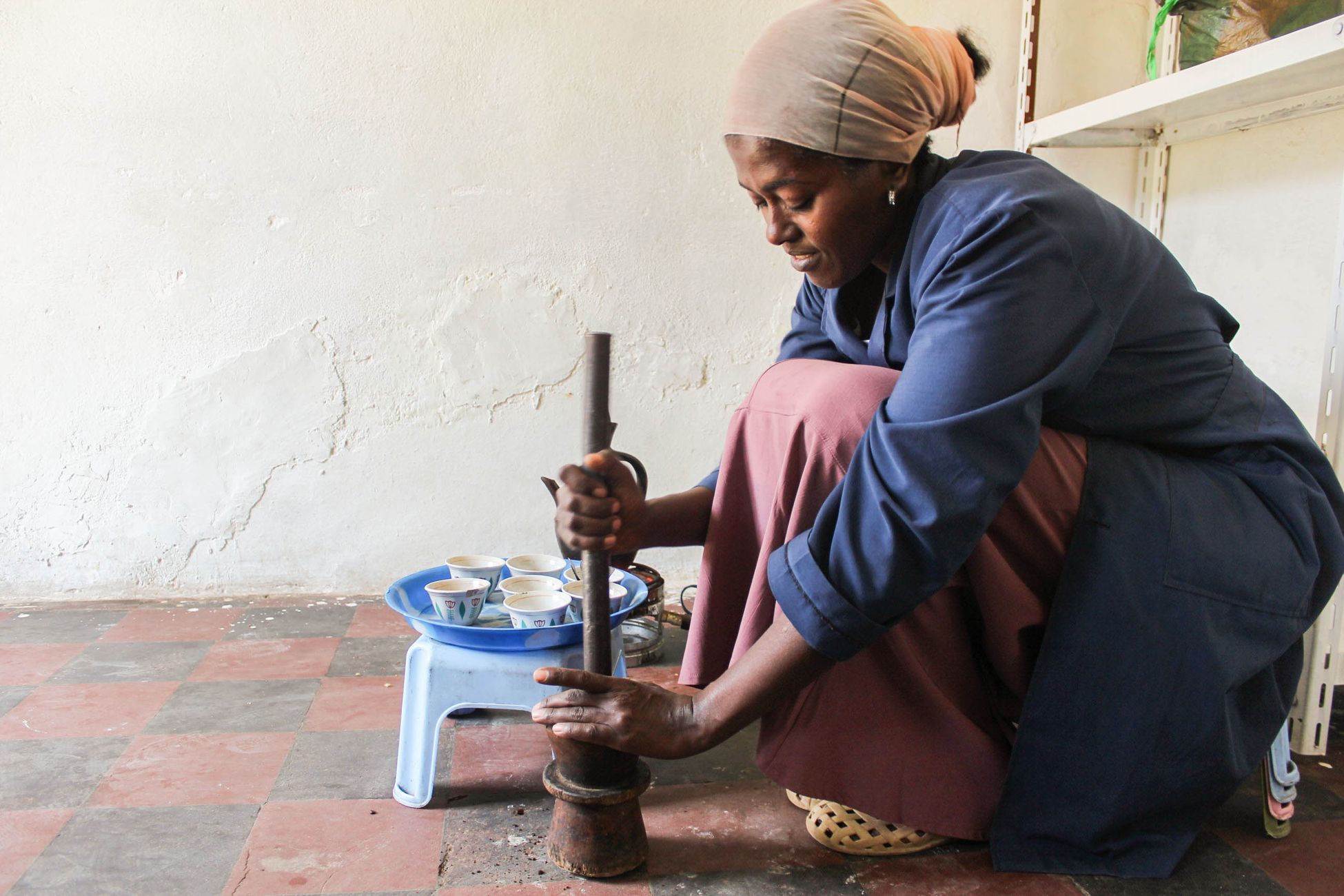
In much of the world, coffee is something you grab on the way to somewhere else. In Ethiopia, coffee is a reason to stop. The traditional Ethiopian coffee ceremony can take an hour or more, from washing and roasting raw green beans to pouring the third and final cup. It is a ritual of hospitality, conversation, and community, practiced every day in homes across the country where coffee was born.
If you love coffee, the ceremony is worth understanding. It captures something the rest of us often rush past: freshly roasted, freshly ground coffee shared slowly with people you care about. Here is how it works and what each part means.
Explore our most popular coffees
Coffee's Home
Arabica coffee originated in the forests of southwestern Ethiopia, where wild coffee trees still grow today. Ethiopians have been drinking coffee for centuries, and it is woven into daily life in a way few other countries can match. A common Ethiopian saying, buna dabo naw, translates roughly to coffee is our bread, a way of expressing how essential it is.
Ethiopia is also one of the few major coffee producing countries that drinks a large share of its own harvest. Roughly half of the coffee grown there is consumed at home, and a great deal of it is prepared through the ceremony.

Setting The Scene
The ceremony is usually hosted by a woman of the household, and it begins with preparing the space. Fresh grass or flowers are often scattered on the floor. Incense, usually frankincense, is lit and burns throughout. A small charcoal stove is set up, along with a low table holding small, handleless cups.
Guests gather around. The host sits close to the coals and works with care, often in traditional dress. There is no rush. The point is the gathering as much as the coffee, and everyone understands they are settling in for a while.
Washing And Roasting
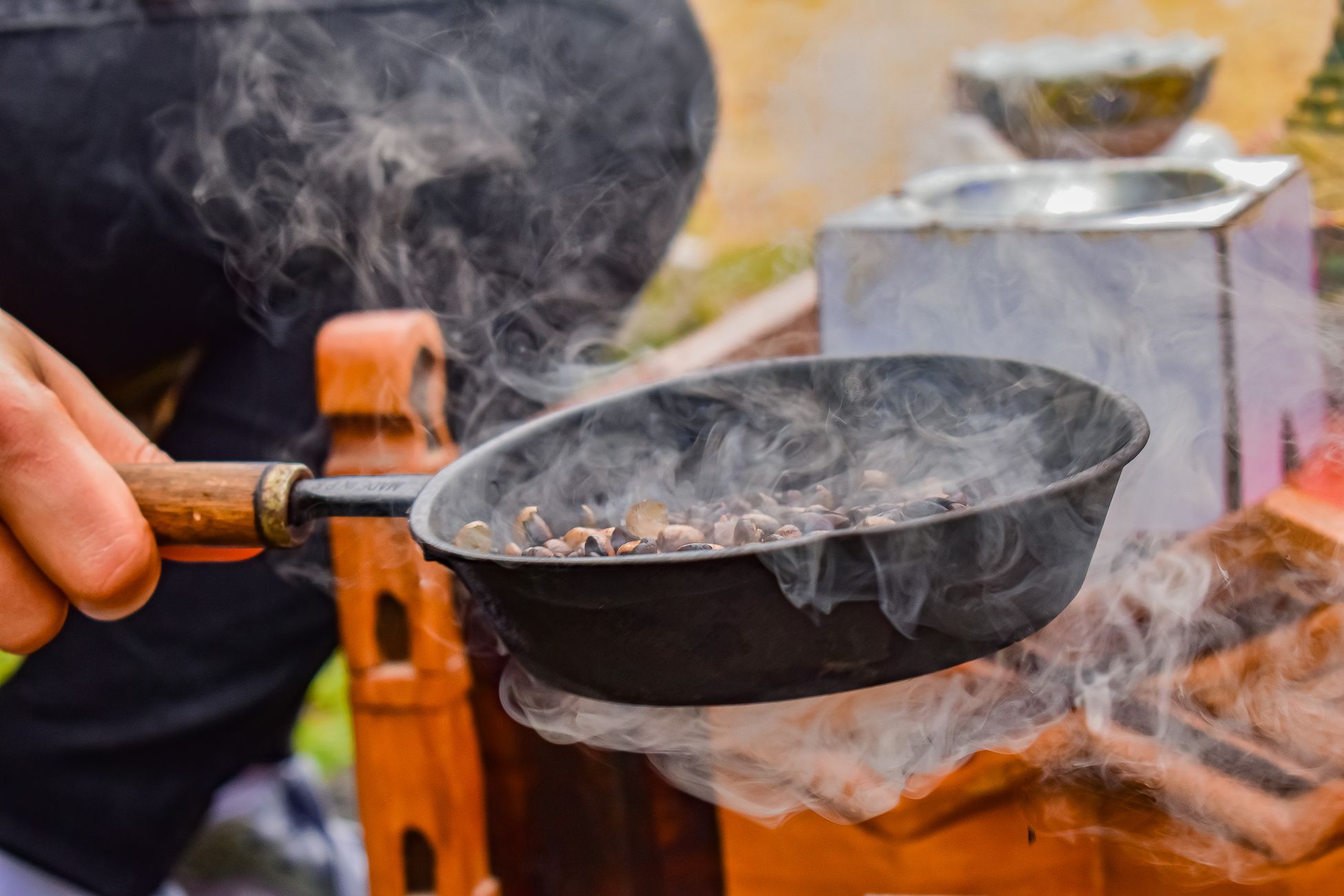
The ceremony starts with green coffee beans. The host washes them to remove any husk or dust, then places them in a flat pan over the charcoal. She stirs and shakes the beans constantly as they roast, often with a long handled tool, until they turn from pale green to yellow, then cinnamon, then a rich brown. The crackling fills the room, and the smell of fresh roasting coffee mingles with the incense.
When the beans are done, the host carries the hot pan around the room so each guest can waft the smoke toward their face and breathe in the aroma. It is a moment of appreciation, and guests often compliment the roast.
Roasting fresh for every ceremony means the coffee is as fresh as it can possibly be, roasted only minutes before it is brewed. Most of us will never drink coffee that recently roasted, and it is part of why ceremony coffee is so aromatic.
Grinding By Hand
Next, the roasted beans are ground by hand with a mortar and pestle, traditionally a wooden or stone bowl called a mukecha and a pestle called a zenezena. The grinding produces a fine powder, and the rhythmic pounding becomes part of the sound of the ceremony.
Hand grinding right before brewing captures the aromatics that would otherwise drift away. Combined with the fresh roast, it is one of the reasons ceremony coffee tastes so vivid.
Brewing In The Jebena
The ground coffee goes into a jebena, a traditional clay pot with a round base, a long narrow neck, and a spout. Water is added, and the jebena is set on the coals until it boils. The host watches carefully and may pour a little coffee into a cup and back into the pot to help settle the grounds.
Once brewed, the jebena rests on a small ring or stand so the grounds can sink to the bottom. The host then pours in a single, steady stream from a height into each small cup, moving from cup to cup without stopping and without disturbing the grounds. It takes practice and a skilled hand, and a good pour is a point of pride.
Find a bright, floral coffee to brew at home
The Three Rounds
This is the heart of the ceremony. Coffee is served in three rounds, each with its own name.
The first round is called abol. It is the strongest and most intense, brewed from the fresh grounds, and it is often considered the best cup.
The second round is called tona. The host adds more water to the same grounds and brews again. The coffee is lighter and milder.
The third round is called baraka, which means blessing. It is the lightest of the three, brewed once more from the same grounds. Drinking the third cup is believed to bestow a blessing, and it is considered polite, and meaningful, to stay for all three rounds.
Each round takes time to brew, so the ceremony stretches across an hour or more. That time fills with conversation, news, stories, and sometimes serious discussion. In many communities, the coffee ceremony is where neighbors talk through disagreements, share family updates, and stay connected. Leaving after the first cup would be a little like leaving a dinner party before the main course.
What Is Served Alongside
Coffee is often served with snacks such as roasted barley, popcorn, peanuts, or a traditional bread called dabo. Sugar is common, and in some regions people add a pinch of salt or a little butter instead. Some hosts add a sprig of an herb called tena adam, or rue, to the cup, which gives a distinctive, slightly medicinal aroma.
What The Ceremony Teaches Us
Even if you never attend a ceremony in Ethiopia, its lessons apply to any cup of coffee. Freshness matters, from roasting to grinding to brewing. The ceremony roasts, grinds, and brews in a single sitting, so nothing has a chance to go stale. It also treats coffee as something to enjoy slowly and share, not something to gulp in the car.
Ethiopian coffee itself reflects this care. The country's coffees are known for a remarkable range of flavors, from the floral, tea like brightness of washed Yirgacheffe to the berry and wine notes of naturals from Guji and Sidama. Many of these coffees grow from heirloom varieties found nowhere else on earth.

Bringing A Little Of It Home
You do not need a jebena or a charcoal stove to bring some of the spirit of the ceremony into your routine. Grind your beans right before brewing. Smell the coffee before you drink it. Brew a pot to share instead of a single cup to go. Set aside time for conversation over coffee rather than squeezing it between tasks.
You can even borrow the idea of rounds. Brew a small pot, enjoy the first cup slowly, then make a second pot later in the visit. The point is not the exact recipe. It is making coffee the reason to sit together a little longer.
Try an Ethiopian coffee and pay attention to how it changes as it cools. Notice the aromatics, the fruit, and the florals. Those flavors are the reason the world fell in love with coffee in the first place.
At Solude, we air roast our coffees to preserve the vibrant flavors that origins like Ethiopia are known for. Hot air roasting avoids the scorching that can hide delicate florals and fruit, letting each coffee taste like the place it came from.
All images shown in this blog are sourced from pexels.com.