

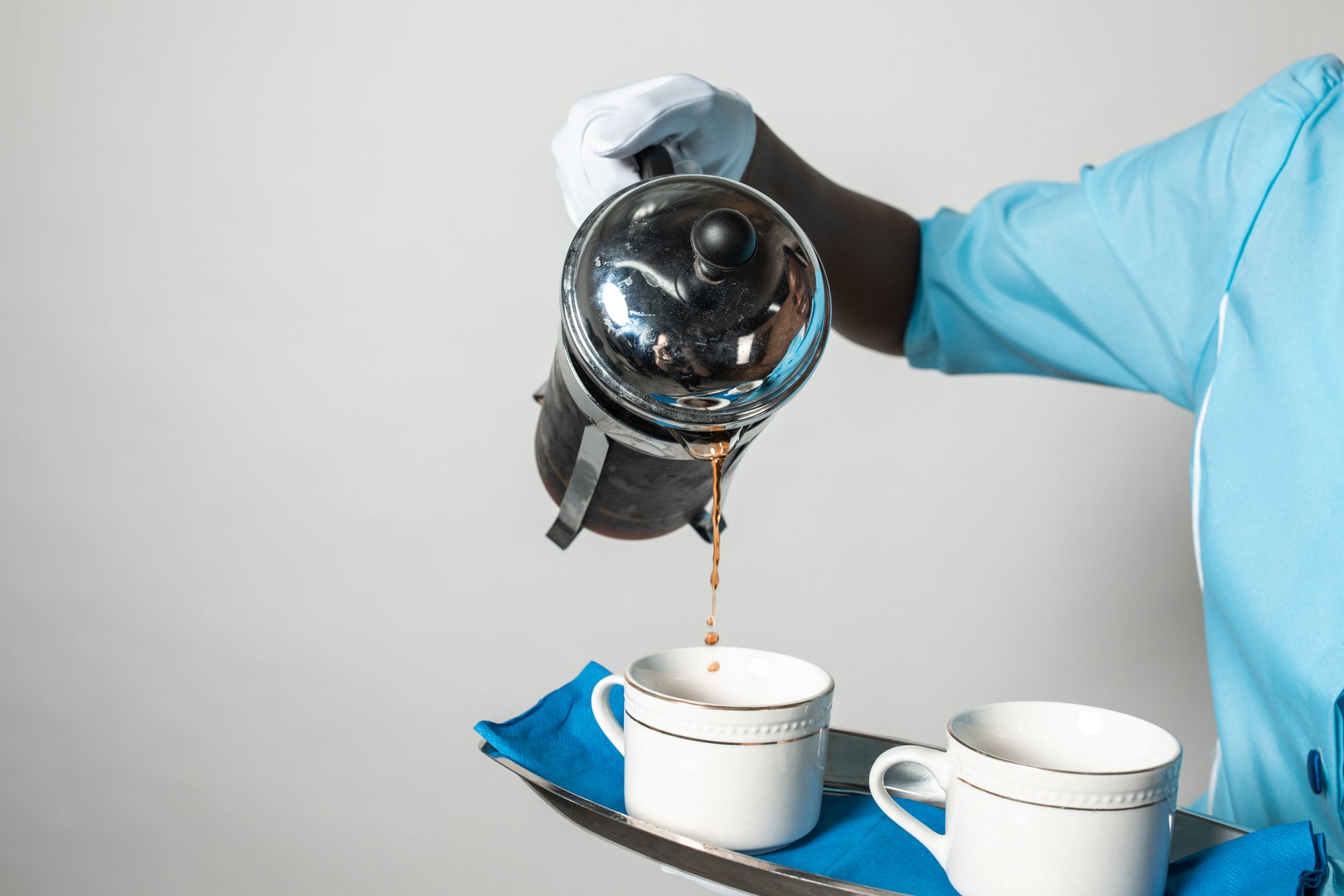
If you own a French press, you have probably made coffee in it the same way for years. Grounds in, hot water on top, lid on, wait four minutes, press. It works. It has worked for a century. And it is also the reason so many people think French press coffee is heavy, muddy, and a little bitter no matter what beans they use.
There is a step in the middle of that routine that almost nobody does, and it changes the cup more than any bean swap will. It is called breaking the crust, and once you see what it actually does inside the pot, you will not skip it again.
What Is Happening Under the Lid
When you pour hot water over coarse grounds, most of the coffee does not sink. It floats. Fresh coffee holds carbon dioxide from roasting, and as that gas escapes it carries the grounds to the surface, where they form a thick raft. Brewers call this the crust.
The crust looks harmless, and in a pour over it would be. But in a French press the water is not moving. Nothing is flowing through the bed. The only way coffee gets extracted is by sitting in contact with water, and a floating raft of grounds is barely in contact with anything. The top layer is dry on one side. The middle is saturated but packed so tightly that water cannot move through it. Only the bottom of the crust and the few grounds that sank are doing real work.
So for most of your four minute steep, a big share of your coffee is not brewing. It is floating.
What Breaking the Crust Does
Breaking the crust is exactly what it sounds like. Around the four minute mark, you take a spoon and gently push through the raft. The grounds, now waterlogged and free of most of their gas, sink to the bottom of the pot.
That one motion does three things at once.
First, every ground finally touches water on all sides. The dry tops get wet. The packed middle loosens. Extraction becomes even instead of lopsided.
Second, the carbon dioxide trapped under the crust escapes in one go. You will see it. The surface bubbles, foam rises, and a burst of aroma comes off the pot. That gas was sitting between the water and the coffee, and getting it out of the way lets the water do its job.
Third, the grounds settle into a bed at the bottom. That matters for the next step, which is the part almost everyone gets wrong.
Why You Should Not Press Right After
The instinct after breaking the crust is to put the plunger on and push. That is the moment the muddy cup gets made.
Right after the break, the water is full of suspended fines, the dust sized particles every grinder produces no matter how good it is. If you press now, the plunger forces water through that cloud and pushes fines straight through the mesh into your cup. You get silt at the bottom of the mug and a heavy, drying texture on your tongue.
Instead, wait. After breaking the crust, use the spoon to skim the foam and floating bits off the surface, then leave the pot alone for another few minutes. Five is a good starting point. In that time the fines settle into the bed at the bottom with everything else, and the water above turns noticeably clearer.
When you finally press, go slowly and stop the plunger just above the bed. Do not compress the grounds. Pour immediately, or decant into a separate carafe, because coffee left sitting on grounds keeps extracting and turns bitter within minutes.
The Cup You Get Instead
The difference is not subtle. A French press brewed this way tastes cleaner, sweeter, and less bitter, while keeping the full body that made you buy a press in the first place. The oils still come through because there is no paper filter. The texture is still rich. What disappears is the grit and the sharp edge.
If you have been buying darker roasts for your press because lighter ones tasted sour or thin, try this method with a medium roast before you write them off. A lot of what tasted sour was under extraction from a floating crust. Even contact fixes it.
Find a coffee worth the extra five minutes
Why the Roast Matters Here More Than You Think
There is one more variable in this story, and it is the one we care about most. The size of the crust, and how much gas it traps, depends on how the coffee was roasted.
Drum roasted coffee tends to hold onto chaff, the papery skin that comes off the bean during roasting. In a French press that chaff floats up with the crust and adds a dry, papery bitterness that no technique removes. Air roasting blows chaff away as it comes off the bean, so what you pour water on is just coffee. The crust still forms, the break still matters, but the flavor you unlock is cleaner from the start.
Freshness matters too. A coffee roasted weeks ago has already lost most of its carbon dioxide, so the crust is thin and the break does less. A coffee roasted days ago forms a thick crust and gives up a wave of aroma when you break it. That is not a problem. It is the coffee telling you it is fresh.
A Simple Routine You Can Actually Remember
Here is the whole thing, start to finish, without a scale full of decimal points.
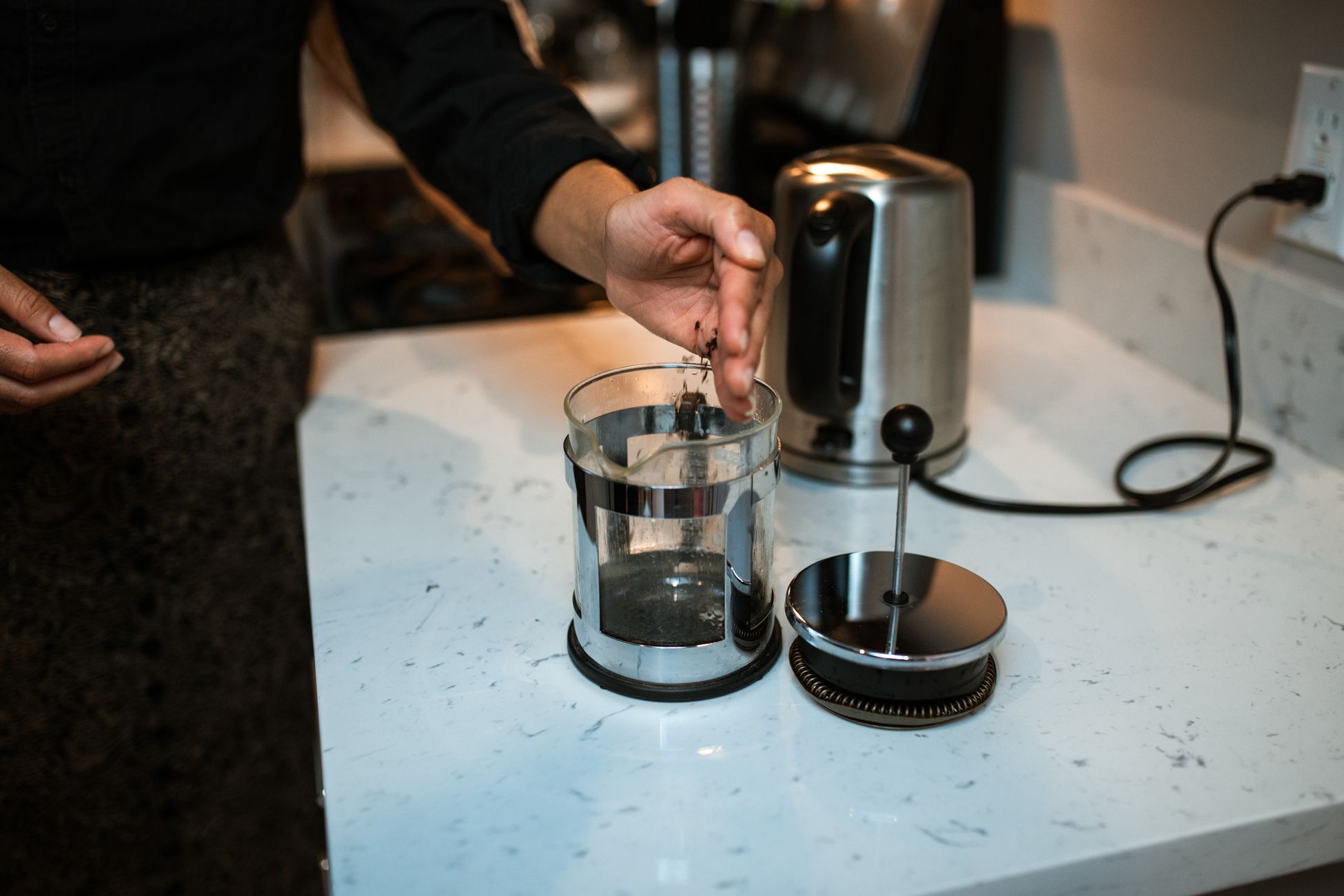
Grind coarse, a little finer than you might think. Sea salt, not breadcrumbs. Use around a one to fifteen ratio, so roughly thirty grams of coffee to four hundred fifty grams of water for a standard press. Pour water just off the boil over all the grounds, making sure everything gets wet. Do not stir. Do not put the plunger on yet.
Wait four minutes. Break the crust with a spoon, pushing gently through the raft and letting the grounds sink. Skim the foam and floating bits off the top. Wait another four or five minutes. Place the plunger on, press slowly, and stop just above the grounds. Pour every cup out immediately.
That is it. Two waits instead of one, a spoon, and a slower press. Nothing to buy.
What to Adjust When It Is Not Right
If the cup tastes sharp or sour, your grind is too coarse or your water was not hot enough. Go a notch finer. If it tastes bitter and heavy even after the settle, you pressed too hard or let the coffee sit on the grounds too long. Decant faster. If there is still silt in the bottom of your mug, give the settle more time, or take a look at your grinder. A blade grinder produces so many fines that no amount of waiting will clear them all.
And if it tastes great, do not change anything. Half of good brewing is knowing when to leave a recipe alone.
Start with a coffee that was roasted to taste clean
The French press has a reputation as the forgiving beginner brewer, and that is fair. But forgiving is not the same as finished. The crust break is the difference between a press that makes acceptable coffee and one that makes coffee you would serve to someone who knows what they are tasting. It costs a spoon and a few minutes. Try it with a fresh bag this week and see what was floating on top the whole time.
All images shown in this blog are sourced from pexels.com.