

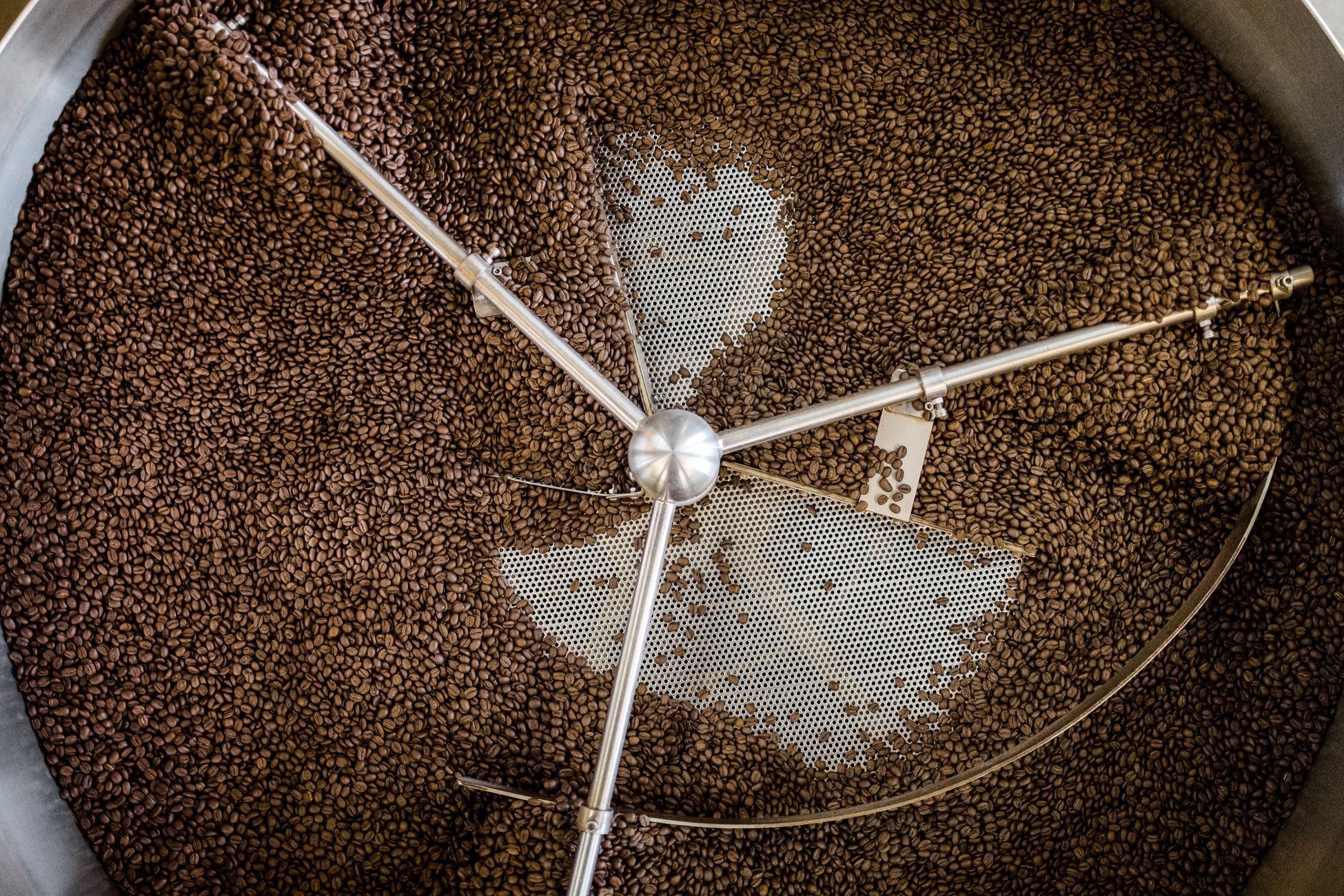
The roast is done. The roaster has watched the curve, listened for first crack, counted the seconds of development, and decided this is the moment. A lever is pulled, a door opens, and a few kilograms of hot, dark, fragrant beans pour out into a wide, flat tray with a fan underneath it and a set of arms sweeping slowly through the pile.
It looks like the end of the process. It is actually one more stage of it, and one that roasters take very seriously, because the beans that just left the drum are still roasting. They will keep roasting until they are cooled, and how fast that happens is the difference between the coffee the roaster intended and a coffee that overshot the mark by a full roast level without anyone touching a dial.
Browse coffees roasted and cooled the way they were meant to be
The Beans Do Not Know The Roast Is Over
When beans drop from a roaster, they are somewhere between 195 and 230 degrees Celsius depending on the roast level. That heat is not just on the surface. It is stored throughout the bean, and the chemical reactions that were happening a moment ago inside the drum are still happening. Sugars are still caramelizing. Acids are still breaking down. The bean is still darkening.
Roasters call this carryover, or sometimes roast momentum. A batch that leaves the drum at a light medium color and then sits in a warm pile without adequate cooling will continue developing and can arrive at a full medium or darker by the time it finally cools. The roaster pulled the roast at the right moment and the coffee still ended up wrong.
The only way to stop the reactions is to remove the heat quickly. That is the cooling tray's entire job.
What Happens In The Tray
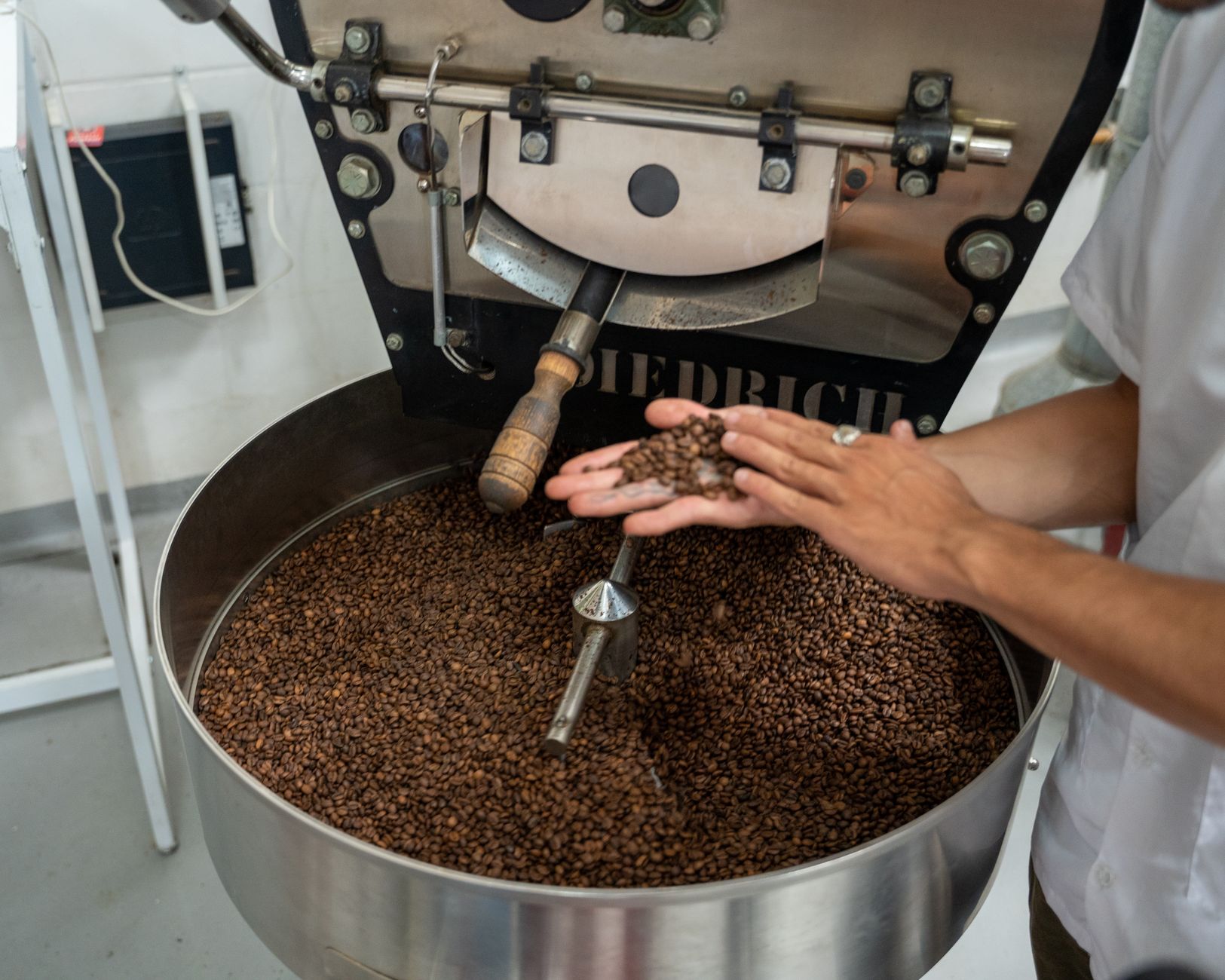
A cooling tray is a perforated metal pan with a powerful fan beneath it that pulls room temperature air down through the bed of beans. Stirring arms rotate through the pile to keep the beans moving so that no pocket of the batch sits insulated in the middle while the outside cools. Some trays also have a lid or a hood to direct the airflow and capture the smoke and chaff that come off the hot beans.
In a well designed system, the beans go from drop temperature to roughly room temperature in somewhere between 90 seconds and four minutes. The faster end of that range is the goal. A commercial roaster with a properly sized cooling tray should have the batch cool enough to touch within about two minutes.
That speed is the whole point. Every second the beans spend above about 100 degrees Celsius is a second they are still developing. A tray that takes six or eight minutes to cool a batch is adding meaningful roast development that the roaster never planned. Cafe sized roasters sometimes run into this when they push a machine beyond the batch size its tray was built for. The roast itself is fine, but the tray cannot dump the heat fast enough, and the coffee ends up darker and flatter than the profile suggested it should be.
Why Slow Cooling Tastes Flat
The obvious problem with slow cooling is that the coffee ends up darker than intended. The less obvious problem is what slow cooling does to aromatics.
Coffee's aroma lives in volatile compounds, and those compounds are at their most volatile when the bean is hot. A bean sitting at 180 degrees Celsius is actively releasing its aromatics into the air. That is why a roastery smells the way it does. The longer the beans stay hot, the more of those compounds escape before the coffee ever reaches a bag.
Fast cooling locks them in. Drop the temperature quickly and the bean structure firms up, the oils settle, and the aromatics stay inside where they belong. A batch that was cooled in two minutes will have noticeably more aroma when ground than the same batch cooled in eight, and the cup will have more of the fruit, floral, and sweet notes that make a coffee interesting.
This is one of the reasons air roasted coffee is often described as clean and aromatic. Air roasting systems tend to have efficient cooling built into the design, because the same airflow that suspends the beans during roasting can be redirected to cool them rapidly at the end. There is no hot drum wall radiating heat back into the pile while the fan is trying to pull it out.
Taste a coffee that kept its aromatics through the cooling stage
The Water Quench Question
Large commercial roasters, the kind producing thousands of kilograms a day, sometimes use a water quench: a fine mist of water sprayed onto the beans as they exit the drum. The water evaporates instantly, pulling a large amount of heat with it, and the batch cools far faster than air alone could manage at that scale.
Done carefully, with a very light mist that fully evaporates, quenching is a legitimate way to stop the roast on a big batch. Done heavily, it becomes a way to add water weight back into the beans, which some producers have used to boost yield. Beans that have absorbed water during quenching go stale faster, because the moisture accelerates oxidation, and they can taste slightly muted compared to air cooled beans from the same roast.
Specialty roasters almost universally avoid water quenching. Their batch sizes are small enough for air cooling to work, and they are not willing to trade aroma and shelf life for speed. If you see roasted beans that look oddly dull or feel slightly heavy for their roast level, quenching is one possible explanation.
Chaff, Smoke, And What Else Comes Off
The cooling tray is also where the last of the chaff and smoke leave the coffee. The papery silverskin that loosened during the roast is still clinging to some beans when they drop, and the fan and stirring arms shake much of it free. In drum roasters, this is one of the main places chaff is collected. In air roasters, most of it was carried off during the roast itself, so the cooling tray sees far less.
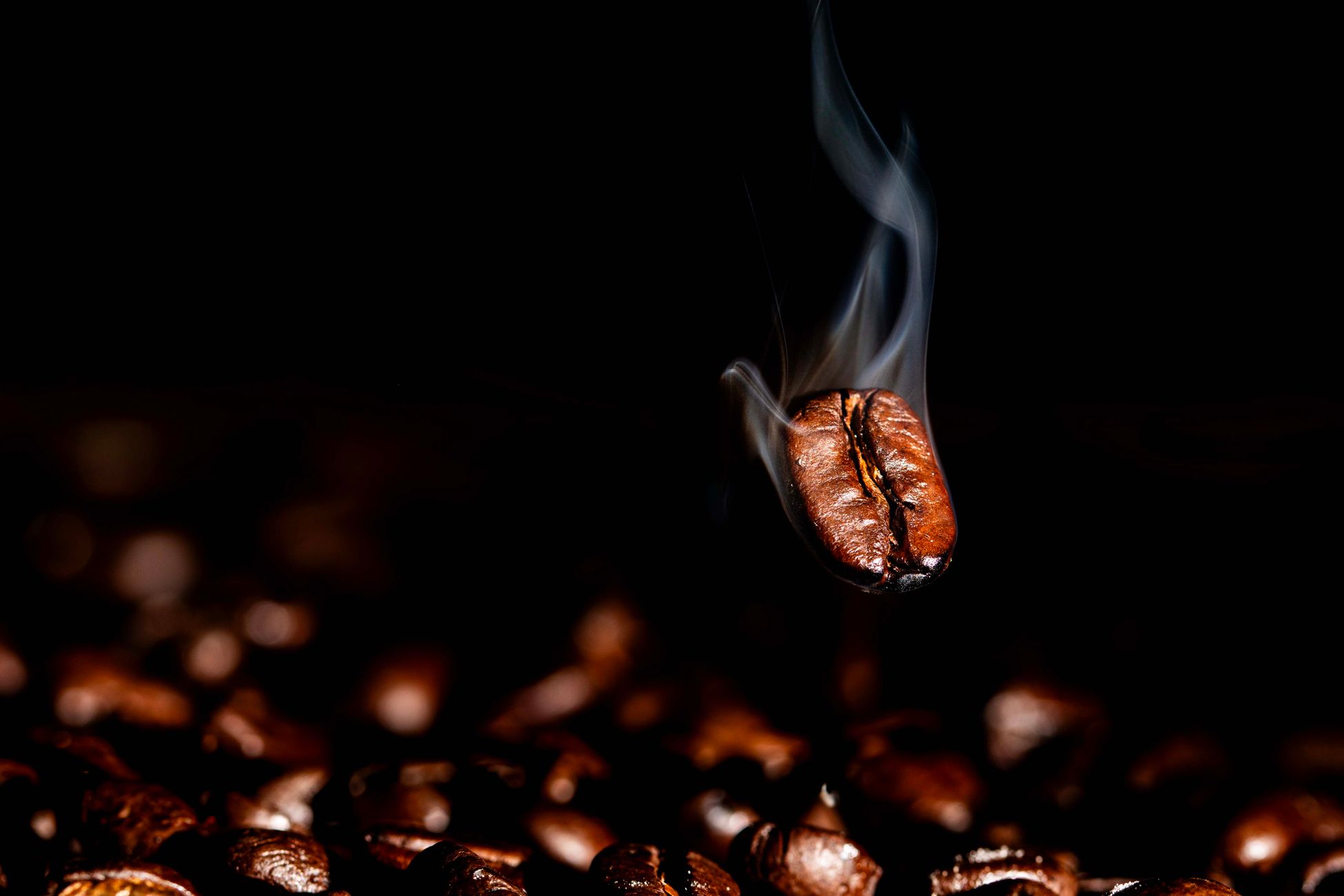
Smoke is the other thing. Beans just out of the roaster are still releasing smoke, especially at darker roast levels, and a good cooling system vents it away from the batch. Beans that sit in their own smoke pick up an ashy, acrid note that has nothing to do with the origin or the roast profile. The faster the smoke is pulled away, the cleaner the coffee tastes.
What The Roaster Is Checking
While the beans cool, the roaster is usually doing three things. First, watching the batch for evenness, spreading the beans with a hand or a paddle to see whether the color is consistent across the pile. Any pale beans, called quakers, or any scorched beans stand out most clearly at this stage and can be picked out before the batch is bagged.
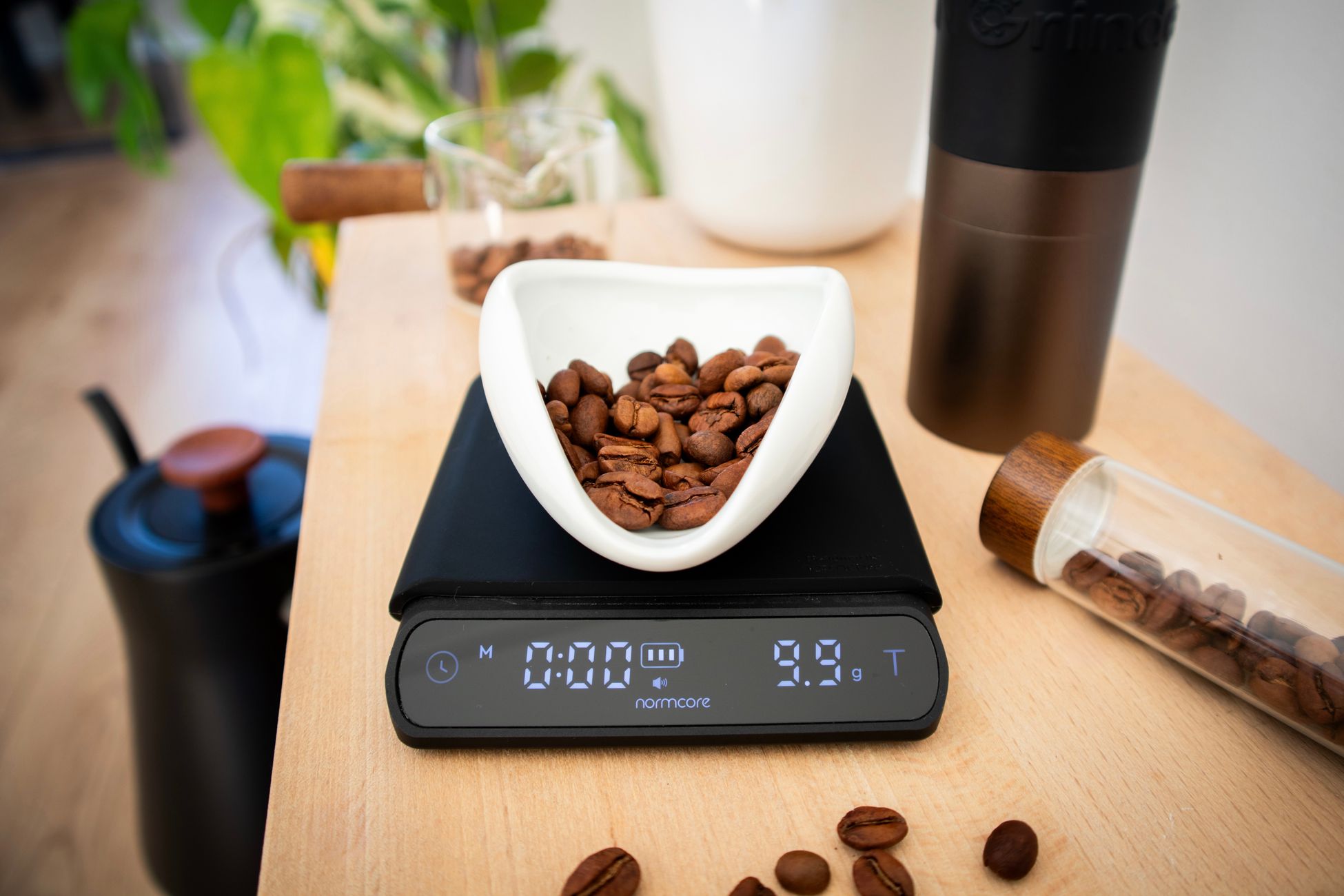
Second, checking the weight. The batch is weighed after cooling to calculate the roast loss, which is the difference between the green weight going in and the roasted weight coming out. That number tells the roaster whether the roast went as planned. A loss that is higher than expected suggests the batch developed further than intended, possibly through slow cooling.
Third, smelling. A freshly cooled batch has a distinctive aroma, and an experienced roaster can tell a lot from a handful of beans held close. Sweet and clean is good. Smoky, flat, or grassy tells them something went wrong somewhere in the process, and the cooling stage is one of the first places they look.
From The Tray To The Bag
Once cooled, the beans are not quite ready. They are still full of carbon dioxide created during the roast, and that gas needs time to escape before the coffee brews well. This is the resting or degassing period, usually a few days for filter coffee and often a week or more for espresso. But the cooling tray is where that clock starts. A batch that was cooled quickly and evenly rests predictably. A batch that cooled slowly has a less consistent internal state and can behave unpredictably as it degasses.
The whole chain, from green bean to roast to cooling to rest to bag, is a series of handoffs, and each one can either preserve or lose what the previous stage created. The cooling tray is the handoff that gets the least attention from drinkers and a great deal of attention from roasters, because it is the one where an otherwise perfect roast can quietly slip.
What This Means For Your Cup
You will never see the cooling tray your coffee came out of. But you can taste whether it did its job. A coffee that tastes clean, aromatic, and true to its stated roast level was almost certainly cooled fast. A coffee that tastes flatter and darker than the bag suggests, with muted aromatics and a faint smokiness that does not match the origin, may have spent too long sitting hot.
Roasters who care about clarity build their process around getting the heat out fast. Air roasting makes that easier by design, since the airflow that roasts the beans is the same airflow that cools them, and no hot drum wall is fighting the fan. The result is a coffee where the roast stopped exactly where the roaster intended, and every bit of aroma that was developed in the drum is still there when you open the bag.
Explore our most popular coffees, cooled fast and roasted right
All images shown in this blog are sourced from pexels.com.