

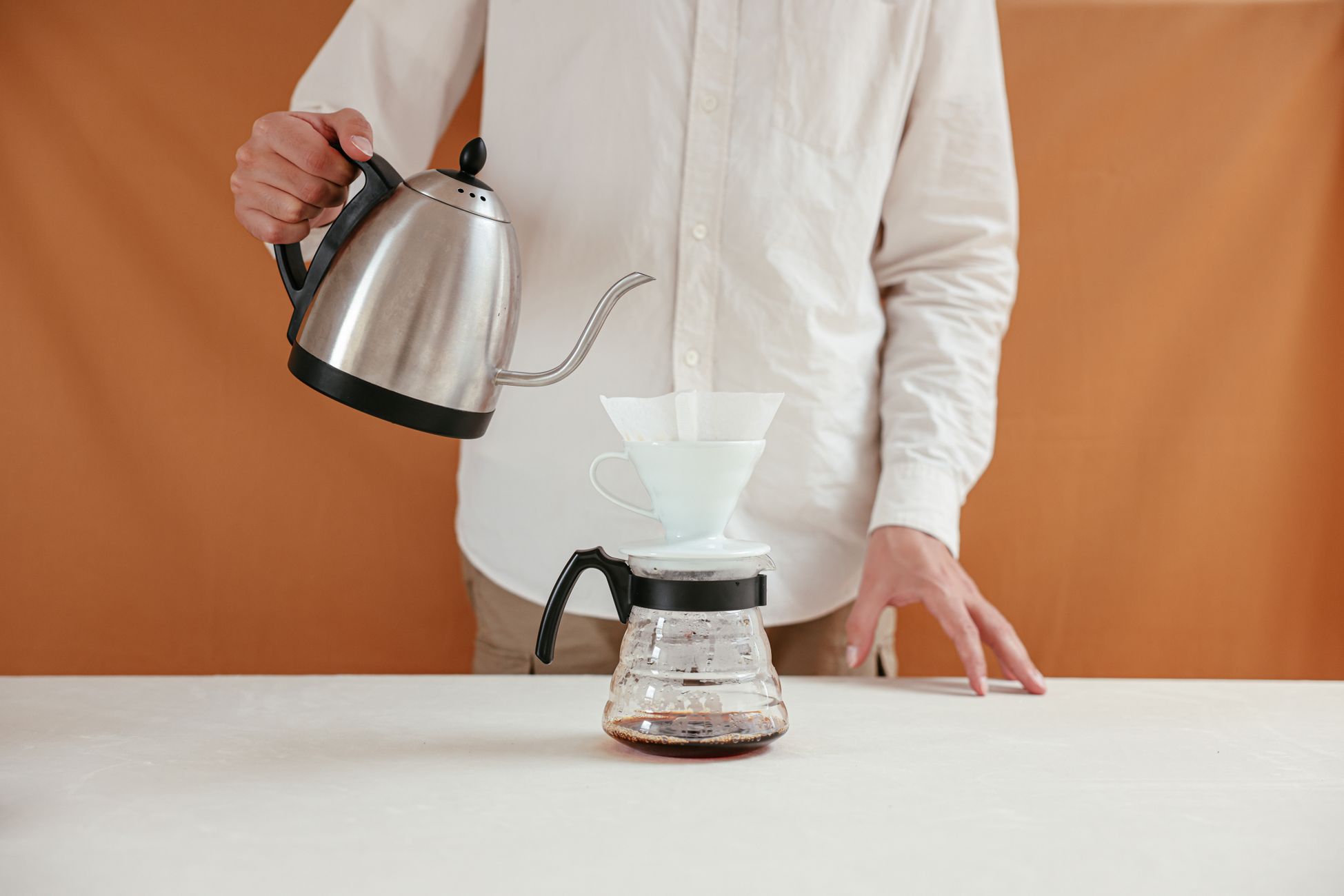
Brewing methods mostly fall into two camps. Either the coffee sits in the water for a set time and then you separate them, which is immersion, or the water passes through the bed continuously and leaves, which is percolation. French press is the first. V60 is the second.
The Clever dripper refuses to pick one. It looks like a plastic cone with a paper filter in it, which makes it look like a pour over, but it has a valve in the bottom that stays shut until you set it on a mug. That valve is the entire product, and it lets you do something neither camp can do on its own.
Start with beans that reward a forgiving method.
How the Valve Changes Everything
The mechanism is a spring loaded stopper. Lift the dripper off the counter and it stays closed. Set it down on a mug or a carafe and the rim of the cup pushes the stopper up, and the brew drains.
So you brew in two distinct phases. Phase one, the valve is closed and the coffee steeps in a full body of water, exactly like a French press. Phase two, you open the valve and the whole thing drains through a paper filter, exactly like a pour over.
Neither phase is unusual. Doing both in sequence is, and it changes which variables you control.
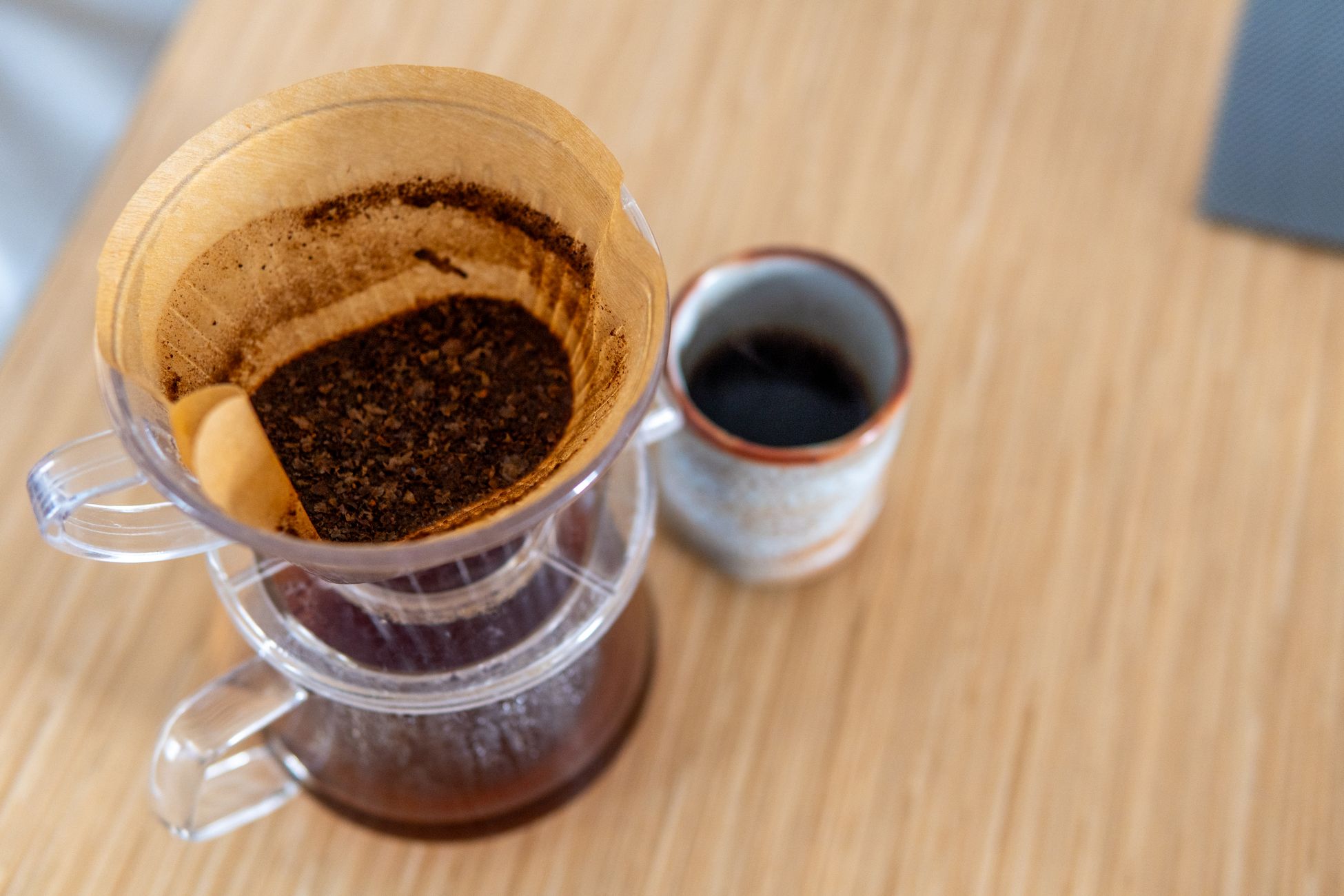
What You Get From Each Half
Immersion gives you even extraction. Every particle is surrounded by water for the same length of time. There is no top of the bed and bottom of the bed, no faster path down one side, no channeling. Whatever happens, it happens to all of the coffee equally.
That is why French press is so forgiving. You can pour badly, you can grind a little unevenly, and the result is still consistent, because time is the only variable that matters and time is the same everywhere in the vessel.
Percolation through paper gives you clarity. A paper filter removes the oils and the very fine particles that give French press its heavy, slightly gritty, sometimes muddy character. What comes through is clean and bright, with flavors that sit apart from each other instead of blending into one heavy impression.
Immersion cannot give you that, because there is no filter fine enough in a French press. Pour over cannot give you the first thing, because water is always moving and always taking the easiest available route.
The Clever gets both. Even extraction from the steep, clean cup from the drain.
What This Actually Means at the Kitchen Counter
The practical version is that pouring technique stops mattering.
In a V60, how you pour is a real skill. Pour rate, pour height, spiral pattern, pulse timing, agitation, all of it shifts your extraction. That is fun if you enjoy it and frustrating if you just want coffee at seven in the morning.
In a Clever, you dump the water in. There is no technique to get wrong. You are not steering the extraction with your kettle, you are setting a timer.
Which means the variables reduce to three: grind size, ratio, and steep time. Three variables is a small enough number that you can actually learn a coffee instead of chasing your own inconsistency.
It also means the gooseneck kettle becomes optional. Useful for temperature control, unnecessary for pour control.
Buy a coffee that shows off a clean cup.
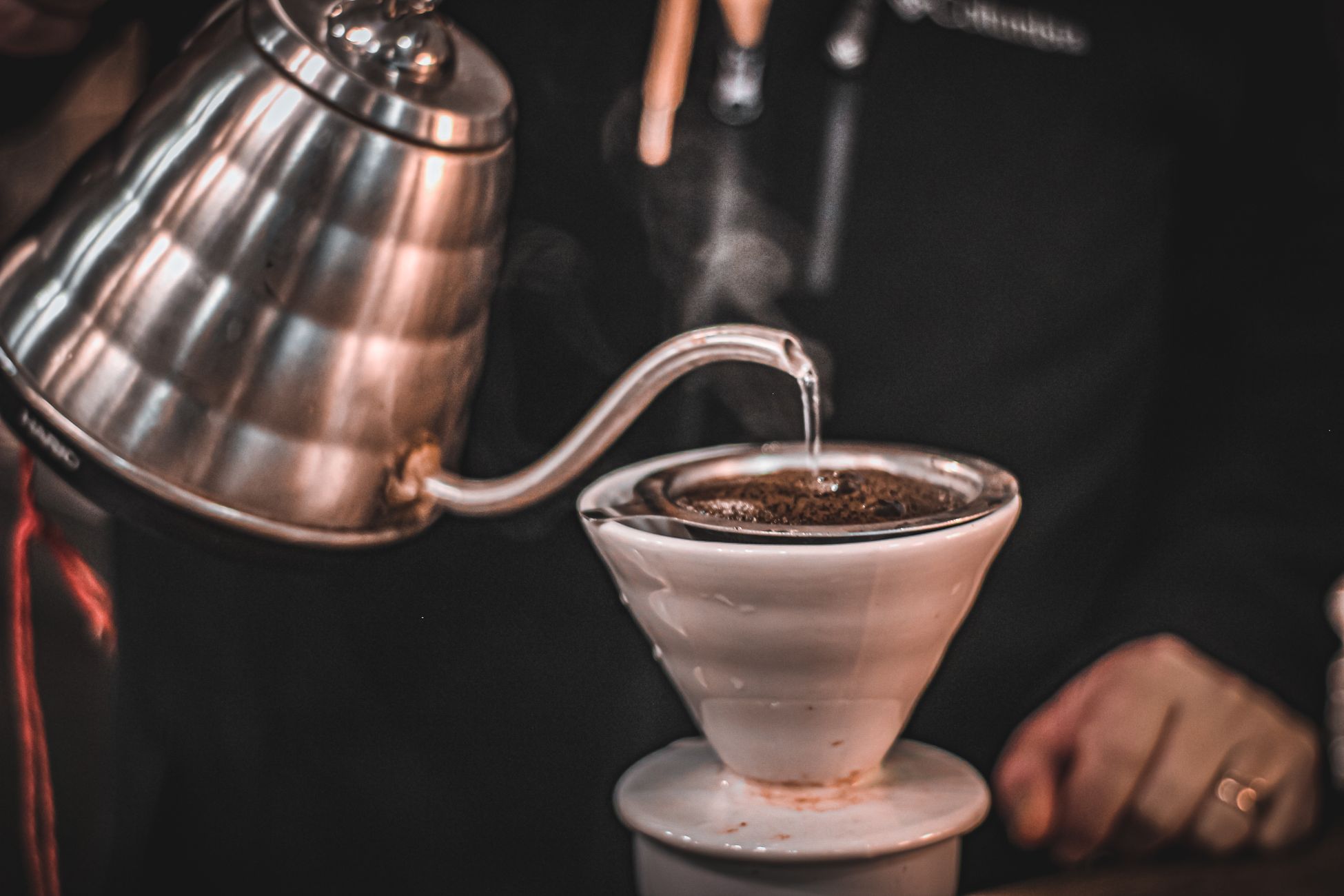
A Recipe That Works
Use a ratio around 1 to 16, so 25 grams of coffee to 400 grams of water for a large mug.
Put the filter in and rinse it with hot water. The valve is closed, so let the rinse water sit, then set it on the mug to drain it, then put it back on the counter. Rinsing removes paper taste and preheats the plastic.
Add the coffee. Level it.
Pour about double the coffee weight in water, so 50 grams, and let it bloom for 30 to 45 seconds. Carbon dioxide escapes and water starts saturating the grounds.
Add the rest of the water and give it one gentle stir to make sure nothing is floating dry on the surface. Put the lid on.
Steep for two to three minutes total from the first pour. Grind medium, roughly what you would use for a flat bottom pour over, coarser than a V60 and finer than a French press.
Set it on the mug. It drains in about a minute and a half. Total time around four minutes.
If it tastes sour and thin, grind finer or steep longer. If it tastes bitter and drying, grind coarser or steep shorter. Change one thing at a time.
Where It Beats the Alternatives
Against French press, the Clever wins on clarity and on cleanup. No plunging fines through the coffee at the end, no sludge in the bottom of the cup, no disassembling a wet metal filter to clean it. You lift out the paper, throw it away, rinse the cone.
Against a V60, the Clever wins on repeatability and on stress. Two people making coffee with the same recipe in a Clever get the same result. Two people using a V60 do not.
Against a batch brewer, the Clever wins on control and on brewing small volumes well. Automatic drip machines struggle to make one good cup because the shower head and the basket geometry are designed for a full carafe.
Against an AeroPress, it wins on volume. AeroPress makes a single small cup, and there is a pressing step. The Clever makes a full mug hands free.
Where It Loses
You cannot make espresso or anything close to it. It is a filter brewer.
It is plastic, or in some versions glass, and the plastic version is unlovely on a counter next to a nice ceramic dripper. That is aesthetic and you can decide how much you care.
It brews one mug at a time, and you cannot easily scale it to a full carafe for a group.
And it is genuinely slower than a V60 if you are counting minutes. Four minutes versus three. Not much, but if the reason you are up early is that you are already late, it registers.
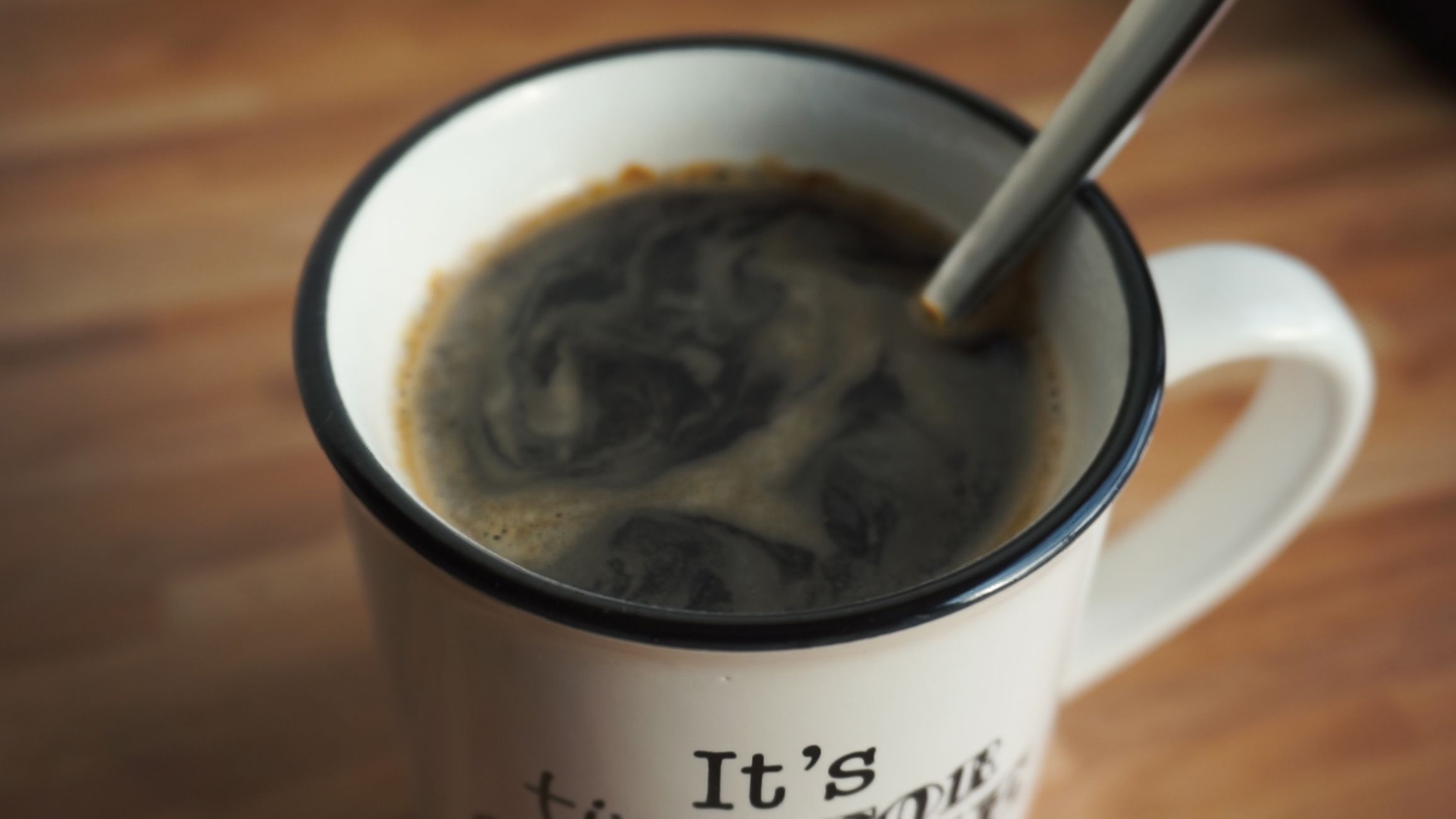
Why It Fits a Certain Kind of Coffee Drinker
There is a version of specialty coffee that is a hobby, where fiddling with pour rate and drawdown times is the enjoyable part. If that describes you, this brewer removes the thing you like.
There is another version where you just want the good coffee, reliably, without a ritual that punishes you for being tired. The Clever is built for that. It takes the forgiveness of immersion and hands you the clean cup that usually costs you technique.
Both versions have the same limit, though. A brewer controls how much of a coffee's character reaches the cup. It cannot invent character that was never there. Even extraction and a clean paper filter will faithfully deliver everything a stale, over roasted bag has to offer, which is not much.
The method that removes technique from the equation is only worth owning when the coffee going into it has something worth extracting evenly.
Give a simple method something worth brewing.
All images shown in this blog are sourced from pexels.com.