


The word specialty gets thrown around so casually that it has started to feel like marketing noise. Every cafe, every bag, every gas station pouring something darker than usual seems to claim it. So it is worth knowing that specialty coffee is not a vibe or a slogan. It is a defined standard with an actual number attached, and that number tells you something concrete about what is in the bag. Once you understand it, the term stops being fuzzy and starts being useful.
Specialty coffee means coffee that scored 80 points or higher on a 100 point scale, graded by a trained, certified taster following a formal protocol. That is it. That is the line. Everything below 80 is commodity coffee. Understanding where that score comes from, and what it does and does not promise, changes how you read a bag and how you spend your money.
The best way to understand a score is to taste what earns one. Start with one of our most popular roasts and pay attention to how much is going on in the cup.
Where the 80-Point Score Comes From
The score comes from a process called cupping, a standardized way of tasting coffee that professional graders use around the world. A certified taster, often a licensed Q grader who has passed a rigorous exam, brews the coffee under fixed conditions and evaluates it across a set of specific attributes, scoring each one and adding them up to a total out of 100.
The attributes are not vague impressions. They include fragrance and aroma, flavor, aftertaste, acidity, body, balance, sweetness, uniformity, cleanliness of the cup, and overall impression. Each gets scored, and defects get subtracted. A coffee has to reach 80 total to be graded specialty. Score in the 80s and you are specialty, with higher 80s and 90s marking increasingly exceptional coffee. The rare coffees that break into the high 80s and 90s are the ones that fetch extraordinary prices at auction. The whole system exists to turn something subjective, how good a coffee tastes, into a repeatable, comparable number.

What the Score Actually Measures
Here is the key thing the number represents. It is not measuring how strong the coffee is, or how dark it is roasted, or how much caffeine it has. It is measuring quality and, above all, the absence of defects and the presence of distinct, pleasant flavor. A high scoring coffee is clean, meaning free of the off flavors that come from bad cherries or careless processing, and it has clarity and character, meaning it actually tastes of something specific rather than tasting generically brown.
Commodity coffee, scoring below 80, is not necessarily undrinkable. It is coffee with more defects, less distinct flavor, and more of the flatness that comes from mixed ripeness and rough processing. When you taste a commodity cup next to a specialty cup, the difference is usually obvious even to someone who has never thought about coffee before. The specialty cup has things going on, layers, sweetness, a finish. The commodity cup is just coffee flavored. The score is a formal way of certifying that gap.
Why the Grade Reflects the Whole Chain
A coffee cannot score 80 or above by accident, and that is what makes the grade meaningful. The score reflects everything that happened to the coffee across its entire journey, because a defect anywhere shows up in the cup.
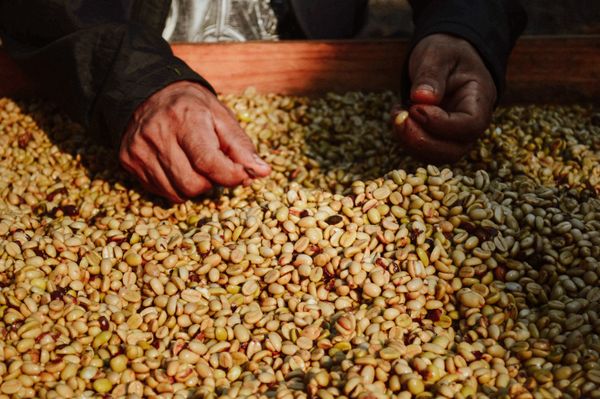
To reach specialty grade, the cherries generally had to be picked ripe, which means selective hand picking rather than stripping the branch. The processing had to be done carefully, with the drying watched and controlled so the coffee did not ferment badly or mold. The beans had to be sorted to remove defects, the pale duds and broken beans that flatten a batch. And the underlying coffee had to have real quality potential, usually meaning good arabica varieties grown at altitude where slow ripening builds sweetness and complexity. A high score is a signal that every one of those steps was done well. One careless step, and defects creep in and the score drops below the line.
See the coffees our customers rate highest and taste the result of that whole careful chain.
What the Score Does Not Tell You
It is just as important to know the limits of the number, because a score is not a personal recommendation. An 86 point coffee is not automatically the coffee you will enjoy most. The score measures quality and cleanliness against a professional standard, but it does not measure whether the flavor profile matches your taste. A brilliant, high scoring natural Ethiopian bursting with blueberry might score well above a clean, classic washed Colombian, and you might personally prefer the Colombian. Both are excellent. The score confirms quality, not compatibility with your palate.
The score also does not travel with the coffee forever. Grading happens on the green coffee, before roasting and long before it reaches your cup. A high scoring green coffee roasted badly, or sold long past its freshness, will not deliver what the number promised. The grade tells you the raw material was excellent. It is still on the roaster to honor that, and on you to brew it and drink it fresh. Think of the score as a floor of quality on the coffee's potential, not a guarantee of the cup in your hands.
Why a Few Points Mean So Much
It is tempting to look at the scale and think 80 is a middling grade, the way 80 percent would be a mediocre score on a school test. That instinct is wrong here, and it is worth correcting. The 100 point scale is compressed at the top. Almost all coffee ever produced would score well below 80 if it were formally graded, so simply clearing that line already puts a coffee in a small minority of the world's harvest. Reaching 80 is not scraping a passing grade. It is qualifying for a different league entirely.
Higher up, the points get harder and more meaningful. The difference between an 84 and an 88 is not small. It usually reflects a real jump in sweetness, clarity, complexity, and the absence of even faint defects, and the price often climbs steeply to match. Coffees that reach the highest 80s and into the 90s are rare enough that roasters compete for them and name the farm on the bag. So when a coffee tells you its score, remember that every point near the top represents a lot of careful work, and a lot of things that had to go right.

How to Use This When You Shop
Knowing all this makes you a sharper buyer. When a coffee is genuinely specialty grade, it means a professional judged it clean, distinct, and free of significant defects. That is a real assurance, and it is why specialty coffee reliably tastes more interesting than commodity coffee. So the term is worth looking for, as long as it is backed by the actual standard and not just slapped on a label.
But do not shop by chasing the highest number you can find, and do not assume a score alone will tell you what you will love. Use the specialty grade as your baseline, your promise that the coffee is well made and worth drinking, and then choose among specialty coffees by flavor profile, by origin, by processing style, and by what you already know you enjoy. The number gets you into the room of coffees worth your money. Your own palate picks which one goes in your cup. Understood that way, the 80 point line is one of the most useful things you can know about coffee.
Explore coffees that clear the bar
All images shown in this blog are sourced from pexels.com.