

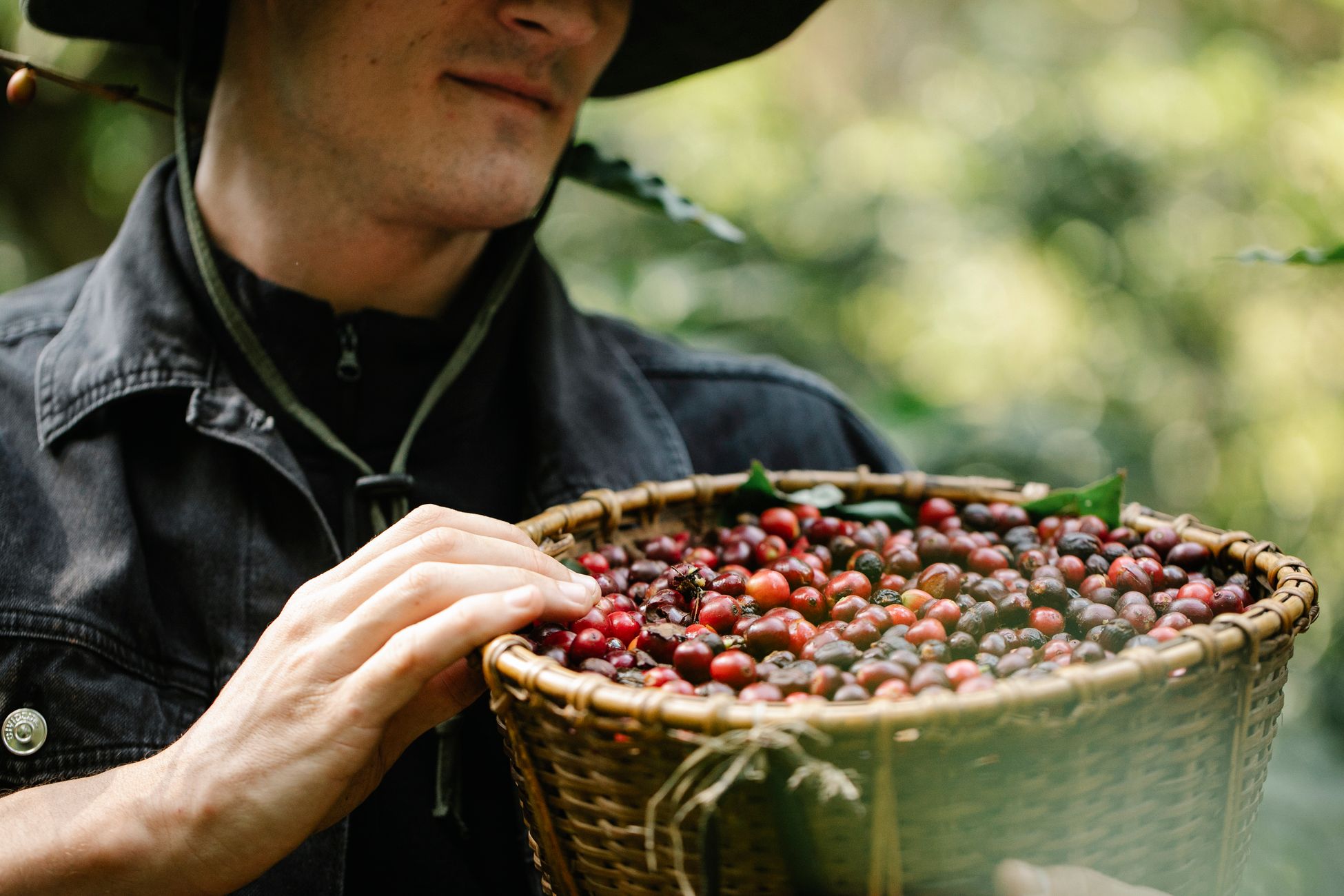
A lot of the world's best coffee is not made on a farm. It is made at a building down the road from several hundred farms, usually next to a river, where everyone brings their cherries at the end of the picking day.
These places are called washing stations, or wet mills, and in countries like Rwanda, Burundi, Kenya, and much of Ethiopia they are where quality is actually determined. A farmer with half a hectare of excellent trees can grow perfect cherry and end up with mediocre coffee if the station handles it badly. A well run station can take cherry from three hundred smallholders and produce a lot that scores in the high eighties.
Almost all of that happens within about a day of the fruit arriving. Here is what that day looks like.
Taste what a good washing station produces.
Late Afternoon: Intake
Pickers work through the day and deliver in the afternoon or early evening. Cherry arrives in bags and baskets, carried, biked, or driven in, and the first thing that happens is weighing.
That weight is the farmer's receipt and the basis for payment, so this step carries real weight in more than one sense. At better stations the intake record also notes which farmer delivered what, which is the foundation of any traceability claim made later.
Then comes the first sorting, and it happens before any machine touches the fruit. Station staff inspect what has been delivered and reject or separate cherry that should not go into a quality lot: unripe green cherry, overripe raisined cherry, cherry with visible insect damage, leaves, sticks. At some stations this is done by hand on a table. At others, farmers are paid on a scale that rewards ripeness, which pushes the sorting back to the picking itself, which is where it works best.
There is also a timer running that nobody can pause. A picked coffee cherry begins fermenting almost immediately, because it is sugary fruit sitting in warm air. Cherry delivered promptly can be processed under control. Cherry that sat in a sack in the sun for a day arrives already fermenting in an uncontrolled way, and no amount of skill downstream fixes it. This is why stations set delivery deadlines and why the good ones enforce them, even when it means turning away coffee from someone who walked a long distance.
Evening: The Flotation Tank
Before pulping, most stations run the cherry through water, and this simple step removes a surprising amount of what would otherwise become defects.
Cherry goes into a tank of water and the physics does the sorting. Dense, properly developed, ripe cherry sinks. Cherry that is underripe, overripe, dried out, or hollowed out by insects is less dense and floats. The floaters get skimmed off the top and either discarded or diverted to a lower grade lot.
It costs nothing but water and a few minutes, and it catches the exact defects that hurt a cup most. If you have wondered how a station pooling fruit from hundreds of farmers manages to produce a clean lot, this is a large part of the answer.
Evening: Pulping
Now the fruit gets removed. A pulper is a machine with a rotating drum or set of discs and a fixed plate, spaced so that a ripe cherry passing through gets squeezed hard enough to burst the skin and pull the pulp away from the seed inside.
That spacing is a deliberately tuned setting and it does a second job. Ripe cherry pulps easily. Underripe cherry is firmer and more stubbornly attached, so with the gap set correctly, a portion of the unripe fruit passes through unpulped and can be separated out. The pulper becomes another sorting stage rather than just a peeling stage.
What emerges is the seed still wrapped in parchment, coated in a sticky layer called mucilage. Mucilage is a pectin rich gel and it will not simply rinse off. Getting rid of it is the entire purpose of the next step, and it is where a washed coffee becomes a washed coffee.
Overnight: Fermentation
The pulped coffee goes into tanks, usually concrete, and sits. This is the part with the most mythology around it and the part that most directly separates good stations from careless ones.
What is happening is enzymatic and microbial. Yeasts and bacteria present on the fruit and in the environment produce pectinase enzymes that break down the pectin structure of the mucilage until it loses its grip and can be washed away. The microbes also produce organic acids and other compounds as byproducts, and some of those find their way into the seed and influence flavor.
Duration is not a fixed recipe. It depends on ambient temperature, altitude, tank size, whether the tank is dry or under water, and the specific microbial population. A station at two thousand meters in Rwanda on a cool night might need thirty hours. A warm lowland station might be done in ten. Somewhere between twelve and thirty six hours covers most of it.
The skill is in knowing when to stop, and the tests used are refreshingly low tech. Staff reach in and rub the parchment between their hands. When the mucilage has broken down, the coffee stops feeling slippery and starts feeling rough, almost gravelly, and it squeaks. Some use a stick pushed into the tank, watching whether the hole it leaves holds its shape. Some measure pH.
Stop too early and mucilage remains, which means it will still be there during drying, causing uneven drying and unpredictable fermentation later. Go too long and the fermentation moves past pectin breakdown into producing the compounds responsible for vinegary, boozy, and onion like off flavors. That is the ferment defect people taste and misattribute to the roast.
Find a coffee where the fermentation was watched closely.
Early Morning: The Washing Channels
Once fermentation is judged complete, the tank is drained into long, narrow concrete channels, and workers walk through with paddles or their feet, agitating the coffee as clean water runs past.
Two things happen simultaneously. The broken down mucilage gets scrubbed off and carried away with the water. And the moving water performs another density separation, because in a flowing channel the denser parchment sinks and settles at the upstream end while lighter, less dense beans travel further down.
Kenyan stations turned this into a formal grading system. Coffee is separated into grades based on where it settles in the channel, and those grades stay separate through drying and milling, and are often sold as distinct lots at different prices. The heaviest fraction is the most valuable. It is a genuinely clever piece of engineering, using nothing but water, gravity, and a well shaped trench.
Morning: The Soak
At many East African stations, particularly in Kenya, there is one more step before drying that is worth knowing about because it is part of why those coffees taste the way they do.
After washing, the parchment goes back into clean water and soaks, often for twelve to twenty four hours. No fermentation objective this time, just a submerged rest in fresh water, sometimes changed partway through.
Producers who do this argue it produces a cleaner cup with more pronounced, sharper acidity. It is a labor and water intensive step that exists mostly because the buyers who prize Kenyan coffee reward the result. If you have noticed that a good Kenyan tastes strikingly clean and bright compared with washed coffees from elsewhere, the double wash and soak is a real part of that signature.
Then, the Long Part
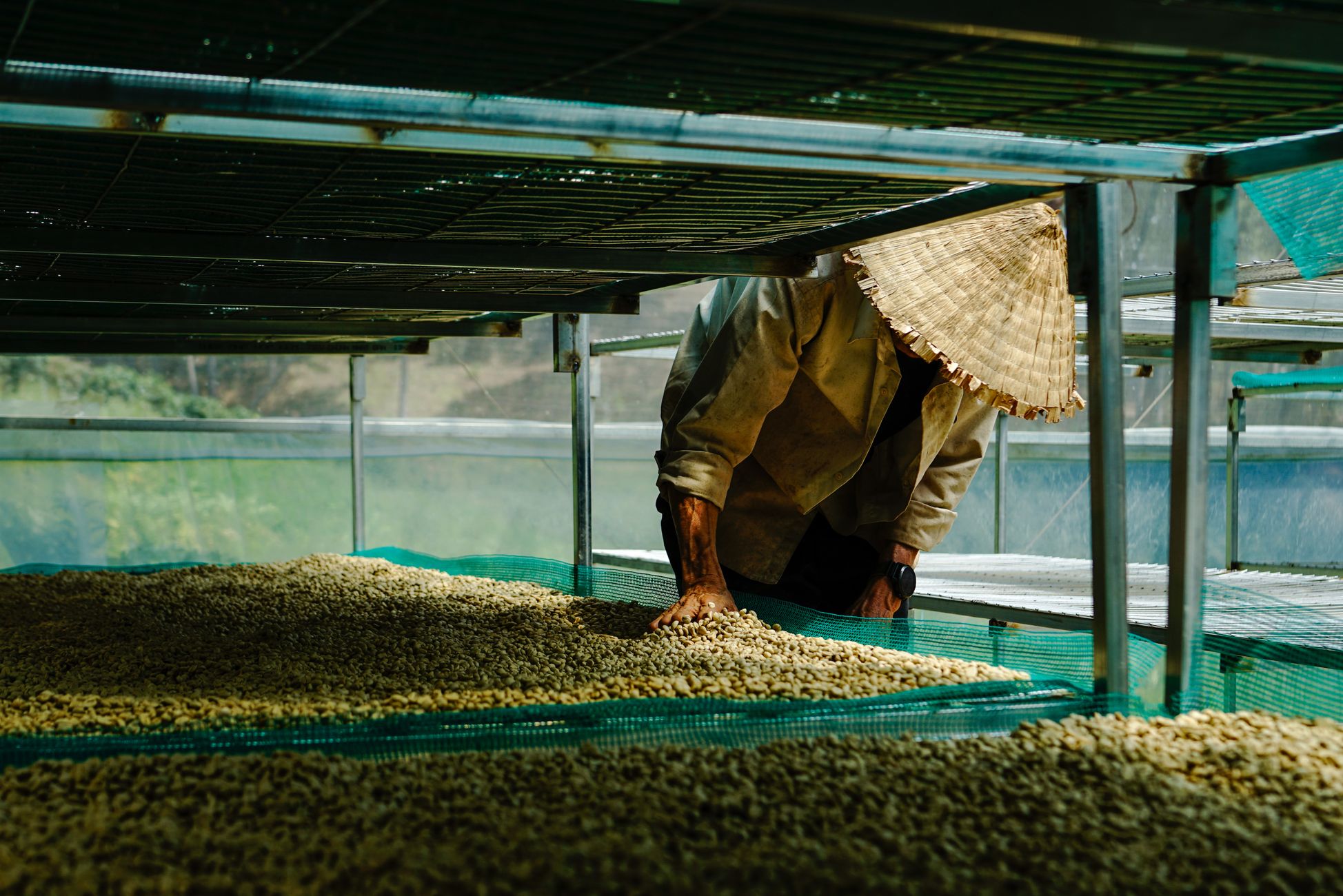
From here the coffee goes to the drying beds, and the fast, busy, decision heavy phase gives way to two or three weeks of turning coffee by hand and watching the weather. That is a longer story on its own.
The point is that everything the drying phase has to work with was determined in the previous day. Cherry that was sorted properly, pulped at the right setting, fermented to the right endpoint, and washed clean is coffee that can dry evenly. Get any of it wrong and drying just preserves the mistake.
The Water Question
Washed processing uses a lot of water, and the wastewater is not benign. Mucilage rich effluent is high in sugars and organic acids, and dumped straight into a river it consumes oxygen as it breaks down, which kills aquatic life downstream. This is a real environmental cost of a processing method that produces coffee many of us prefer.
The industry has responses at various stages of adoption. Eco pulpers use a fraction of the water by mechanically removing mucilage rather than relying on fermentation and washing. Water recirculation systems reuse it through multiple stages. Settling ponds, sometimes with treatment beds, break the effluent down before release. Mucilage and pulp get composted and returned to the farms as fertilizer, which turns a disposal problem into an input.
None of it is universal, and it costs money that has to come from the price of the coffee. It is one of the less visible things a higher price can pay for.
What This Means on a Label
Once you know the station is where the work happens, coffee labels from certain origins read differently.
Rwandan and Burundian coffees are frequently named for the washing station rather than a farm, because the station is the meaningful unit. When you see a name followed by CWS, that stands for coffee washing station. Kenyan coffees are often named for a factory, which is the local term for the same thing, operated by a farmers cooperative society.
That kind of naming is not vaguer than a single farm name. It is accurate. It tells you the coffee is the pooled work of many smallholders processed at one place by one team, and the station's reputation is a meaningful thing to trust, because the station's decisions are what shaped the cup.
The Short Version
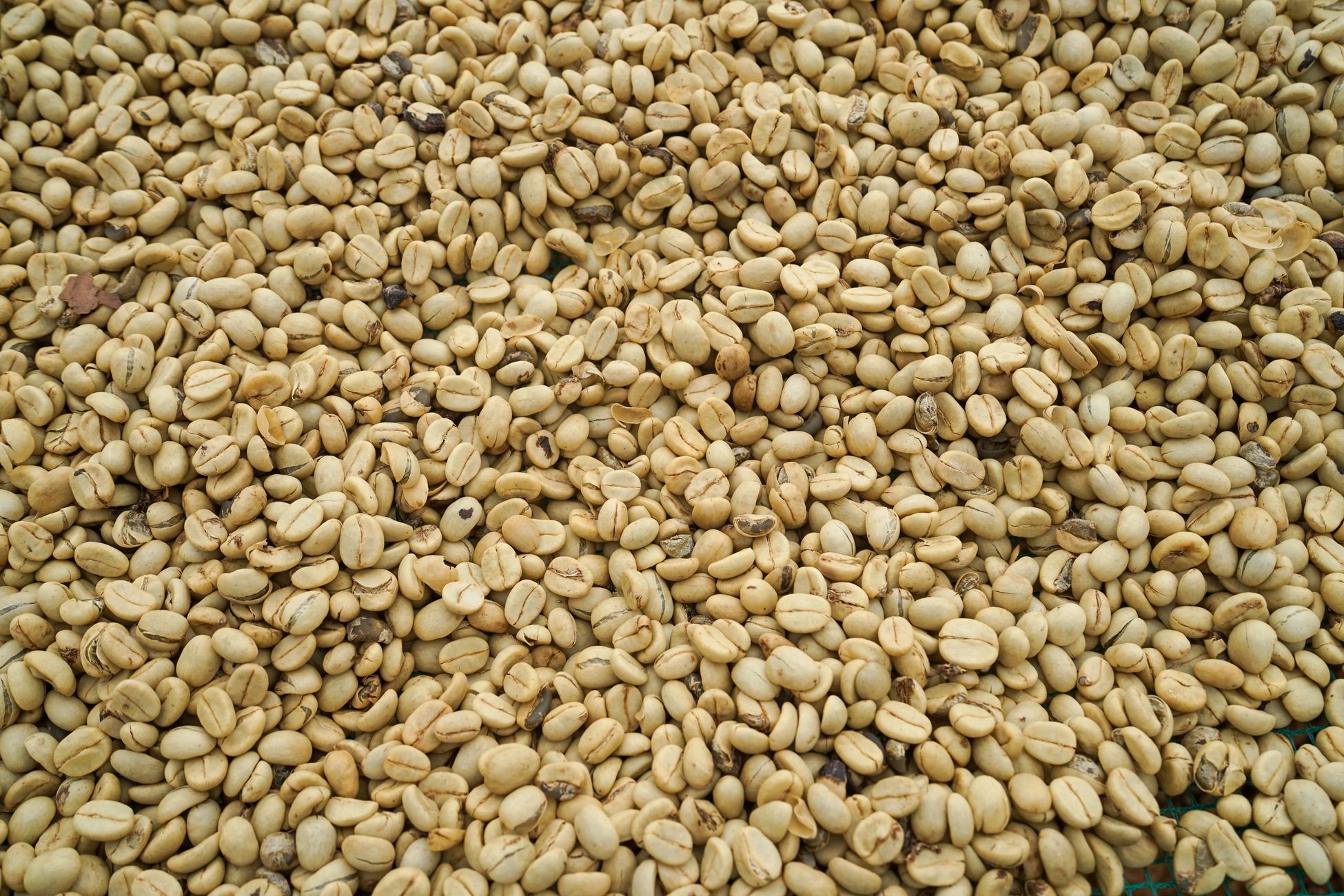
In the twelve to twenty four hours after picking, a washing station weighs and sorts the cherry, floats off the light defects, pulps the fruit at a setting that rejects unripe fruit, ferments the mucilage until it lets go and not one hour longer, washes it away in channels that grade by density, and sometimes soaks it again in clean water.
Almost none of that is visible in your bag, and all of it is upstream of anything a roaster can influence. When a coffee tastes clean and precise, someone stood in a concrete channel at five in the morning and made a series of judgment calls correctly.
All images shown in this blog are sourced from pexels.com.