


Watch a skilled barista pull a shot on a good machine and you might notice something before the espresso ever starts flowing. The pump kicks on gently, the puck gets wetted, and then there is a pause, a few seconds where nothing seems to happen, before the machine ramps up and the shot begins in earnest. That pause is not hesitation. It is pre-infusion, one of the most quietly powerful tools in espresso, and it is the difference between a good machine and a great shot on a lot of setups.
Pre-infusion is easy to overlook because it happens in the first few seconds and looks like nothing. But those few seconds change how the entire rest of the shot extracts. Understanding what it does, and why it helps, is one of those small pieces of knowledge that immediately makes your espresso better.
Pre-infusion can only improve a shot that started with good coffee. Begin with a fresh espresso roast and give the technique something worth refining.
What Pre-Infusion Actually Is
Pre-infusion means wetting the coffee puck with low pressure water and letting it soak briefly before the machine applies full brewing pressure. Instead of hitting the dry puck immediately with the full nine bars, the machine eases in. It gently saturates the coffee at low pressure, pauses for a couple of seconds while the grounds absorb that water and swell, and only then ramps up to full pressure to pull the actual shot.
Think of it like wetting a dry sponge before you try to wring anything out of it. A bone dry sponge repels water and lets it run off. A sponge that has been dampened first soaks evenly and releases what is inside it smoothly. The coffee puck behaves the same way, and pre-infusion is the damping step.
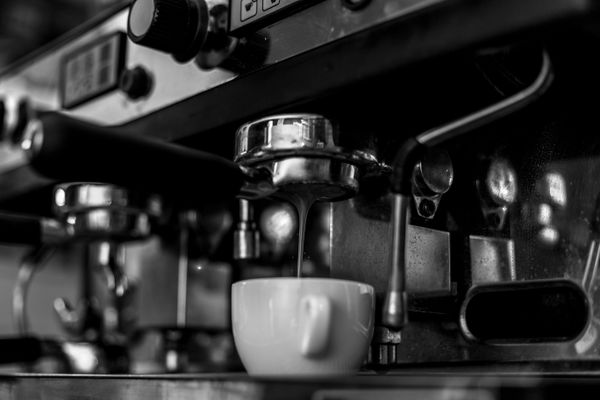
Why a Dry Puck Is a Problem
To understand why pre-infusion helps, you have to picture what happens without it. When full pressure slams into a dry puck all at once, the water hits with force before the coffee has had any chance to settle and absorb evenly. Dry ground coffee does not accept water uniformly. Some spots wet faster than others, and under sudden high pressure, the water blasts through the path of least resistance before the whole puck is saturated.
That is a recipe for channeling, the uneven extraction where water carves a fast lane through one part of the puck and neglects the rest. A dry puck hit hard is far more likely to crack, to form channels, and to extract unevenly, which gives you a shot that is sour and bitter at the same time. The violence of full pressure on dry coffee is working against you before the shot even establishes itself.
What Pre-Infusion Changes
Pre-infusion solves this by letting the puck get ready. During those low pressure seconds, water gently and evenly saturates the entire bed of coffee. The grounds absorb water and swell, closing up small gaps and settling into a more uniform, cohesive puck. Fresh coffee also releases a burst of carbon dioxide when it first meets water, and letting that happen at low pressure, rather than fighting it at high pressure, helps the puck settle instead of erupting.
By the time full pressure arrives, the puck is evenly wet, swollen tight, and free of the dry weak spots that cause channeling. The water now has nowhere easy to escape, so it pushes through the whole puck evenly. The result is a more even extraction, which in the cup means more sweetness, more body, less harshness, and more consistency from one shot to the next. You are not adding anything to the coffee. You are removing the chaos from the start of the shot so the good extraction can happen cleanly.
See which espresso roasts our customers reach for and taste what an even extraction does for them.
The Taste Difference
In practical terms, a shot pulled with good pre-infusion tends to taste rounder and sweeter, with the harsh edges sanded off. Because the extraction is more even, you get less of the sour under extracted notes and less of the bitter over extracted notes, and more of the balanced middle where the sweetness and body live. Many people find that pre-infusion is what finally tames a coffee that kept tasting a little sharp or aggressive no matter how they dialed it.
It also makes shots more forgiving and more repeatable. Because pre-infusion reduces channeling, small imperfections in your puck prep matter a little less. It does not excuse sloppy distribution, but it gives you a wider margin, which for a home barista fighting for consistency is genuinely valuable. Shots that used to be a coin flip start landing more reliably.
How to Use It at Home
How you get pre-infusion depends on your machine. Some espresso machines have pre-infusion built in and do it automatically every shot, either through a programmed low pressure phase or through a mechanical design that ramps pressure gradually. If your machine has a pre-infusion setting, it is worth experimenting with the length, often somewhere between two and eight seconds, and tasting the difference.
On machines with a manual paddle or a lever, you control pre-infusion by hand, easing into the shot with low flow before committing to full pressure. On simpler machines that go straight to full pressure with no control, you have fewer options, though even there some people approximate a soak by using a gentler start if the machine allows it. If your machine does none of this, it is one of the features genuinely worth looking for when you upgrade, because it meaningfully improves the cup rather than just adding a number to a spec sheet.
Light Roasts Benefit Most
Pre-infusion helps almost any espresso, but it earns its keep most on lighter roasts. Lightly roasted coffee is denser and harder than dark roasted coffee, and it resists giving up its flavor. Under a sudden blast of full pressure, a dense light roast puck is especially prone to channeling, because the water hits a hard, tight bed and looks for any weakness rather than soaking through. Those coffees often taste sharp or sour when rushed.
Giving a light roast a longer, gentler pre-infusion lets the dense grounds absorb water and soften before the real pressure arrives, which coaxes out the sweetness that a hard, fast extraction leaves behind. Many people who struggle to make light roasted espresso taste good are really just skipping the soak that those beans need most. If your fruity, high altitude espresso keeps landing sour, try extending the pre-infusion by a few seconds before you touch the grind. It often fixes what no grind adjustment could.
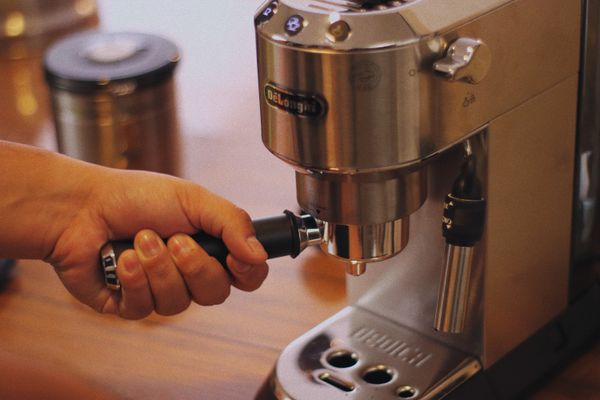
A Few Seconds Well Spent
Pre-infusion is a small thing that punches far above its weight. All it does is wet the puck gently and let it settle before the real pressure arrives, but that small courtesy prevents channeling, evens out the extraction, and gives you a sweeter, rounder, more consistent shot. It costs you only a few seconds at the front of the pull, and it asks nothing of you once your machine is set up to do it.
If your espresso has been tasting sharp, uneven, or unpredictable despite good beans and careful puck prep, pre-infusion may be the missing piece. It is one of those techniques that sounds like fussy detail and turns out to be the reason the professionals' shots taste so much rounder than yours. Give the puck a moment to get ready, and the rest of the shot rewards you for the patience.
Put your pre-infusion to work on a fresh bag
All images shown in this blog are sourced from pexels.com.