


Two espresso machines can sit side by side, both set to ninety three degrees, both with the same grinder and the same beans, and produce shots that taste meaningfully different. The usual explanation is build quality or boiler size, and those matter, but the specific thing doing most of the work has three letters and gets glossed over in almost every product description.
PID temperature control is the difference between a machine that averages the right temperature and a machine that holds it. If you have ever wondered why your first shot of the morning tastes different from your third, or why the same recipe gives you a different cup on different days, this is usually where the answer lives.
Give a good machine something worth extracting.
How Machines Held Temperature Before PID
The traditional method is a pressurestat, and it is beautifully simple. A boiler heats water, the pressure inside rises, and when it hits a set point a switch cuts the heating element. Pressure falls as the machine loses heat and dispenses water, and at a lower set point the switch turns the element back on.
Because water in a sealed boiler has a fixed relationship between pressure and temperature, controlling pressure controls temperature. That part works.
The problem is the gap between the two switch points, called the deadband. A pressurestat cannot react until the pressure has drifted far enough to trip the switch, which means the boiler is always cycling above and below the target rather than sitting on it. On many machines that swing is several degrees.
So the machine is not at ninety three degrees. It is somewhere between about ninety one and ninety five, moving continuously, and the temperature you get depends entirely on where in that cycle you happened to start your shot.
What a PID Does Instead
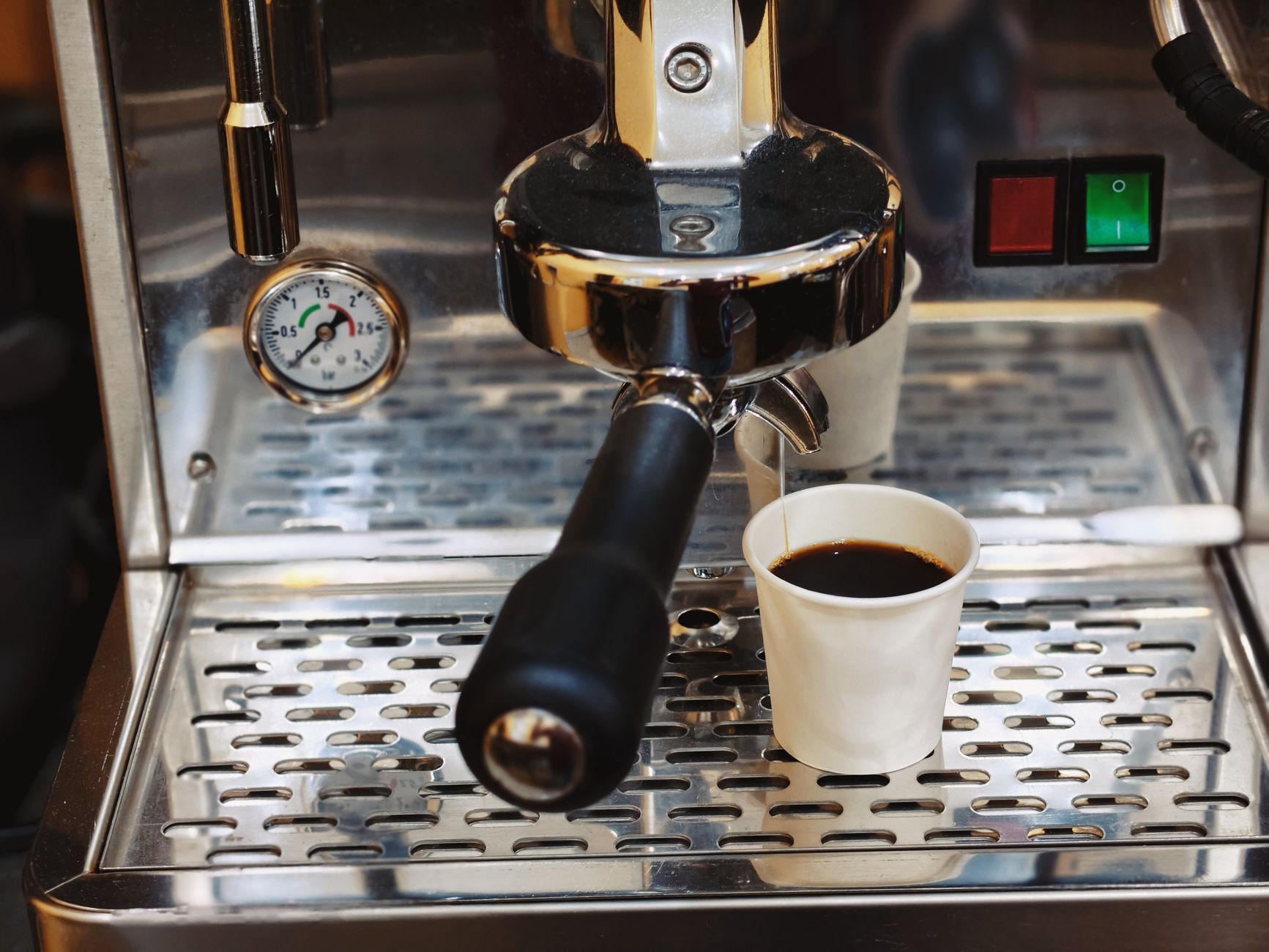
PID stands for proportional, integral, derivative, which describes the three inputs a control algorithm uses to decide how much power to send to the heating element.
Proportional looks at how far the current temperature is from the target and responds in proportion. Far away, apply lots of power. Close, apply a little.
Integral looks at accumulated error over time. If the temperature has been sitting slightly below target for a while, this term pushes harder to close a persistent gap that the proportional term alone would tolerate.
Derivative looks at the rate of change and anticipates. If temperature is climbing quickly toward the target, this term backs off power early so the system does not sail past it.
Together they replace a binary on and off switch with continuous, modulated power delivery. Instead of full blast until too hot then nothing until too cold, the element receives exactly the power required to hold position. A well tuned PID keeps a boiler within a fraction of a degree of the set point rather than several degrees.
It also gives you a display, which sounds cosmetic and is not. Knowing what the machine is actually doing lets you tell the difference between a recipe problem and a temperature problem.
Why a Few Degrees Change the Cup So Much
Temperature drives extraction rate. Every soluble compound in coffee dissolves at a rate that depends on how hot the water is, and different compounds respond differently.
Broadly, the acids come out early and readily even at lower temperatures. The sugars and the compounds responsible for body and sweetness need more heat. The bitter compounds come out last and are most sensitive to high temperature.
So a shot pulled at ninety one degrees, with everything else the same, extracts less overall and leans sour and thin, with acidity out ahead of sweetness. The same shot at ninety five extracts more, and the late arriving bitter compounds show up in force.
Three or four degrees is enough to move a shot from underextracted to overextracted. On a machine with a wide swing, you are not choosing between those outcomes, you are getting whichever one the boiler cycle handed you.
That is the single biggest practical consequence. Without stable temperature you cannot troubleshoot anything, because when a shot tastes wrong you have no way to know whether it was the grind, the dose, the distribution, or simply where the pressurestat was in its cycle when you pressed the button.
Dial in a coffee that rewards the effort.
What It Actually Fixes at Home
Shot to shot consistency. This is the big one. Same recipe, same result, which means the changes you make are the changes you observe.
The first shot problem. On a pressurestat machine that has been idling, the group head and portafilter are often at a different temperature than they will be after a couple of shots. PID does not solve group head thermal mass by itself, but combined with stable boiler temperature it narrows the gap considerably, and machines with PID often reach a genuinely ready state faster.
Deliberate temperature adjustment. With a stable, adjustable set point, temperature becomes a tool rather than a variable you endure. Light roasts are dense and less soluble, so they generally want more heat, often ninety four to ninety six degrees. Dark roasts are more soluble and extract easily, so they usually want less, often ninety to ninety two. Being able to move one degree and taste the result is how you learn what your coffee wants.
Faster diagnosis. When temperature is fixed, a sour shot means the grind is too coarse or the dose is off. That certainty saves an enormous amount of wasted coffee.
What It Does Not Fix
PID is a boiler control, and there are limits to what a stable boiler can do.
It does not control the temperature at the coffee. Water leaves the boiler and travels through pipes and a group head, all of which have their own temperature. A machine with a small or poorly insulated group head can have an excellent PID and still deliver inconsistent water to the puck, particularly on the first shot after an idle period.
It does not control temperature during the shot on a single boiler machine. Once water starts flowing, fresh cold water enters the boiler, and how well the system holds up under that load depends on boiler size and heater power as much as on the controller.
It does not fix a bad grinder. Grind consistency remains the dominant variable in espresso, and a machine with perfect temperature control fed by an inconsistent grinder will still produce inconsistent shots. If you are choosing where to spend, the grinder comes first, every time.
It does not make bad coffee good. Stale beans extracted at a perfectly held ninety three degrees are still stale beans.
How to Use It Once You Have It
Let the machine reach true thermal stability, which usually takes longer than the ready light suggests. Twenty to thirty minutes is a reasonable expectation on most home machines, since the group head and portafilter mass take much longer to settle than the boiler does.
Flush a little water through the group before your first shot. This brings the group and the portafilter closer to the boiler temperature and is worth doing even on a stable machine.
Change one degree at a time and write it down. Pull a shot, note the temperature and how it tasted, adjust, repeat. Two or three sessions is usually enough to find where a given coffee sits.
Reset the set point when you change coffees, especially across roast levels. The temperature that made a dark blend sweet will make a light single origin sour.
And treat the display as information rather than reassurance. The number tells you what the boiler is doing, which is most of what you need to know and not quite all of it.
The reason PID matters is not that it makes any single shot better. It is that it removes one of the largest sources of randomness from the process, which is what lets everything else you do actually count for something.
Buy beans worth being precise about.
All images shown in this blog are sourced from pexels.com.