

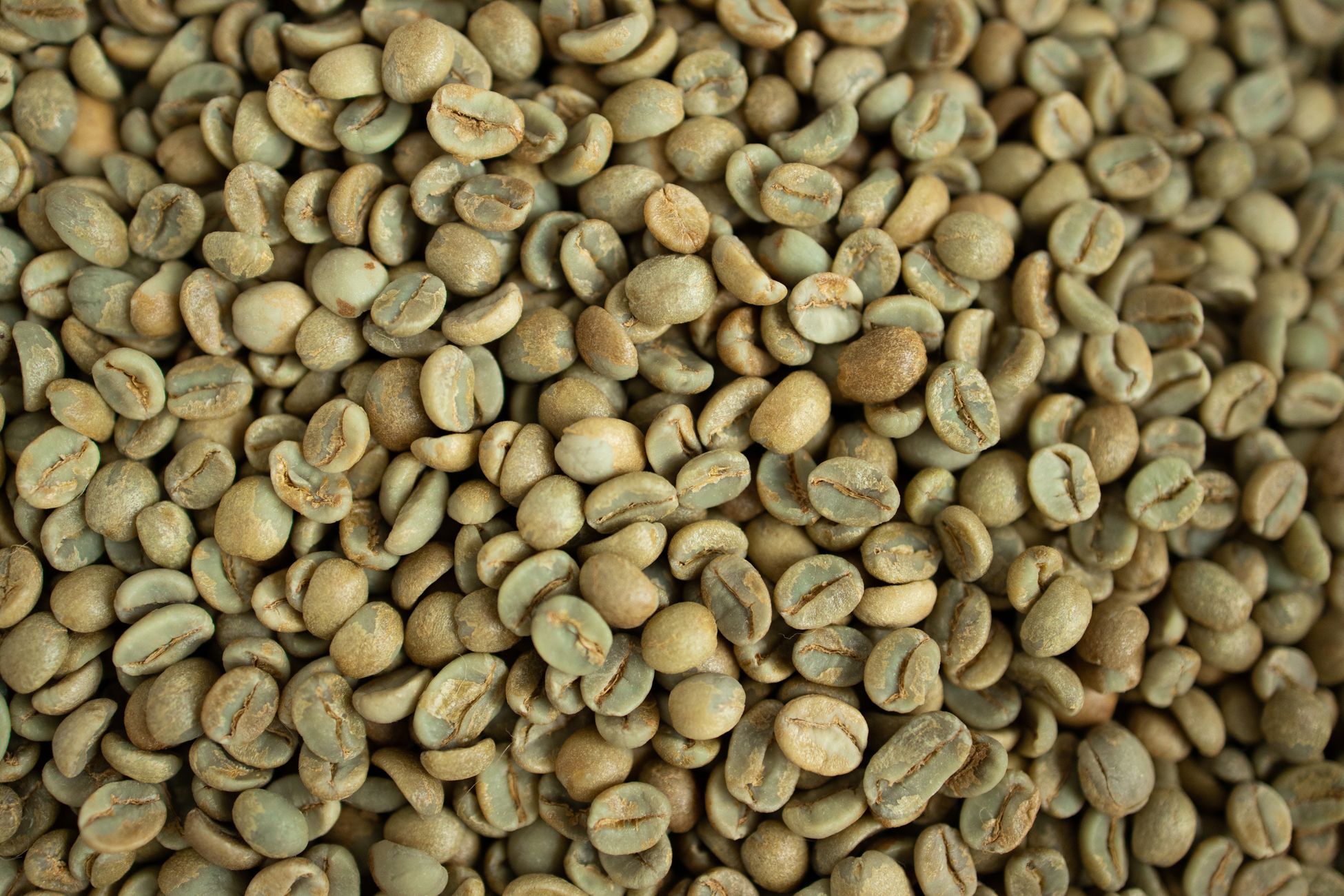
Pour a handful of Pacamara next to almost any other coffee and you notice the difference before you smell anything. The beans are huge. They are long, broad, and flat, the kind of size that makes you check the bag twice.
Pacamara has a reputation that matches its size. It shows up near the top of competitions, it sells in small auction lots, and it divides people. One cup tastes like mango and jasmine. Another tastes like green pepper and fresh herbs. Both can be Pacamara, and understanding why starts with where it came from and ends with what happens in the roaster.
See if a Pacamara is in our most popular collection
Two Mutations From Two Countries
The name tells you the parents: Pacas plus Maragogype. Each began as a natural mutation, a single tree in a field that came up different from the rest, and each was noticed and kept because the difference was useful.
Pacas is a mutation of Bourbon discovered in El Salvador on a farm owned by the Pacas family, around the middle of the twentieth century. Like Caturra, it is a compact plant, shorter than Bourbon with its branches packed closer together, which makes it easier to plant densely and easier to pick. It carries a good share of Bourbon's sweetness in the cup.
Maragogype is a mutation of Typica first found in Brazil, near the town of Maragogipe in the state of Bahia. Everything about it is oversized: the leaves, the cherries, and above all the seeds. Its beans are so large that the coffee trade calls them elephant beans. On its own, Maragogype is a low-yielding tree, which kept it more of a curiosity than a staple on most farms.
Built On Purpose In El Salvador
Pacamara did not happen by accident. Beginning in the late 1950s, El Salvador's national coffee research institute crossed Pacas with Maragogype. The idea was to pair the practical, compact Pacas plant with the remarkable seed of the Maragogype.
Breeding a stable coffee variety is slow work. The first generation of a cross does not breed true, so researchers plant the seeds, select the trees that show the traits they want, plant the seeds of those trees, and repeat. Each generation takes years to fruit. Pacamara went through that patient cycle many times before it was ready to hand to farmers.
Today it grows across El Salvador and has spread to Guatemala, Honduras, Nicaragua, and Mexico, usually on farms that are chasing quality rather than volume.
Why The Beans Grow So Large
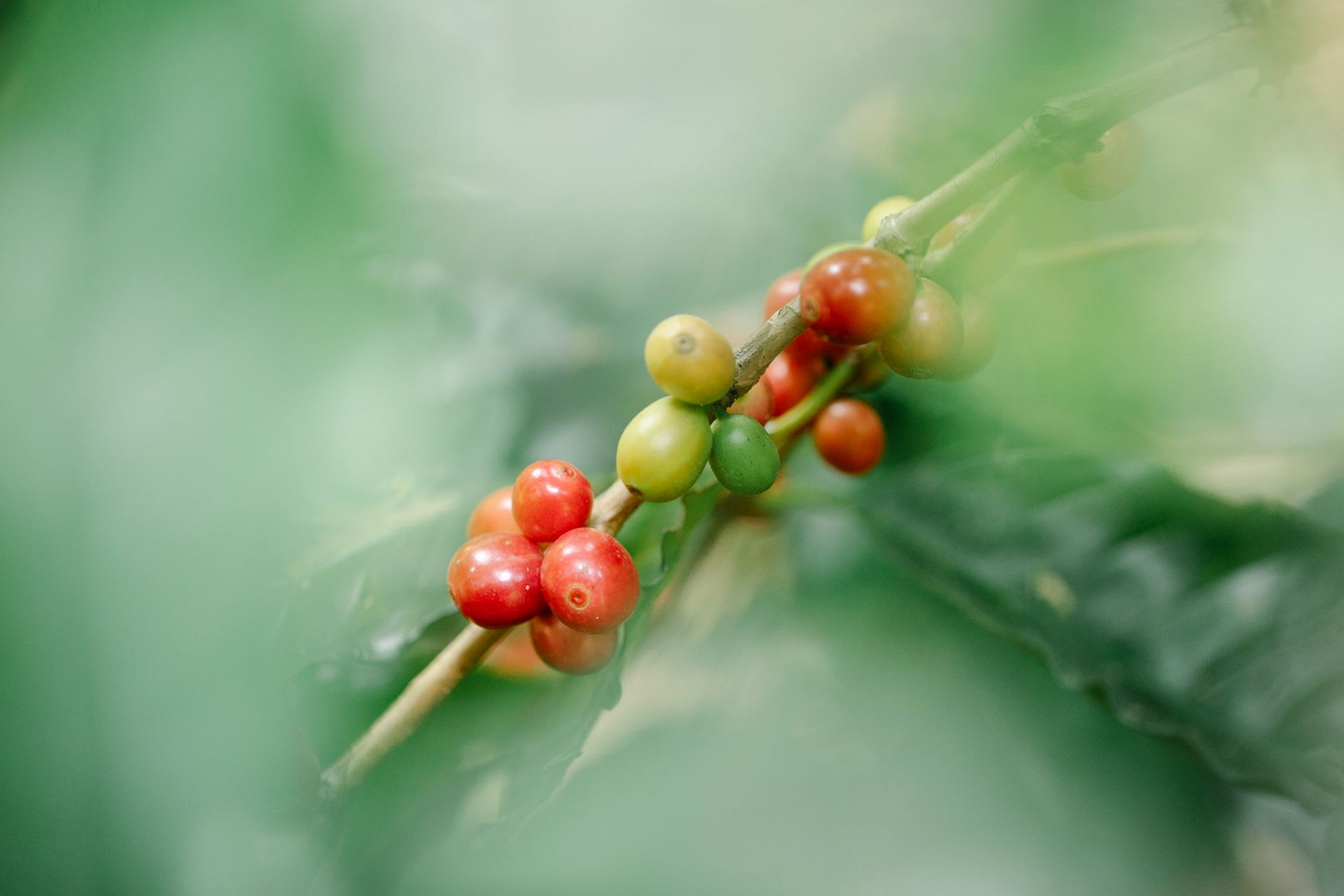
The size comes from the Maragogype side of the family. That mutation scales up the whole plant: bigger leaves, bigger cherries, and inside those cherries, bigger seeds. Pacamara inherited the trait, and its cherries hang noticeably plumper than the Bourbon or Caturra cherries on a neighboring row. A coffee bean is the seed of the cherry, so a bigger cherry holds a bigger bean.
On the screens that sort green coffee by bean size, Pacamara lands near the very top of the scale, at sizes most varieties rarely reach.
Big does not automatically mean better. Bean size on its own says nothing about flavor, and plenty of the world's best coffees come from small beans. What size does change is how the bean behaves under heat, which matters a great deal later in this story.
Where Pacamara Grows Best
Pacamara is a high-elevation coffee. At altitude, where nights are cool and cherries ripen slowly, it builds the sugars and acids behind its famous fruit. Lower down, where warmer weather ripens the cherry faster, the cup tends to flatten out and the herbal, vegetal side of its personality takes over.
That sensitivity is part of why Pacamara is such a favorite for competition and auction lots. Producers who grow it high, pick only ripe cherry, and process it carefully can make something unforgettable. In El Salvador especially, Pacamara has become one of the varieties people expect to see near the top of the results.
It is also a demanding tree. Pacamara is susceptible to leaf rust, the fungal disease that has hit coffee hard across Central America, so growing it well takes attention, labor, and commitment from the farmer.
A Cup That Splits The Room
A great Pacamara tastes big. The fruit is tropical and loud, mango, pineapple, passion fruit, sometimes red berries, and it often comes wrapped in florals like jasmine or orange blossom. The acidity is bright and juicy, the sweetness is generous, and the body is rounder than you expect from a coffee this bright. A cocoa or chocolate note often sits underneath and keeps the cup grounded.
Then there is the other side. Pacamara has a well-known tendency toward savory, herbal, and vegetal flavors: green bell pepper, fresh herbs, tomato vine, sometimes even a hint of onion. In a high-grown, well-roasted lot those notes sit beside the fruit as an interesting savory edge, like basil next to strawberries. In a lower-grown or poorly roasted lot they take over, and the coffee tastes green and unfinished.
That split is why Pacamara divides people. Some drinkers love the complexity. Others taste one herbal cup and decide the variety is not for them. Often the difference comes down to two things: how high the coffee was grown, and how well it was roasted. If you like coffees with a lot to say, a well-grown Pacamara is worth seeking out.
Find a bright, fruit-forward coffee in our most popular collection
Why A Big Bean Is Hard To Roast Evenly
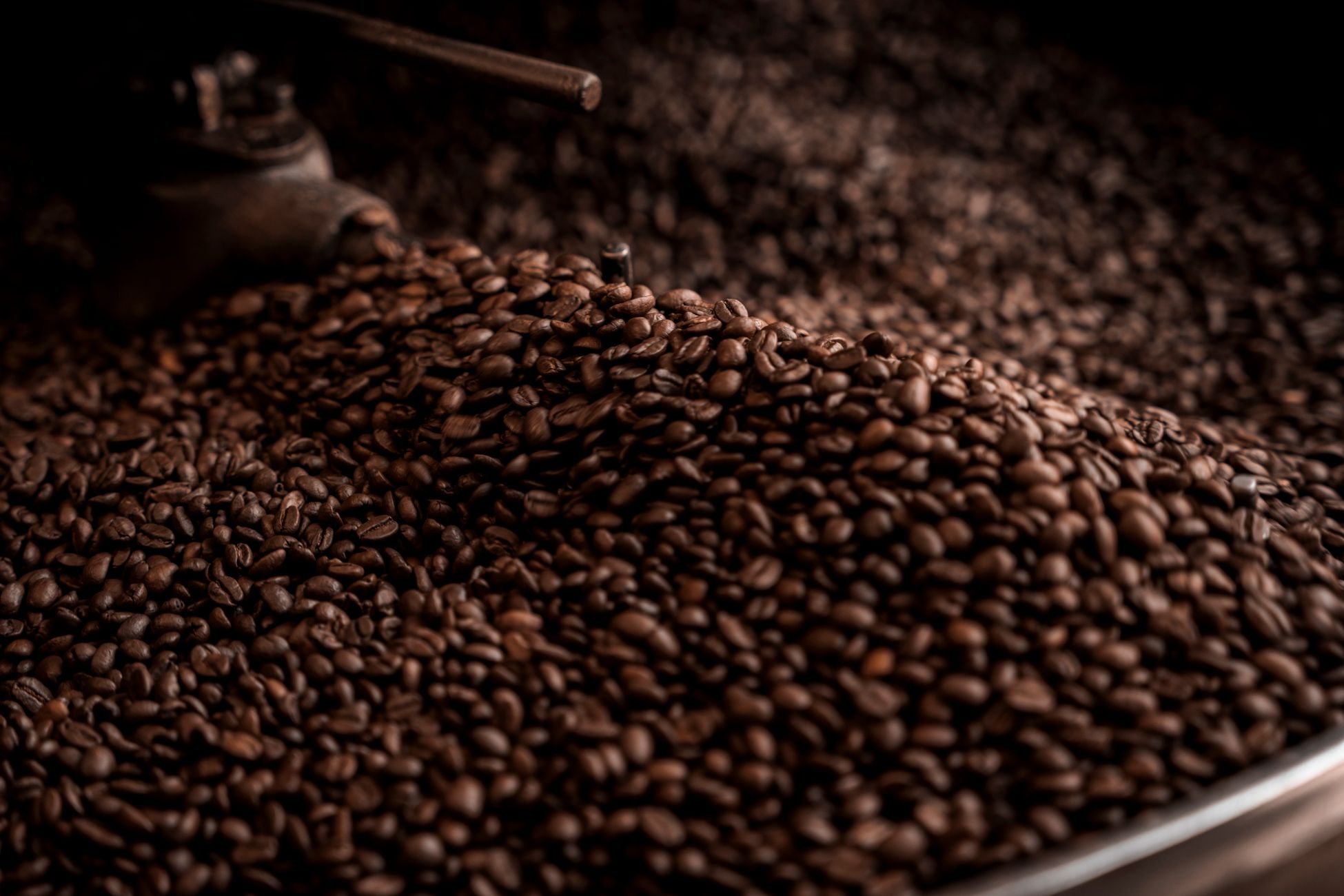
Roasting is a heat transfer problem. Heat hits the outside of the bean first and has to work its way inward through dense plant tissue to reach the center. A bigger bean means a longer path, and the time it takes heat to reach the core grows faster than the size of the bean does. A Pacamara needs more time for its center to catch up with its surface than a small bean ever does.
High-grown Pacamara makes this harder because it is dense as well as large. Dense beans take more energy to move through each stage of the roast, so the roaster has to push heat in steadily without letting the outside run ahead.
When the outside does run ahead, you get a bean that is two roasts at once. The surface darkens and can scorch, adding bitter, ashy flavors. Meanwhile the core stays underdeveloped, and underdeveloped coffee tastes grassy, sour, and raw, like cereal or green vegetables. Notice that last part. Pacamara already leans herbal and vegetal, and an underdeveloped core pushes it straight in that direction. Some of the Pacamara people dismiss as too savory is Pacamara whose center never fully developed.
Contact heat adds another risk. In a drum roaster, beans pick up much of their heat by tumbling against hot metal walls, and every point where a bean presses against that metal can scorch. Roasters call those burn marks tipping and facing, and a long, flat bean offers plenty of surface for them.
How Air Roasting Handles A Bean This Size
Air roasting takes the hot metal out of the picture. The beans are lifted and suspended in a moving column of hot air, so heat surrounds every bean from every side at once. That even, convective heat means no single spot on the bean gets hammered while another stays cool, which gives the center time to catch up without the surface scorching on the way there.
The chaff, the papery skin that flakes off as beans expand, gets blown out of the roasting chamber before it can burn and send smoky flavors back into the batch. For a coffee whose best qualities are delicate florals and bright tropical fruit, that matters. You want the cup to taste like the farm, not like the fire.
How To Brew Pacamara So The Fruit Comes Through
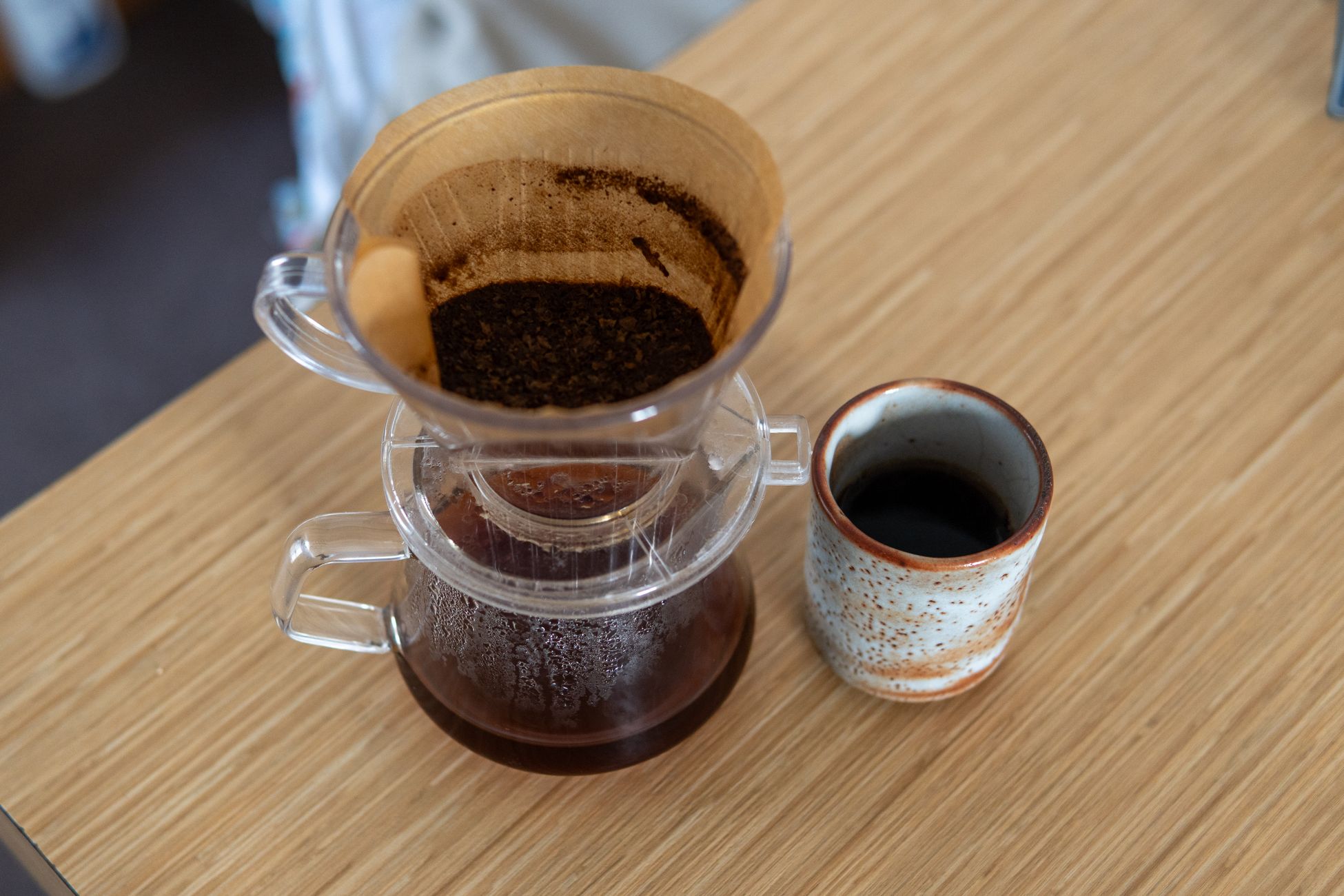
Pacamara rewards filter brewing. A pour over with a paper filter gives you the clarity to pick apart the layers: the tropical fruit, the florals, the chocolate underneath, and the savory edge if there is one. Paper holds back the oils and fine particles that would blur those layers together.
Start with about 16 grams of water for every gram of coffee, water around 93 to 96 C, and a medium-fine grind. The bean size stops mattering once the coffee is ground, so grind it the way you would any lighter roast for pour over and aim for a total brew time around three minutes. If the cup tastes sour and thin, grind a little finer. If it tastes bitter and dry, go coarser.
Give the coffee a few days of rest after roasting, too. That lets the carbon dioxide from the roast escape, which makes for an even bloom and a clearer cup.
Then taste as it cools, because Pacamara changes a lot in the cup. Hot, you will notice body and sweetness. As it drops toward warm, the fruit and florals open up and the acidity turns juicier. If there is a savory note, it shows most clearly near room temperature, and in a good lot it reads as a pleasant herbal edge rather than something green. Espresso is possible but tricky, since the concentration can amplify the savory side, so start with filter if you want to know what Pacamara is really about.
Pacamara is a big bean with a big personality, and it asks a lot of everyone who handles it, from the farmer on the mountain to the roaster to you at the kettle. Get each step right and it is one of the most exciting cups in coffee.
Shop air-roasted coffees from our most popular collection
All images shown in this blog are sourced from pexels.com.