

Almost everything in specialty coffee is a fight against time. Roast dates, one way valves, sealed bags, freezers, the whole apparatus exists to keep a coffee as close as possible to the day it left the roaster. Staling is the enemy.
Then there is a coffee from the west coast of India that is deliberately left out in wet wind for months, allowed to swell and fade to the color of straw, and sold at a premium for exactly the qualities that would get any other lot rejected. Monsooned Malabar is the strangest thing on most shelves, and the reason it exists is one of the better stories in coffee.
See what else is worth having on your shelf.
It Started as an Accident on a Boat
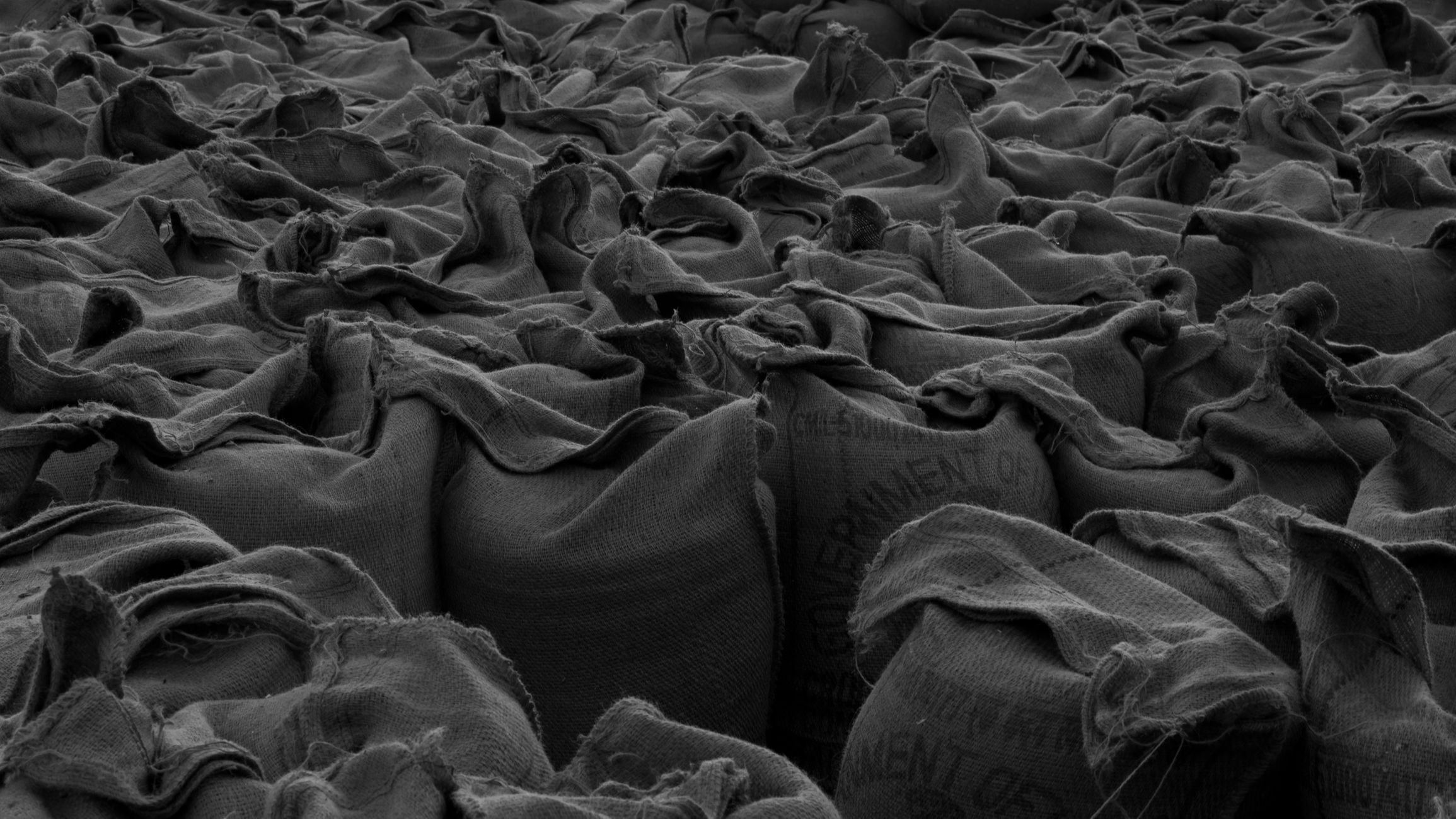
Before the Suez Canal opened, coffee leaving India for Europe went the long way around the Cape of Good Hope. The voyage took months. The beans traveled in the holds of wooden sailing ships, in jute sacks, surrounded by sea air and humidity, with temperature and moisture swinging constantly.
They did not arrive the way they left. Months of absorbing and releasing moisture changed the beans physically and chemically. They swelled. They lost their green color and turned pale gold. The acidity that defines a fresh coffee faded almost completely, and what remained was heavy, smooth, and a bit wild.
European buyers did not know that this was a change. That flavor was simply what Indian coffee tasted like, because no one there had ever received any other kind.
Then steamships and the canal cut the journey to a few weeks, the beans arrived green and bright, and the customers complained. The coffee they had been buying for generations had disappeared, replaced by something that tasted, to them, thin and sour and wrong.

India Rebuilt the Voyage on Land
Rather than lose the market, producers on the Malabar coast worked out how to reproduce the effect without a ship. The result is a process that is still done by hand today and still tied to the weather.
It runs during the southwest monsoon, roughly June through September, when the coast gets relentless wet wind. Washed and dried green coffee is spread in open sided warehouses on the coast in layers about four to six inches deep. The monsoon wind blows straight through the buildings and the beans absorb moisture from it.
They are raked regularly to expose new surfaces and keep the layer even. Periodically they are re-bagged into loosely packed sacks, stacked so air can circulate, then spread out again. The cycle of spreading, raking, and re-bagging repeats for something like twelve to sixteen weeks.
Over that time the moisture content of the beans climbs far above the level any normal green coffee is stored at. The beans swell, sometimes to nearly double their original volume. They turn pale, from straw to almost white. Beans that fail to swell correctly get sorted out, because a lot that monsooned unevenly will roast unevenly.
Then they are dried back down, graded, and bagged for export.
What the Process Does to the Coffee
Two things happen, and both are enormous.
The first is that acidity collapses. The organic acids that give a fresh coffee its brightness break down during the extended high moisture period, and what comes out the other end is one of the lowest acid coffees you can buy. Not low acid the way marketing uses the term, genuinely low, to the point where the absence is the first thing you notice.
The second is that body increases. Monsooned coffee brews thick, syrupy, and heavy in the mouth. The structural changes in the swollen bean, along with what happens to the sugars and proteins during the process, produce a cup with real weight to it.
The flavor that remains is earthy, woody, and slightly musty, with notes people describe as tobacco, spice, nuts, and sometimes chocolate. There is a wildness to it. It does not taste like a defect, though it uses vocabulary that would be damning on a cupping form for any other coffee.
It also roasts differently. The swollen, low density beans behave nothing like normal green coffee in a roaster, they take on color faster, and a roaster who treats a monsooned lot like a standard Indian washed coffee will scorch it.

Why It Survives in a Market That Chases Brightness
Specialty coffee spent twenty years teaching people that acidity is quality. Against that backdrop, a coffee engineered to have none of it looks like a mistake.
It survives for three reasons.
It is unmatched in espresso blends that want body without sharpness. A small percentage of monsooned coffee in a blend adds thickness and a long, heavy finish, and it stands up to milk better than almost anything else because there is nothing delicate in it to lose.
It is genuinely gentle on people who find bright coffee uncomfortable. Some drinkers find high acid coffee harsh, and the usual answer is a dark roast, which trades brightness for bitterness. Monsooned Malabar gets there by a different route, low acid without the char.
And it is a piece of living history. This is one of the very few coffees anyone drinks today that tastes the way coffee tasted to a European buyer two hundred years ago. That is worth something, even if the value is more cultural than sensory.
Try coffees that show you something new.
How This Differs From Coffee That Just Went Stale
It is a fair question, since the description sounds a lot like what happens to a forgotten bag in a warm cupboard.
The difference is control and direction. Stale coffee is a story of loss. The volatile aromatics escape, the oils oxidize into rancid compounds, and nothing arrives to replace what left. The result is flat, cardboard flavored, and unpleasant in a way that has no character to it.
Monsooning is a controlled process of chemical transformation, run at a specific moisture level, for a specific duration, with constant intervention to keep it even. Compounds break down and new ones form. The result is stable, repeatable, and gradeable, which is why lots that do not transform correctly get pulled out.
The nearest comparison is not stale bread. It is closer to what happens when a cheese is aged in a cave or a spirit sits in a barrel. Time plus controlled conditions produces something different from the starting material, rather than a degraded version of it.
How to Brew It
If you buy a bag, do not treat it like a bright single origin.
Immersion methods suit it best. A French press plays directly to its strengths, since the metal filter lets the oils through and the heavy body has nowhere to hide. Moka pot and espresso both work well, and this is one of the rare coffees where a straightforward stovetop brew tastes complete rather than compromised.
A pour over will make a clean, syrupy cup, but you lose some of what makes it interesting to a paper filter. If you go that route, grind a little coarser and do not push the extraction, because there is very little acidity to balance any harshness you pull.
It takes milk well, unusually well, and it takes sugar without collapsing. Both are worth trying, because this is a coffee that behaves like an ingredient more than a delicate object.
Do not expect it to change with temperature the way a bright coffee does. It presents the same character hot and warm, which makes it forgiving on a slow morning.

Who Should Buy It
Anyone who wants to understand how wide the range of coffee actually is. Anyone who finds most specialty coffee too sharp and has been settling for dark roasts as the only alternative. Anyone building an espresso blend at home who wants more weight in the cup. And anyone who likes the idea of drinking a flavor that only exists because of the shape of a shipping route that stopped being used in 1869.
It is not an everyday coffee for most people, and it is not trying to be. It is a reminder that the rules specialty coffee lives by, freshness above all, brightness as a marker of quality, are useful defaults rather than laws of nature. Every so often something breaks all of them and is still worth drinking.
Keep something unusual next to the everyday bag.
All images shown in this blog are sourced from pexels.com.