


There is a gap in the coffee timeline that almost nobody talks about. Harvest gets attention. Processing gets attention. Roasting gets an entire vocabulary. And in between the mill and the roaster there is a stretch of two to four months where the coffee sits in a warehouse doing apparently nothing.
It is not doing nothing. Green coffee changes measurably during that period, and the change is significant enough that experienced buyers will taste a lot, decide it is not ready, and come back in six weeks. Coffee that gets rushed past this stage tastes worse than the same coffee would have if someone had been patient. Producers at origin have a word for it. In Spanish speaking countries they call it reposo, which simply means rest.
Drink coffee that was given time.
What Comes Out of the Mill Is Not Finished
Follow a washed coffee through processing and you get pulped cherry, fermented and washed parchment, then weeks of drying. At that point the bean is still wearing parchment, a papery husk that protects it. Coffee in that state is called pergamino, and it is fairly stable.
The dry mill removes the parchment through hulling, then sorts and grades the beans. What emerges is green coffee, exposed for the first time, graded and ready to be bagged.
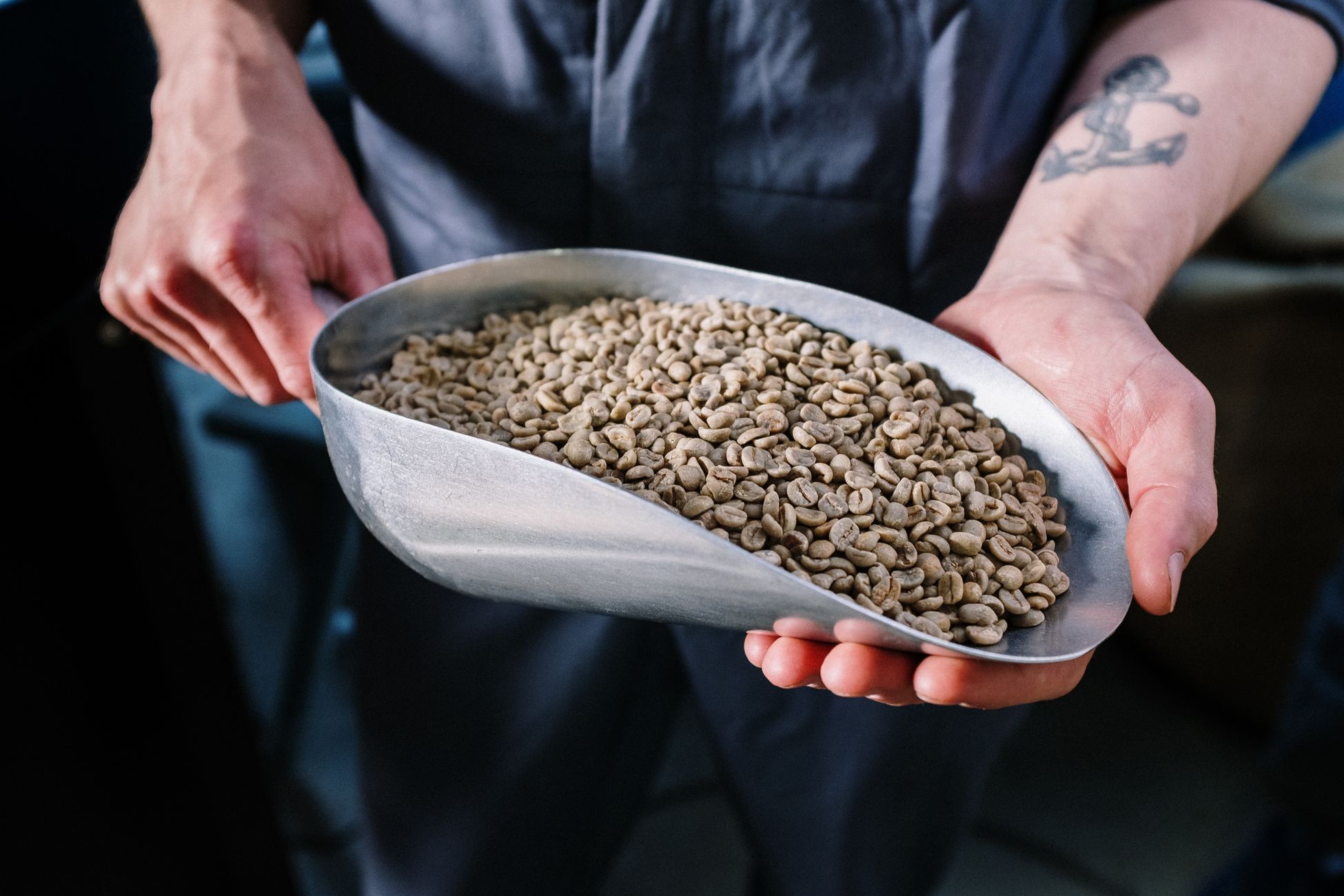
Ready to be bagged is not the same as ready to be roasted. A coffee that just came off the drying beds and through the huller is chemically busy. Moisture inside the bean has not equilibrated, which means some parts of each bean are wetter than others even when the average reads correctly. Volatile compounds left over from fermentation and drying are still present at levels that will drop off over the following weeks. And the bean's surface chemistry is still settling after losing its parchment.
Sample roast that coffee immediately and it tends to cup rough. Buyers describe it as harsh, grassy, aggressively sharp, sometimes with a raw green vegetal note that has nothing to do with the coffee's actual potential. It is a coffee talking over itself.
What Actually Changes During Rest
Three things happen, and they happen on slightly different schedules.
Moisture equilibrates. Water redistributes within each bean and across the lot until the gradient flattens out. This is the same problem that badly dried coffee creates, but even well dried coffee needs time for the internal distribution to even out. Once it has, the beans roast predictably, first crack arrives as a coherent event, and the roaster can actually target a development window.
Water activity settles. Water activity measures how available the moisture is rather than how much there is, and it is the number that predicts whether a coffee will stay stable. A freshly milled coffee often reads high, then falls into a stable range over several weeks. Coffee shipped before that settles is coffee more likely to arrive with problems.
Harsh volatiles dissipate. The sharp, green, sometimes fermented top notes that dominate a freshly milled coffee are largely volatile compounds that leave the bean slowly. As they go, what remains is the coffee's underlying structure, and sweetness that was buried under all that noise becomes legible.
The practical window is usually thirty to ninety days, varying with the coffee's density, the processing method, and the storage conditions. Dense high grown coffees generally need longer. Naturals and heavily fermented lots often need longer still, because they have more residual volatile material to shed.
Why Good Coffee Gets Rejected Too Early
This creates a real trap in the buying process, and it costs producers money every season.
A buyer receives a sample shortly after milling, cups it, and finds it harsh and unbalanced. If they do not account for the coffee's age, they pass. That lot may have been outstanding two months later, but the decision was already made, and the producer sold at a lower price to someone less particular.
Experienced buyers handle this by asking when the coffee was milled before they cup it, then interpreting what they taste in light of the answer. A rough cup from a coffee milled three weeks ago is not information about quality. It is information about timing. The same buyers will often request a second sample later specifically to see how the lot developed.
This is one of the quieter reasons long term relationships between roasters and producers produce better coffee. A roaster who buys from the same farm every year knows how that farm's coffee behaves during rest and does not need to guess.
Explore coffees chosen at the right moment.
The Other End of the Window
Rest improves coffee up to a point, and then the curve turns over. This is the part with a name most drinkers have heard: past crop.
Green coffee is stable but not immortal. Somewhere after a year, and much sooner in bad storage, it starts fading in a recognizable pattern. Acidity goes first, so the brightness that made a Kenyan or an Ethiopian exciting quietly drains out. Sweetness follows. Aromatic complexity flattens. What fills the gap is a set of flavors buyers describe as baggy, papery, woody, or like straw and old cardboard.
The bean also changes physically. The green fades toward pale yellow or a dull grey green, which is why sample color matters to buyers. And it roasts differently, since drier coffee needs less energy to reach first crack and gives the roaster less margin for error.
So the coffee timeline is a window rather than a slope. Too early and the coffee is unresolved. Too late and it has faded. The good stretch runs roughly from two or three months after milling out to a year, with the sweet spot in the first half of that range.
Storage Is Doing Most of the Work
Whether that window is long or short depends almost entirely on how the coffee is held.
Traditional jute bags breathe, which sounds appealing and is mostly a liability. They let ambient humidity in and let aromatics out, and they offer no protection against the temperature swings of a warehouse or a shipping container. Coffee stored in plain jute in a hot humid port fades fast.
Modern lots often use a barrier liner inside the jute, the best known being a multilayer plastic liner that blocks moisture and oxygen exchange. Coffee held this way keeps its moisture content stable and holds its acidity considerably longer. Vacuum packing goes further and is common for high value microlots.
Temperature matters as much as packaging. Coffee stored in a cool, dry, stable warehouse ages slowly. Coffee that spent six weeks in a steel container crossing the equator, hitting well above ambient temperature every afternoon, arrives older than its calendar age. Two lots with the same harvest date can be in very different condition depending on how they traveled.
What Any of This Means for Your Bag
You are not buying green coffee, so none of this is a decision you make directly. It is a lens for interpreting what you already have.
The roast date on your bag tells you nothing about how old the green coffee was. A bag roasted last Tuesday could be current crop at its peak or eighteen month old coffee that has been sitting in a warehouse. Fresh roasting cannot restore what green aging took away, which is why a very fresh bag can still taste flat and papery. That flavor arrived long before the roaster touched it.
Harvest information is the missing piece, and better roasters publish it. A harvest year, a harvest window, or an arrival date tells you where in the window your coffee sits. When a label says the lot is from the current or most recent harvest, that is a substantive claim rather than marketing.
Seasonality is the practical version of all this. Different origins harvest at different times, so the coffees at their peak rotate through the year. A roaster whose offerings change with the calendar is a roaster paying attention to the window. One selling the same six origins year round is either managing storage extremely well or not thinking about it.

The Short Version
Green coffee needs a few months between the mill and the roaster. During that time moisture evens out, water activity stabilizes, and the harsh volatile leftovers of processing dissipate, leaving sweetness and structure behind. Rush it and the coffee cups rough. Wait too long and the acidity fades into paper and straw.
It is the least visible stage in the entire chain and one of the easiest to get wrong, because getting it right mostly means doing nothing for ninety days while your inventory sits there. The roasters who taste their lots repeatedly during that window are the ones who catch coffee at the point where it is actually as good as it is going to get.
All images shown in this blog are sourced from pexels.com.