


There is a week or two every year on a coffee farm when the whole place smells like jasmine. The trees go white almost overnight, the bees show up in numbers, and for a few days a hillside of coffee looks like a hillside of flowers.
It is beautiful, and it is also the single most predictive event in the coffee calendar. What happens during blossom season decides how much coffee exists eight to eleven months later, how evenly it ripens, and whether the lot you buy next year is a careful selection or a scramble. Most of the qualities you taste in a finished cup were set in motion by a flower you never saw.
See what a carefully sourced harvest tastes like.
The Flower Becomes the Cherry
Coffee is self pollinating in the case of arabica, which means each blossom carries what it needs to become a fruit without help from a neighboring tree. The flower opens, it is fertilized, the petals brown and drop within a few days, and a tiny green node is left behind at the branch node where the flower was attached.
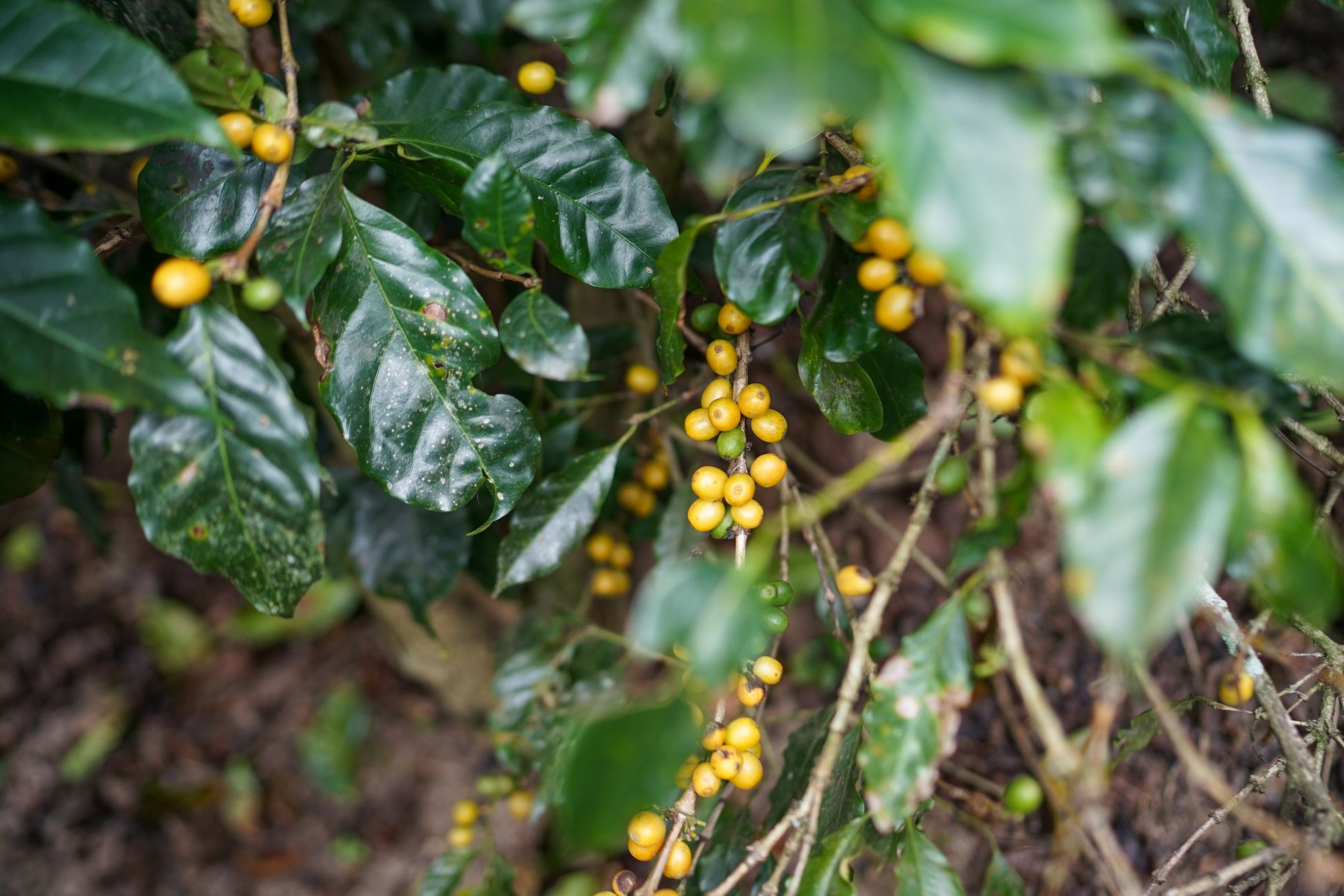
That node is the cherry. It sits there small and hard for weeks before it starts filling out, then spends months expanding, accumulating sugars, and finally turning from green to yellow to red or to whatever color that variety ripens to.
The math is direct. Every cherry on the tree in October was a flower in February or March or whenever that region blossomed. No flower, no cherry. A tree that blossoms lightly cannot produce heavily no matter what the weather does afterward, and a tree that blossoms heavily has committed itself to a load it now has to carry.
Rain Is the Trigger
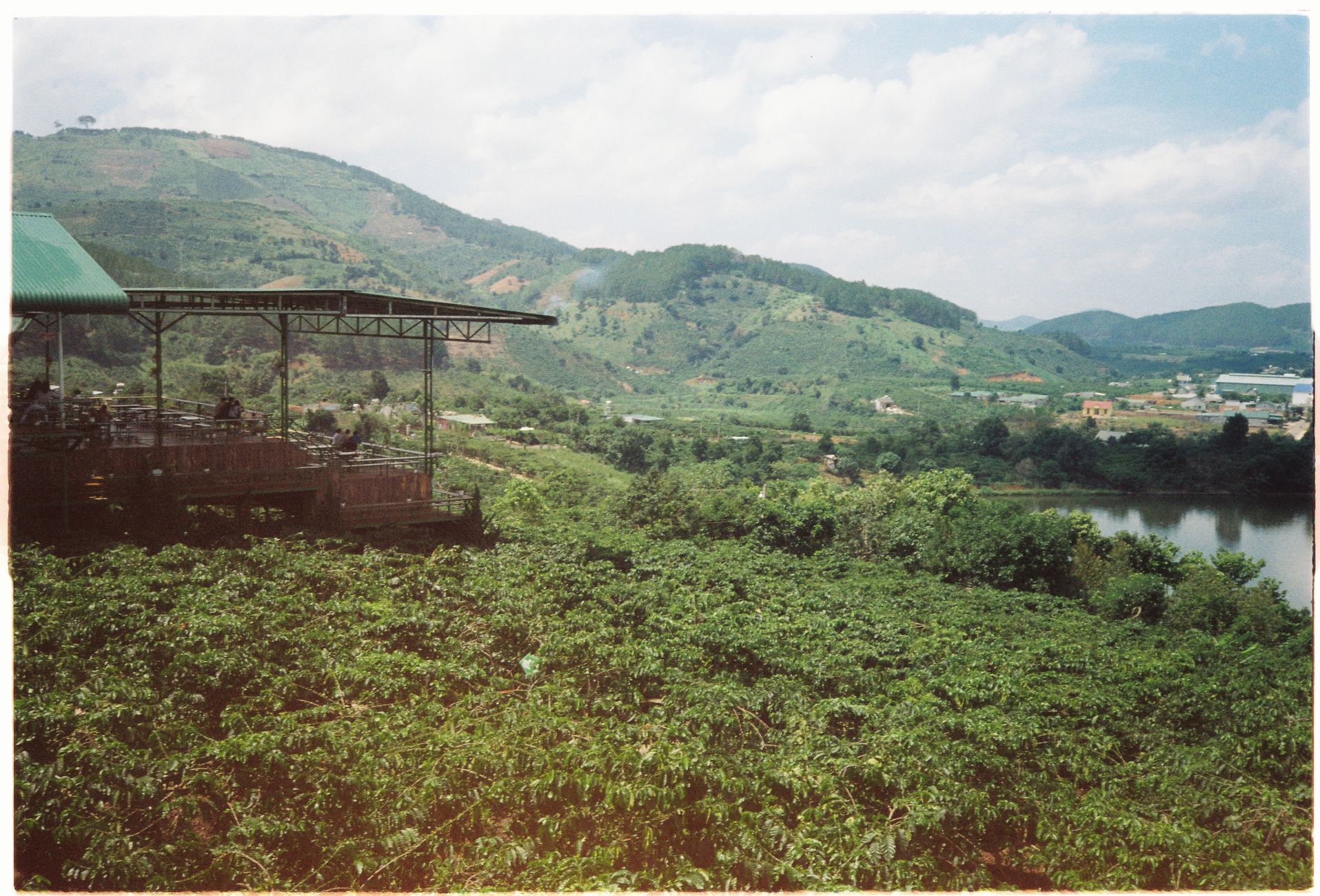
Coffee does not blossom on a calendar. It blossoms in response to water after a dry period.
The trees need a stretch of dry weather to build up the internal signal, then a substantial rain to release it. That rain is what farmers watch for, and it is why coffee people talk about the blossoming rains as a specific event rather than just weather. Roughly a week after a good soaking, the flowers open.
The size of that rain matters enormously. A single heavy rain across the whole farm triggers a single uniform blossom, which is what everyone wants. Scattered light rains over several weeks trigger several partial blossoms, which is what nobody wants.
Regions with two rainy seasons often get two blossoms and two harvests, a main crop and a smaller secondary one called a fly crop. That is normal in parts of Colombia and Kenya. What is not normal is a main crop that has fractured into three or four staggered blossoms because the rain came in unpredictable bursts.
Why Uneven Blossom Ruins Picking
Here is the practical consequence, and it is the reason blossom uniformity matters to what you drink.
Cherries ripen roughly the same number of days after the flower that made them. If a farm blossomed once, the whole farm ripens together, and pickers can move through selecting only red cherries at their peak. If a farm blossomed three separate times, then on any given day a single branch holds green cherries, ripe cherries, and overripe cherries side by side.
That branch is a problem. Selective picking becomes slow and expensive, because a picker has to work cherry by cherry rather than handful by handful, and the farm has to send pickers through the same trees many more times. Farms working on thin margins respond by stripping the branch, taking everything at once, and accepting that unripe and overripe fruit will be mixed into the lot.
Unripe cherries taste like grass and astringency. Overripe cherries taste fermented and sometimes rotten. A lot with a meaningful percentage of either loses the clarity that specialty coffee is bought for, and no amount of careful roasting recovers it. Sorting at the mill removes some of it, never all.
So when a roaster asks a producer how the blossom went, that is not small talk. The answer predicts how clean the cup will be.
Too Much Rain Is Its Own Problem
Blossoms are fragile in a specific and unhelpful way. Once the flowers are open, heavy rain knocks the petals off before pollination completes, and hail is worse.
A farm can have a perfect uniform blossom and then lose a large share of it to a storm three days later. The trees will not blossom again for that cycle, so the crop is simply smaller. This is the mechanism behind a lot of the coffee price spikes that show up in the news, and it happens months before anyone can see a shortage in the fruit.
The opposite failure is a drought after blossom. The flowers set fruit, then the tree does not have the water to fill them, and it aborts cherries or produces small light ones with underdeveloped seeds. Those beans show up later as low density green coffee that roasts unevenly and tastes hollow.
Find coffee from producers who get the details right.
Altitude Delays Everything
Higher farms blossom later and ripen much more slowly, because the temperatures are cooler.
A low elevation farm might go from flower to ripe cherry in seven months. A farm at nineteen hundred meters can take eleven. That slower maturation is a large part of why high grown coffee tastes the way it does, since the cherry has more time to accumulate sugars and acids, and the seed inside develops denser.
This staggering is also why a single country has a harvest window measured in months rather than weeks. Colombia picks somewhere for most of the year because it is a country of many altitudes and two rainy patterns. Ethiopia is far more concentrated.
For a roaster tracking freshness in green coffee, knowing the blossom timing of a specific region is how you know whether a coffee arriving in port is from the crop that just finished or from the one before it.
The Biennial Swing
Coffee trees carry a memory of last year's effort.
A tree that produced an enormous crop spent most of its stored energy doing it, and the following year it blossoms less and produces less while it rebuilds. Then it overproduces again. This two year rhythm is called biennial bearing, and it is one reason coffee supply and prices wobble on a cycle rather than holding steady.
Good farm management flattens the swing. Pruning removes some of the wood that would otherwise overbear, fertilizer applied at the right moment in the cycle supports the tree through a heavy year, and shade trees reduce the stress that makes the swing worse. Farms that manage this well produce more consistent quality year over year, which is exactly what a roaster wants when they are trying to keep a blend tasting the same.

Why This Reaches Your Cup
You will never taste a blossom. You taste its consequences.
A uniform blossom means uniform ripening, which means a picker can select ripe fruit efficiently, which means the lot arrives at the mill clean, which means the processing goes to plan, which means the green coffee is consistent in density and moisture, which means the roaster can develop it evenly. Break that chain at the first link and every step afterward is compensating.
This is also why relationships between roasters and producers matter more than a country name on a bag. A roaster who has been buying from the same farm for years knows what the blossom looked like, knows whether this year's lot will be a little smaller or a little brighter, and can plan around it. A roaster buying whatever is cheapest on the spot market knows none of that.
When you buy coffee that names a producer, a region, and a harvest year, you are buying the visibility that lets someone answer these questions. That traceability is not a marketing flourish. It is the only way anyone knows what happened during that week the hillside turned white.
Start with coffee that can tell you where it came from.
All images shown in this blog are sourced from pexels.com.