

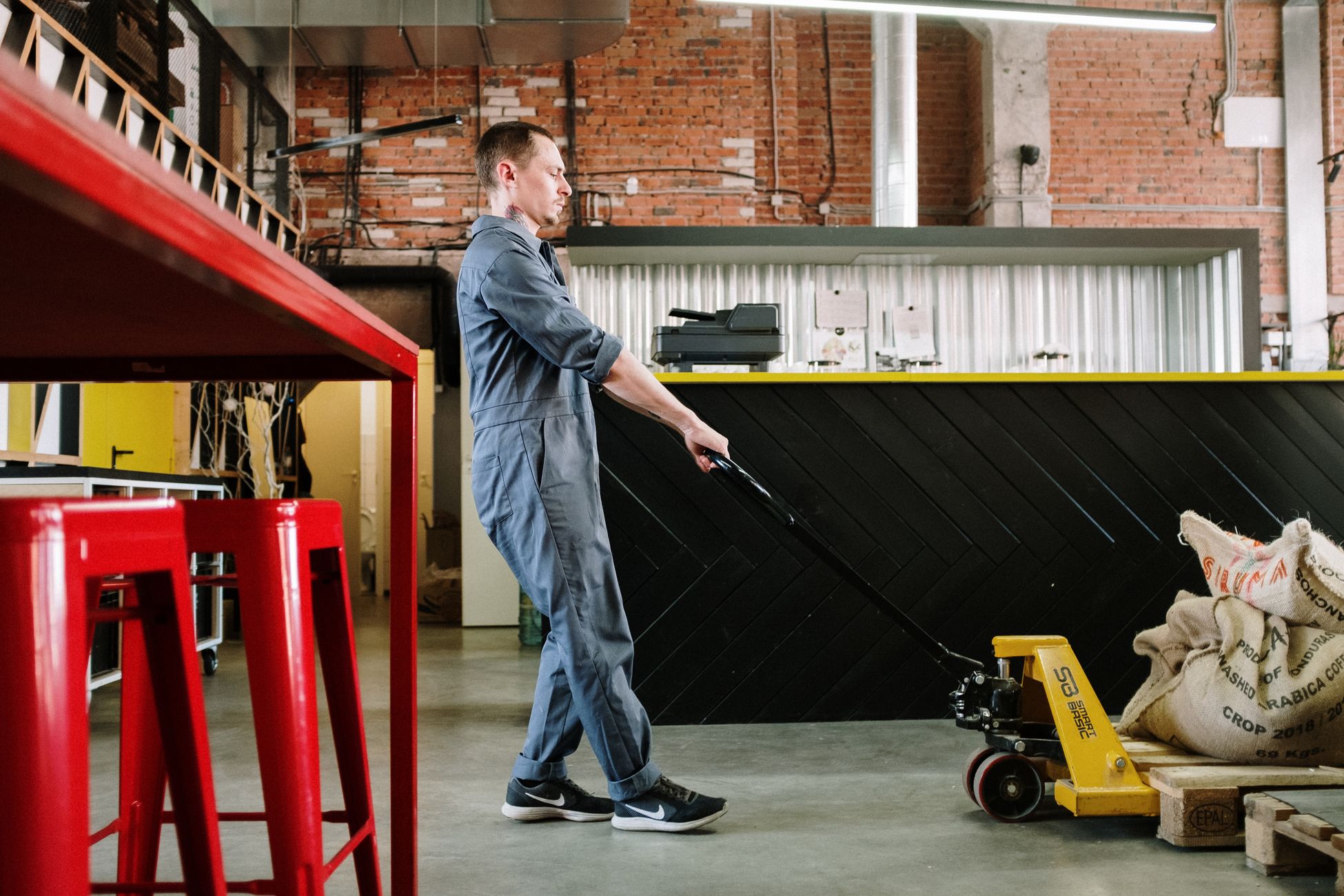
It seems like it should be simple. If a roaster holds twenty pounds and you only need ten, put in ten. Same machine, same coffee, same target, less of it.
In practice that half load will not taste like the full one unless the roaster rebuilds the profile around it, and often it will not taste as good no matter what they do. Batch size is one of the largest variables in roasting and one of the least discussed outside the trade. It changes heat transfer, airflow, timing, and the shape of the curve, and every machine has a range where it works well and a range where it does not.
Try coffee roasted in batches that fit the machine.
The Bean Mass Is Part of the Machine
The reason a smaller batch is not simply a scaled down version comes down to what the coffee is doing thermally.
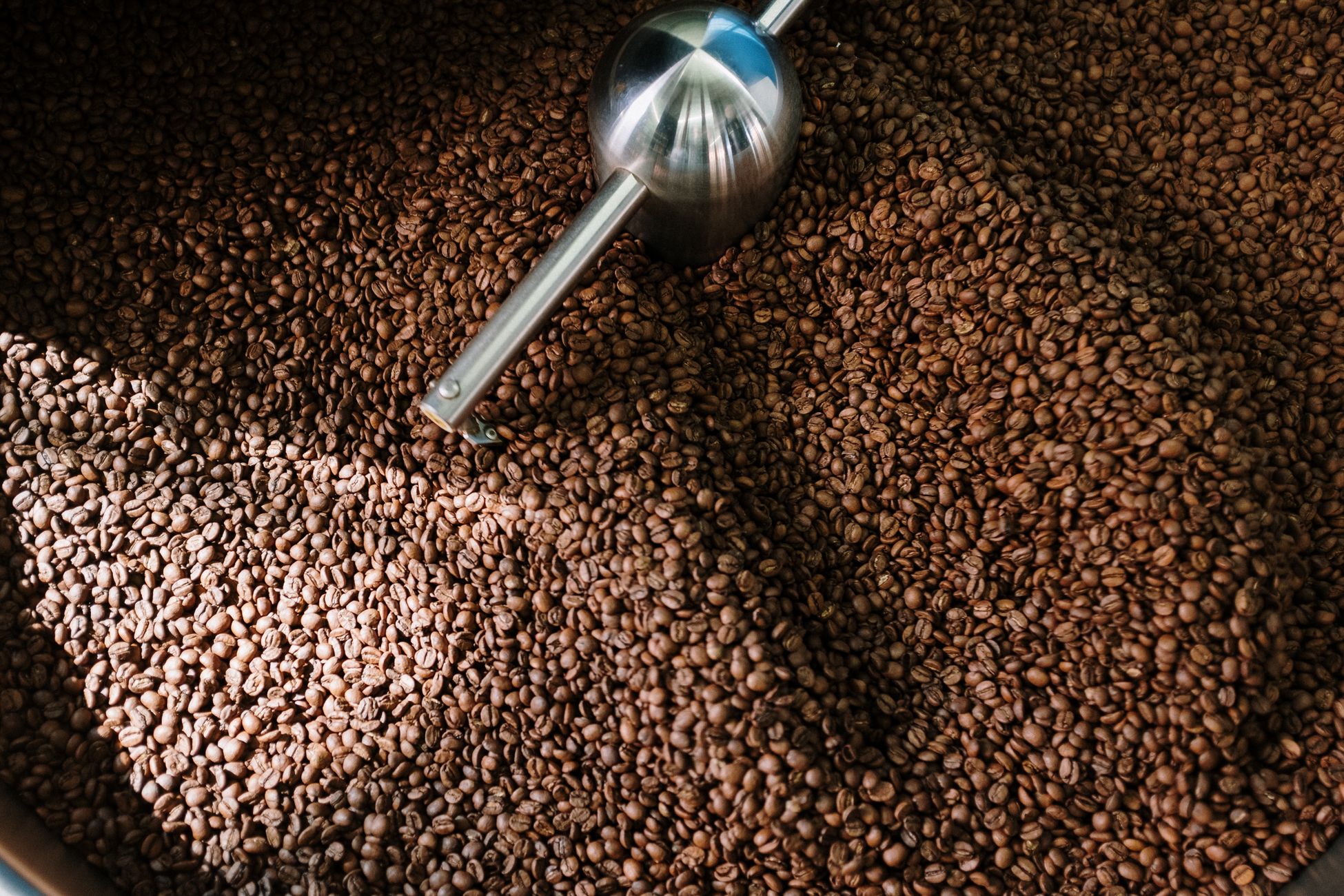
A full charge of green coffee is a large heat sink. It absorbs energy from the drum and the air, it holds that energy, and it moderates everything. When cold beans hit a hot drum, the system dips hard and then recovers, and the size of that dip and the speed of the recovery are governed largely by how much coffee is in there.
A small charge in a big drum barely dips at all. The machine has far more stored heat than the load requires, so the beans are hit with an aggressive amount of energy relative to their mass and the temperature climbs faster than the roaster wants. Left uncorrected, the coffee races through the drying phase, arrives at first crack early and underprepared, and finishes with the outside more developed than the inside.
An overloaded drum has the opposite problem. Too much coffee for the available energy means the system dips deeply and struggles to recover, the roast stalls, and the batch spends too long at moderate temperature. That produces the flat, bready, baked character that comes from a roast that lost momentum in the middle.

Surface Contact Changes Too
Heat reaches the beans three ways in a drum roaster. Conduction from the metal they touch, convection from the hot air moving past them, and radiation from the hot surfaces around them. The balance between those shifts with load size.
In a small charge, each bean spends proportionally more time in direct contact with drum steel, because there is less coffee to be buried inside. The ratio of hot surface to bean mass goes up. This is why small batches in a large drum are prone to surface scorching and tipping, where the ends of the beans darken before the interior has developed.
A properly sized charge keeps beans mostly in contact with other beans, tumbling through the drum, taking heat more evenly. The coffee insulates itself, and the roaster's heat application reaches the mass rather than searing the fraction that happens to be touching metal.
Air roasters and fluid bed machines behave differently here, since the beans are suspended in moving air rather than tumbling against hot steel. There is far less conductive contact to worry about, and scorching is much less of a risk. What matters instead is whether the airflow can lift and circulate the load properly, and that has its own load dependent window.
Airflow Depends on How Much Coffee Is There
This is the part that surprises people. Airflow is not just a setting on the machine, it is a result of the setting plus the resistance the bean bed provides.
A full drum restricts airflow more than a half full one. The same fan setting therefore delivers different actual air movement through the coffee depending on the load. A roaster who reduces batch size without adjusting the fan is now applying much more convective energy per bean than before, and is also potentially pulling chaff off more aggressively at a stage where that changes things.
In an air roaster the relationship is even more direct, since airflow is doing both the heating and the physical fluidization of the bed. Too little coffee and the beans move too violently in air that is passing through with almost no resistance. Too much and the bed will not fluidize properly, so circulation goes uneven and some beans see far more heat than others.
Find a roaster who dials in every batch size they run.
Every Machine Has a Working Range
The practical result of all this is that a roaster does not treat their machine as scalable from one pound to capacity.
Most machines have a usable window somewhere around fifty to a hundred percent of rated capacity, and many roasters keep to seventy to ninety percent for production. Below the bottom of that window the thermal behavior gets erratic and scorching risk climbs. At the very top, recovery gets sluggish and the machine cannot deliver enough energy to hold the curve.
This is why roasteries often run more than one machine. A sample roaster handles a hundred gram cupping batch, a small production machine handles limited lots, and a larger one handles the volume sellers. Trying to do all of it on one machine means running some batches outside the range where that machine is good.
It is also why a roaster who develops a profile at fifteen kilos cannot simply apply it at eight. The profile has to be rebuilt, tested, cupped, and adjusted, which takes time and green coffee. Small lots genuinely cost more to roast well, and roasters who offer tiny microlots alongside their regular line are absorbing that.
The Curve Has to Be Rebuilt, Not Rescaled
When a roaster moves a coffee to a different batch size, they are not adjusting one number.
Charge temperature usually changes, often lower for a smaller batch since there is more heat available relative to the load. Gas application changes throughout, typically less overall and applied differently in the early phase. Airflow changes to account for the different bed resistance. Total time usually shortens for a smaller batch, and the development window after first crack shifts with it.
Getting all of that right takes several attempts and a cupping table. A roaster who says a coffee is available in a different size than usual has generally done that work. One who has not will produce something recognizable but noticeably off, usually a little sharper and thinner than the full batch version.
Why This Reaches Your Cup
You buy roasted coffee, not batch sizes, but the consequences are tasteable.
Coffee roasted in an underloaded machine tends to have a scorched edge to it, a dry finish, and sometimes a slightly harsh top note, because the outside of the bean got ahead of the inside. Coffee roasted in an overloaded machine tends to be flat and bready, with the sweetness present but the acidity dulled and the finish short.
Coffee roasted in the machine's sweet spot, by someone who built the profile for that exact load, tastes like the origin it came from with nothing added or subtracted by the roast.
The signals worth noticing are consistency and honesty about scale. A roaster whose bags taste the same order after order is running repeatable loads. One whose offerings are limited in quantity but consistent in quality is roasting small lots on equipment sized for it, rather than throwing a few pounds into a machine built for twenty and hoping.
A half load is not half a roast. It is a different roast on the same equipment, and treating it as anything less is one of the more common ways a good green coffee gets wasted.
Start with coffee roasted at the right scale.
All images shown in this blog are sourced from pexels.com.