

You take a sip of coffee and something is off, but it is not quite bitterness and it is not quite sourness. Your tongue feels rough. The inside of your cheeks pull in slightly. A few seconds after swallowing, your mouth feels dry and a little chalky, as if you had just bitten into an unripe banana or sipped an over steeped black tea. That sensation has a name. It is astringency, and it is one of the most common faults in home brewed coffee and one of the least understood.
Astringency gets blamed on bitterness, and bitterness gets blamed on dark roasts, so most people reach for the wrong fix. This post explains what astringency actually is, where it comes from in coffee, and the specific changes that make it go away.
Explore our most popular coffees
Astringency Is A Feeling, Not A Flavor
The first thing to understand is that astringency is not a taste. Your tongue has receptors for sweet, sour, salty, bitter, and savory. Astringency is none of those. It is a tactile sensation, a change in how your mouth feels, caused by certain compounds binding to the proteins in your saliva.
Saliva is slippery because it is full of proteins that lubricate the surfaces of your mouth. When astringent compounds enter, they grab those proteins and pull them out of solution, clumping them together. The lubrication vanishes. Your tongue and cheeks lose their slickness and rub against each other, which your brain reports as dryness, roughness, and puckering. The effect builds with each sip, which is why an astringent coffee feels worse by the bottom of the cup than it did at the top.
Red wine drinkers know this as tannin. Tea drinkers know it from a bag left in the pot too long. Anyone who has eaten an unripe persimmon knows it in its most extreme form. In every case the mechanism is the same.
Where It Comes From In Coffee
Coffee contains a family of compounds called chlorogenic acids, along with related polyphenols, that behave much like the tannins in wine and tea. These are not bad in themselves. In the right amount they contribute to body and structure. The problem is when too many of them, or the wrong forms of them, end up in the cup.
Three things push them there.
Over extraction is the biggest cause. Astringent compounds dissolve more slowly than the sugars and acids that make coffee taste good, so they are among the last things to come out of the grounds. If you grind too fine, brew too long, or use water that is too hot, you pull past the sweet spot and into the drying, harsh territory at the end of extraction. This is why over extracted coffee is described as bitter and astringent together. They often arrive as a pair, but they are different sensations.
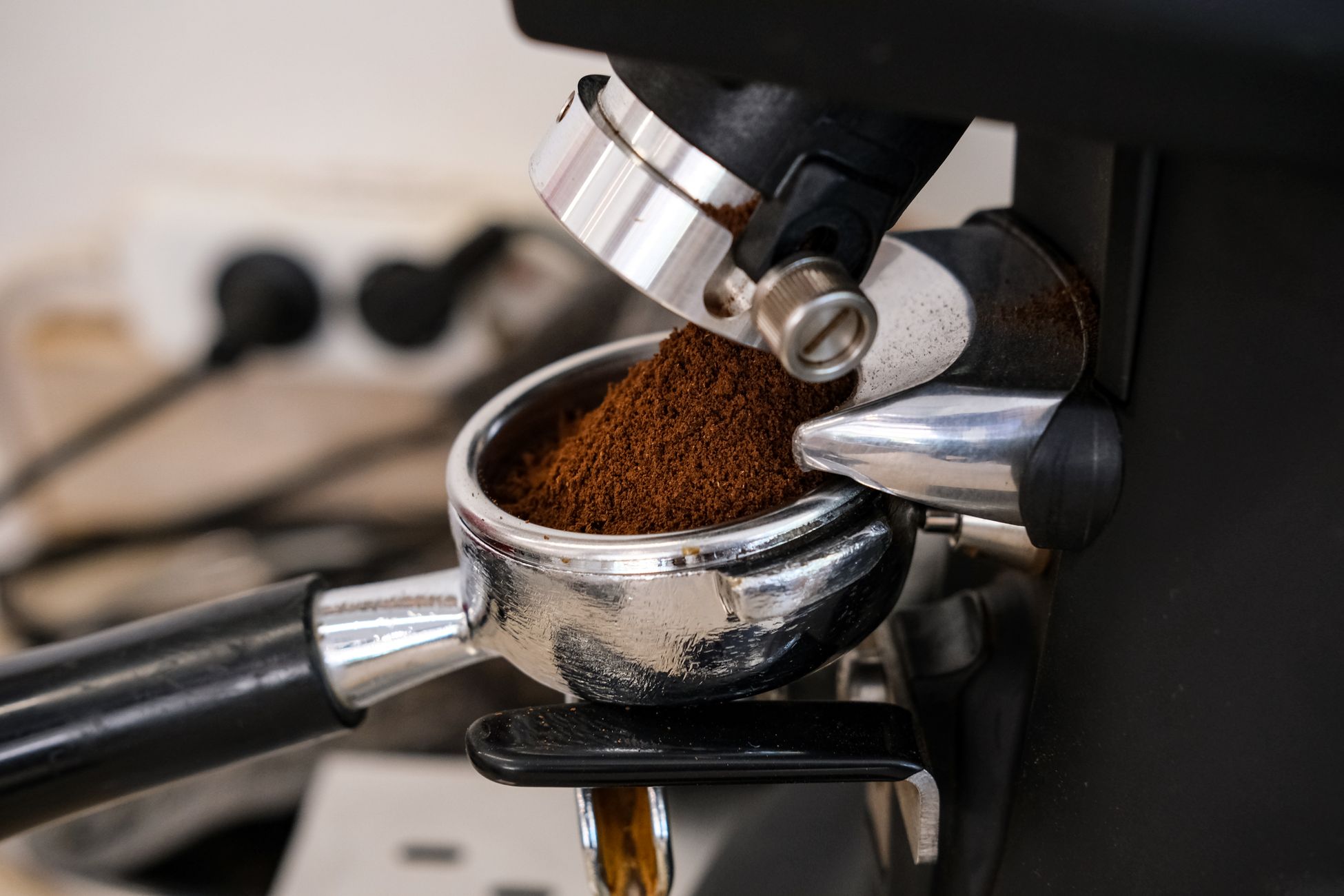
Fines are the second cause. Every grinder produces some dust alongside the intended particle size, and that dust extracts almost instantly and completely. A grinder with worn burrs or a cheap blade grinder produces a lot of it, and all of that dust dumps its astringent compounds into the brew no matter how carefully you control the rest. This is why a coffee can feel drying even when the brew time and temperature look correct on paper.
Underripe and underdeveloped beans are the third. Cherries picked green carry far more astringent compounds than ripe ones, and no roast fully fixes that. On the roasting side, a bean that has been browned on the outside but left raw at the core retains more of these compounds than a fully developed one. Quakers, the pale, underripe beans that occasionally slip through sorting, are intensely astringent on their own and can affect a whole brew.
Taste a fully ripe, carefully roasted coffee from our collection
Astringency Versus Bitterness Versus Acidity
Because these three get confused constantly, it is worth separating them.
Bitterness is a taste. You perceive it mostly at the back of your tongue, it is sharp and immediate, and it comes largely from compounds created during roasting. Dark roasts are more bitter than light ones. A bitter coffee does not necessarily feel dry.
Acidity is also a taste. It is the brightness or tartness you feel on the sides of your tongue, it makes your mouth water rather than dry out, and it reads as citrus, apple, or berry in a good coffee. Light roasts carry more of it. Many people call a bright coffee sour, but sourness is simply acidity out of balance.
Astringency is the drying, puckering feel. It is not on the tongue so much as across the whole mouth, it lingers and builds, and it can show up at any roast level. It is the least pleasant of the three, and unlike mild bitterness or acidity, almost nobody wants it.
A coffee can be bitter without being astringent. It can be acidic without being astringent. And it can be astringent while tasting neither bitter nor particularly sour, which is the case that confuses people most. If your mouth feels dry and rough but the flavor seems fine, that is astringency on its own.

How To Make It Go Away
Because astringency is mostly about extraction, the fixes are mostly about brewing.
Grind coarser. This is the first move almost every time. A coarser grind slows extraction and reduces the proportion of fines, which addresses the two biggest causes at once. Make the change in small steps and taste each one.
Lower the water temperature. If you are brewing with water just off the boil, try a few degrees cooler, in the range of 90 to 93 degrees Celsius. Hot water extracts the slow dissolving compounds faster.
Shorten the contact time. For immersion methods like French press, plunge and pour sooner. For pour over, pour a little faster or reduce agitation so the water moves through more quickly.
Check your grinder. If the coffee feels drying across every method and every bag, the grinder is the likely culprit. Worn burrs or a blade grinder will produce fines no matter what you do. A good burr grinder is the single most effective purchase for reducing astringency.
Use a paper filter. Paper traps fines and some of the compounds that contribute to dryness. If you brew with a metal filter or a French press and the coffee feels harsh, try the same beans through paper and notice the difference.
Buy better beans. Carefully sorted, fully ripe coffee from a roaster who develops the roast properly will be noticeably less astringent at the same brew settings. Air roasting helps here too, because the even heat develops the interior of the bean fully instead of leaving a raw core while the surface browns.
When A Little Astringency Is Normal
Some coffees carry a faint astringency as part of their character. Certain washed African coffees have a black tea quality in the finish that includes a touch of grip, and in small amounts it reads as structure rather than a fault. A very light roast will sometimes show a hint of it that disappears with a slightly coarser grind. The goal is not to eliminate every trace but to keep it in the background, where it supports the cup instead of taking it over.
If your mouth feels like sandpaper after a few sips, that is not character. That is a problem with a fix.

Listen To Your Mouth
The next time a coffee leaves you feeling dry, resist the urge to blame the roast or reach for a sweetener. Notice whether the sensation is a taste on your tongue or a feeling across your whole mouth. If it is the feeling, you are dealing with astringency, and the answer is almost always coarser, cooler, or shorter. Make one change, brew again, and let your mouth tell you when you got it right.
Browse our most popular coffees and find your next favorite
All images shown in this blog are sourced from pexels.com.