

You buy a bag labeled anaerobic natural, brew it the way you brew everything else, and the cup that comes out does not taste like coffee in the way you understand coffee. It tastes like fruit punch, or cinnamon candy, or a strawberry left in the sun, or something distinctly boozy. People either love it on the spot or wonder what was added to it.
Nothing was added. The flavor comes from controlling who gets to eat the coffee fruit and under what conditions, and the results are genuinely dramatic.
See what we have on the shelf right now.
Fermentation Was Always Part of Coffee
This is the piece most people miss. Every coffee you have ever had was fermented. It is not an exotic add on, it is a structural step in getting a seed out of a fruit.
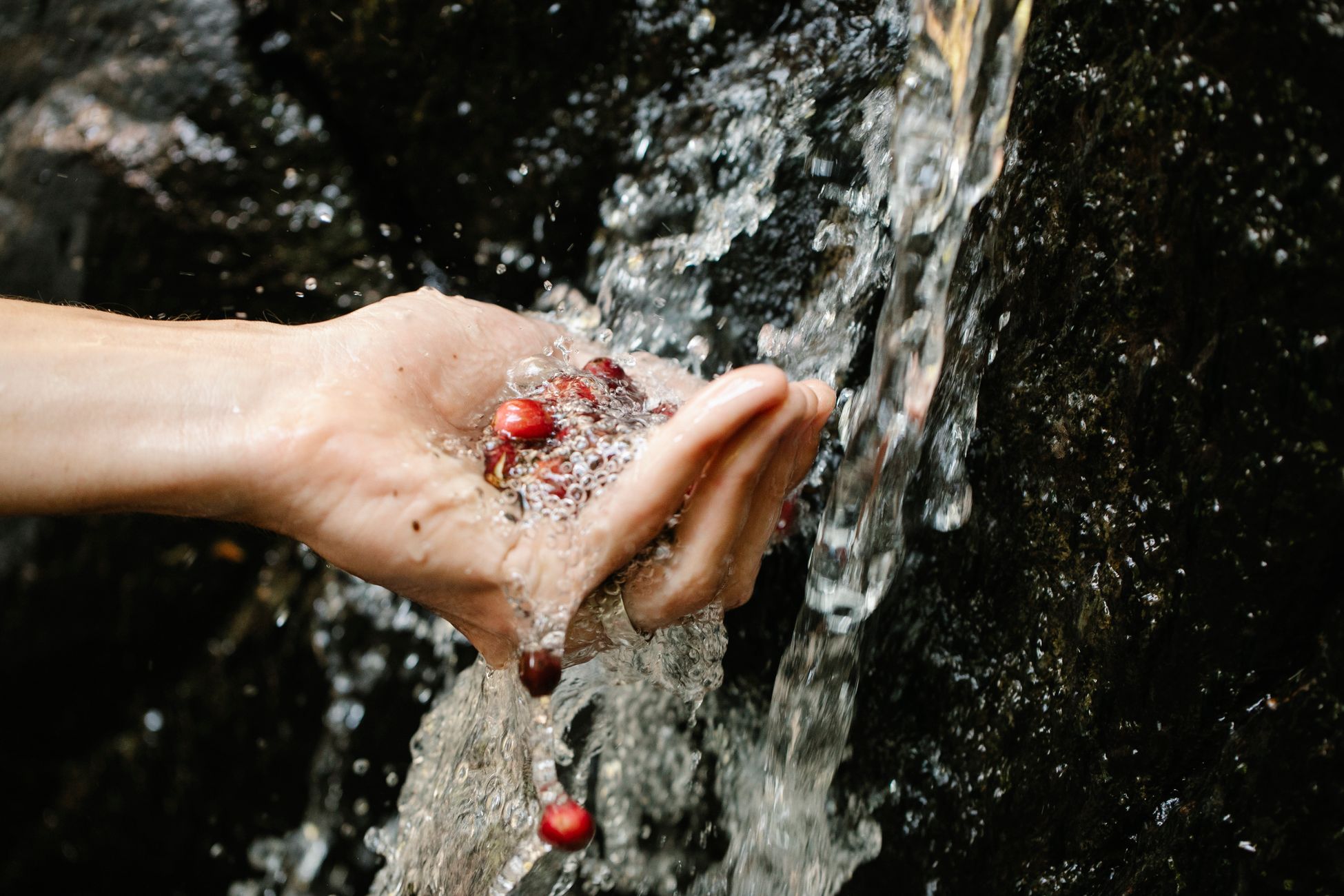
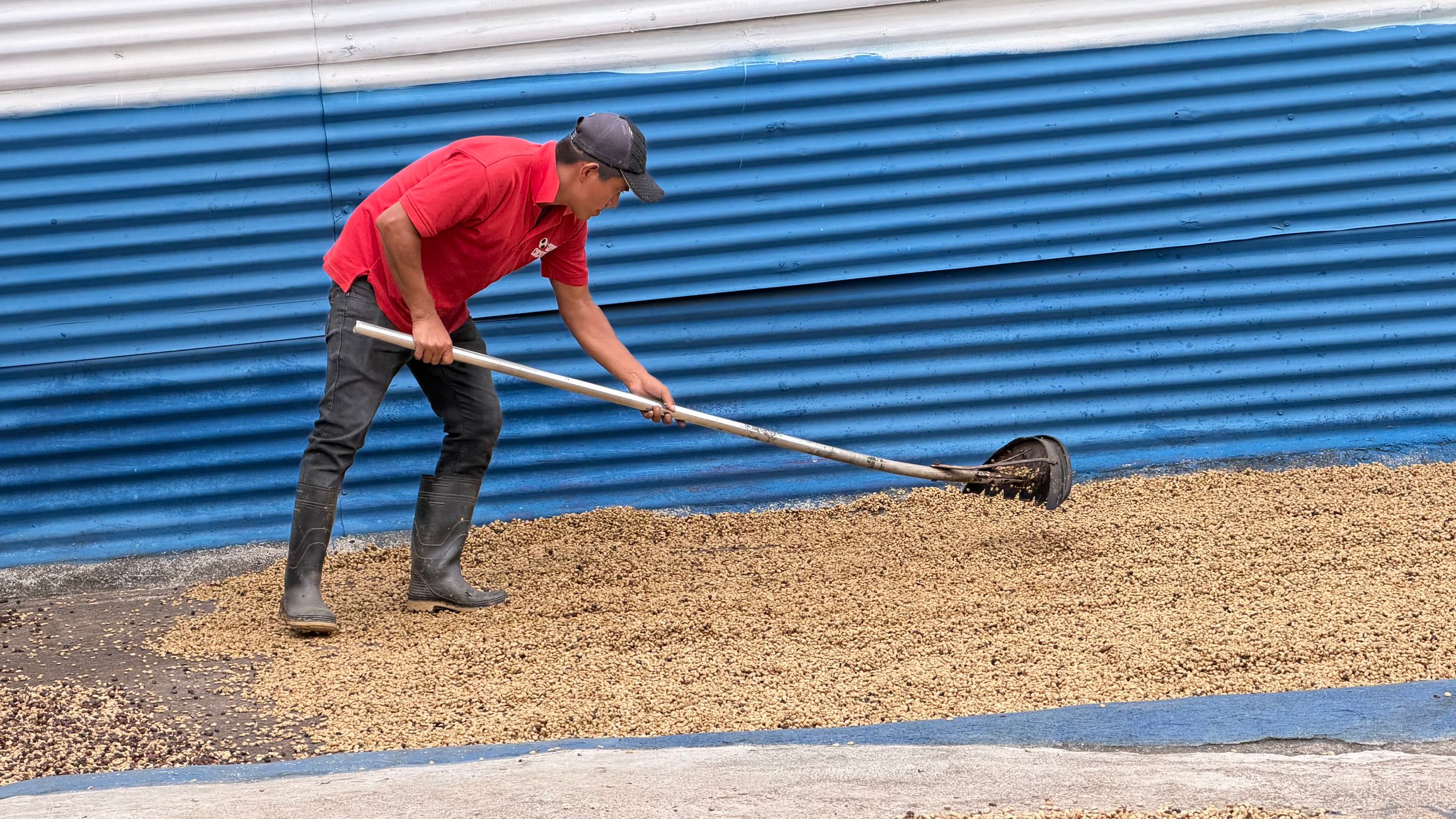
Under the skin of a coffee cherry is a layer of sticky, sugary flesh called mucilage. It clings to the bean and it has to come off. In washed processing, coffee sits in tanks of water for twelve to thirty six hours while naturally occurring microbes break that mucilage down enough to rinse it away. In natural processing, the whole cherry dries with the fruit on, and fermentation happens slowly inside the drying fruit.
In both cases the tank or the drying bed is open to the air. Oxygen is present. The microbial population that develops is whatever happens to be around: a mix of yeasts, bacteria, and molds from the farm environment, doing their work at whatever the ambient temperature happens to be.
That is traditional processing. It works, and it is not especially controlled.
What Changes When You Remove the Oxygen
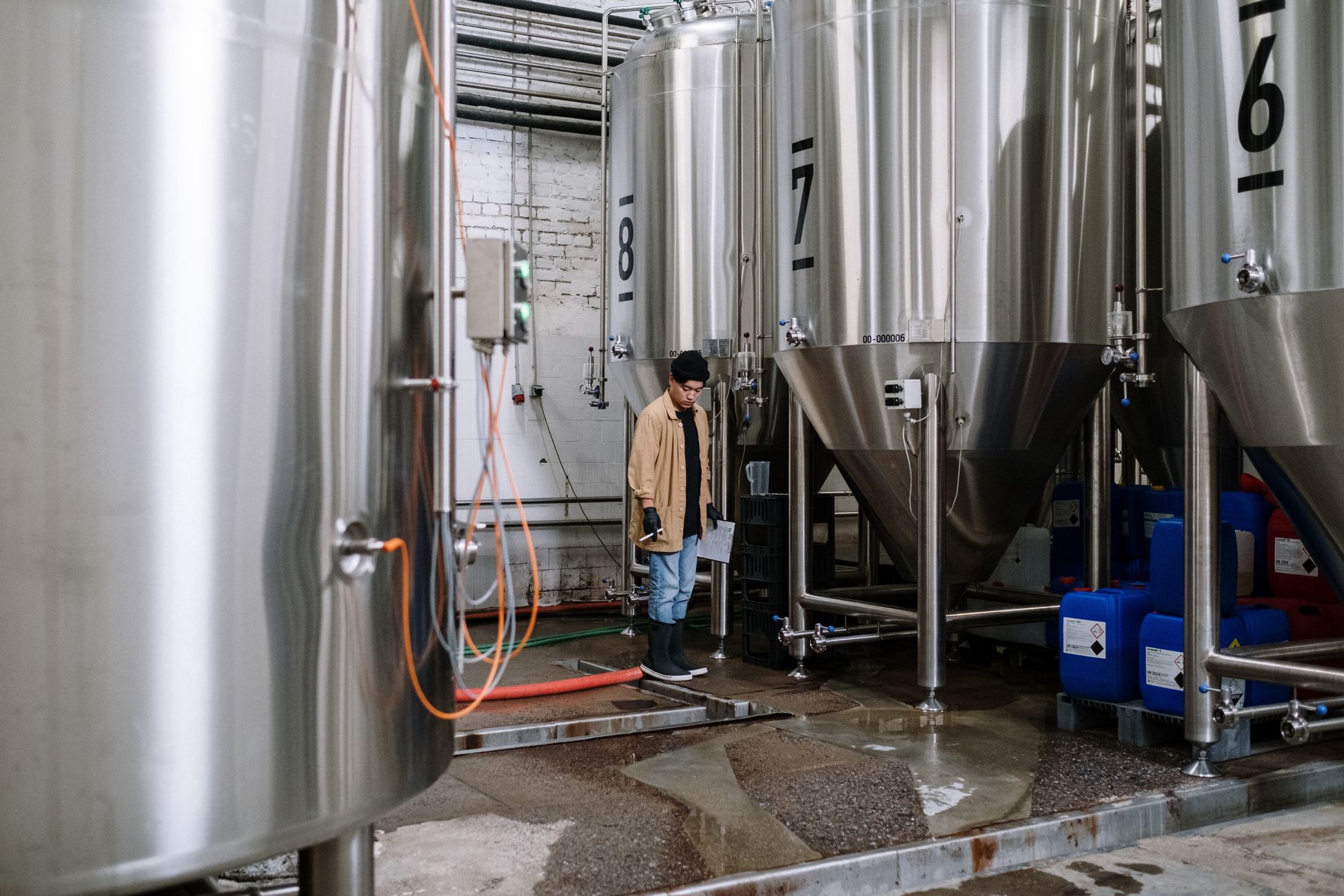
Anaerobic fermentation puts the coffee in a sealed vessel. Usually a stainless steel tank, sometimes plastic barrels, fitted with a one way valve that lets carbon dioxide escape without letting air back in.
The microbes at the start consume the available oxygen quickly. Once it is gone, the environment shifts, and the organisms that thrive without oxygen take over. In practice that means a population dominated by lactic acid bacteria and certain yeasts rather than the aerobic mix you would get in an open tank.
Different organisms produce different compounds. Aerobic fermentation tends to produce acetic acid, the vinegar note that can turn sharp when it goes too far. Anaerobic fermentation pushes toward lactic acid, which reads as softer, creamier, and rounder, along with a wide range of esters, which are the compounds responsible for fruit aromas in everything from wine to bananas.
The sealed tank also lets the producer control the process instead of watching it. Temperature can be regulated. Duration can be extended, sometimes to 60, 90, or even 150 hours instead of the usual day. Some producers monitor pH and stop the ferment at a target reading. Some inoculate with specific cultures rather than relying on whatever is present.
Coffee processing goes from something that happens to something that is designed.
Why the Flavors Get So Loud
Three things stack up.
First, the ester production. Those fruity, sometimes candy like aromatics accumulate over a long controlled ferment in concentrations you rarely see in a twenty four hour open tank.
Second, the extra time. A longer ferment means more of everything the microbes are producing, and it means those compounds have more opportunity to work their way into the seed itself rather than staying in the fruit that gets washed away.
Third, the CO2 pressure. In a sealed tank, carbon dioxide builds up. Some producers use that pressure deliberately, borrowing an idea from carbonic maceration in winemaking, where whole grapes ferment in a CO2 rich environment and the fermentation begins inside the intact fruit. Applied to coffee, it changes how compounds move between the fruit and the seed.
The result is a cup where the processing character can be louder than the origin character. That is the trade, and it is worth being explicit about it. A heavily fermented Colombian and a heavily fermented Ethiopian can taste more like each other than either tastes like a washed version of itself.
Where the Controversy Sits
Two arguments come up regularly, and both have merit.
The first is about terroir. Specialty coffee spent thirty years teaching people that altitude, varietal, soil, and climate produce distinguishable flavor, and that this is worth paying for. Processing that overrides those signals is, from one angle, erasing the thing the movement was built on. If the tank determines the taste, the farm matters less.
The second is about co ferments. Some producers add things to the tank: fruit pulp, cinnamon, juice, wine yeast. The resulting coffees taste emphatically of whatever went in. Whether that counts as coffee processing or as flavoring is a live disagreement in the industry, and competition rules have had to address it directly. The reasonable position is that there is nothing wrong with the practice as long as the bag says what happened, and something quite wrong with selling it as an unadorned expression of a farm.
There is also a quality risk that gets less attention. Fermentation that runs too long or too warm produces defects, not complexity. Over fermented coffee tastes of vinegar, nail polish, rotting fruit, and alcohol in a way nobody enjoys. The line between striking and spoiled is thin, and pushing toward it deliberately means some lots cross it.
Shop coffees we cupped before we bought them.
Why These Coffees Cost More
The price on an anaerobic lot is usually noticeably higher, and the reasons are concrete.
The equipment is an investment: sealed tanks, valves, sometimes temperature control, on farms where the previous setup was a concrete channel. The process takes longer, which means tank capacity limits how much coffee can be processed per day during a harvest window that does not wait. The risk is higher, because a failed lot is not a slightly worse coffee, it is unsellable. And the labor is more skilled, since somebody has to monitor and make judgment calls.
The producers doing this well are also, generally, the producers who have already invested in doing everything else well. You are paying for the whole operation, not just the tank.
How to Brew One
Treat these as coffees where the aromatics are the point, and protect them.
Use a paper filter method. The clarity helps you actually taste the layers rather than muddling them, and these coffees are usually intense enough that body is not the limiting factor.
Do not brew them hot and hard. Water around 195 to 200 degrees Fahrenheit is plenty. Aggressive extraction on a coffee this loud tips it quickly into something overwhelming.
Go slightly weaker than your normal ratio if the first cup feels like too much. Something in the range of 1 to 17 gives the fruit room to be pleasant rather than aggressive.
Let it cool. These coffees change more between hot and warm than almost anything else, and the middle temperature range is often where the best of it shows up.
And try one black before you decide anything about it. Milk does interesting and unpredictable things to heavily fermented coffee, occasionally excellent and occasionally strange.

The Honest Take
Anaerobic and extended ferment coffees are one of the most genuinely new things to happen in coffee in a long time, and they are worth trying if you have not. The best ones are memorable in a way an ordinary cup is not.
They are also not an everyday coffee for most people, and they are not a replacement for a clean, sweet, well grown washed coffee that tastes like the place it came from. Think of them the way you would think of a natural wine or a heavily hopped beer. A specific, deliberate, sometimes brilliant expression that is not trying to be the default.
Buy one, drink it over a week, and notice what it teaches you about how much of coffee's flavor is decided after the picking. That lesson sticks around long after the bag is gone.
All images shown in this blog are sourced from pexels.com.