

There is a piece of espresso equipment that looks like someone glued sewing needles into a wine cork. People pay real money for nicer versions of it, and they use it before every single shot.
It is a distribution tool, usually called a WDT tool after the Weiss Distribution Technique it comes from, and what it does is stir the grounds in the basket before tamping. That sounds like a fussy extra step for an already fussy drink. It is actually solving one of the most consistent causes of bad home espresso, and it solves it more reliably than most equipment upgrades costing a hundred times more.
Pull shots with coffee worth the effort.
The Problem Starts at the Grinder
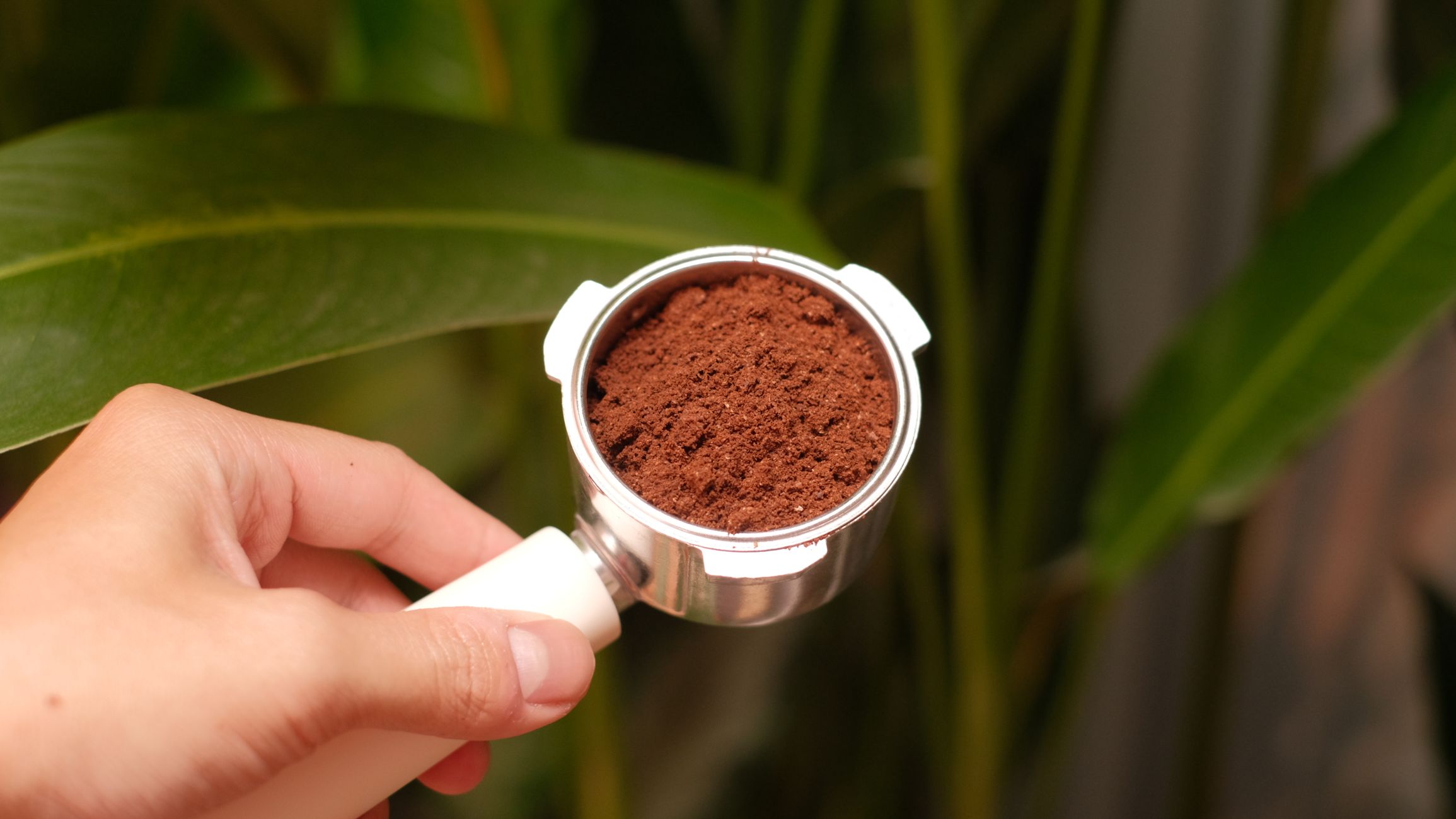
Ground coffee does not fall into a basket evenly. It comes out of the grinder chute in clumps, and it lands in whatever pattern the chute and gravity decide.
Two things create those clumps. Static electricity, generated by beans being sheared between burrs, makes fine particles stick to each other and to the chute. And the grinder itself dispenses in surges rather than a smooth stream, so the coffee arrives in bursts that pile unevenly.
The result inside the basket is a bed that looks flat on top and is anything but uniform underneath. There are dense clumps, loose pockets between them, and often a heavier concentration on one side depending on how the grinder threw it.
Tamping does not fix this. A tamp compresses everything downward, so a dense clump becomes a denser clump and a loose pocket becomes a slightly less loose pocket. The unevenness is preserved, just under more pressure.
Why Uneven Density Wrecks a Shot
Espresso works by forcing water through a compacted bed of coffee at around nine bars of pressure. Water, like anything else, takes the path of least resistance.
If part of the bed is less dense than the rest, water moves through it faster. That is a channel. Once a channel forms, water preferentially floods through it, extracting that small section far past the point of good flavor while the dense regions around it barely get touched.
The shot that comes out is both overextracted and underextracted at once. There is bitterness and astringency from the channel and sourness and thinness from the parts the water skipped. Blending them in the cup does not average out to correct. It produces something muddled that tastes harsh and hollow at the same time, and no adjustment to grind or dose fully fixes it because the problem is geometric rather than chemical.
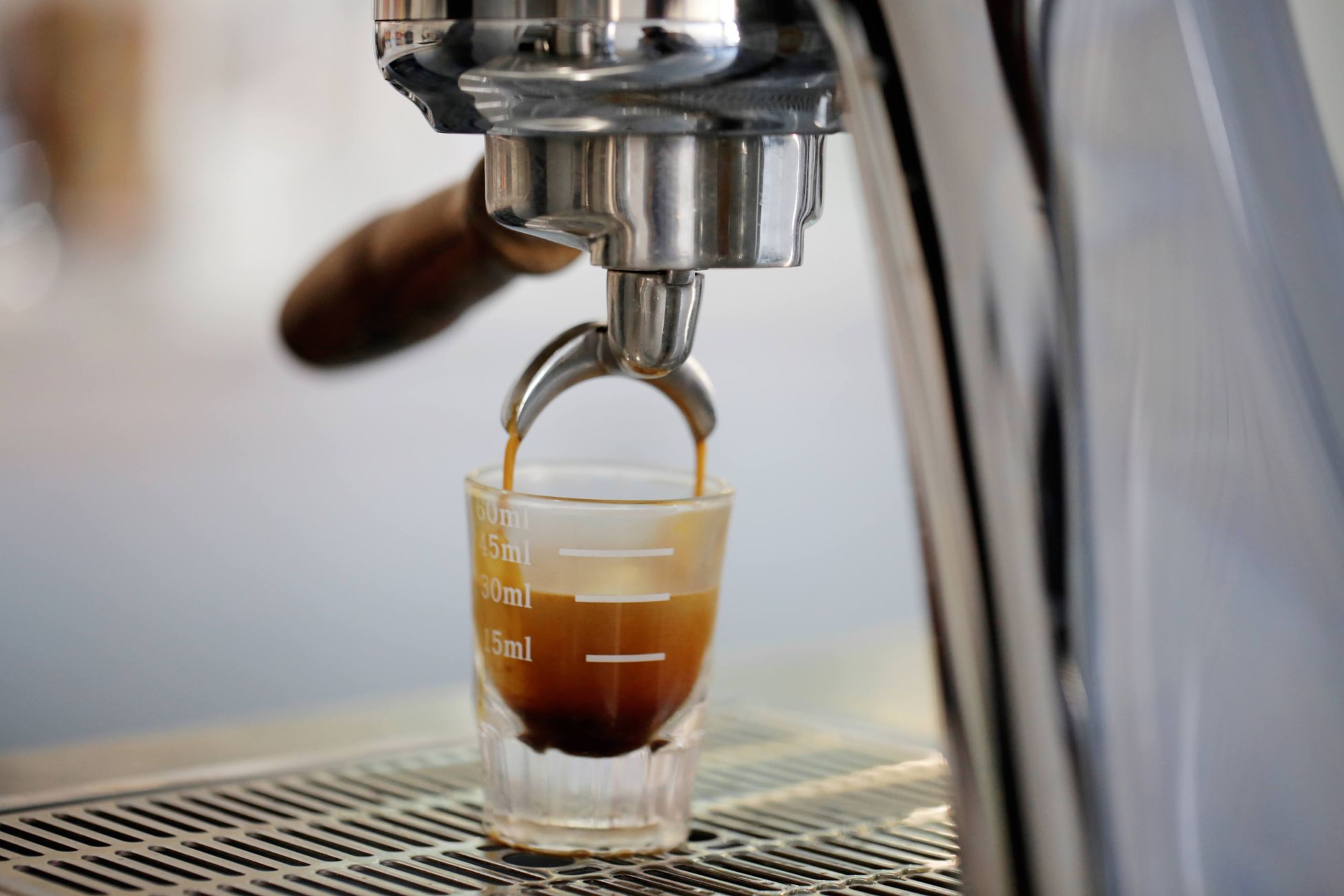
You can see it happening with a bottomless portafilter. Channeling shows up as a jet of light colored liquid spraying sideways, or as a spot on the basket that starts flowing well before the rest.
What the Needles Do
The tool is a set of very thin needles, typically between 0.2 and 0.4 millimeters, mounted in a handle. You insert them into the grounds and stir through the full depth of the bed, moving in a pattern that covers the whole basket.
The needles break up clumps by passing directly through them. Because they are thin, they redistribute the coffee without pushing it into new dense regions the way a thicker implement would. A toothpick or a paperclip does part of the job, but each pass displaces more coffee and leaves its own trail of compaction behind.
The stirring also does something the clumps alone do not explain. Fine particles and coarse particles separate during grinding and dispensing, with fines tending to settle differently than boulders. Stirring remixes them so that any given part of the bed has roughly the same particle distribution as any other part, which means the resistance is uniform across the basket.
Get espresso beans that reward good technique.
How to Actually Do It
The technique matters more than the tool's price.
Grind into the basket, or into a dosing cup and then into the basket. Some people prefer the cup because it lets them settle the grounds first.
Insert the needles all the way to the bottom of the bed. Stirring only the top layer redistributes the top layer and leaves the clumps underneath exactly where they were. The bottom of the bed is where channeling starts, since that is where the water exits.
Move in a deliberate pattern rather than randomly. Many people work in a spiral from the outside in, or use a series of small circles covering the whole area. What you want is complete coverage without spending so long that you compact the bed by working it too much.
Ten to twenty seconds is enough. Stirring for a minute does not make it better and does start pressing fines toward the bottom.
Wipe the needles between shots, or at least knock them clean. Coffee oils build up on them and stale grounds riding along into a fresh basket is an easy thing to avoid.
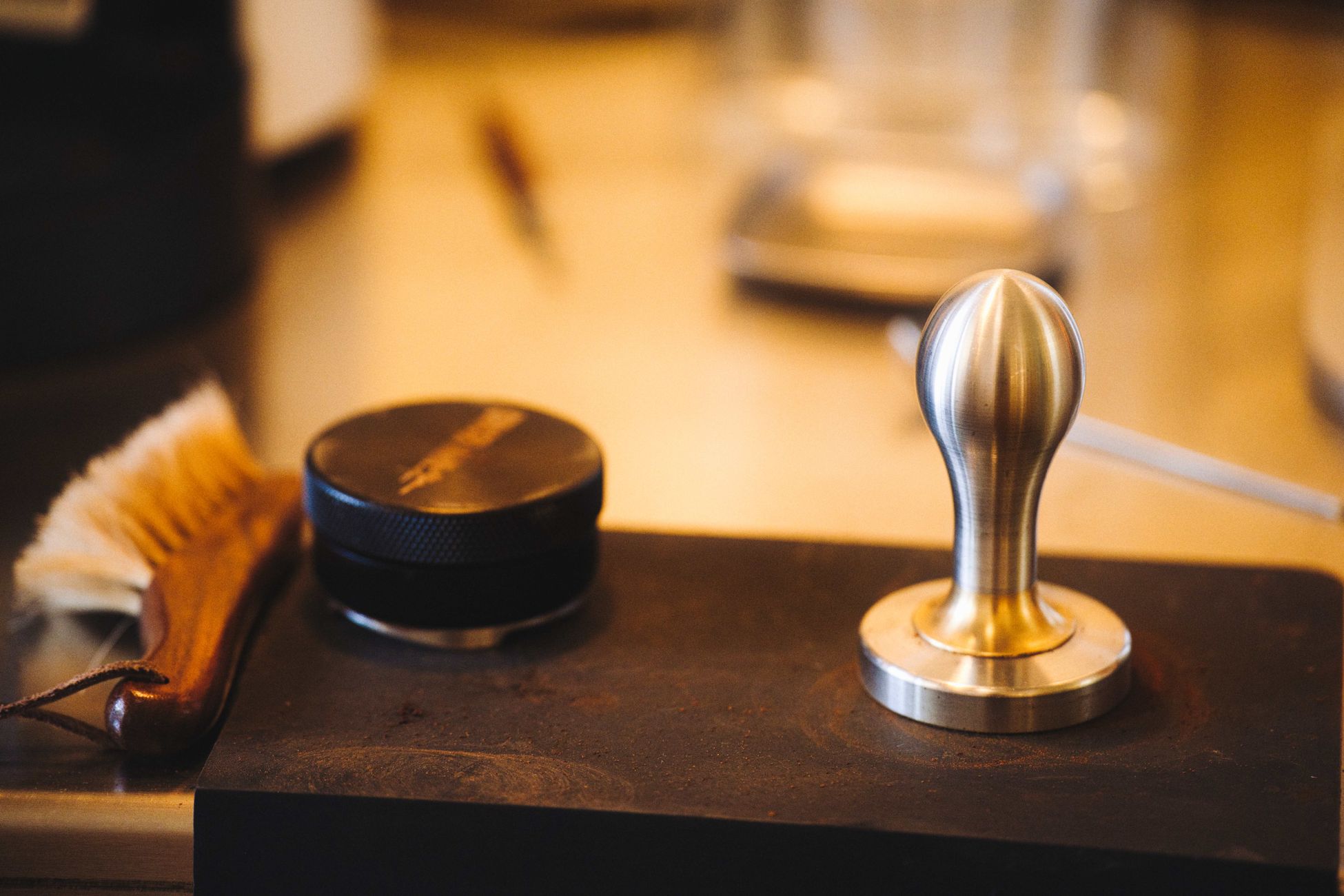
Level the surface gently after stirring, then tamp. The tamp should be level and consistent, and once the bed is evenly distributed the exact pressure matters far less than people think. Even distribution plus a level tamp beats heroic tamping pressure on an uneven bed every time.
What Changes When You Start
The first thing most people notice is that their shot times become predictable. The same dose and grind setting produce roughly the same time day after day, instead of wandering by five or ten seconds for no apparent reason.
That predictability is the real benefit. Dialing in a coffee requires that your only variable is the one you are deliberately changing, and if distribution is randomly different every shot, you are chasing noise. People who add distribution to their routine often find they can finally dial in a coffee in three shots instead of eight, which is the difference between enjoying espresso and fighting it.
The flavor change is usually described as more sweetness, less harshness, and a longer finish. That makes sense given the mechanism. Removing the overextracted channel removes the bitter astringent edge, and getting water through the previously skipped regions adds the sweetness and body that was locked in there.
Where It Fits Among Other Upgrades
Espresso has a long list of things to buy, and most of them matter less than this.
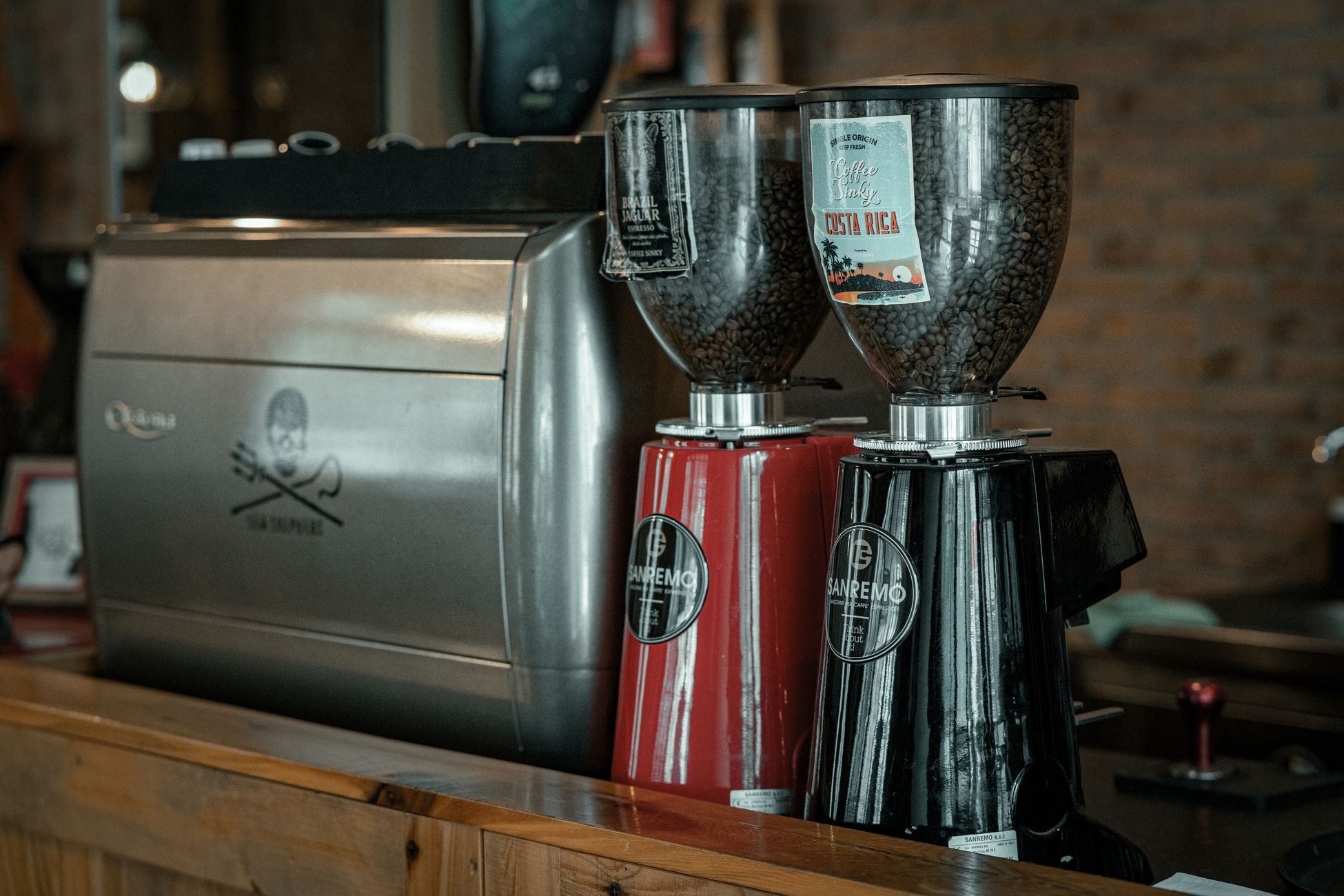
A better grinder genuinely helps, because grind uniformity is upstream of everything and a good grinder clumps less to begin with. But even excellent grinders produce clumps, and single dose grinders with static tend to produce quite a few.
A better tamper, a puck screen, a precision basket, a pressure profiling machine, all of these are real improvements at the margins. None of them fix a bed with a soft spot in it.
Distribution tools cost somewhere between fifteen dollars and a hundred, take fifteen seconds per shot, and remove the single most common cause of a shot going wrong. For anyone whose home espresso is inconsistent and who has already checked their dose, grind, and freshness, it is the cheapest meaningful fix available.
The bundle of needles looks ridiculous. It works because the problem it solves is the one that a tamper physically cannot reach.
Start with a coffee that deserves the setup.
All images shown in this blog are sourced from pexels.com.