

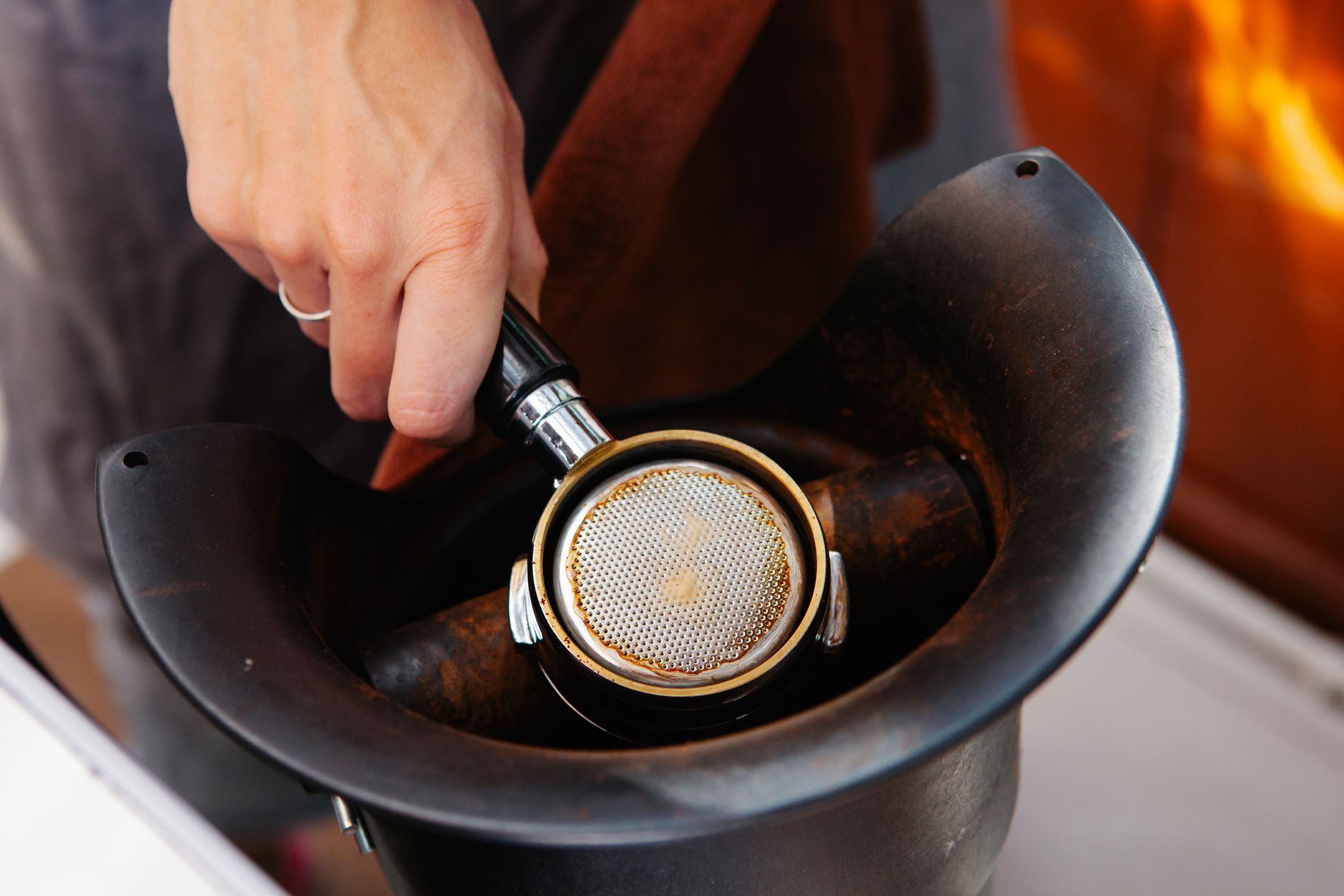
Knock out a spent espresso puck and look at it before it hits the bin. Some pucks come out as a firm, dry disc with a clean surface. Others are a soupy mess that slides out in pieces. Some have a pinhole in the middle or a crack across one side. Home baristas have been reading these signs for decades, and the internet is full of confident claims about what each one means. A wet puck means your dose is too low. A hole means channeling. A dry puck means you nailed it.
Some of that is true. A lot of it is not. The puck does carry information about what happened during your shot, but it also carries a great deal of noise from what happened after the shot ended. Knowing which is which will save you from chasing problems that do not exist and missing the ones that do.
Explore our most popular coffees
What Happens To The Puck After The Shot
Before you can read a puck, you need to understand the moment the shot stops. On most pump machines, a three way solenoid valve opens when you end the shot. Pressure inside the group head, which was sitting around nine bars, vents instantly through the drip tray. That sudden release does two things. It sucks a small amount of water back up through the puck, and it lets the compressed coffee bed relax and expand.
Machines without that valve, including many small home units and nearly all lever machines, do not vent that way. Pressure bleeds off slowly through the coffee, and the puck sits in standing water until you remove the portafilter.
This matters because much of what you see on the surface of a spent puck is created in those few seconds after the shot ended, not during extraction. A puck that looks perfect on a machine with a solenoid can look like soup on a machine without one, from exactly the same prep and the same coffee.
What The Puck Actually Tells You
With that caveat in place, there are a few things a puck reliably reveals.
The clearest is headspace. When you lock the portafilter in, there is a gap between the top of your tamped coffee and the shower screen. If the gap is tiny or nonexistent, the screen presses into the coffee and leaves a visible imprint of the screw and the screen pattern on the puck surface. That is a sign your dose is a bit high for the basket. If the gap is large, water pools on top of the puck during the shot and the surface comes out wet and loose, often with a layer of muddy slurry. That points to a dose that is low for the basket. Adjusting dose by half a gram in either direction and checking the next puck will dial this in quickly.
The second is severe channeling. When water finds a weak spot and bores straight through, it sometimes leaves a visible tunnel in the puck, a narrow hole you can see running from the top surface down into the coffee. Sometimes it leaves a crater on top where the water drilled in. These are real signs of a real problem, and they match what you would see spraying from a bottomless portafilter. The fix lives in your distribution and tamping.
The third is obvious prep failure. A puck that has a deep crack or splits into layers when knocked out often had a crack or a void before the shot started. If the grounds were clumped, or you tamped unevenly and then bumped the portafilter, the coffee bed was already compromised and water went straight through the fault line.
Find a coffee that rewards careful prep in our collection
What The Puck Does Not Tell You
Now the part that trips people up. A dry, firm puck is not proof of a good shot, and a wet puck is not proof of a bad one.
Wet pucks are mostly about the machine and the dose, not the extraction. If your machine lacks a solenoid valve, your pucks will be wet no matter how well the shot went. If your machine has one, a slightly low dose will leave a wet surface even when the shot itself extracted beautifully and tasted great. Plenty of baristas pull excellent espresso and knock out soupy pucks every single time. The cup is what counts.
Dry pucks can hide terrible shots. A high dose in a small basket leaves a firm, dry puck with a crisp screen imprint, and it can also choke the machine and produce a bitter, under extracted mess. The puck looks like a textbook photo. The espresso is undrinkable.
Pinholes are often nothing. Small holes on the surface of a puck very frequently come from the solenoid releasing pressure, which can pull a thread of water back through the weakest point in the bed. That hole was created after the shot. People spend weeks adjusting their tamp to eliminate a pinhole that had no effect on anything they tasted.
Cracks that appear when you knock out the puck usually come from the knocking, not the shot. A puck held loosely together by moisture breaks when it hits the knock bar. That is physics, not a diagnosis.
Read The Cup First
The order of operations that experienced baristas use is simple. Taste the shot. If it tasted sour, watery, and thin, you under extracted, and you should grind finer or pull longer. If it tasted harsh, bitter, and drying, you over extracted, and you should grind coarser or stop sooner. If it tasted both sour and bitter at once, you probably channeled, and the puck may help confirm where.
Only after tasting should you look at the puck, and only to confirm or narrow a suspicion. Taste is the primary evidence. The puck is the supporting witness, and it is not always reliable.
If you want a visual diagnostic that actually reflects what happened during extraction, a bottomless portafilter is far better than puck reading. It shows you channeling as it happens instead of leaving you to guess from the wreckage afterward.
A Simple Puck Reading Checklist
When you do check the puck, here is what is worth noting.
Is there a screen imprint? Lower the dose slightly. Is the surface a wet slurry on a machine with a solenoid? Raise the dose slightly. Is there a deep tunnel or crater? Fix distribution and tamp level. Did the puck split into layers? Check for clumps and avoid bumping the portafilter after tamping. Everything else, including surface moisture, small pinholes, and cracks from the knock, can be ignored unless the cup is telling you something is wrong.
Freshness plays a role here as well. Beans that are only a day or two off the roast release a lot of carbon dioxide under pressure, which can puff up the puck and make it look disturbed even with flawless prep. Beans that are weeks old lose that gas and produce flat, dense pucks that look great while tasting dull. Coffee rested about a week from the roast date gives you the most honest puck and the best shot.

Trust Your Tongue
Puck reading has survived because it feels like insight. There is a physical object in your hand and it seems to be telling you something. Some of it is. Most of it is the machine's plumbing and your dose, neither of which has much to do with how the shot tasted.
Use the puck to check headspace and to confirm a channel you already suspect. Then forget it. The espresso in the cup is the only result that matters, and it is the one you can always trust.
Browse our most popular coffees and find your next favorite
All images shown in this blog are sourced from pexels.com.