

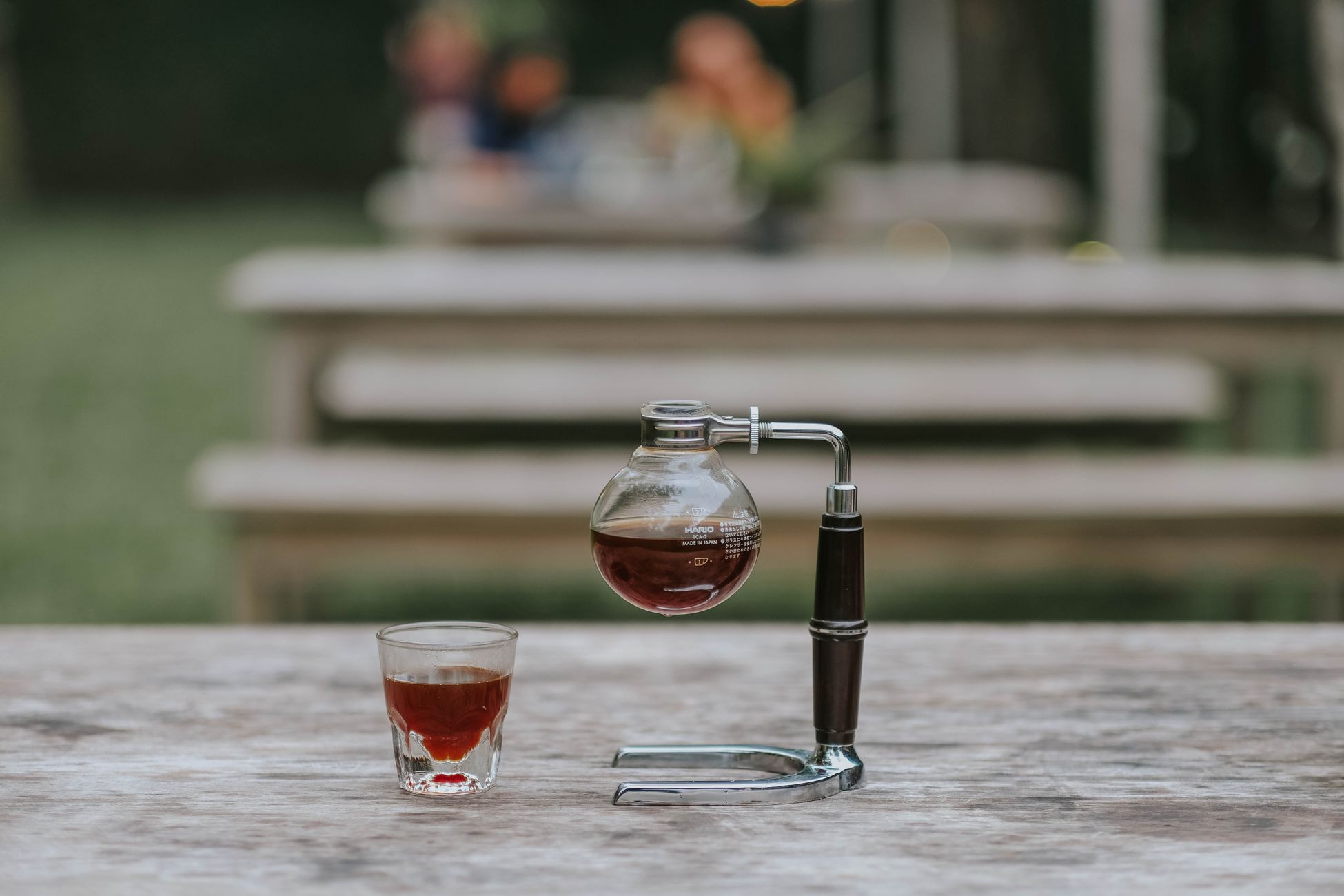
There is a brewer that looks like something borrowed from a chemistry department, makes a quiet gurgling noise, and produces a cup that people struggle to describe because it does not taste like anything else they make at home. The siphon, also called a vacuum pot, has been around since the 1830s and has never quite gone away, mostly because nothing else does what it does.
It has a reputation for being theatrical and impractical, which is half deserved. It is also the only common brewing method that holds the entire brew at full immersion, at a stable high temperature, and then removes the water from the grounds in a few seconds through vacuum rather than gravity. That combination is genuinely unique, and it shows up in the cup.
Find a coffee worth the extra effort.
How the Thing Actually Works
A siphon is two chambers joined by a tube, with a filter sitting at the bottom of the upper chamber where the tube enters.
Water goes in the lower globe. A heat source underneath, traditionally a spirit burner, often a halogen lamp or a butane burner now, brings it toward a boil. As the water heats, the air above it expands and vapor pressure builds. That pressure has one place to go, which is down onto the surface of the water, pushing it up the tube into the upper chamber.
This is the part that surprises people. The water is not boiling over or being sucked upward. It is being pushed by expanding vapor, and it arrives in the upper chamber at a temperature slightly below boiling, usually in the low nineties Celsius, which is very close to the ideal brewing range.
You add coffee to the upper chamber and stir. The brew sits there fully immersed while a small amount of water remains in the lower globe, kept at a rolling simmer by the heat source. Because the vapor pressure is continuously maintained, the water stays up.
Then you remove the heat. The vapor in the lower globe condenses, pressure drops, a partial vacuum forms, and atmospheric pressure pushes the brewed coffee back down through the filter in a matter of seconds. The grounds stay behind in the upper chamber as a neat dome.
The Two Things Nothing Else Combines
Every brewing method makes a trade between immersion and filtration. The siphon refuses to.
Full immersion with a stable temperature. In a French press, the water starts hot and drops steadily for four minutes, so the end of the extraction happens noticeably cooler than the start. In a pour over, temperature is even less stable because fresh water is arriving in pulses onto a bed that is losing heat continuously. In a siphon, the heat source is still running under the lower globe during the entire brew, which means the water in the upper chamber holds its temperature far more steadily than any other manual method achieves. Extraction stays consistent from the first second to the last.
A clean filtered cup from an immersion brew. Immersion normally means either grit or oils in the cup, since the filter is either a metal mesh or nothing at all. The siphon draws the finished brew through a cloth, paper, or fine metal filter under vacuum pressure, which produces a cup with the clarity of a pour over but the fullness of an immersion.
There is a third quality that matters more than it sounds. Because the vacuum pulls the liquid down in seconds rather than letting it drain by gravity over minutes, the brew has a defined end. There is no long drawdown where the last of the water trickles through an increasingly exhausted bed, extracting the harsh compounds that come out late. The moment you kill the heat, extraction stops.
What That Produces in the Cup
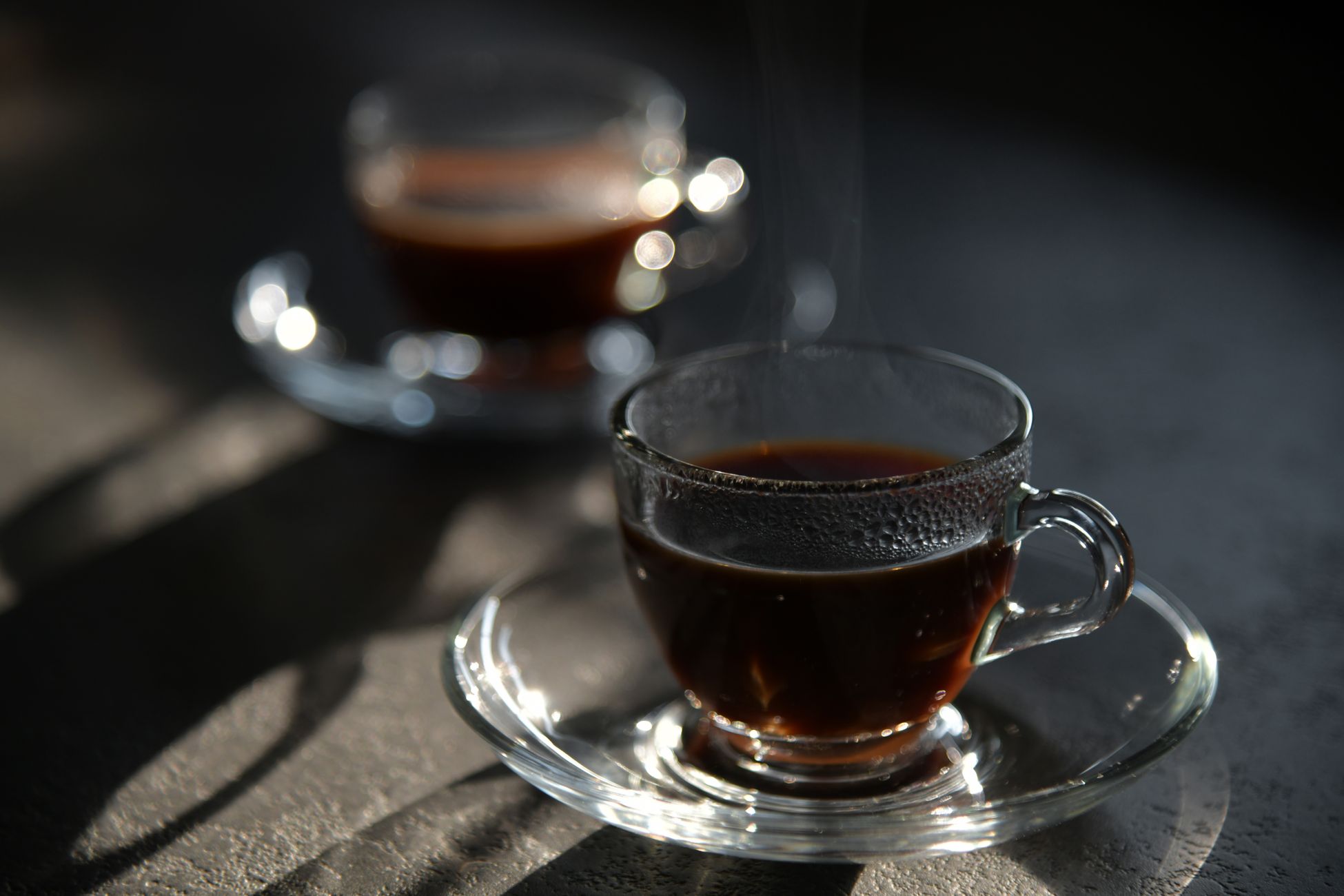
Siphon coffee tastes clean and bright with a rounder body than a pour over of the same beans. The texture is often described as silky or syrupy, which comes from the immersion, while the flavor separation is sharp, which comes from the filtration.
Aromatics survive well because the brew happens in a mostly enclosed glass chamber rather than an open cone losing volatile compounds to the air for three minutes.
Delicate coffees benefit most. Light roast Ethiopians, high altitude washed lots, anything floral or tea-like. The stable temperature pulls a complete extraction without the harshness that comes from pushing a pour over too hard, and the result tends to taste more resolved and less angular.
It is a poor match for dark roasts, which extract quickly and get bitter under sustained hot immersion, and it is wasted on a coffee that does not have much to say in the first place.
Choose beans with something to reveal.
Getting a Good Result
The variables are fewer than a pour over, which is part of the appeal once you get past the setup.
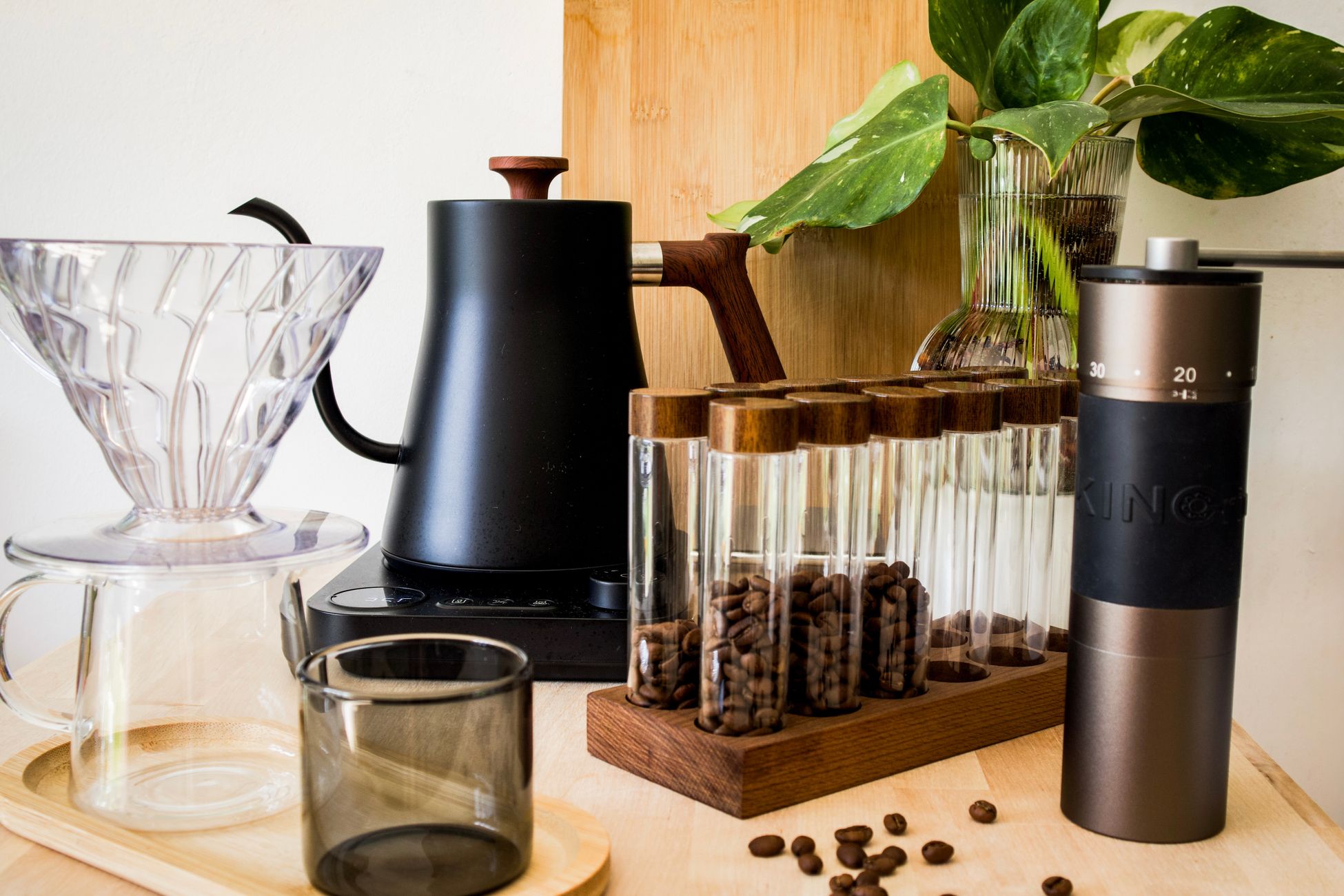
Grind medium, close to a drip grind. Coarser than espresso, finer than a French press. Too fine and the vacuum drawdown stalls or takes uncomfortably long, too coarse and you underextract despite the immersion.
Preheat your water. Starting with hot water in the lower globe cuts several minutes off the process and, more importantly, means the burner is not running for ages before you even begin, which cooks the water and drives off dissolved oxygen.
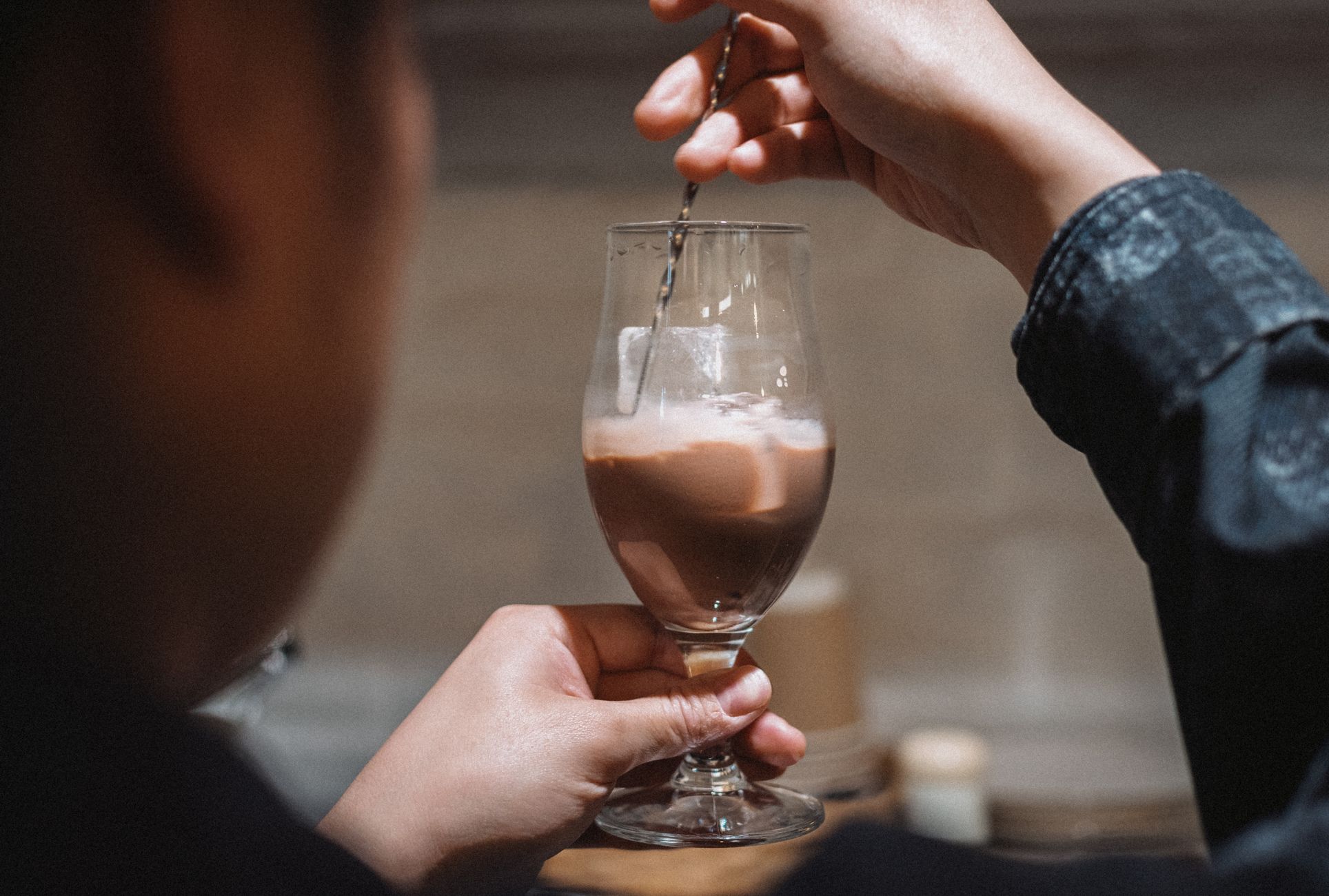
Stir when the coffee goes in, and stir once more before you pull the heat. The first stir wets everything and breaks the crust that forms on top. The second redistributes grounds that have floated. Uneven wetting is the main cause of a disappointing siphon brew.
Brew for about a minute to ninety seconds at full immersion, then remove the heat. Longer than that pushes into bitterness because the temperature stability that helps you early keeps working against you late.
Watch the drawdown. A healthy one takes twenty to forty seconds. Much faster and your grind is too coarse. Much slower and it is too fine or the filter needs cleaning.
Clean the filter properly. Cloth filters need rinsing thoroughly and storing in water in the fridge, or they go rancid and taste like it. Paper and metal are easier and lose very little.
The Honest Drawbacks
It is glass, and it breaks. The upper chamber and the tube are fragile, and most siphon owners have replaced a part.
It takes longer and demands attention. This is not a brewer you start and walk away from, because the heat management is the method. If you want coffee while doing three other things, this is the wrong tool.
Cleaning is more involved than rinsing a cone. There are two glass chambers, a filter assembly, and a spring or chain to deal with.
And the burner matters. A spirit burner is traditional and beautiful and gives poor temperature control. A halogen lamp gives excellent control and costs more than the brewer. A small butane burner is the practical middle, though it is the least attractive of the three.
Why People Keep Coming Back to It
Partly because the process is genuinely pleasant to watch, and there is nothing wrong with a brewing method that makes a Sunday morning feel like an occasion.
Mostly, though, because of what it does with a really good coffee. The siphon is the method that most reliably makes a delicate light roast taste like the roaster intended, with full sweetness, complete extraction, no harshness at the edges, and a body that a pour over cannot match on the same beans.
If you already own a pour over setup and a French press and have wondered what the gap between them tastes like, the siphon is that gap. It is not a replacement for either. It is a third answer to the same question, and on the right coffee it beats both.
Start with a bag you already know well from a pour over. Brew it in a siphon the same week. The difference between the two cups is the clearest explanation of the method anyone can give you.
Get a bag worth studying this closely.
All images shown in this blog are sourced from pexels.com.